Skip to story
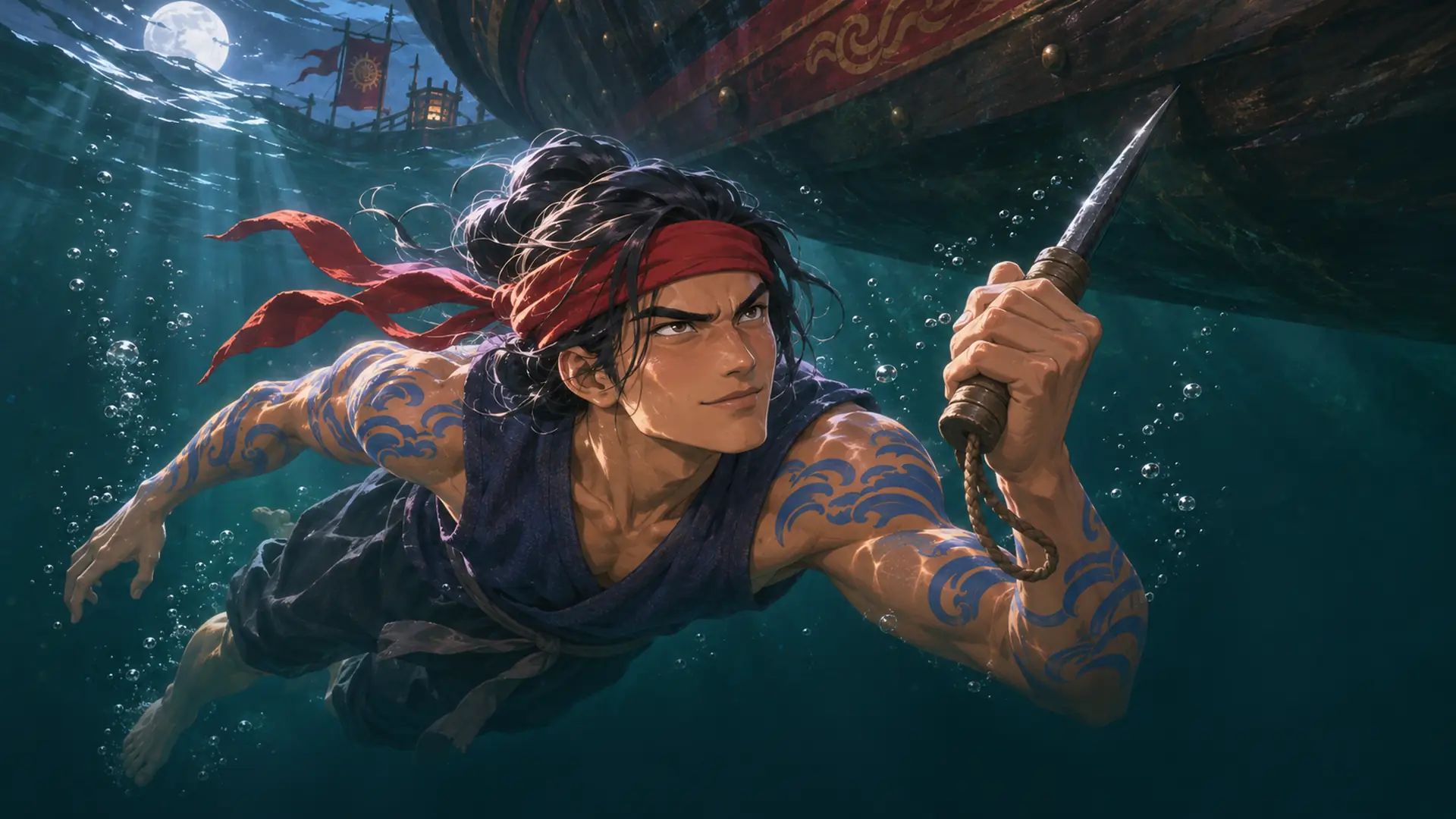
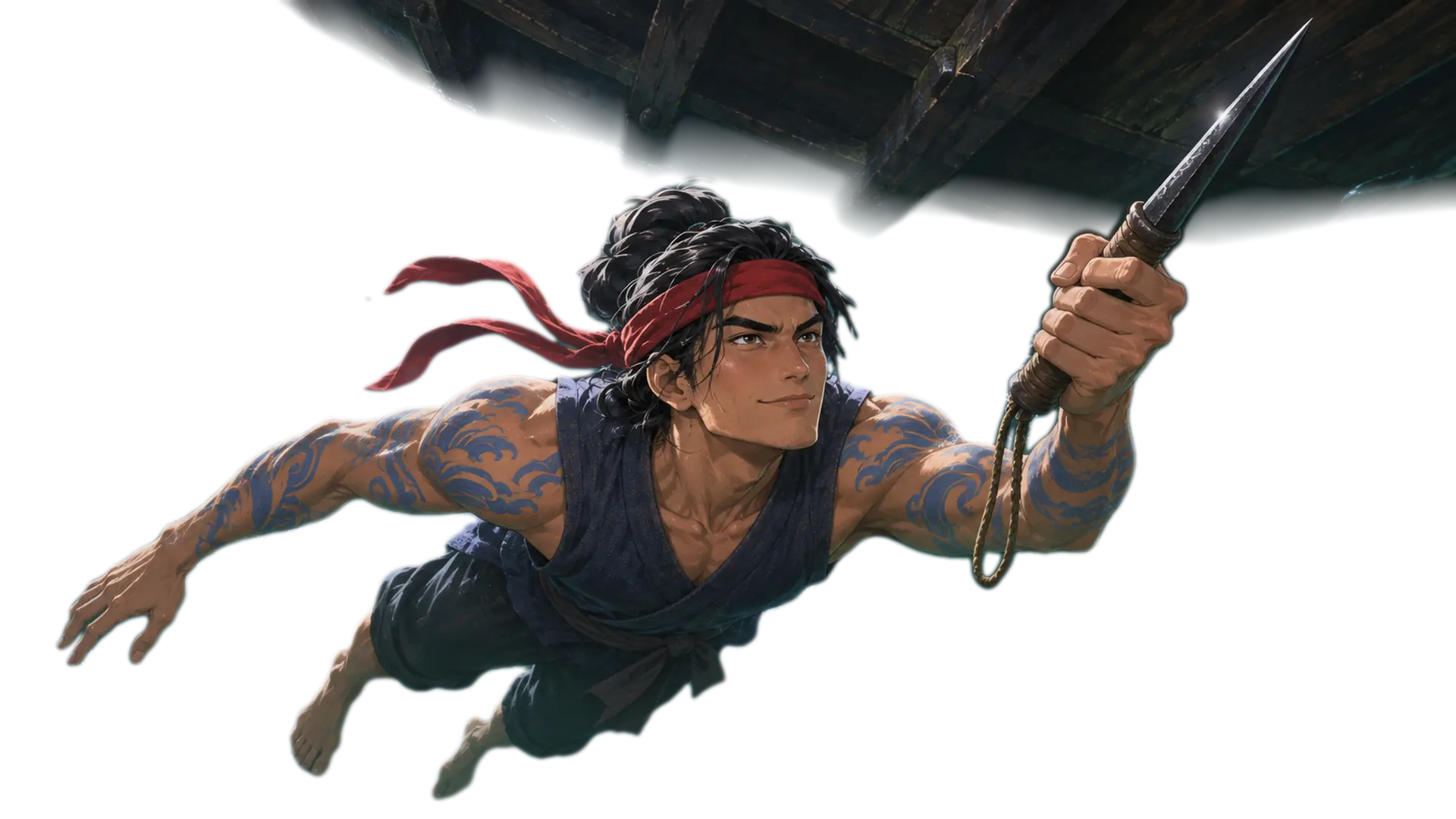
Yet Kieu underwater beneath the dark hull of a warship, raising his iron awl, moonlight rays and bubbles around him.

Vietnamese Legend · 3 min read

Yet Kieu, the Underwater Warrior

Yết Kiêu

The Mongols had conquered a world. In Vietnam, legend says one man sank their warships alone, from beneath the river: a poor fisherman who won a spirit buffalo's pearl, waited by a boat when everyone else ran, and took a sword through the leg without making a sound.

Underwater at night in a dark river: Yet Kieu swimming upward beneath the enormous dark hull of a war junk from the Yuan war fleet, gripping his iron awl, eyes open and determined, bubbles trailing, shafts of moonlight from the surface, close and centred.

Chapter

The Diver

In the thirteenth century, the Mongol Empire had conquered a world — from China to the edge of Europe. Then its war fleets sailed into the rivers of Vietnam.

But legend says one man sank their warships. Alone. From beneath the river.

His name was Yet Kieu.
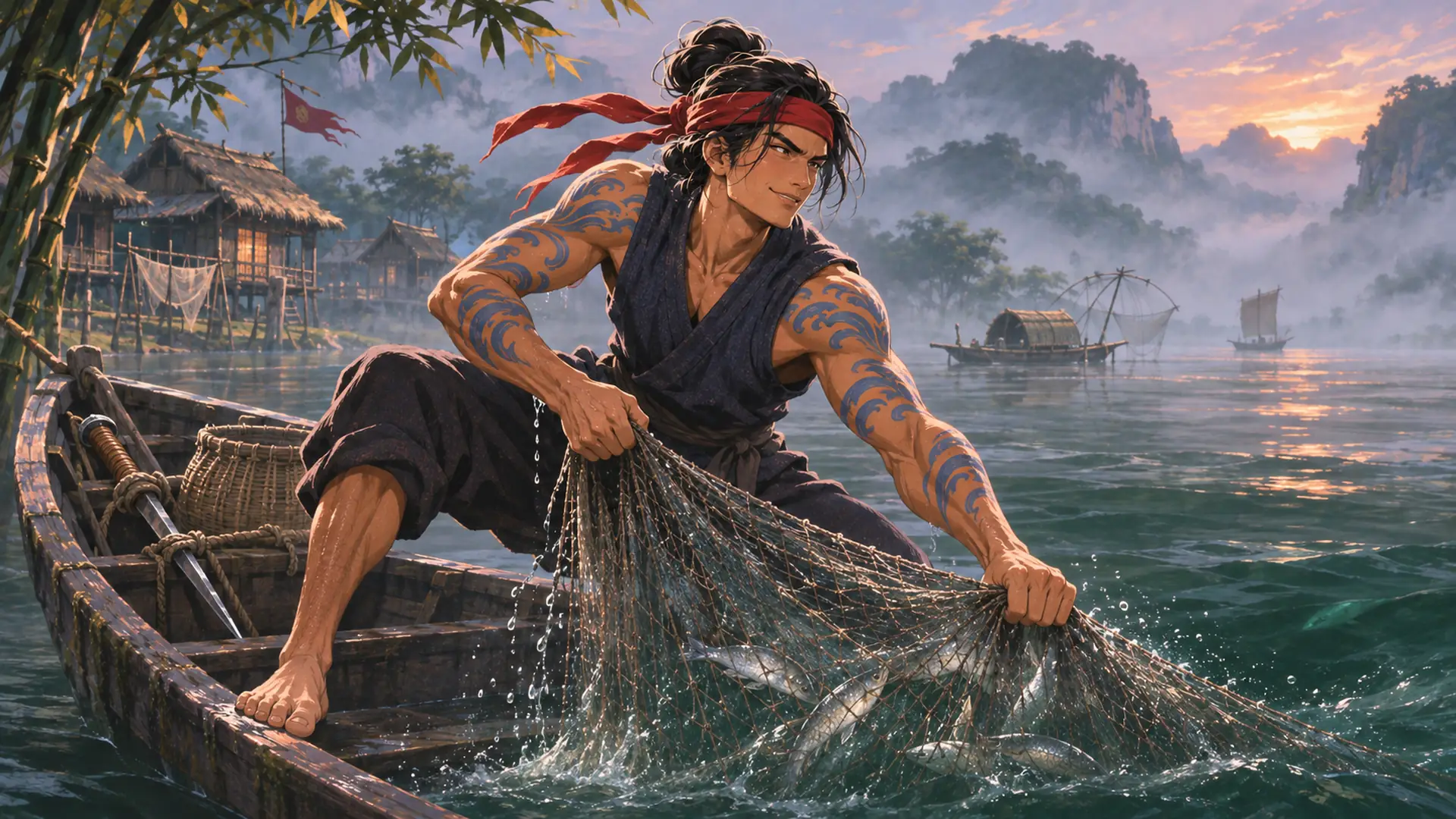
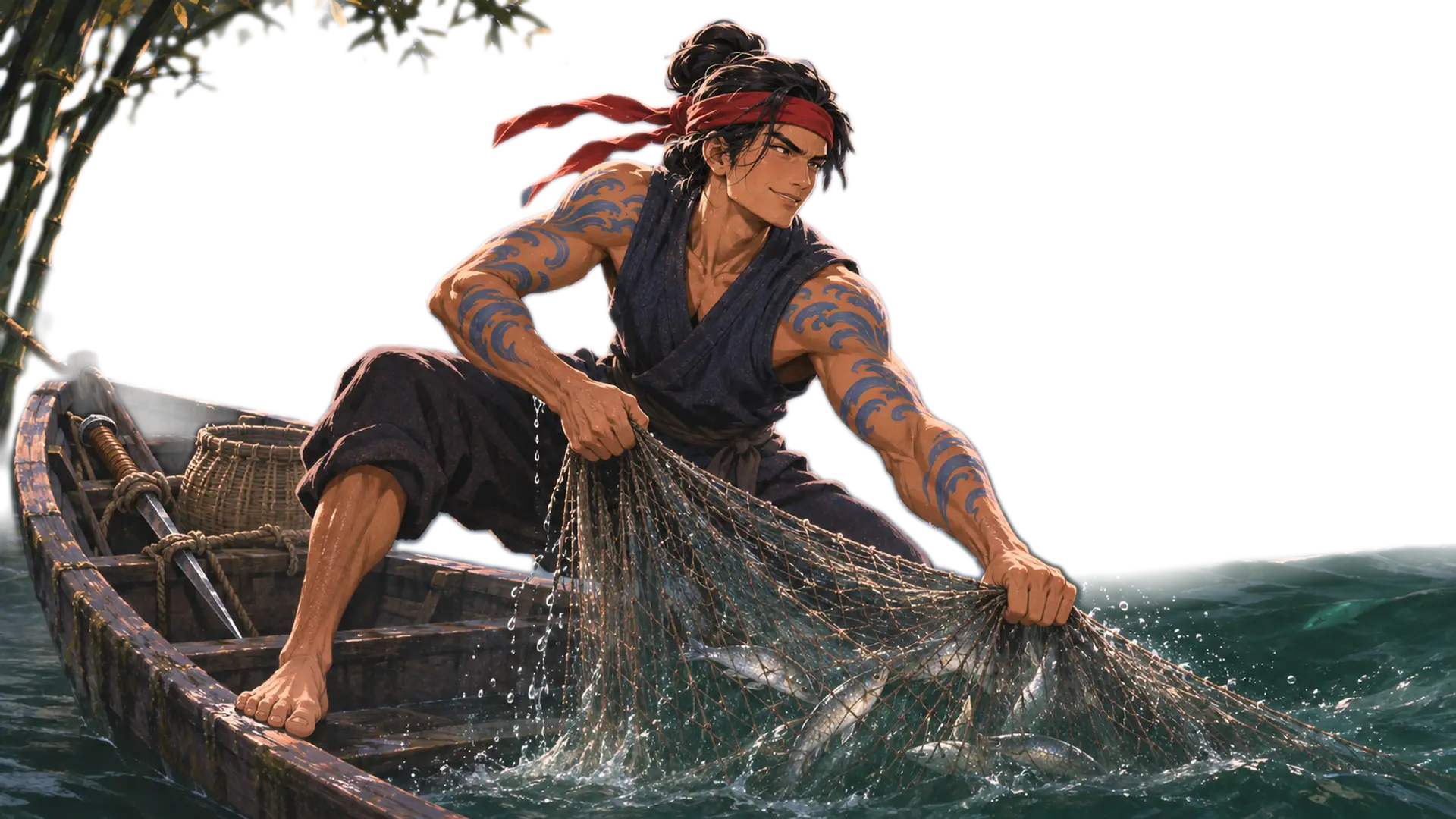
A riverside fishing village in old Vietnam at morning: Yet Kieu as a poor young fisherman pulling a net from a small wooden boat, thatched houses, bamboo, limestone hills in the mist.

Chapter

The Spirit Buffalo

The story goes that in Ha Bi, a village on a riverbank, there lived a poor young man named Pham Huu The. All year round he fished and gathered firewood, just to get by.
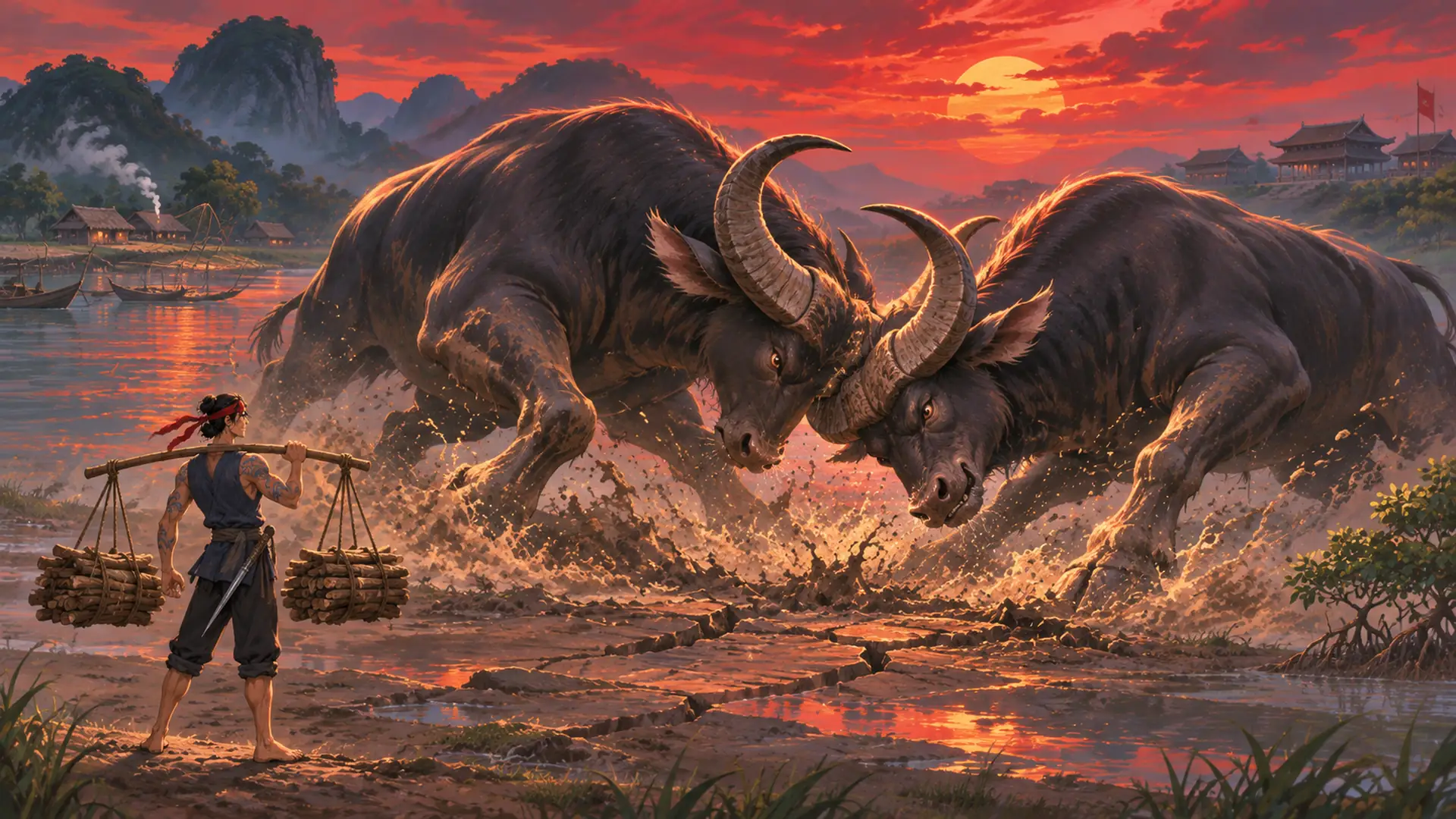
A riverbank at dusk: two gigantic dark water buffalo with huge curved horns locked together, fighting, mud and spray flying, the ground cracking, a red sunset sky, and small in the foreground Yet Kieu with a carrying pole and two bundles of firewood, staring.

One evening, walking home with his firewood, he saw two gigantic buffalo fighting on the riverbank. Their horns crashed like thunder. The ground shook.
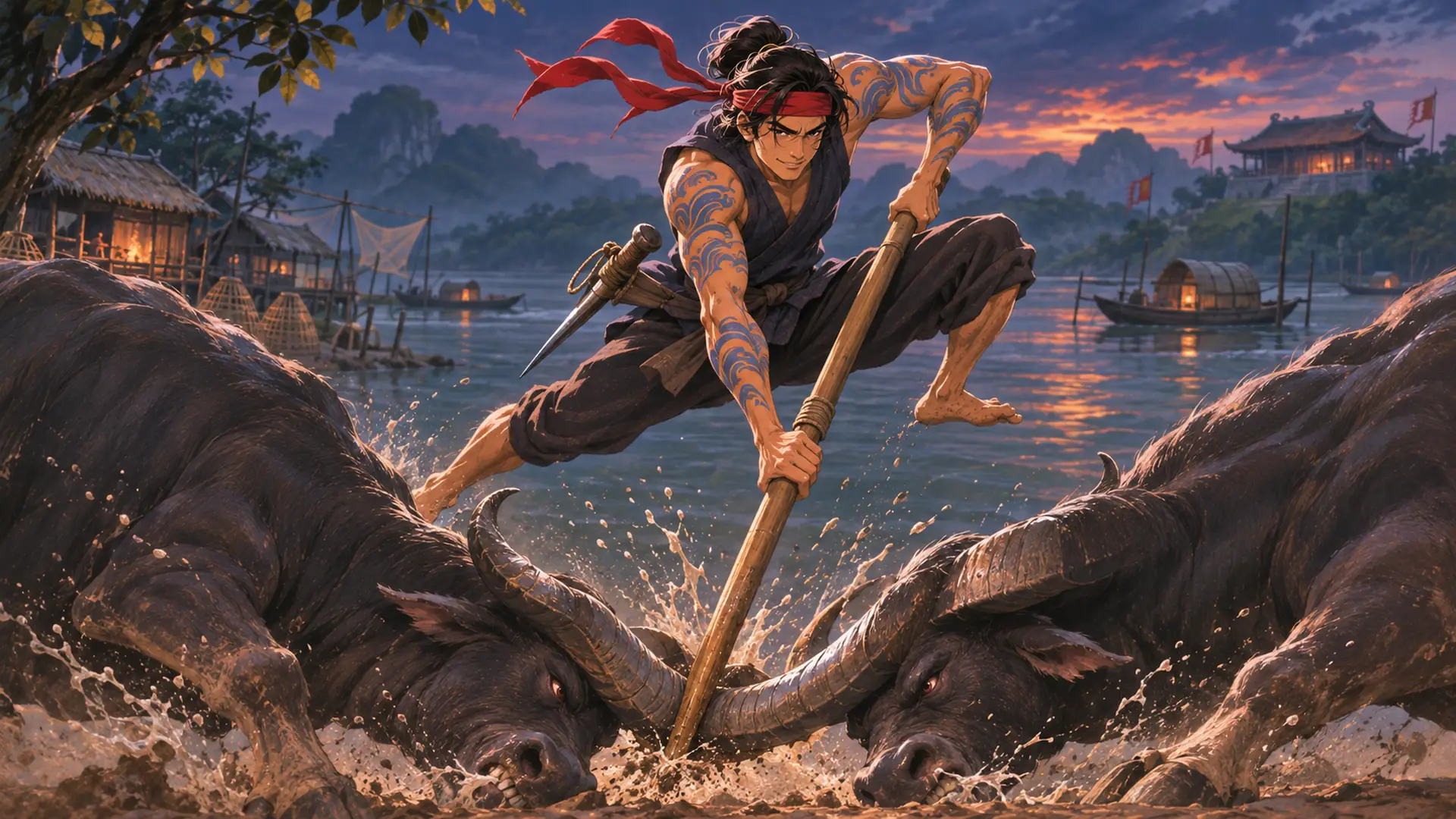
The riverbank at dusk: Yet Kieu leaping between the two gigantic fighting buffalo and swinging his wooden carrying pole down between their horns with all his strength, dynamic action pose, spray and dust.

Anyone else would have run. Not him. He swung his carrying pole — and brought it down right between their horns.
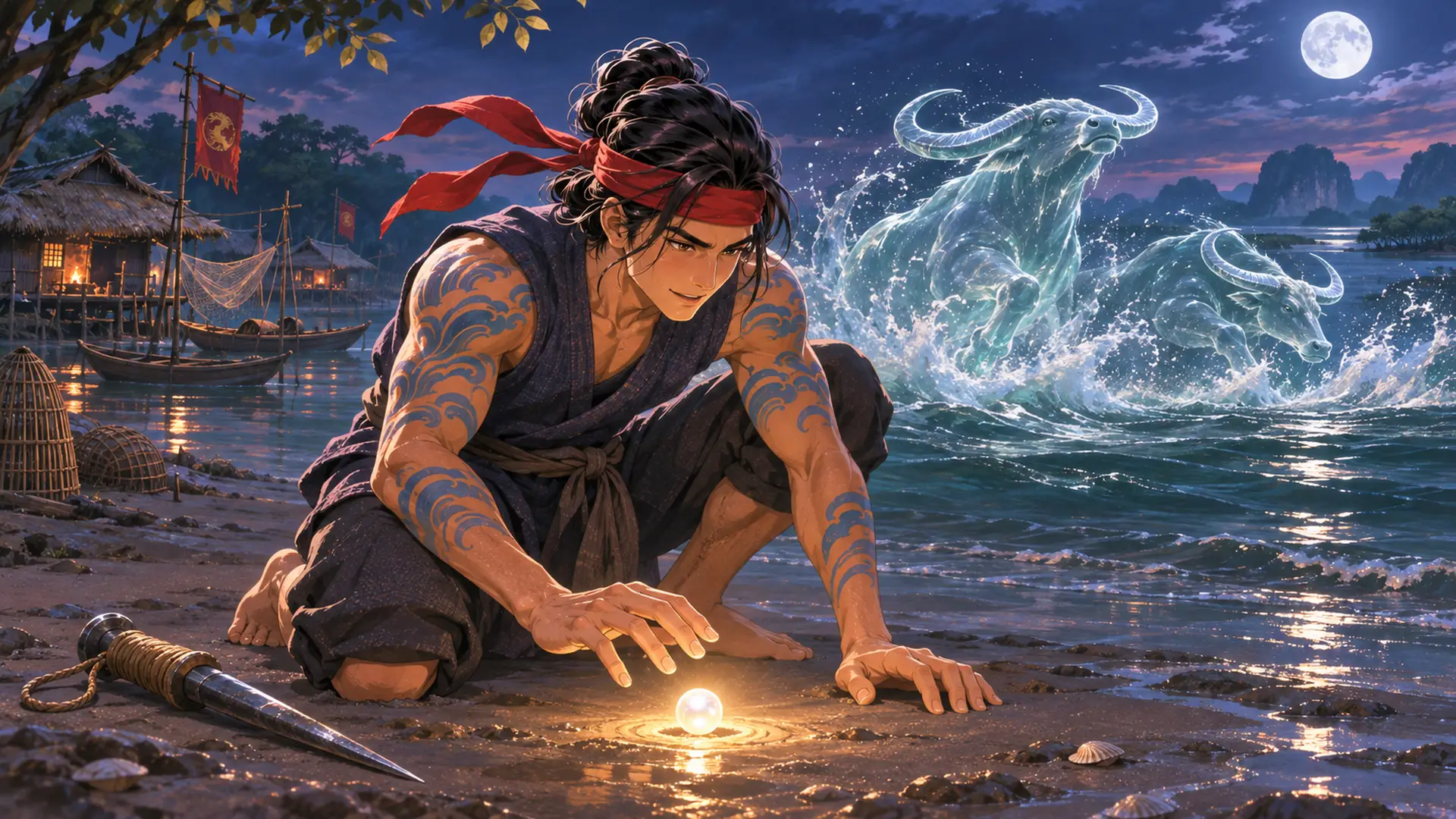
The riverbank at twilight: the two giant buffalo plunging into the river in a huge splash, turning into shimmering spirit shapes, and on the wet sand in the foreground a glowing pale-gold pearl, Yet Kieu kneeling toward it in wonder.

The two buffalo plunged into the river and vanished. On the sand lay a single shining pearl. They had been spirit buffalo.
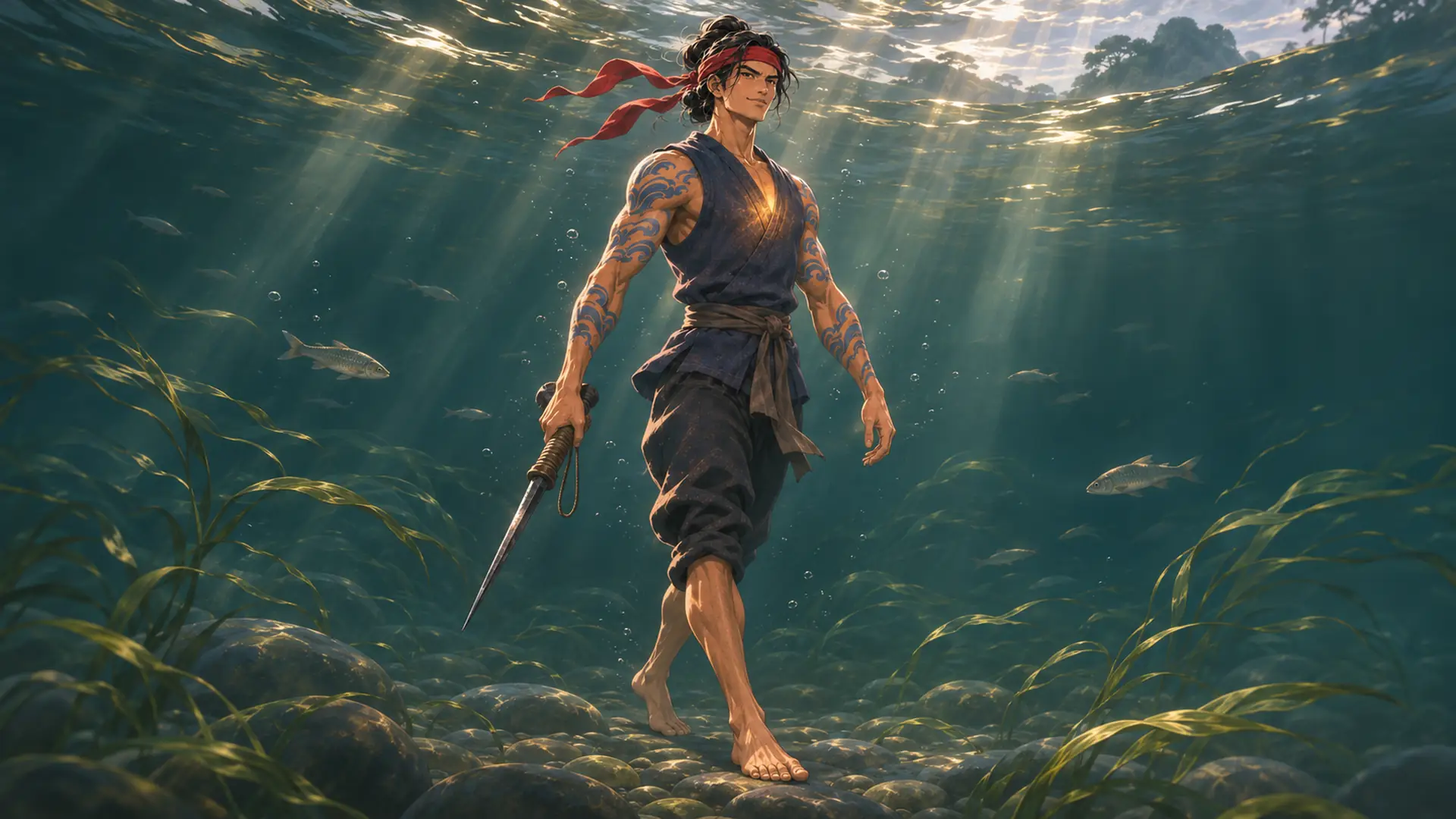
Underwater in a calm river: Yet Kieu walking on the riverbed among waving water weeds and stones as if on land, eyes open, a faint gold glow inside his chest, fish swimming around him, sunlight rippling from above.

One version says he swallowed that pearl. From that day on, water was like air to him. He could stay down on the riverbed for days, walk there as if on land, and see clearly through the muddy water.
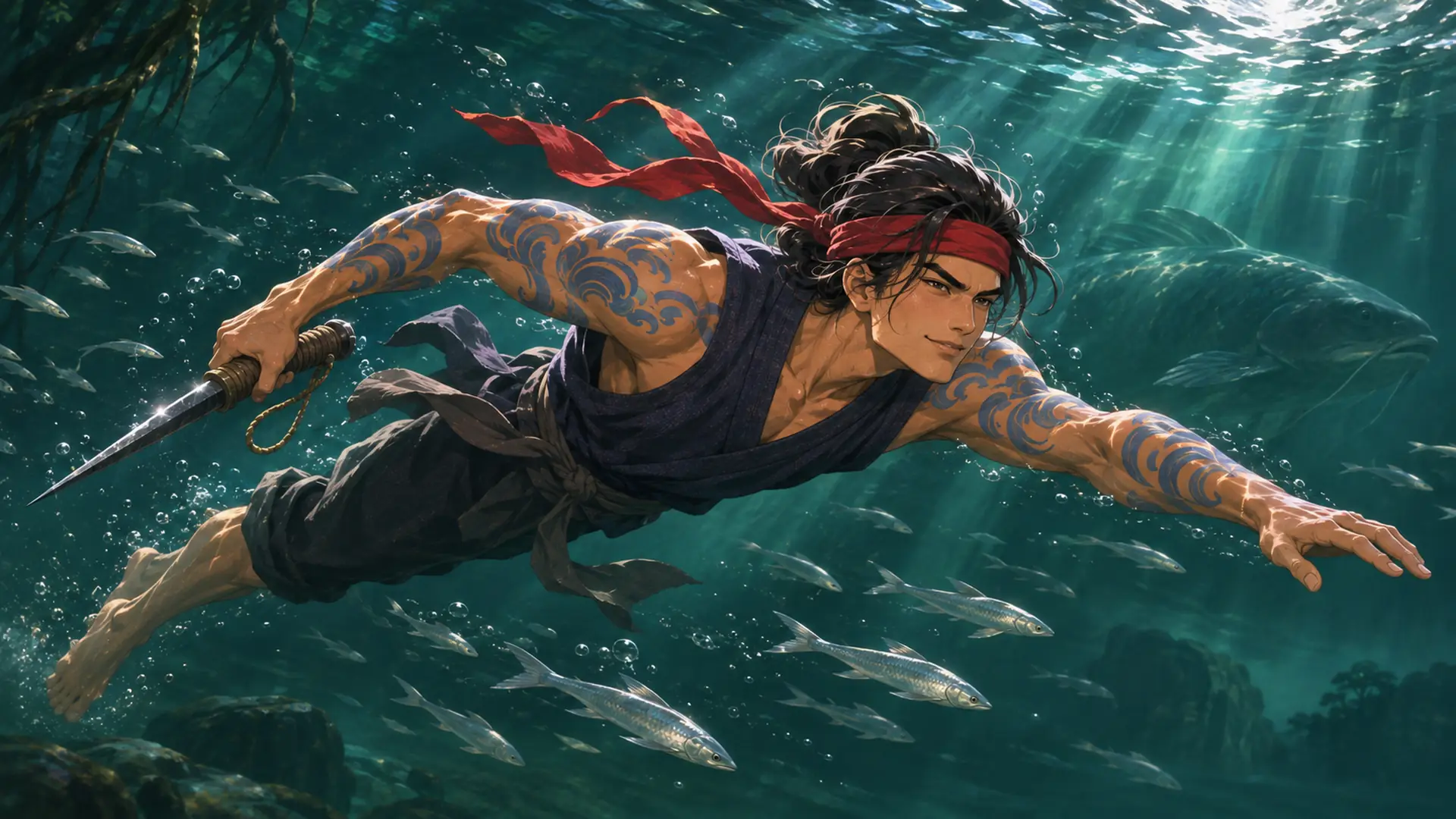
Underwater: Yet Kieu gliding fast and powerfully like a great fish, a school of silver fish parting around him, a huge shadowy sea fish swimming beside him like a spirit companion, teal light rays.

People called him Yet Kieu — after a great fish of the open sea.
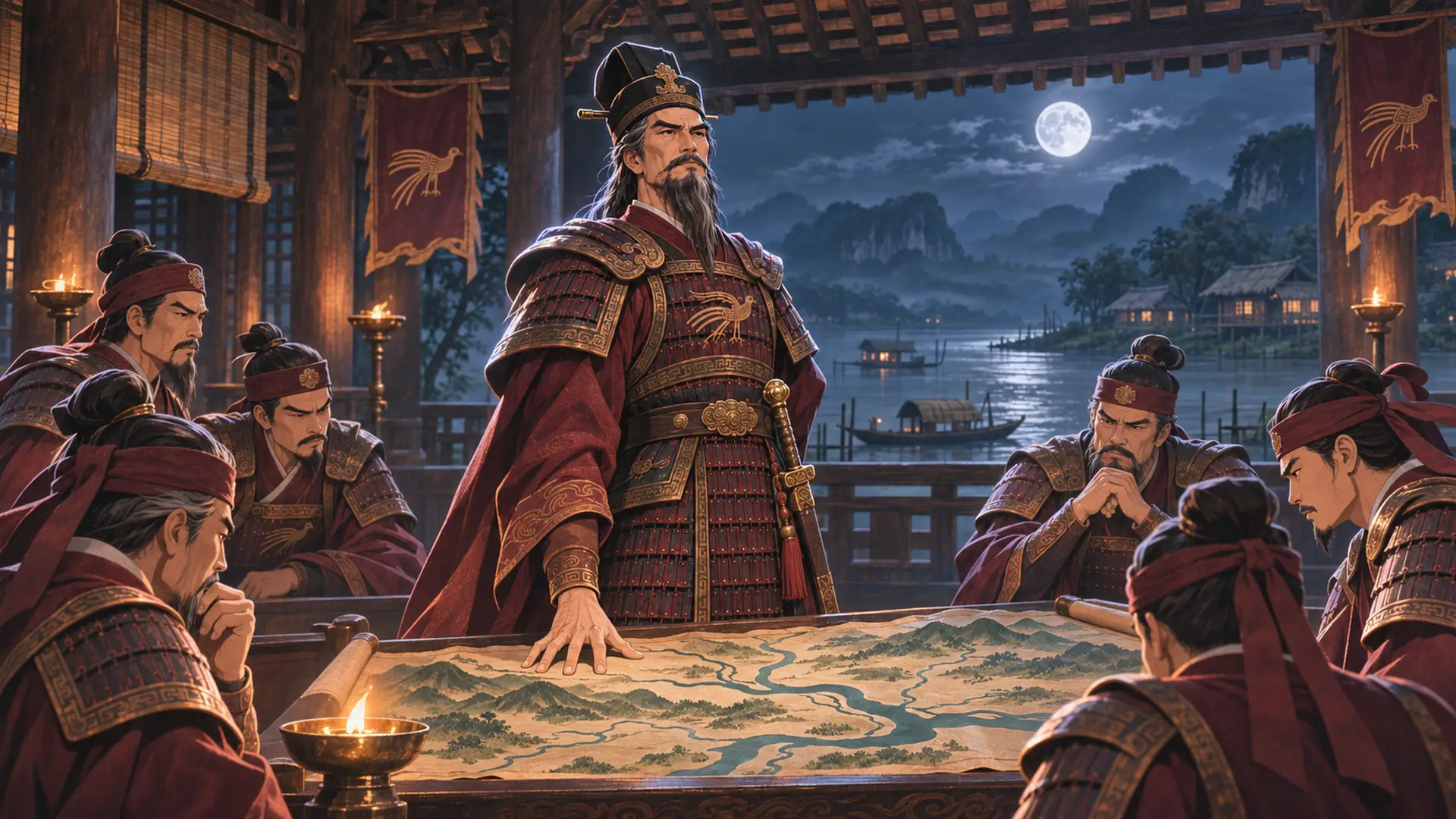
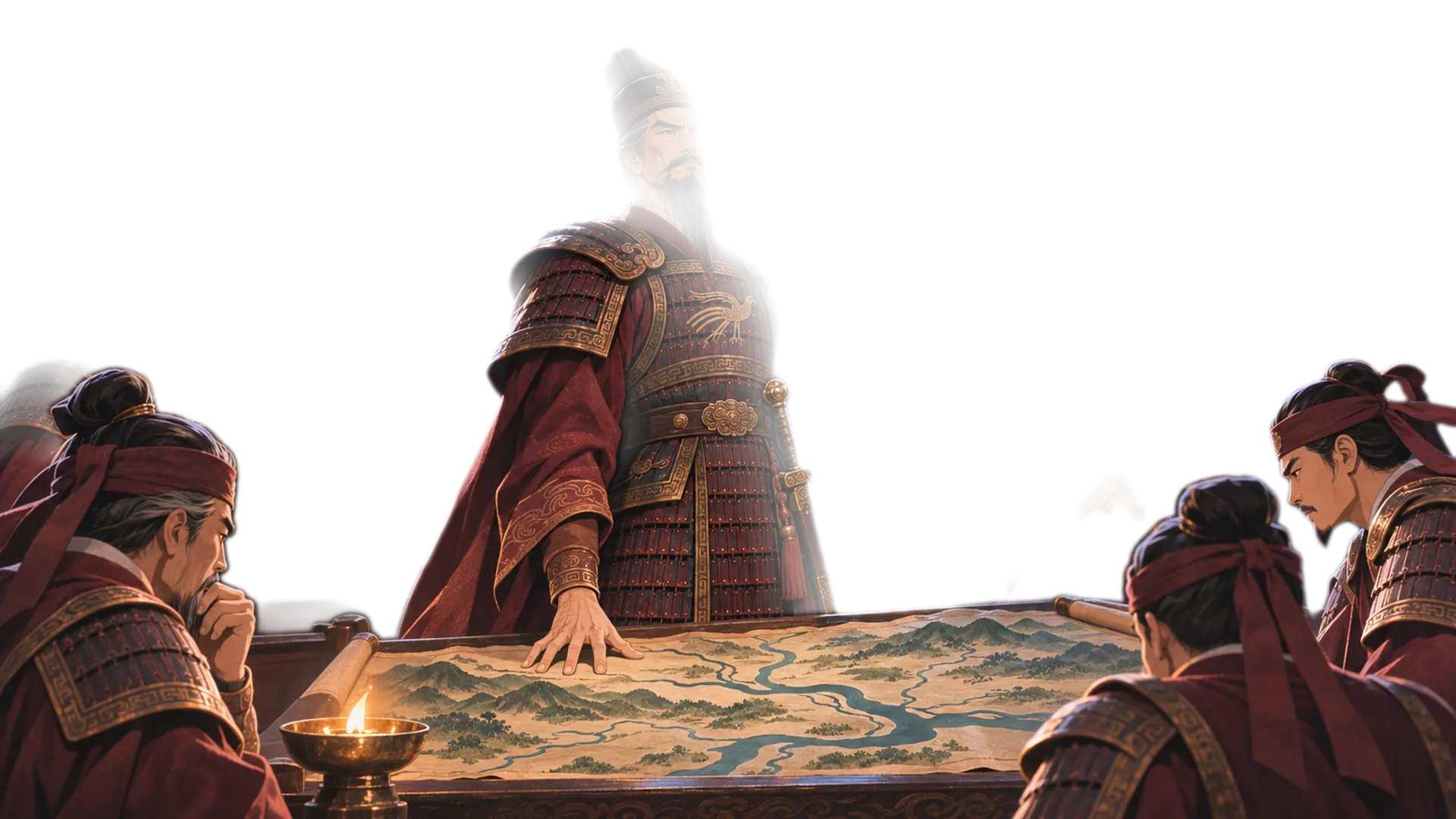
A Tran-dynasty war council in a tile-roofed wooden hall: Tran Hung Dao standing over a map of rivers on a low table, generals in crimson around him, lamplight, grave faces.

Chapter

The Mongols Are Coming

This was the age of the Tran dynasty. Kublai Khan’s Mongol Empire demanded that Dai Viet — Vietnam — submit. The supreme commander, Tran Hung Dao, sent men everywhere in search of talent.
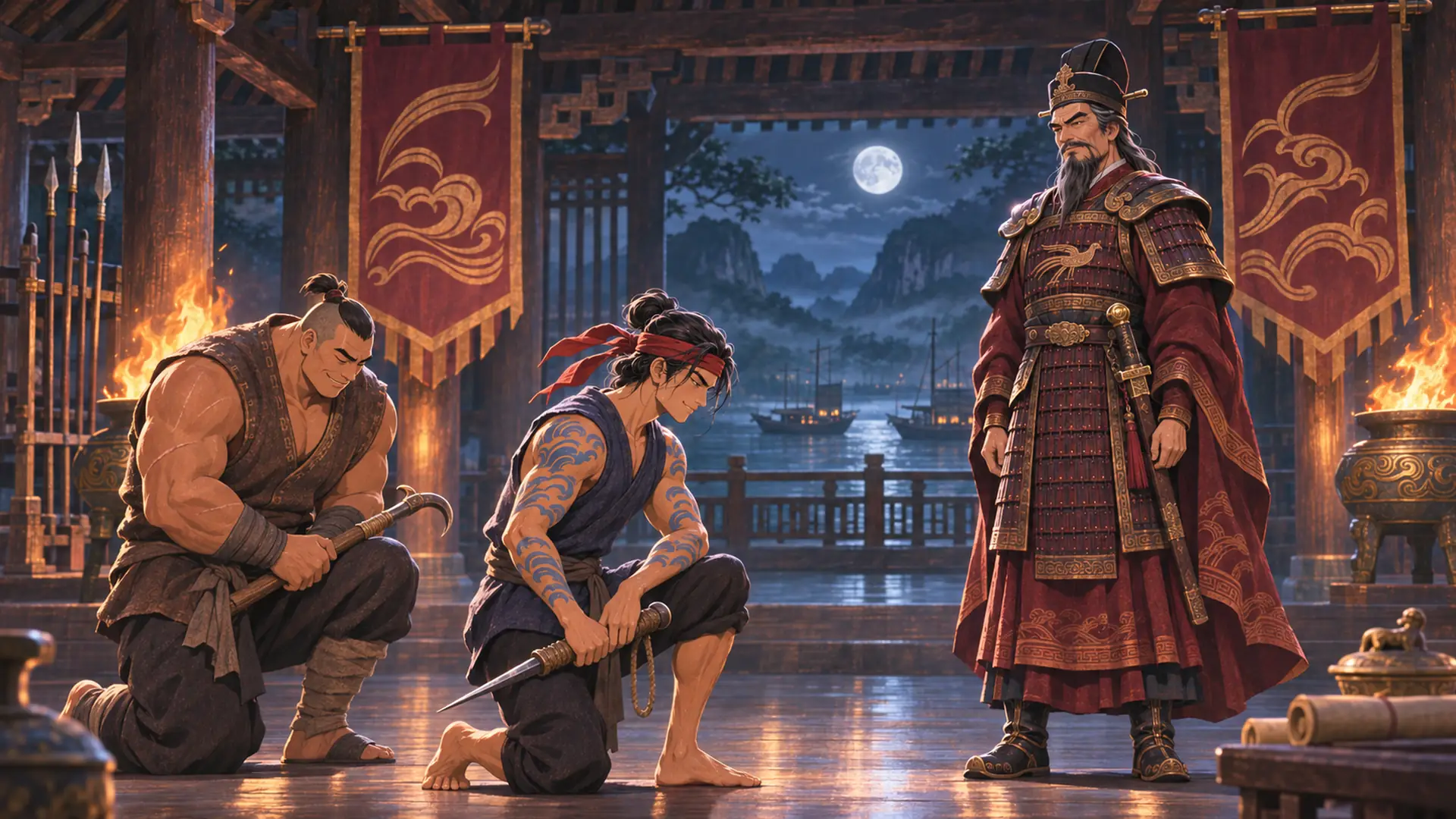
The same hall: Yet Kieu kneeling on one knee before Tran Hung Dao, beside him Da Tuong, both bowing, Hung Dao looking at them with approval, banners behind.

Yet Kieu came to offer his service. With Da Tuong, the finest elephant master in the land, he became Hung Dao’s most trusted retainer.
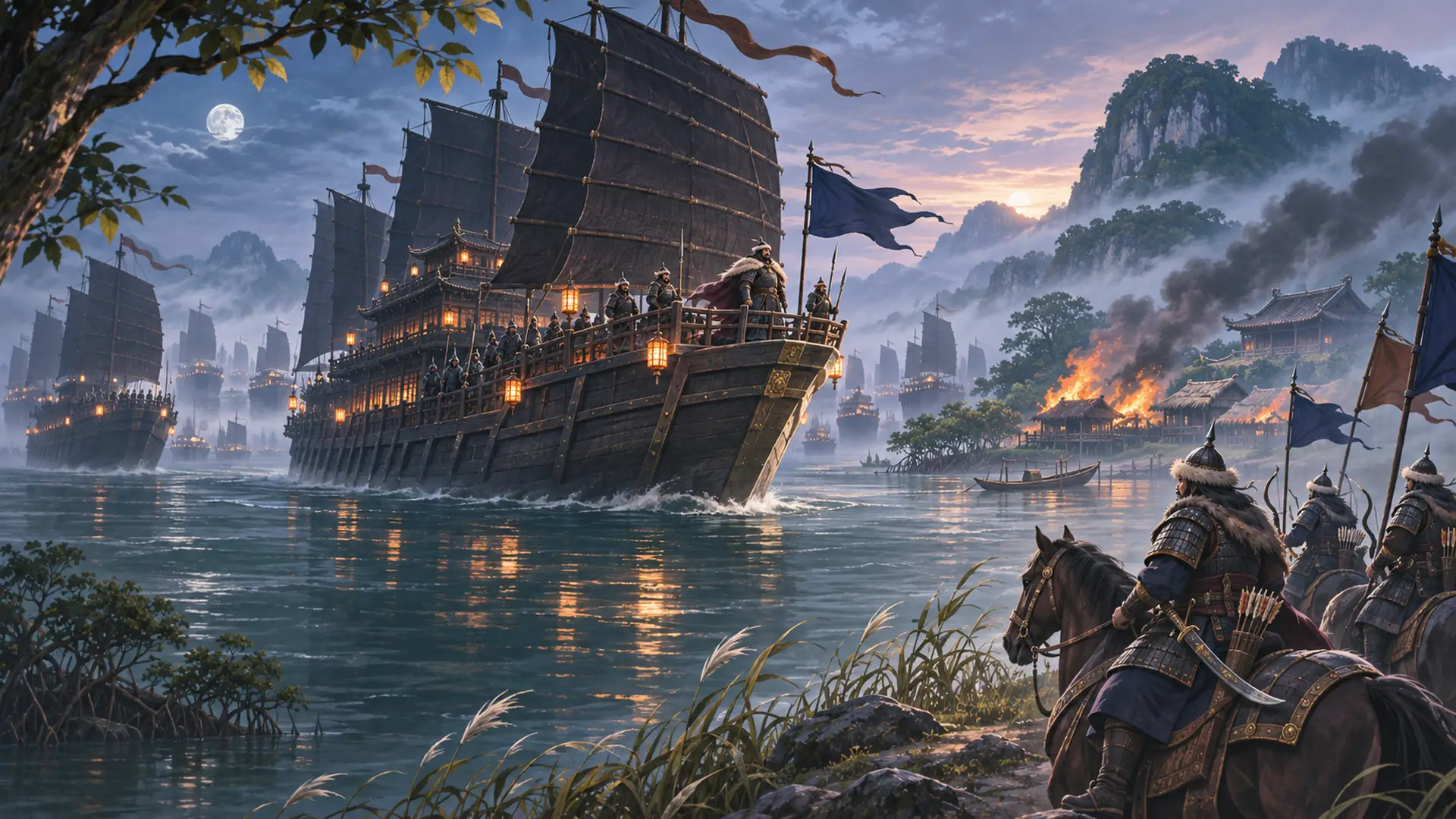
A wide river at dawn: the Yuan war fleet filling the water from bank to bank, sails as far as the eye can see, and on the shore the cavalry of the Mongol Yuan invaders with banners, smoke rising from a burning village.

In 1285, the Mongol Yuan army swept south. Infantry. Cavalry. And fleets of warships, one after another, covering the river from bank to bank.
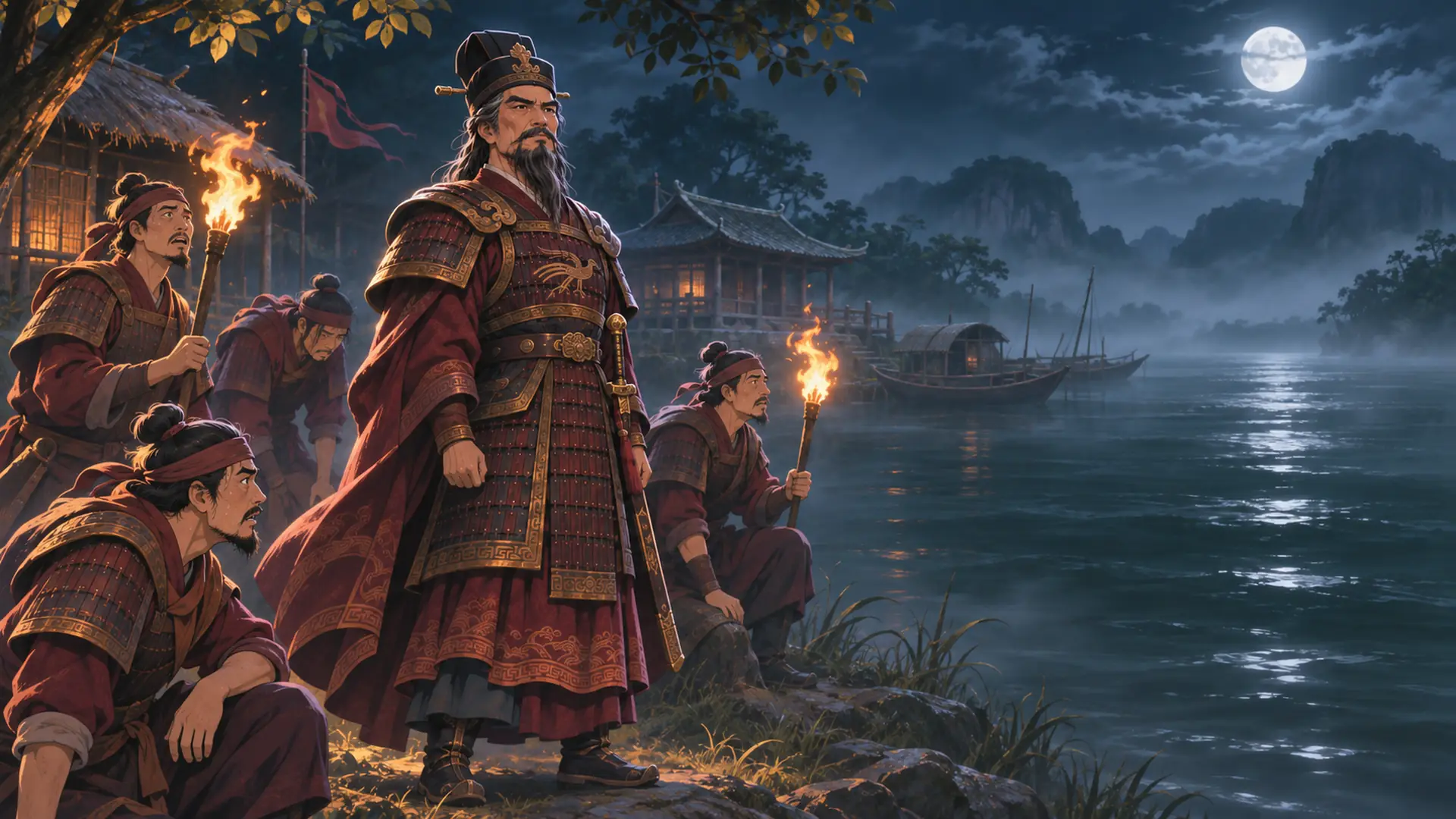
A misty riverbank at night during a retreat: Tran Hung Dao with a small group of exhausted Dai Viet soldiers in crimson, torches, worried faces looking at the empty dark water.

Chapter

Six Wing Feathers

The enemy was too strong. The Vietnamese army had to retreat. In the chaos of the night, many fled, and only a handful followed Hung Dao to the river. The navy was gone. Hung Dao thought of escaping through the mountains. But Da Tuong shook his head.

Until Yet Kieu sees you, my lord, he will never leave the boat.
Da Tuong
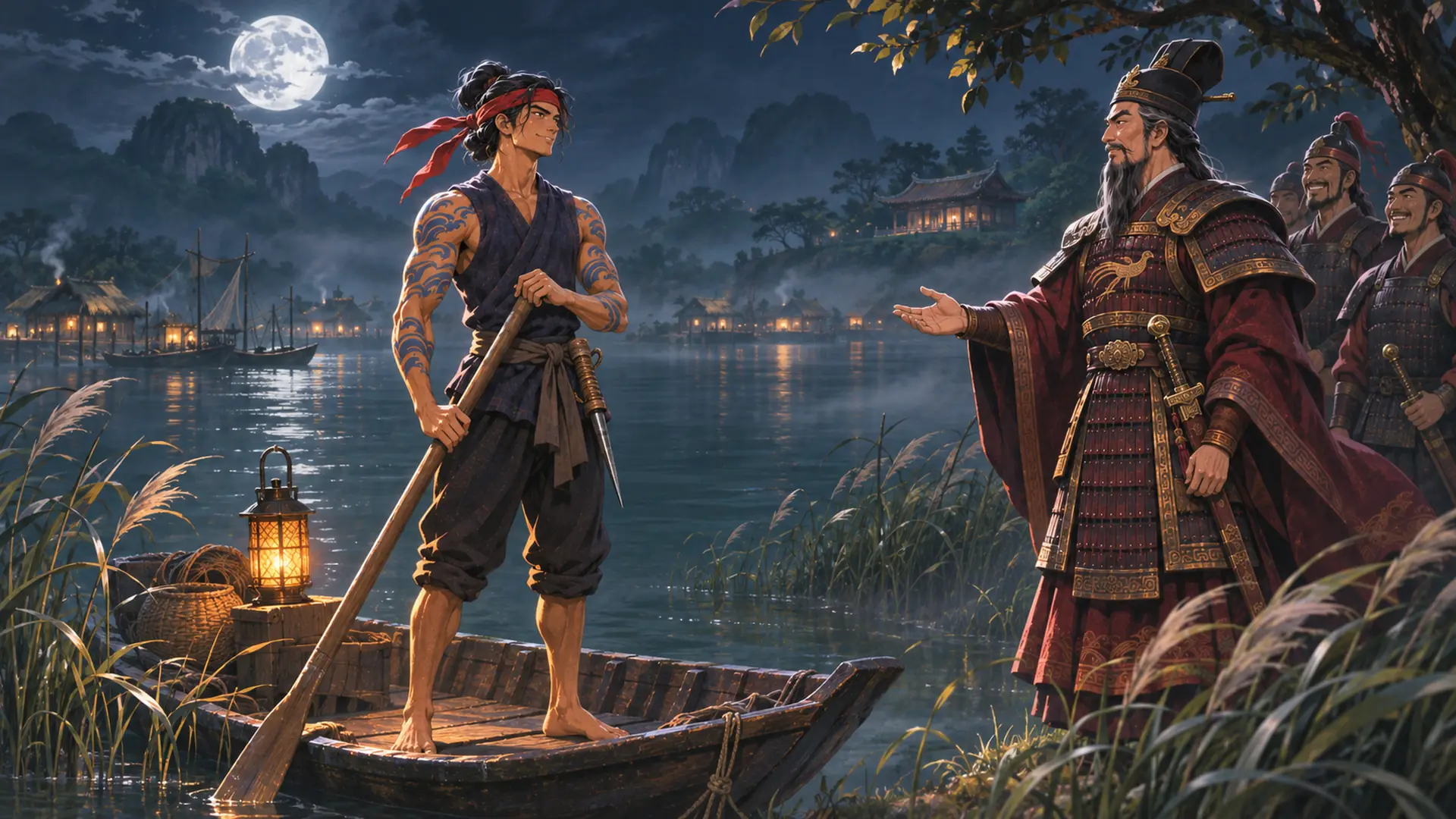
A misty river at night: Yet Kieu standing alone on a small wooden boat at the reeds, holding an oar, waiting loyally, a single lantern glowing, Tran Hung Dao and soldiers arriving on the bank with relief.

And there, in the night mist, Yet Kieu was still standing by the boat. Waiting. He had not moved a single step.

The old chronicles record this very moment. And later, people compared Yet Kieu and Da Tuong to the wing feathers of a great swan: a bird can only fly high because of them.
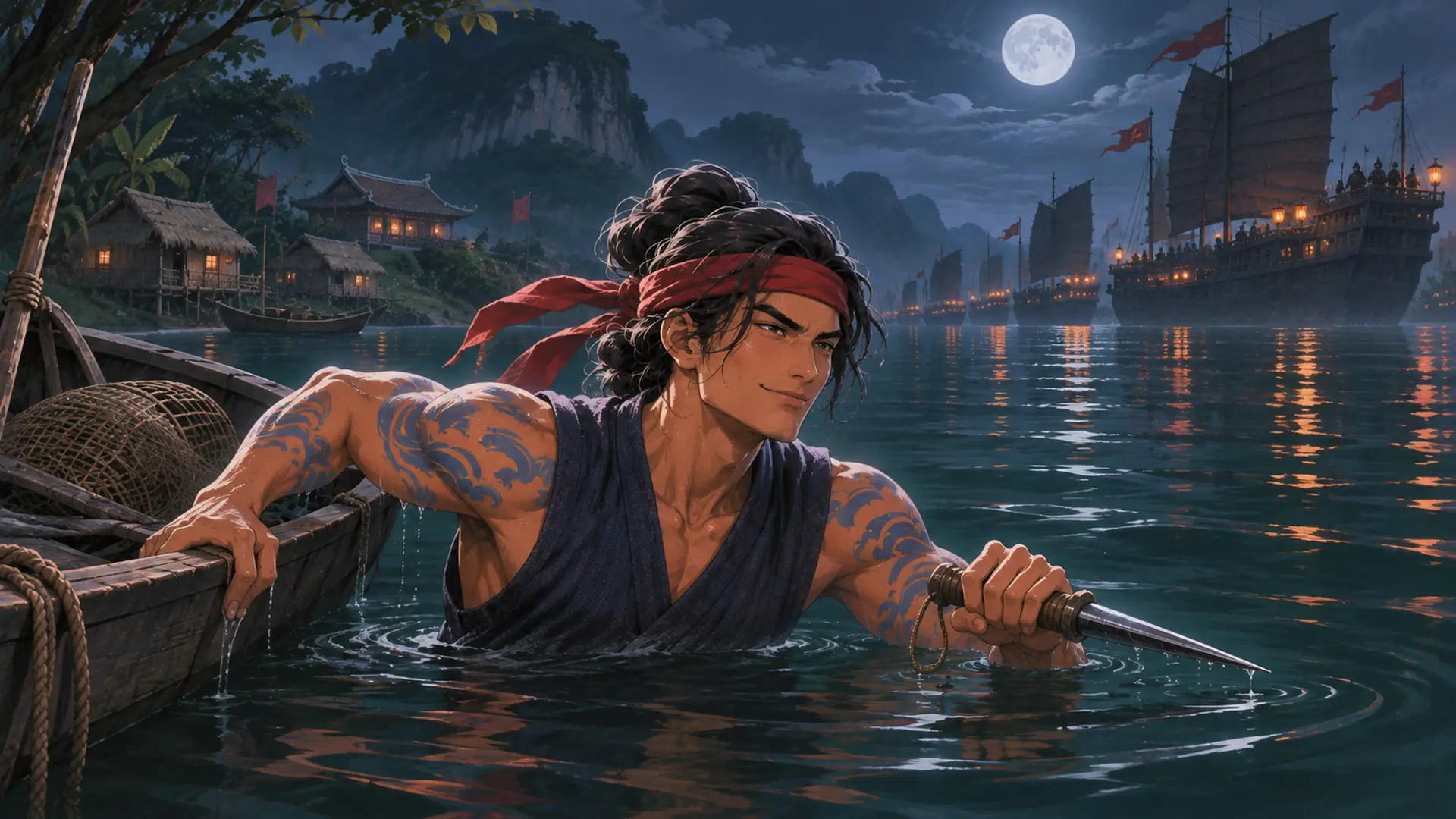
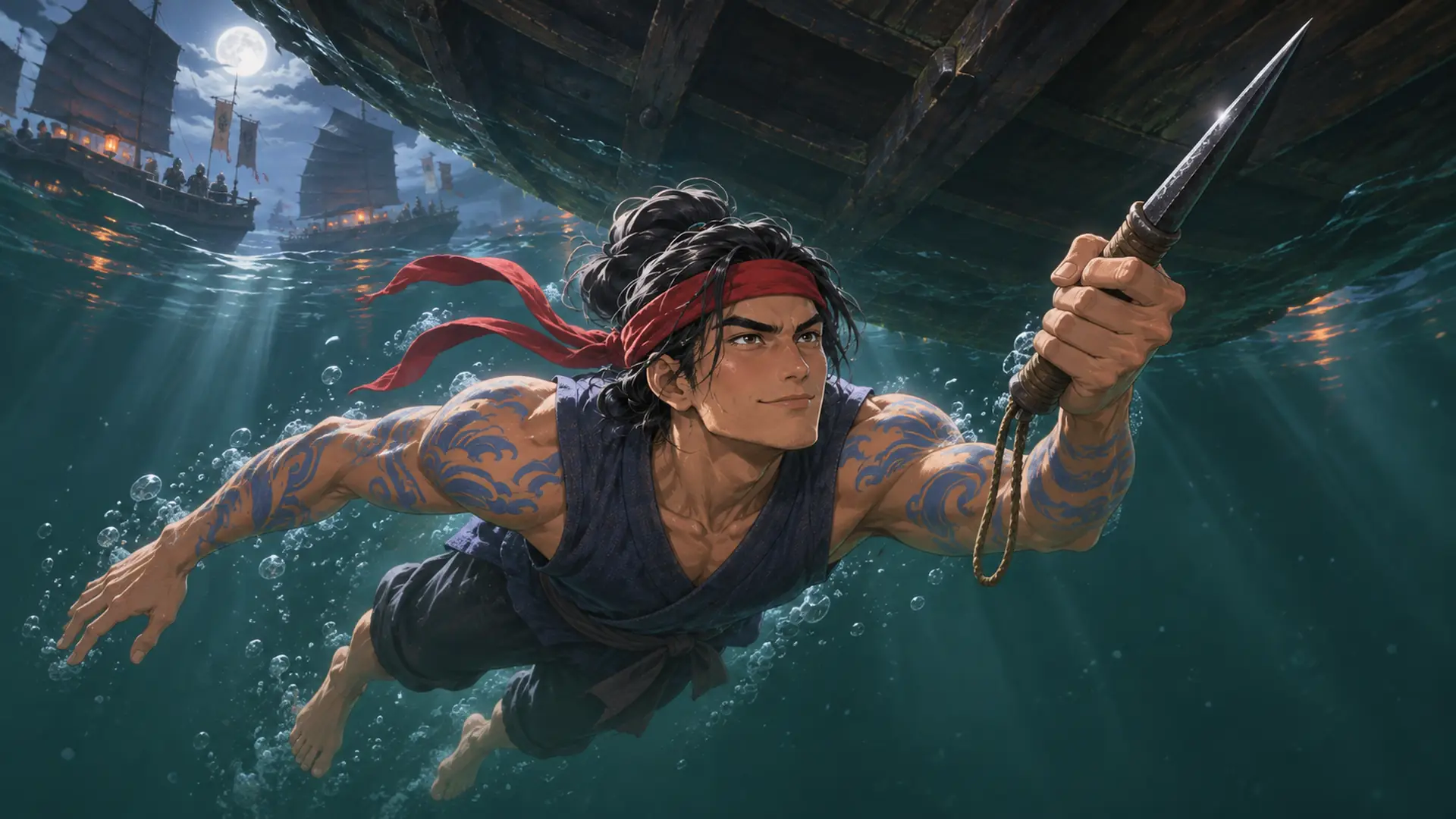
Night on the river: Yet Kieu slipping silently into the black water beside his small boat, iron awl in hand, the lanterns of the huge Yuan war fleet glowing in the distance.

Chapter

Under the Fleet

Then Vietnam struck back. Night after night, Yet Kieu slipped silently into the river, an iron awl in his hand.
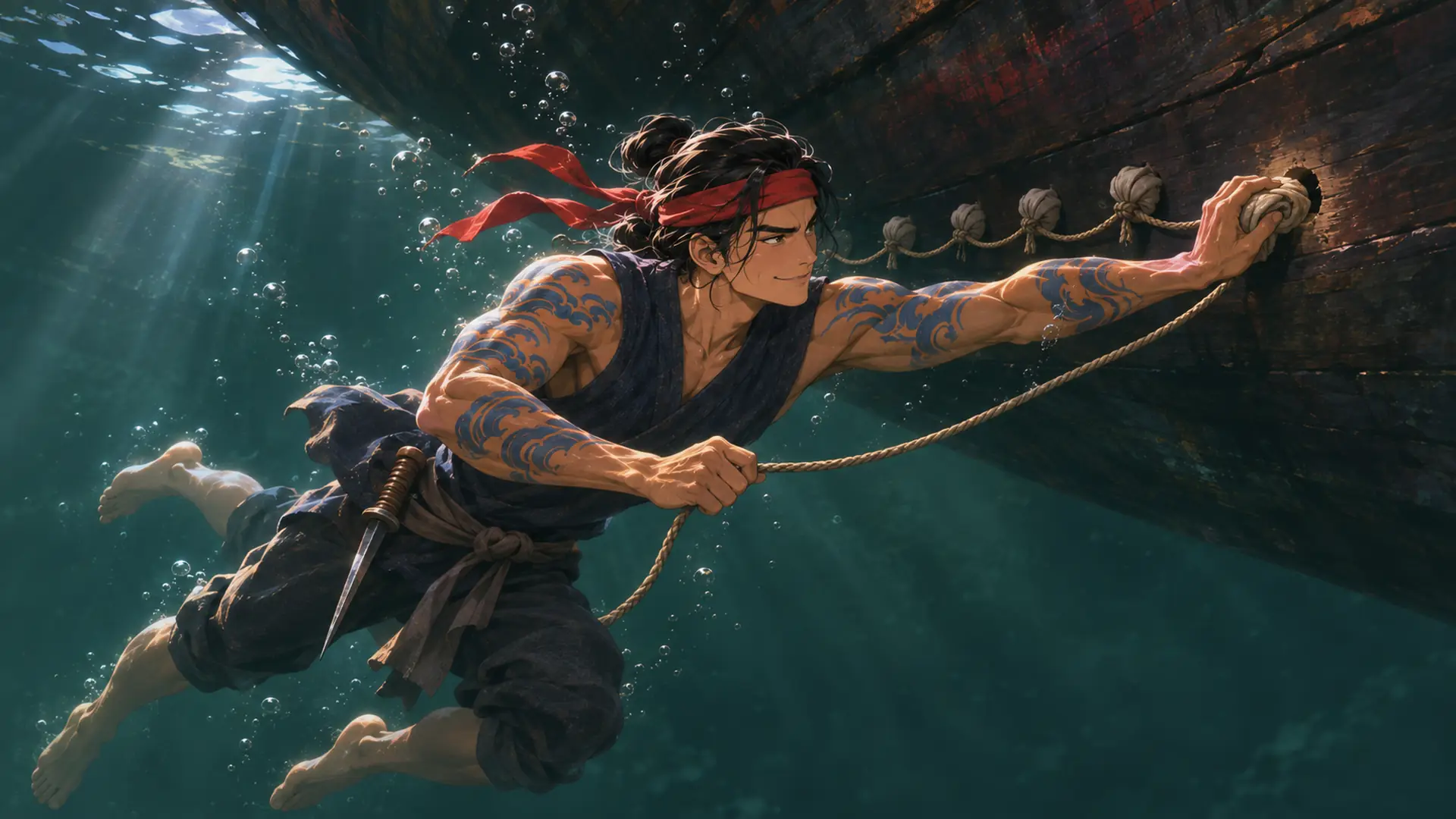
Underwater beneath a huge dark war-junk hull: Yet Kieu pushing a rolled cloth plug into a freshly bored hole, a row of other plugs along the planks all tied to one long rope he holds, his iron awl at his belt, bubbles, moonlight from above.

He swam beneath the enemy’s warships and bored more than twenty holes in each hull. Into every hole he pushed a cloth plug — all tied to a single rope. Then on to the next ship. And the next.
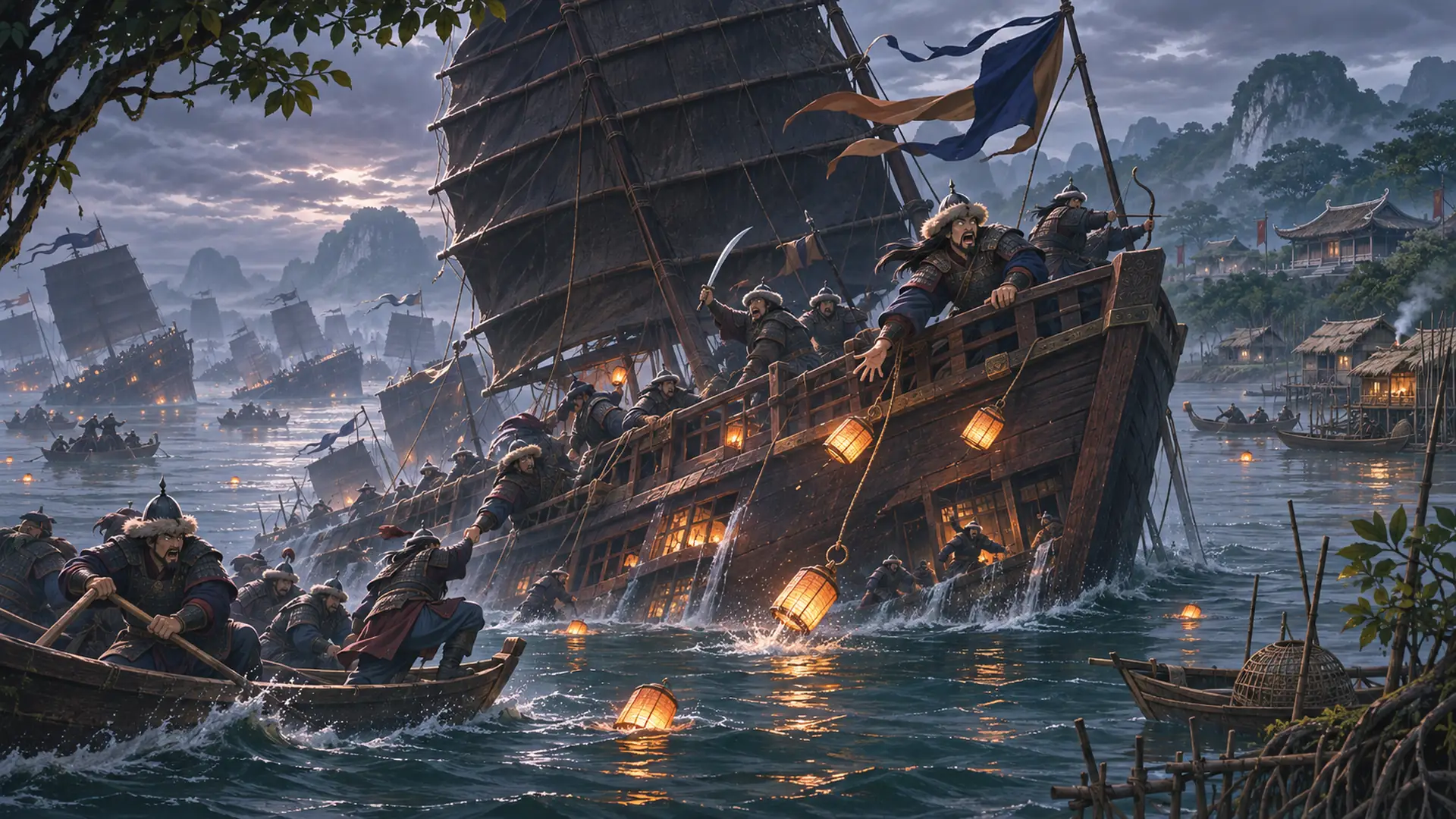
The river at grey dawn: dozens of huge war junks of the Yuan war fleet tilting and sinking at once, lanterns falling, soldiers of the Mongol Yuan invaders panicking on deck and jumping into boats, no enemy in sight, dramatic but not gory.

Near dawn, he pulled the rope hard. Every plug came out at once. It’s said that in a single night, dozens of enemy warships went down to the bottom of the river. And no one ever saw the enemy.
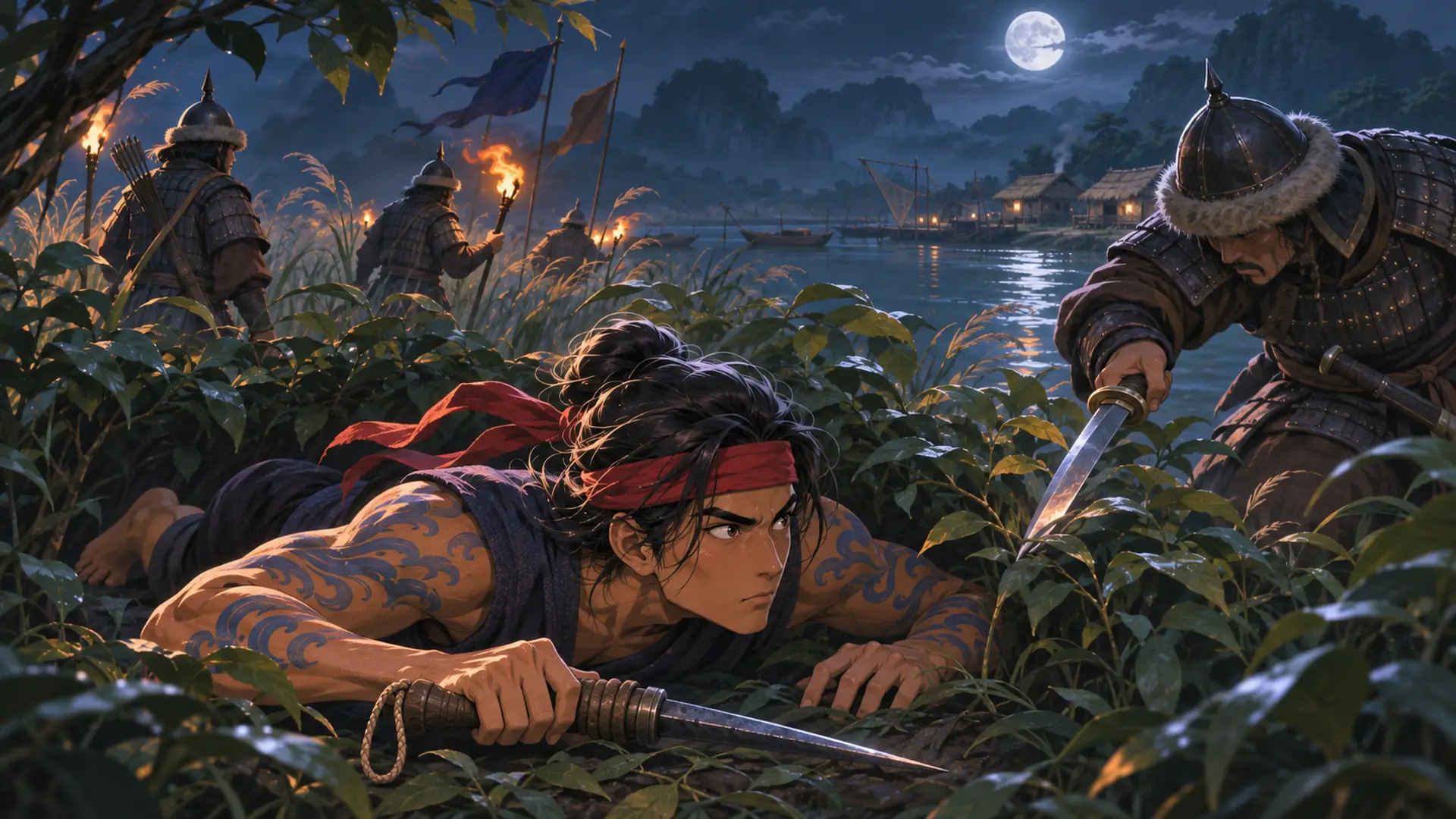
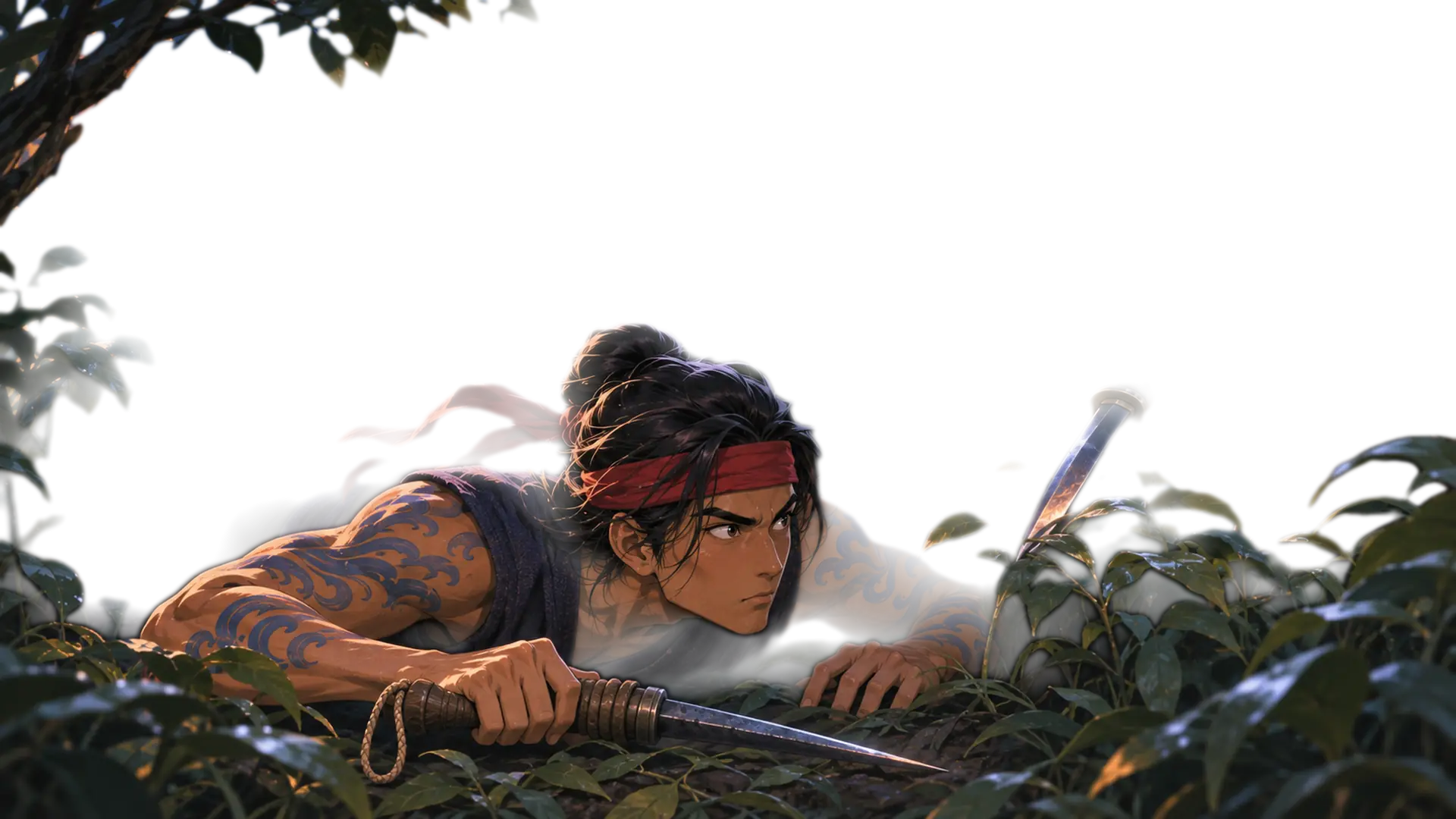
A riverbank at night with dense low bushes: Yet Kieu hiding flat inside a thick bush, holding his breath, wide alert eyes, while soldiers of the Mongol Yuan invaders with torches search the reeds just beyond, one sword thrust into the leaves near him, tense, no blood.

Chapter

Not a Sound

Once, enemy soldiers spotted him on the riverbank. They searched everywhere. Yet Kieu lay perfectly still inside a thick bush, barely breathing.

A soldier thrust his sword into the bush. The blade went straight through Yet Kieu’s thigh. He clenched his teeth — and didn’t make a sound.
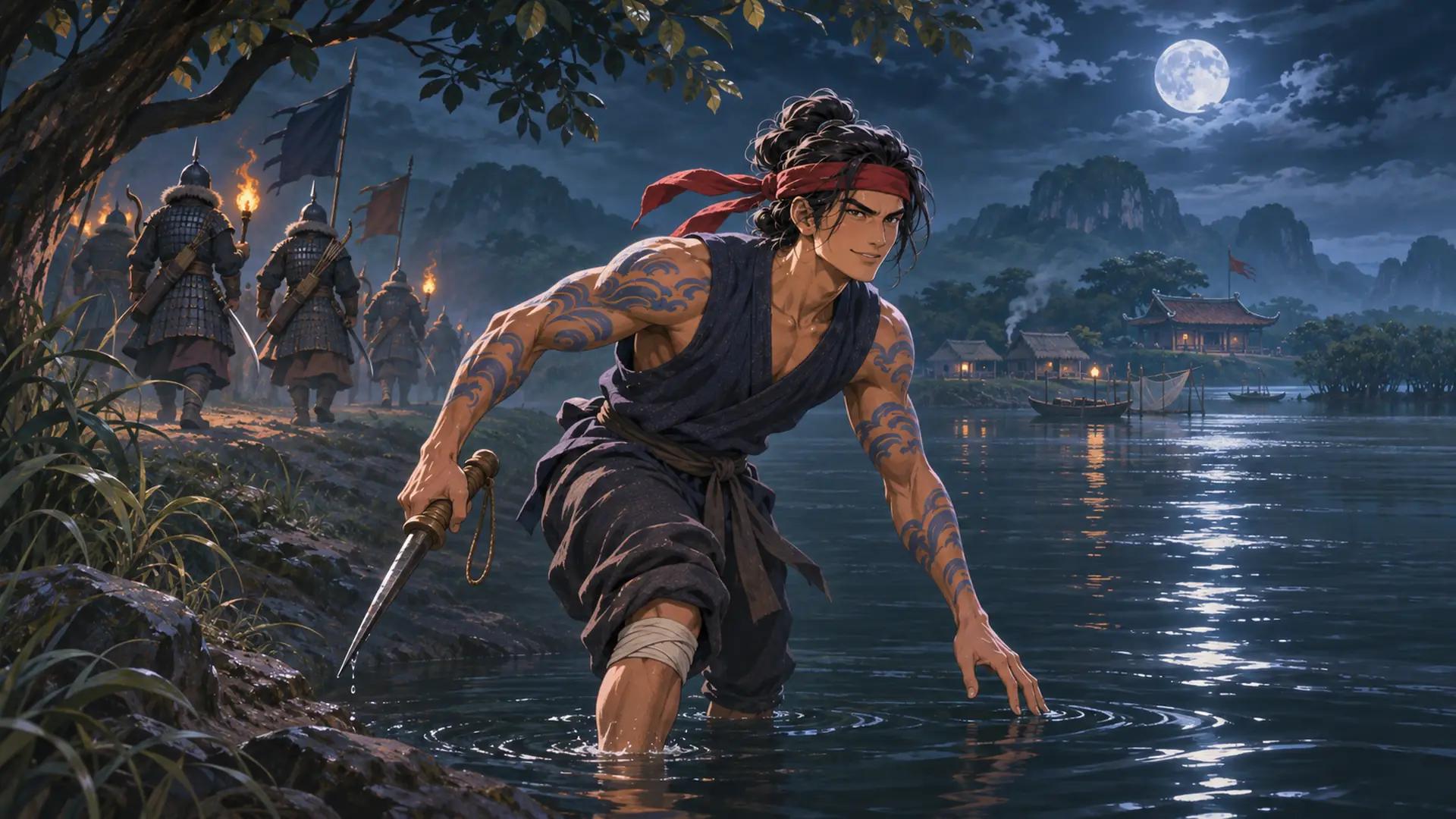
Night on the riverbank: soldiers of the Mongol Yuan invaders walking away with their torches, and in the dark foreground Yet Kieu, wounded leg bound with a cloth strip, quietly slipping into the black river, moonlight on the water.

As the sword slid back out, he wiped the blood off the blade with his hand, so the soldier would notice nothing. They walked away. And that same night, Yet Kieu was back in the river.
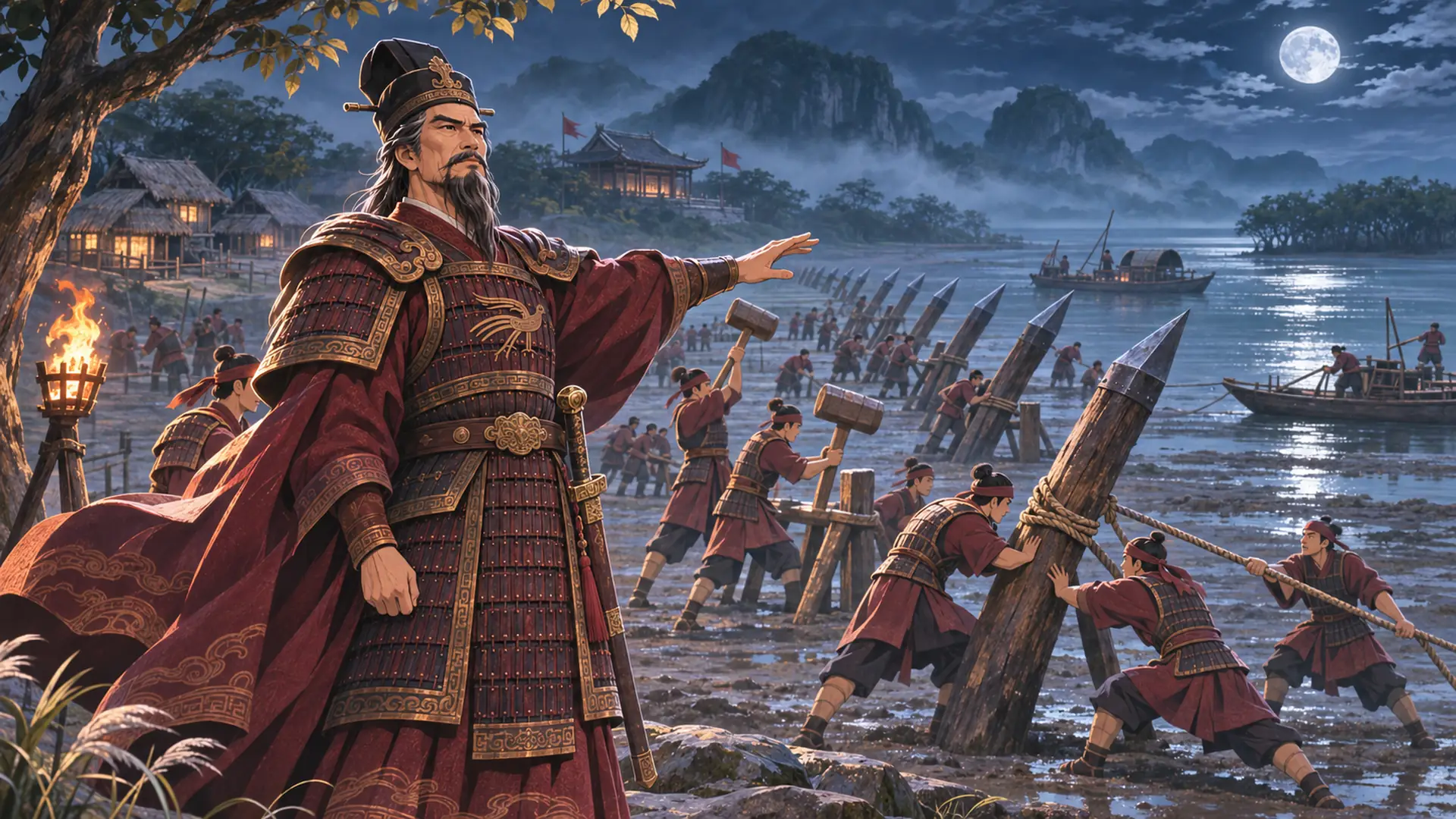
The Bach Dang river at low tide: Dai Viet soldiers in crimson driving rows of huge sharpened iron-tipped wooden stakes into the riverbed, Tran Hung Dao directing them from the bank, mangroves and limestone hills.

Chapter

Bach Dang, 1288

In 1288, the Mongols came back. This time, Hung Dao set a trap on the Bach Dang River: thousands of sharpened wooden stakes, tipped with iron, hidden beneath the water.
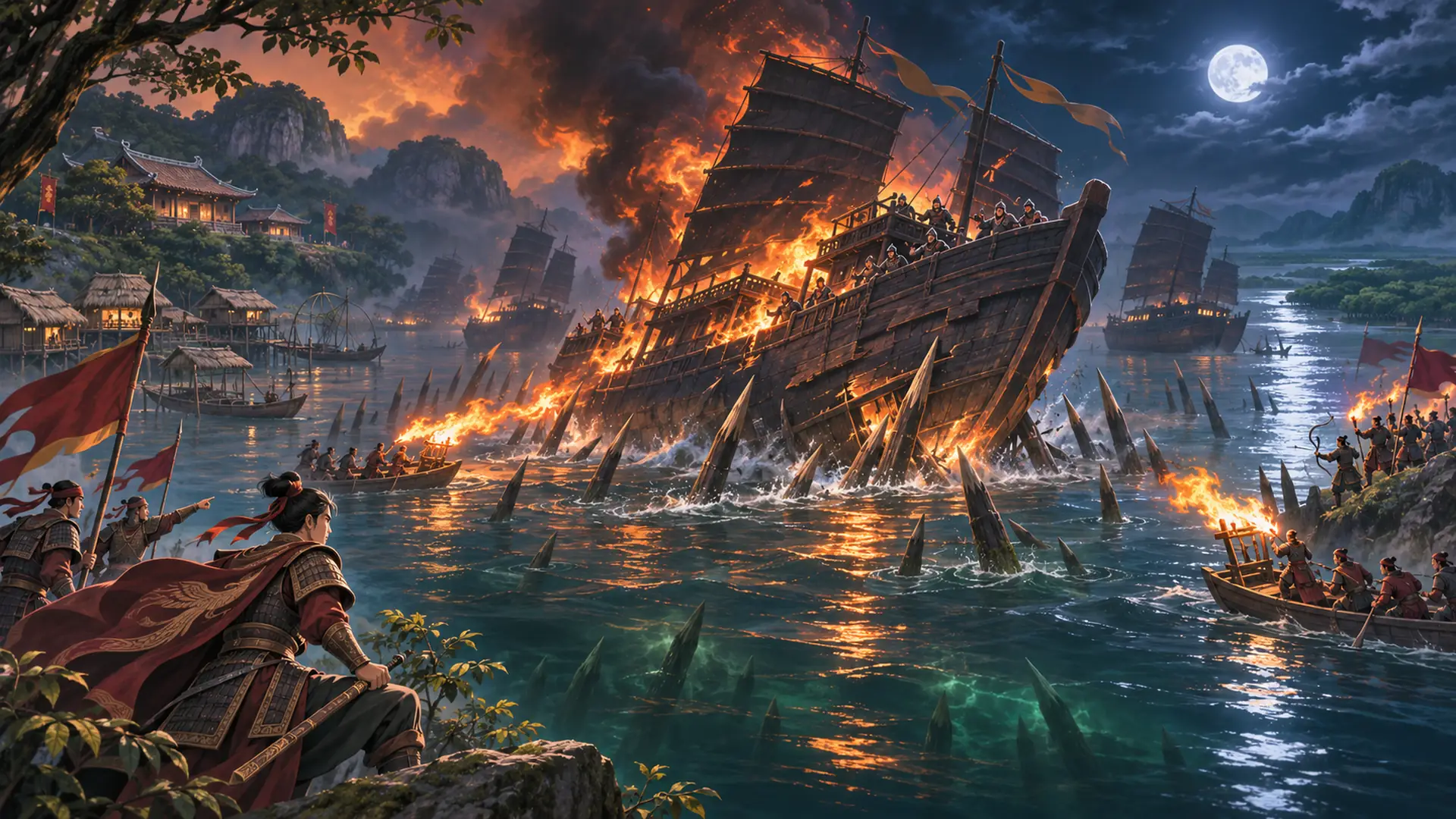
The Bach Dang river at falling tide: the Yuan war fleet caught and broken on a forest of wooden stakes rising from the water, ships tilting and burning, Dai Viet fire boats and soldiers attacking from both banks, epic wide view, smoke and fire orange sky.

The tide went out. The entire enemy fleet was caught on a forest of stakes — tilting, breaking apart. And the Vietnamese army poured out from both banks.
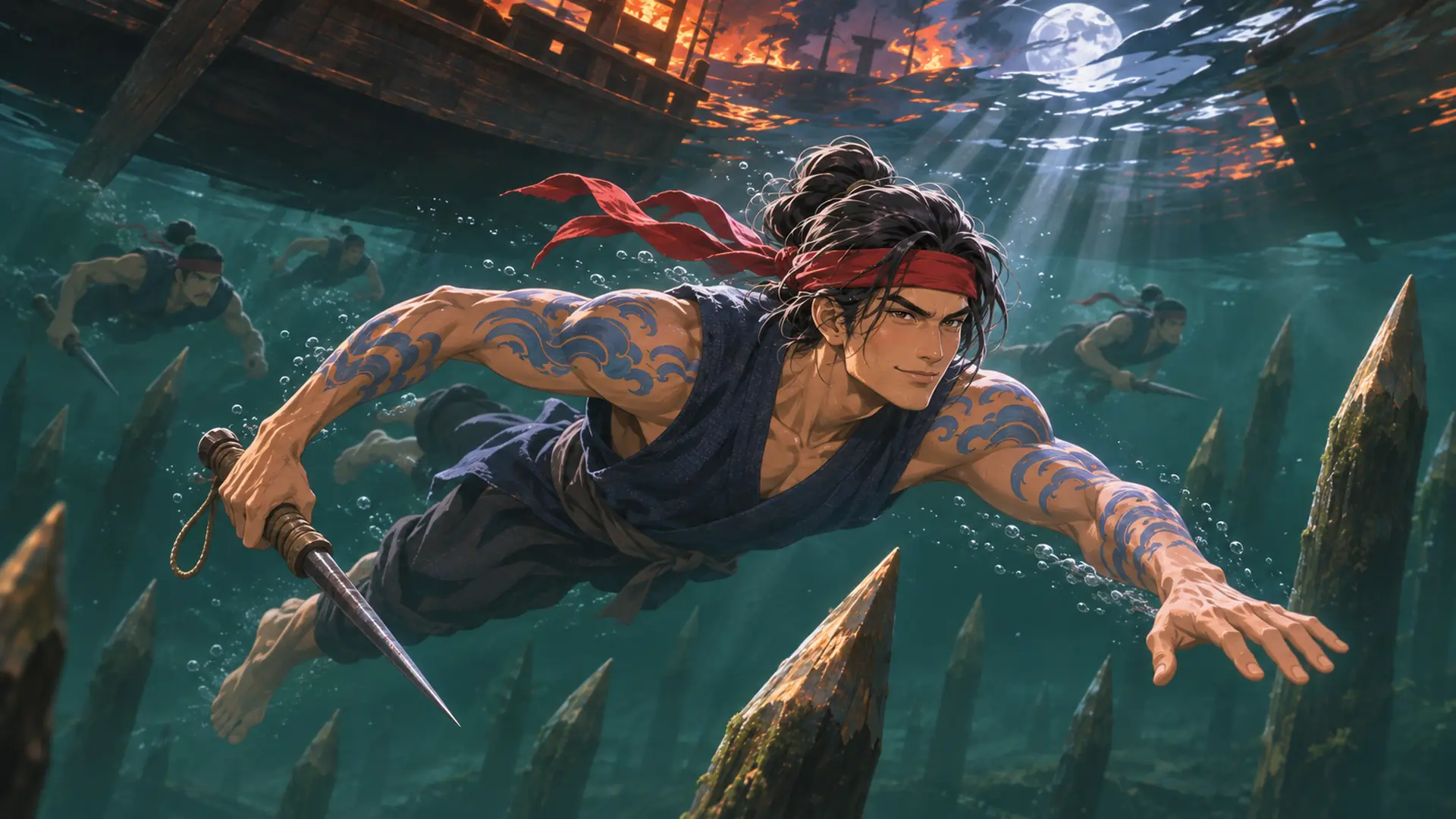
Underwater among the stakes of the Bach Dang river: Yet Kieu and a team of Dai Viet divers with awls swimming between the hulls of stranded war junks, fire glowing orange through the surface above, heroic.

Legend says that in the middle of that battle, Yet Kieu and his divers were still under the water, sinking ships to the very last one. The Mongol fleet was destroyed. And the Mongols never invaded Vietnam again.
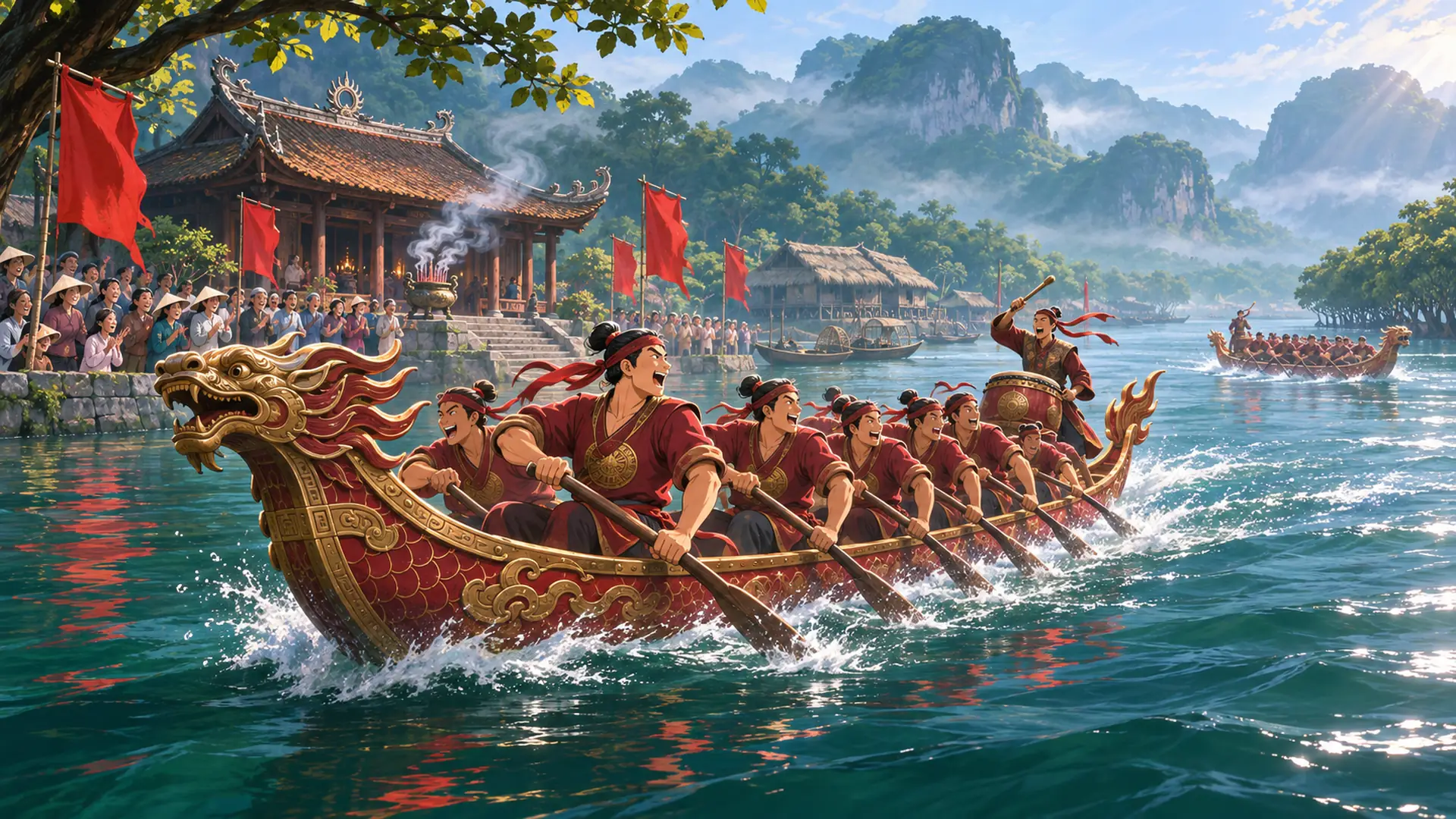
Present-day Vietnam: an old riverside temple in a northern village during its festival, long dragon racing boats with rowers on the river in front, red banners, incense smoke, crowds on the bank, bright morning light.

Chapter

The Legacy

Today, in his home village — now part of the city of Hai Phong — the Quat Temple has honoured Yet Kieu for more than seven hundred years. Every year its festival holds boat races on the river. And his home commune now carries his name: Yet Kieu.

History remembers the victory. Legend remembers the man: a poor fisherman, a spirit buffalo’s pearl, and a promise — to wait by the boat, to the very end.