Skip to story
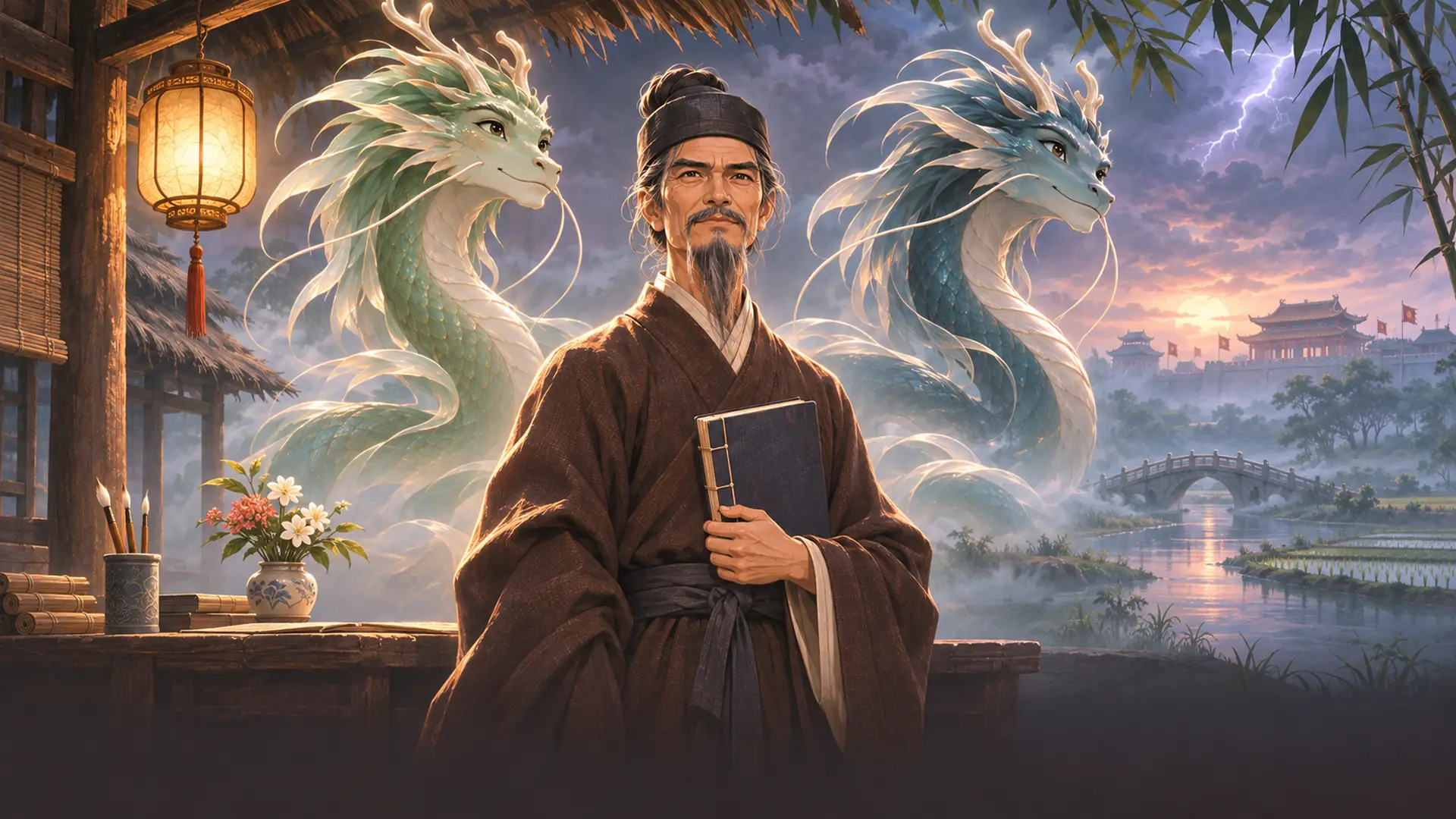
Chu Van An under a warm lantern holding a book, flowers on the desk beside him, and behind him the glowing shapes of two jade-green river dragons.

Vietnamese Legend · 3 min read

Chu Van An and the Dragon Students

Chu Văn An và sự tích Đầm Mực

Vietnam's most revered teacher had two quiet students who walked on the river at dawn. When drought came, they made rain from the ink in his inkstone — against Heaven's law — and the Thunder God came for them. A legend for Vietnamese Teachers' Day, and the story of the Ink Pond.

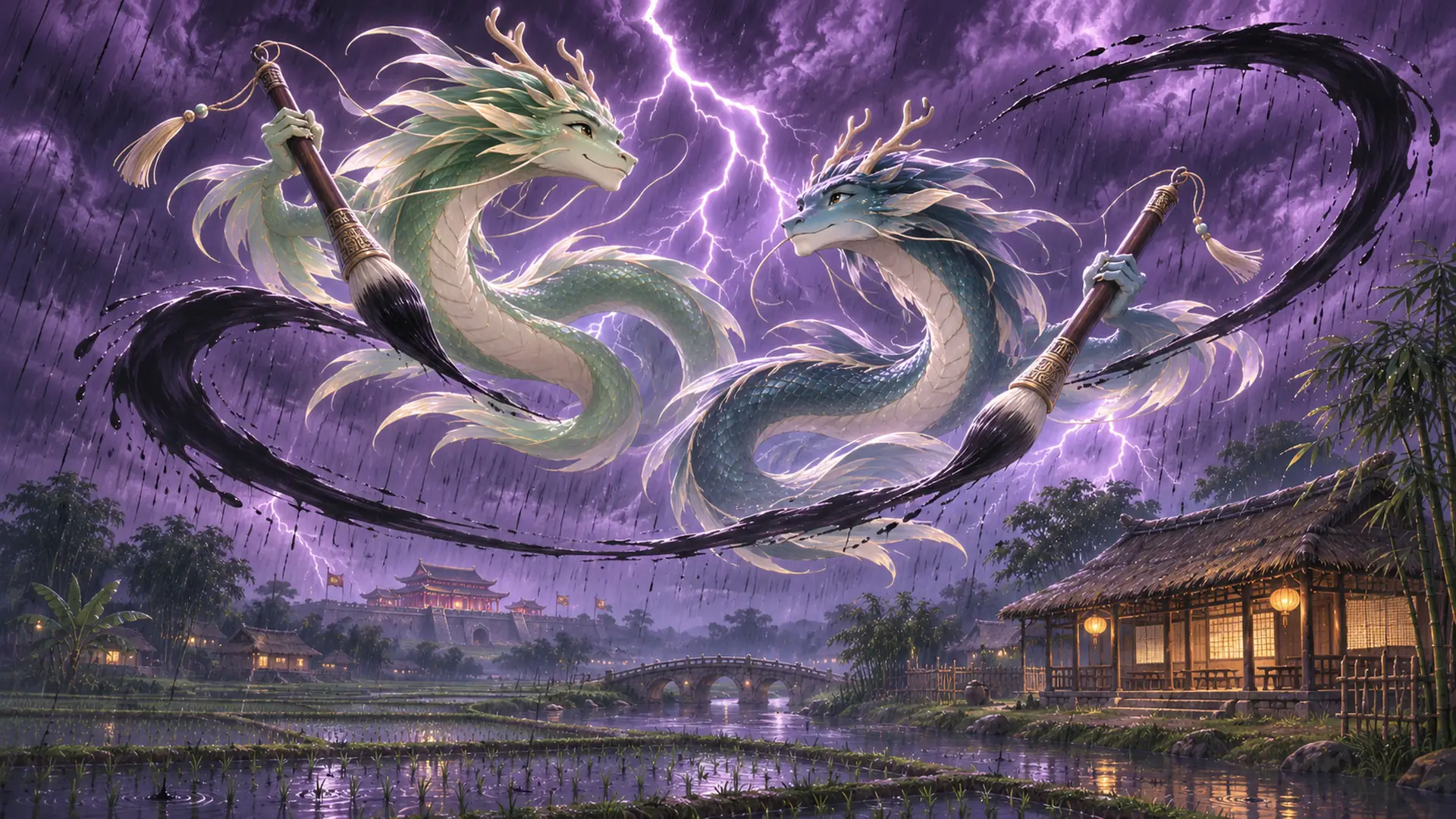
A night storm over Vietnamese rice fields: rain falling black like ink from violet storm clouds, and high in the clouds two long jade-green the two river dragons coiling, each flinging a long arc of black ink from a giant writing brush, lightning behind them, close and dramatic.

Chapter

The Ink Pond

In Vietnam, there is a pond whose water is as black as ink.

Legend says it was made by two river dragons. Two students, who died keeping a promise to their teacher.
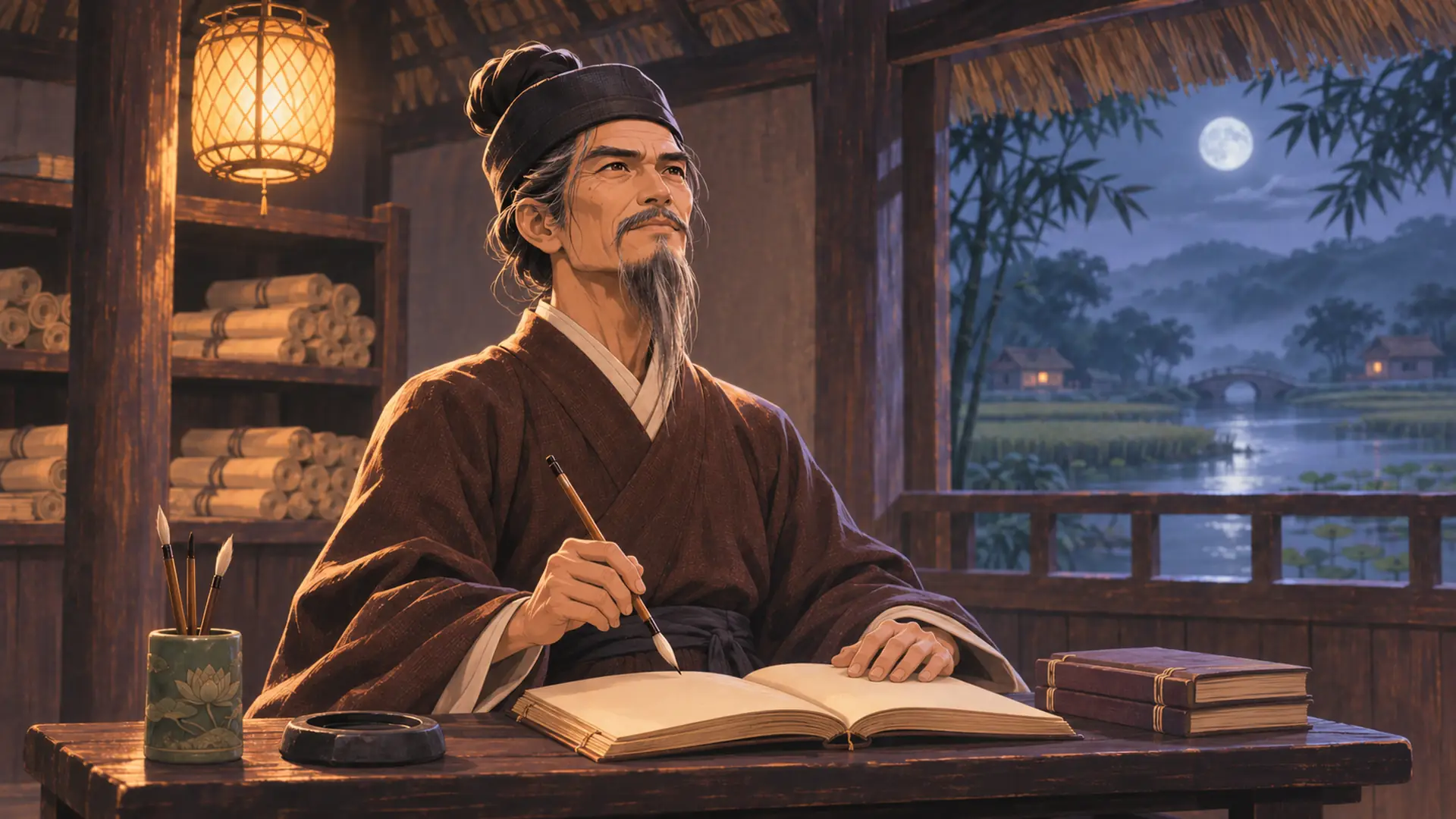
A lantern-lit village classroom at night: Chu Van An sitting at a low desk with an open book and a brush, looking up thoughtfully, warm lantern light on his face, shelves of scrolls behind, calm and dignified.

Their teacher was Chu Van An — the most revered teacher in Vietnamese history. And for Vietnamese Teachers’ Day, the twentieth of November, this is his story.
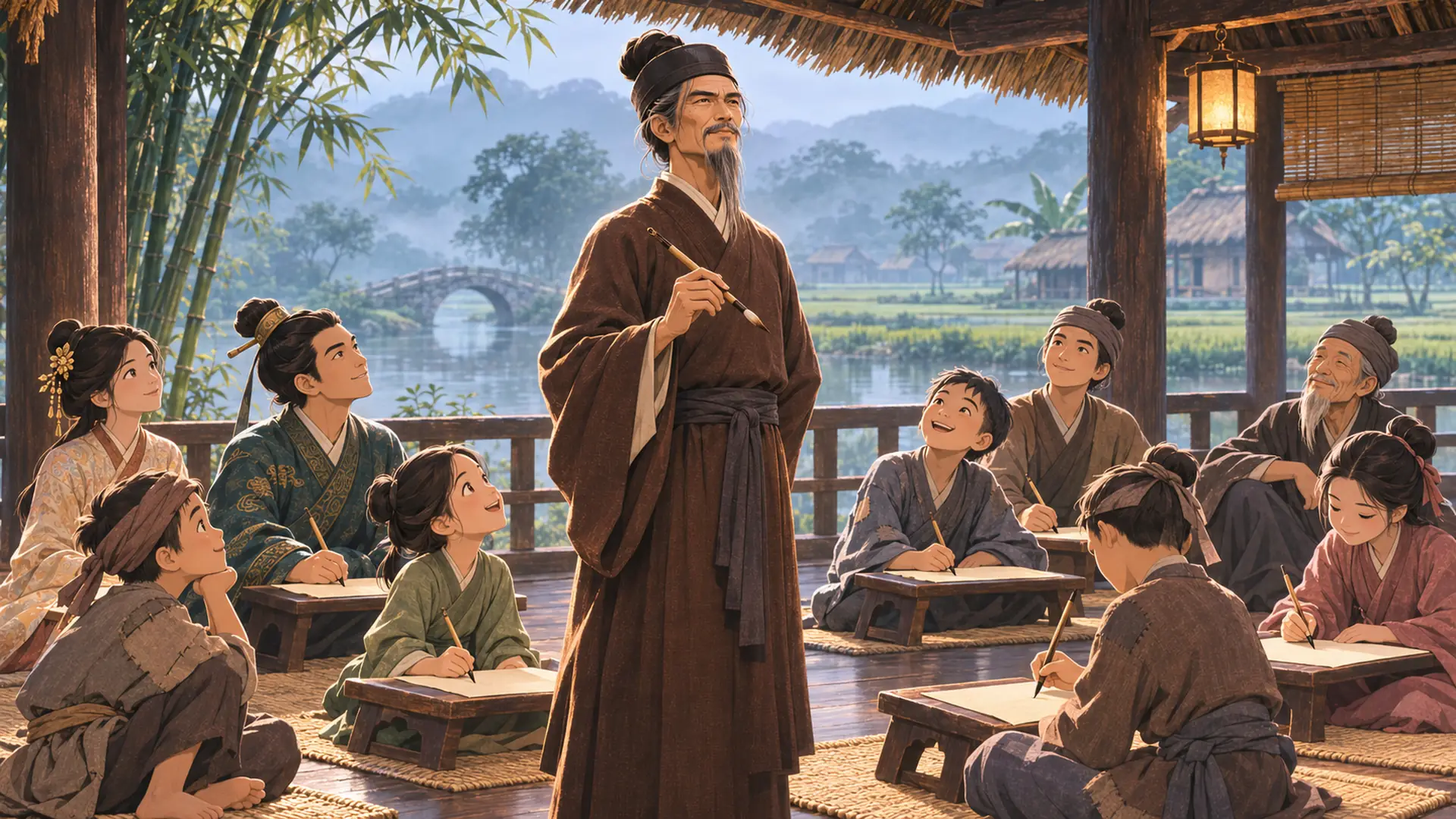
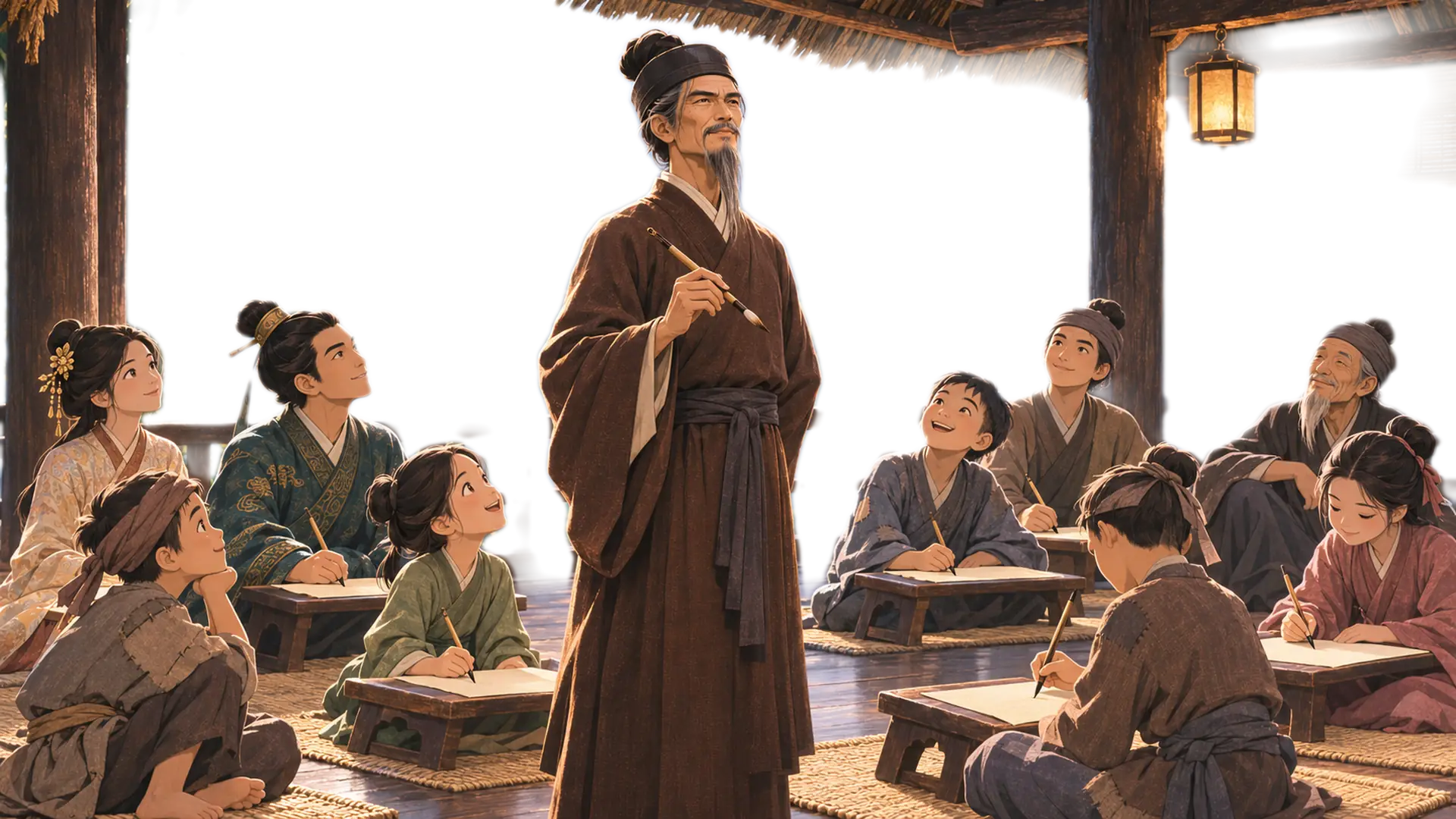
A village school beside a slow river in old Vietnam, morning: Chu Van An teaching a crowd of students of all ages sitting on mats on a wooden veranda, some in fine silk and some barefoot in patched clothes, all writing with brushes, bamboo and mist behind.

Chapter

The Teacher

Chu Van An lived in the fourteenth century, under the Tran dynasty. He passed the royal exams — but instead of becoming an official, he went home and opened a school in Huynh Cung, a village on the To Lich River.

Students came in crowds. Rich or poor, he taught them all the same. He was strict — and every one of them loved him.
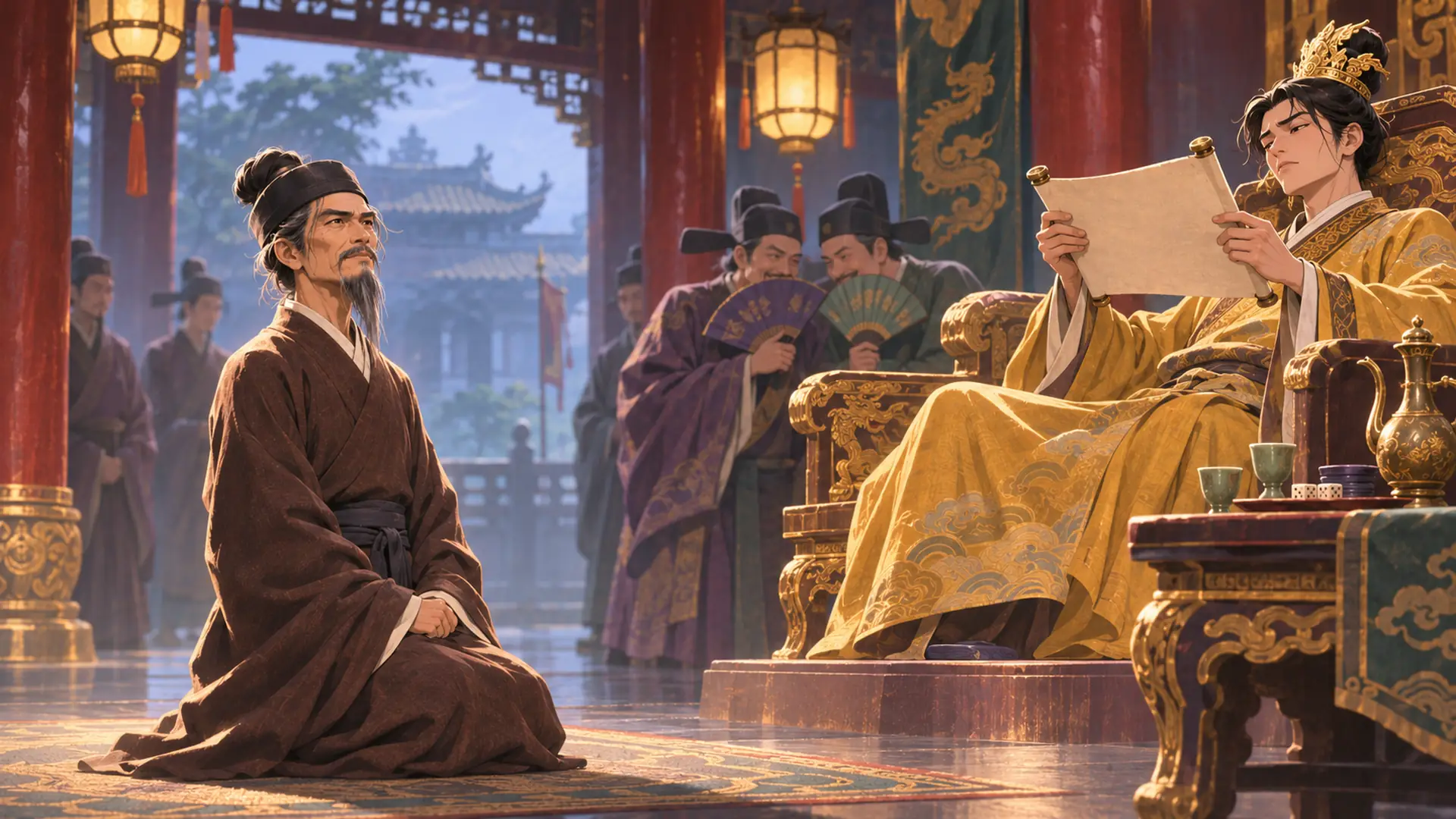
The royal court of Thang Long: Chu Van An kneeling upright before King Tran Du Tong and holding up a long petition scroll with both hands, the king lounging and frowning on his throne, sly courtiers in rich robes whispering behind fans, red lacquered columns.

His fame reached the capital. The king invited him to teach the crown prince. But the royal court was full of corrupt men.

So he sent the king a petition that shook the whole country: the Petition of Seven Beheadings — asking him to execute seven corrupt ministers. The king did not listen.
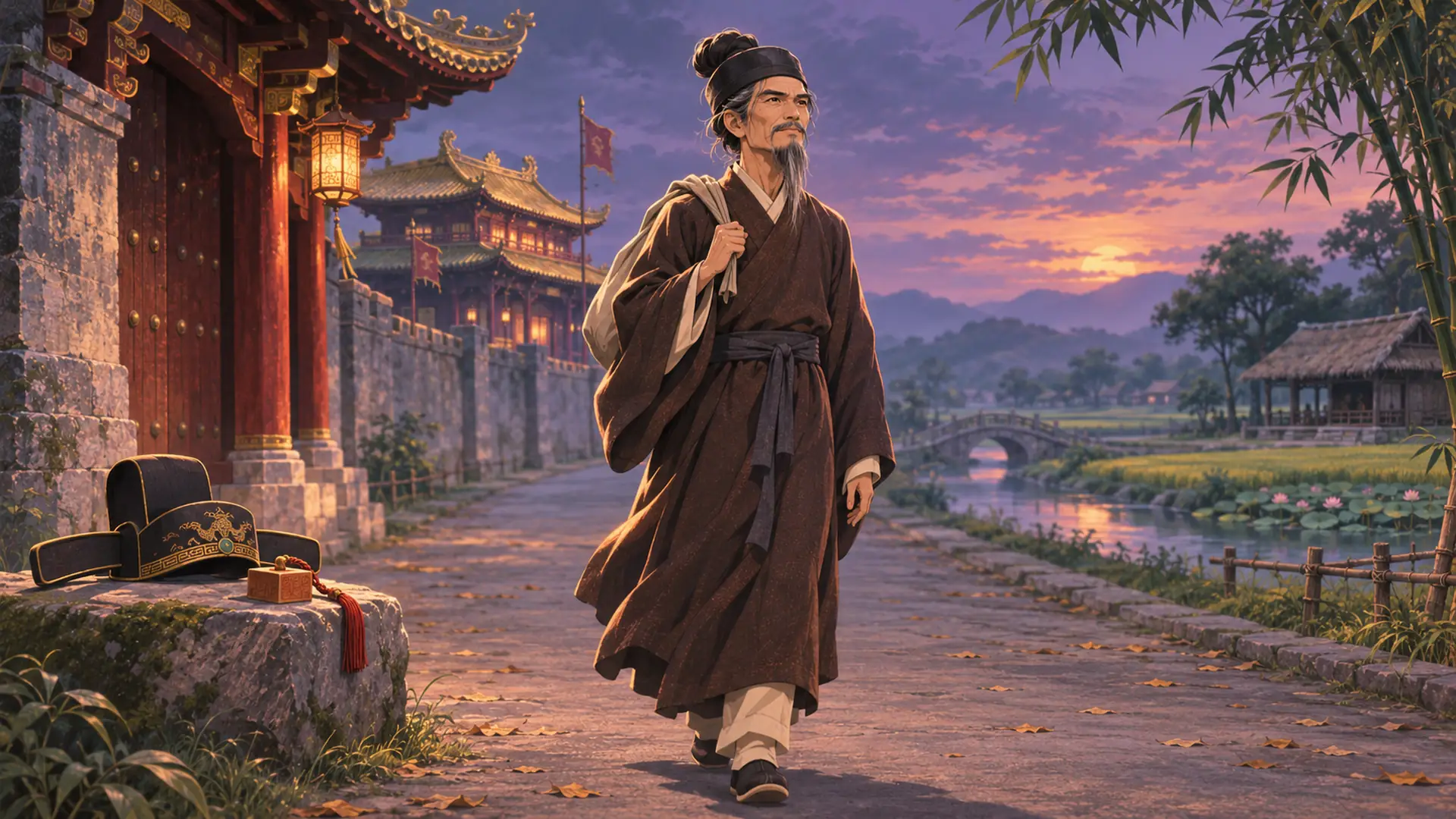
A road outside the palace gates at dusk: Chu Van An walking away alone with a small bundle on his shoulder, having left his official hat and seal behind on a stone at the gate, the golden palace roofs fading behind him.

Chu Van An gave up his post and went home. And he picked up his books, and taught again.
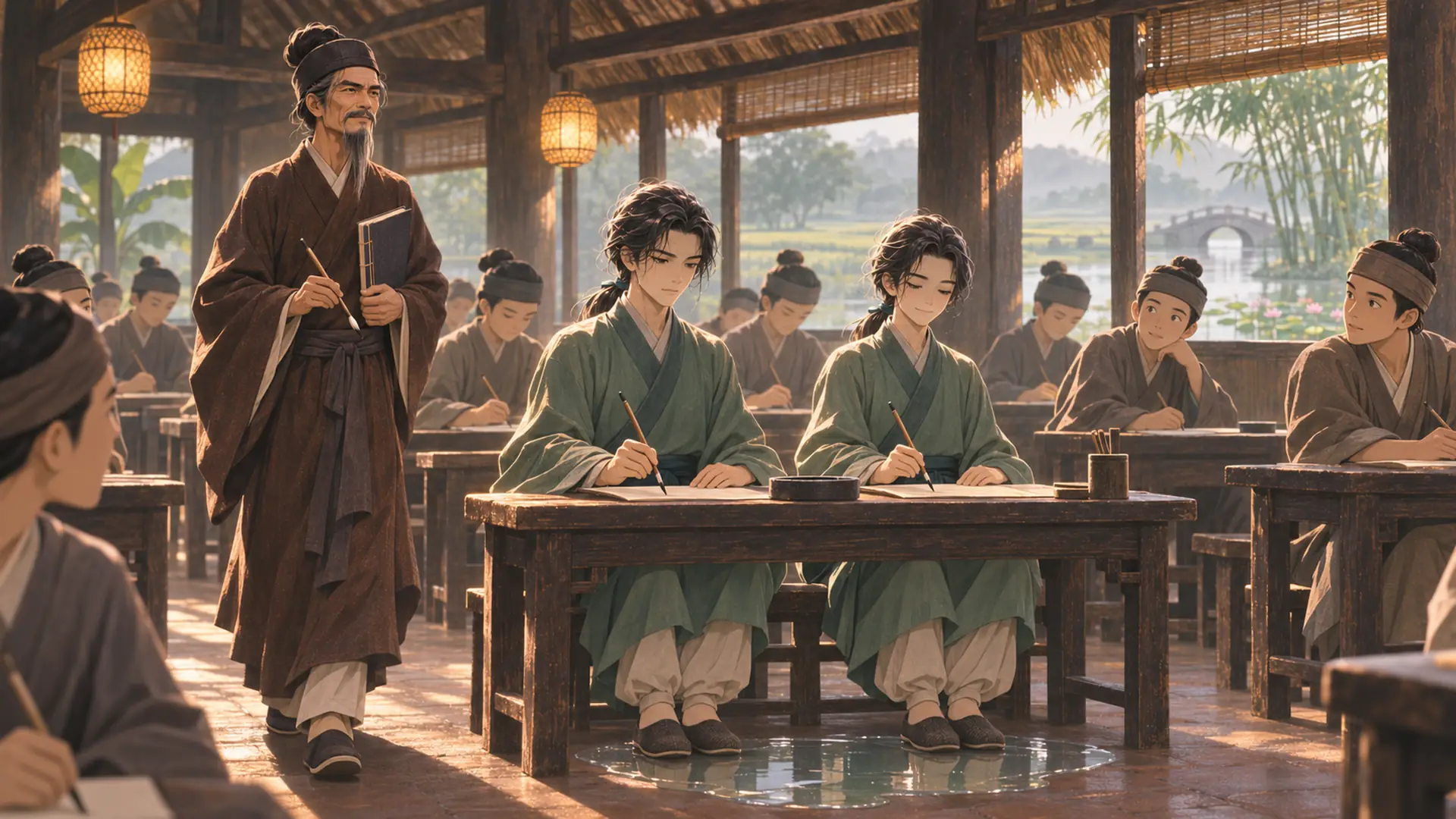
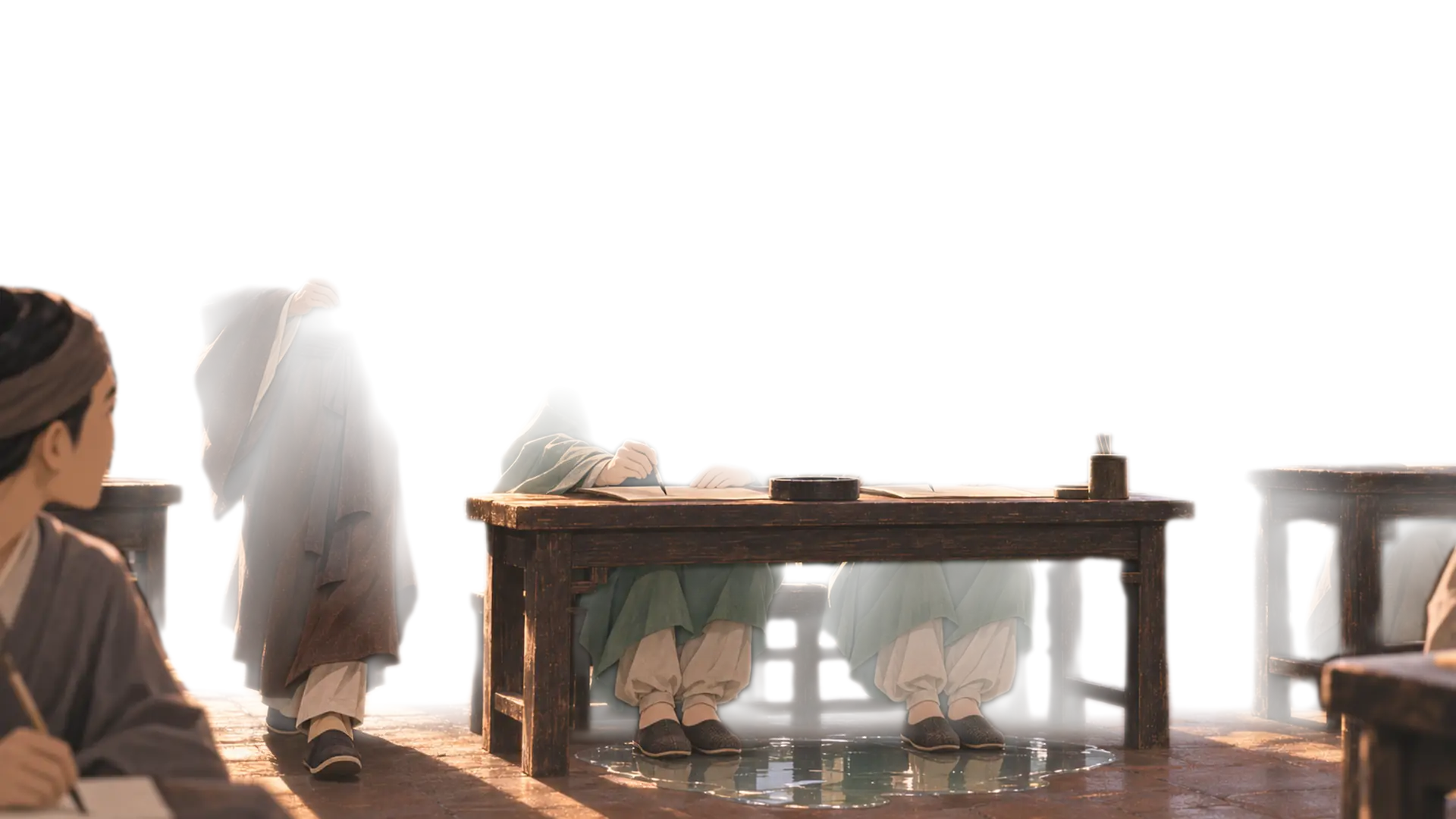
Inside the village classroom: rows of students writing, and in the front row the two brothers sitting side by side, very straight, writing beautifully, a small puddle of water by their feet, other students glancing at them curiously, Chu Van An walking between the rows.

Chapter

Two Strange Students

In his class there were two strange brothers. First to arrive, last to leave, quiet, and brilliant. No one knew where they lived.
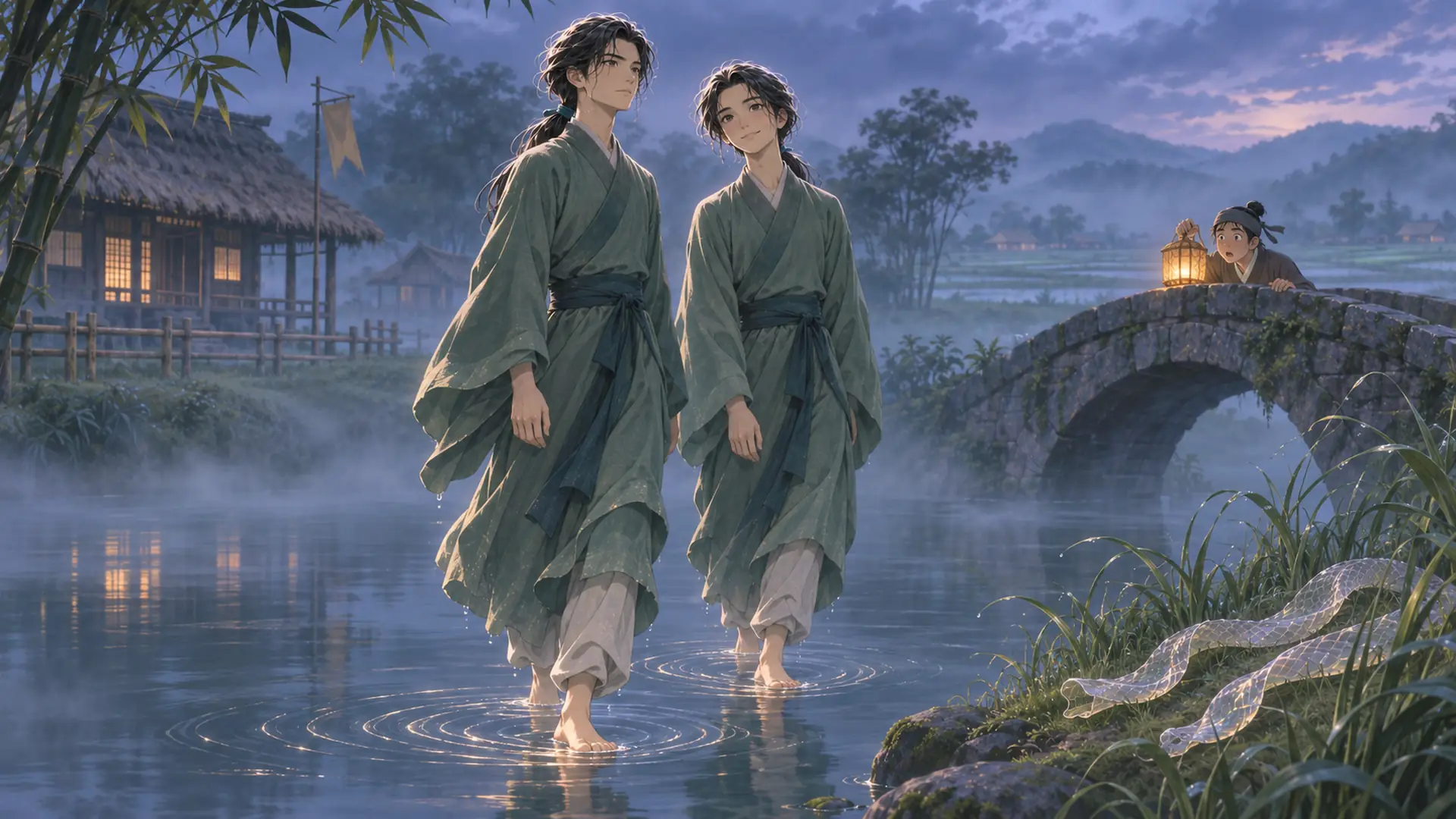
A misty river at blue dawn near a small stone bridge: the two brothers walking calmly across the surface of the water toward the bank, ripples under their feet, two shed serpent skins glinting in the reeds, and on the bridge a startled student with a lantern, hiding.

One morning before sunrise, the head student was crossing the Buu bridge. He saw two figures walking on the surface of the river — from the middle of the water to the bank.

It was the two brothers. And in the reeds lay two serpent skins, freshly shed. He ran all the way back to his teacher.
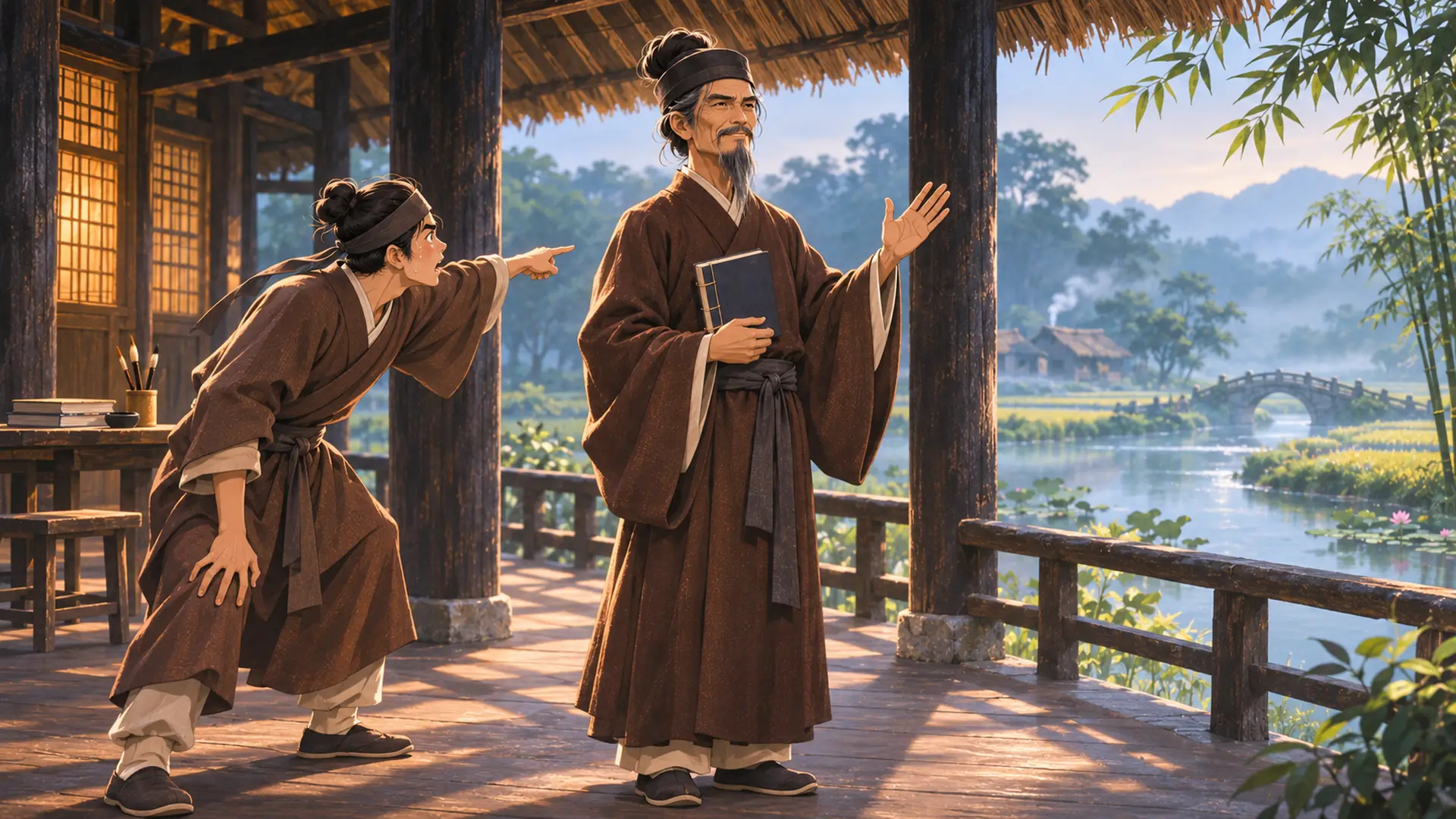
The school veranda at morning: a breathless head student in a brown robe pointing toward the river, and Chu Van An smiling calmly and raising one hand, unbothered.

Chu Van An only smiled.

If spirits love the teachings of the sages — then so much the better.
Chu Van An
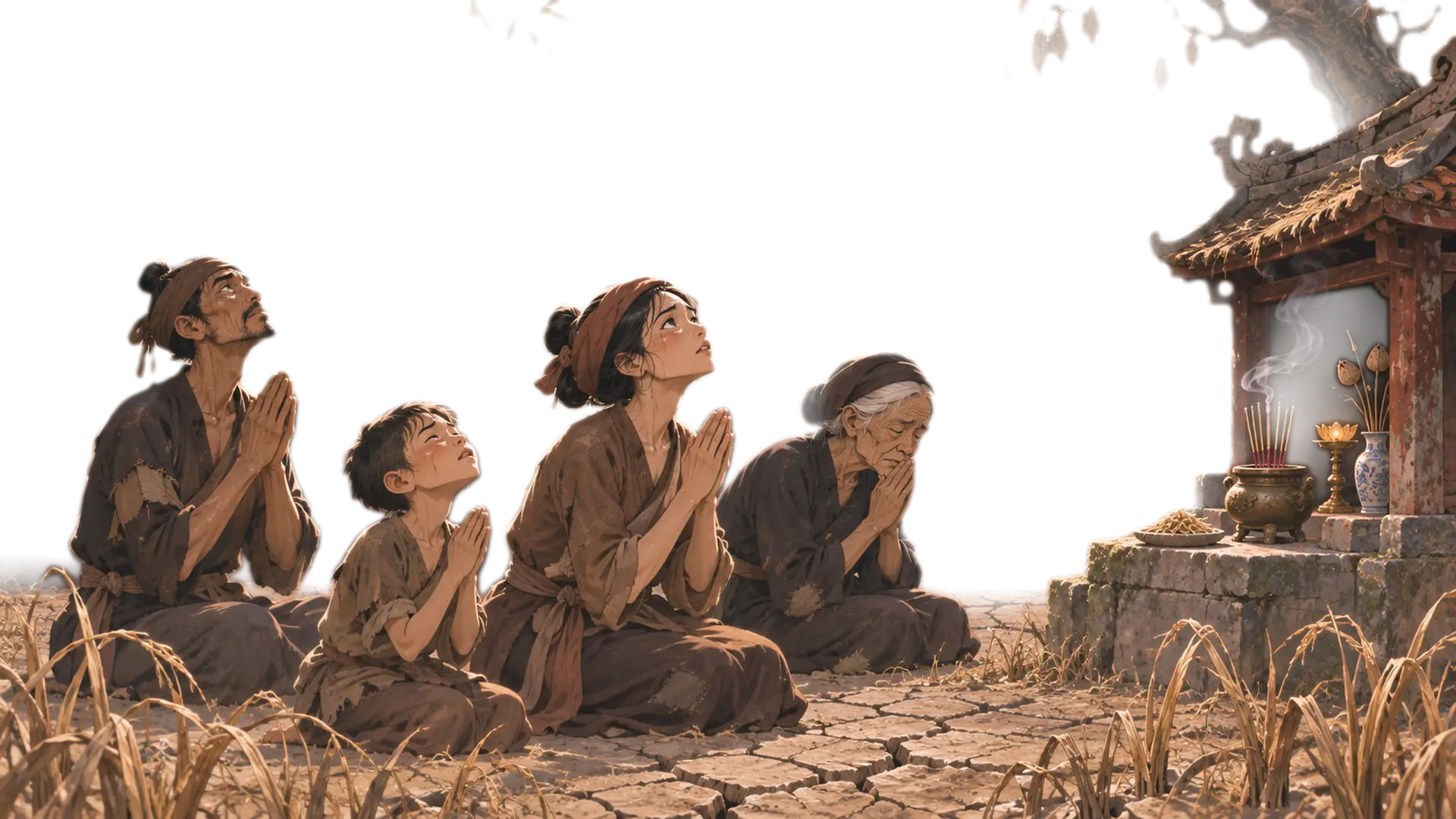
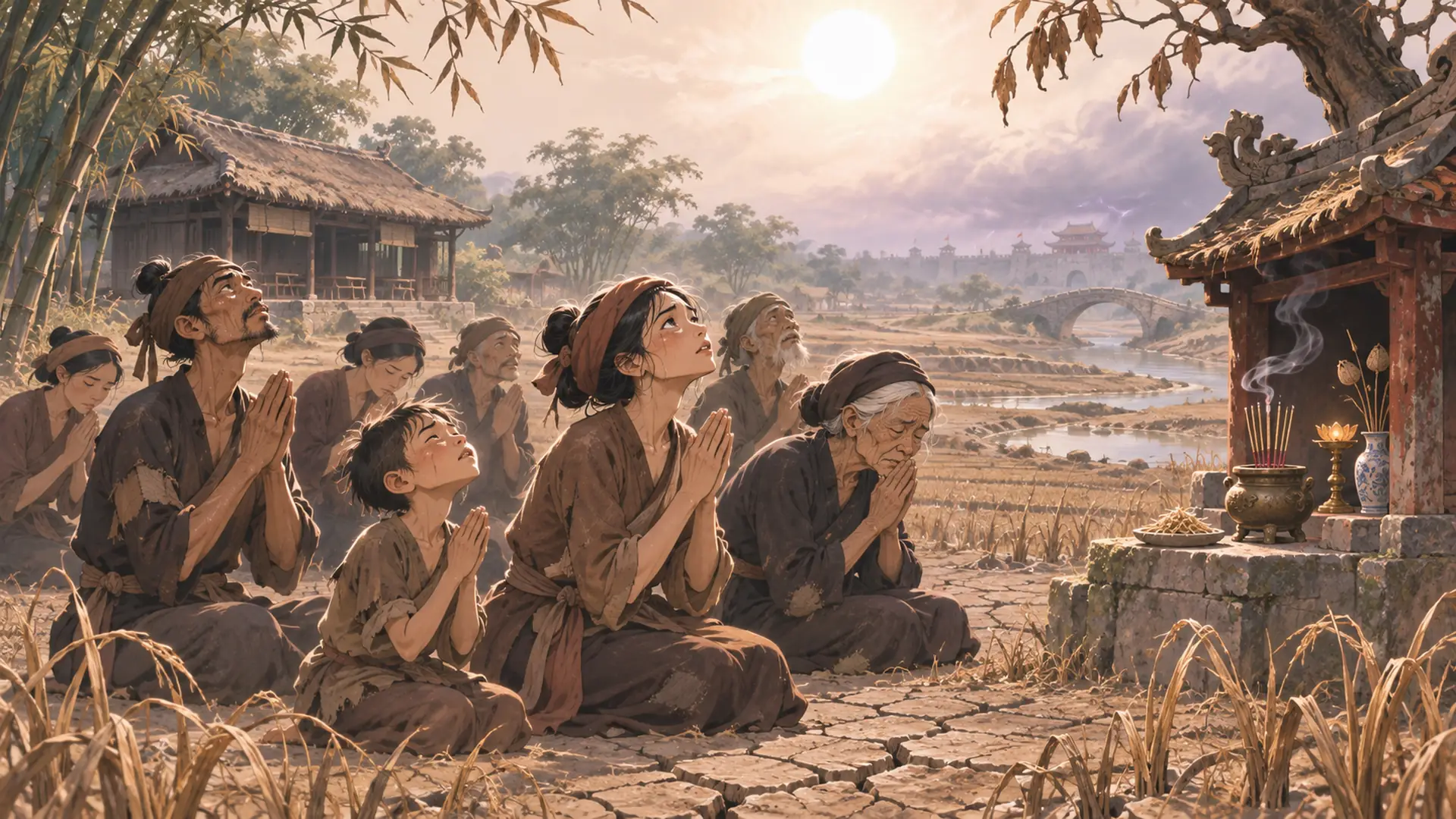
A drought in old Vietnam: cracked dry rice fields under a white burning sky, dead brown rice plants, thin villagers kneeling at a small shrine with incense, praying for rain.

Chapter

The Drought

That year, a terrible drought struck his village. From the end of the year until the second month, not a single drop of rain. The fields cracked. The rice and corn died.
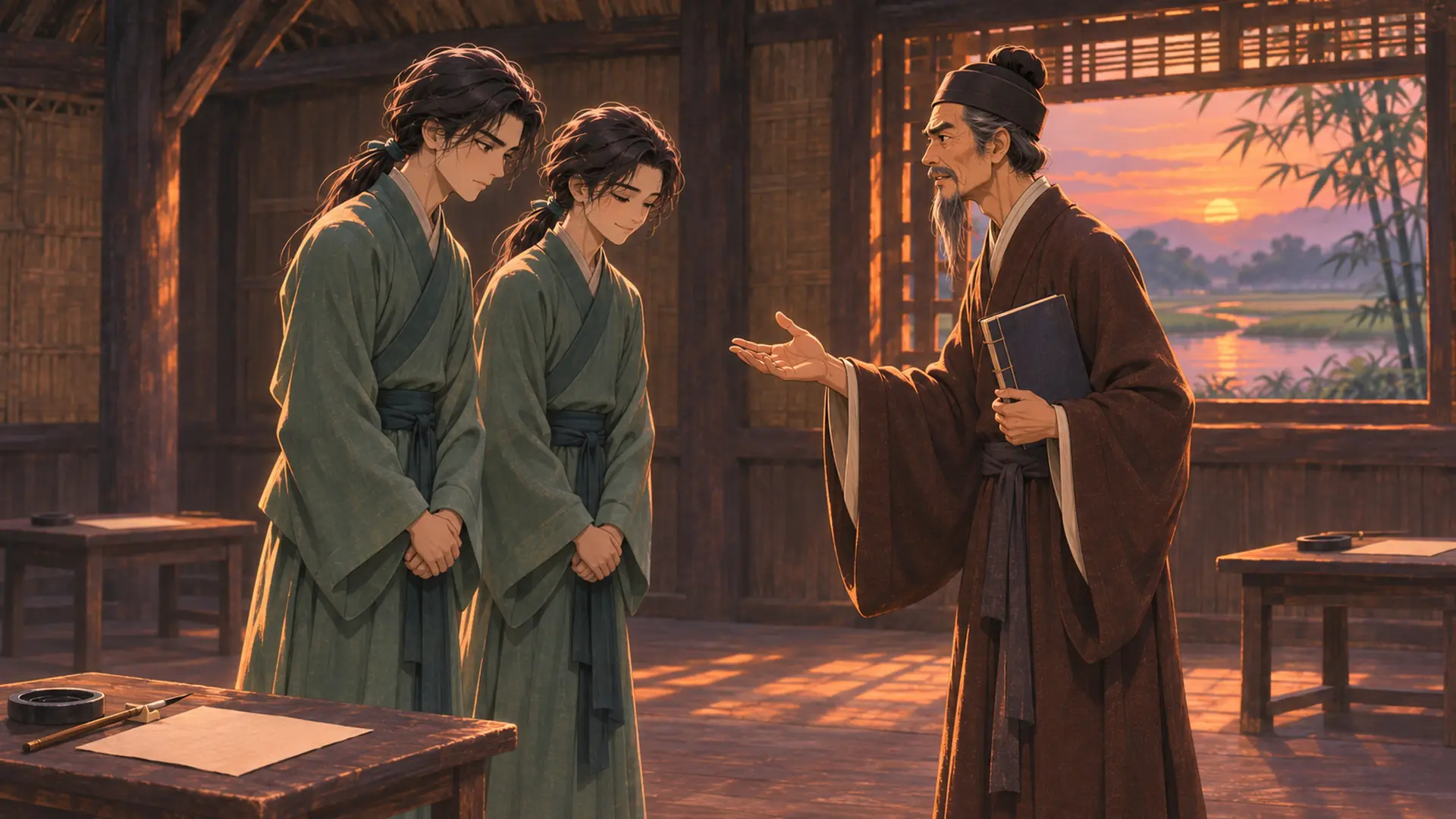
The empty classroom at dusk: Chu Van An standing before the two brothers who bow their heads respectfully, the teacher's face grave and pleading, last orange light through the window.

One evening, the teacher asked the brothers to stay behind.

I know who you are. Have pity on these people. Give them rain.

Chu Van An

The brothers bowed their heads.

Teacher — Heaven has sealed every river and lake. To make rain without Heaven’s order is a crime punished by death.
The brothers
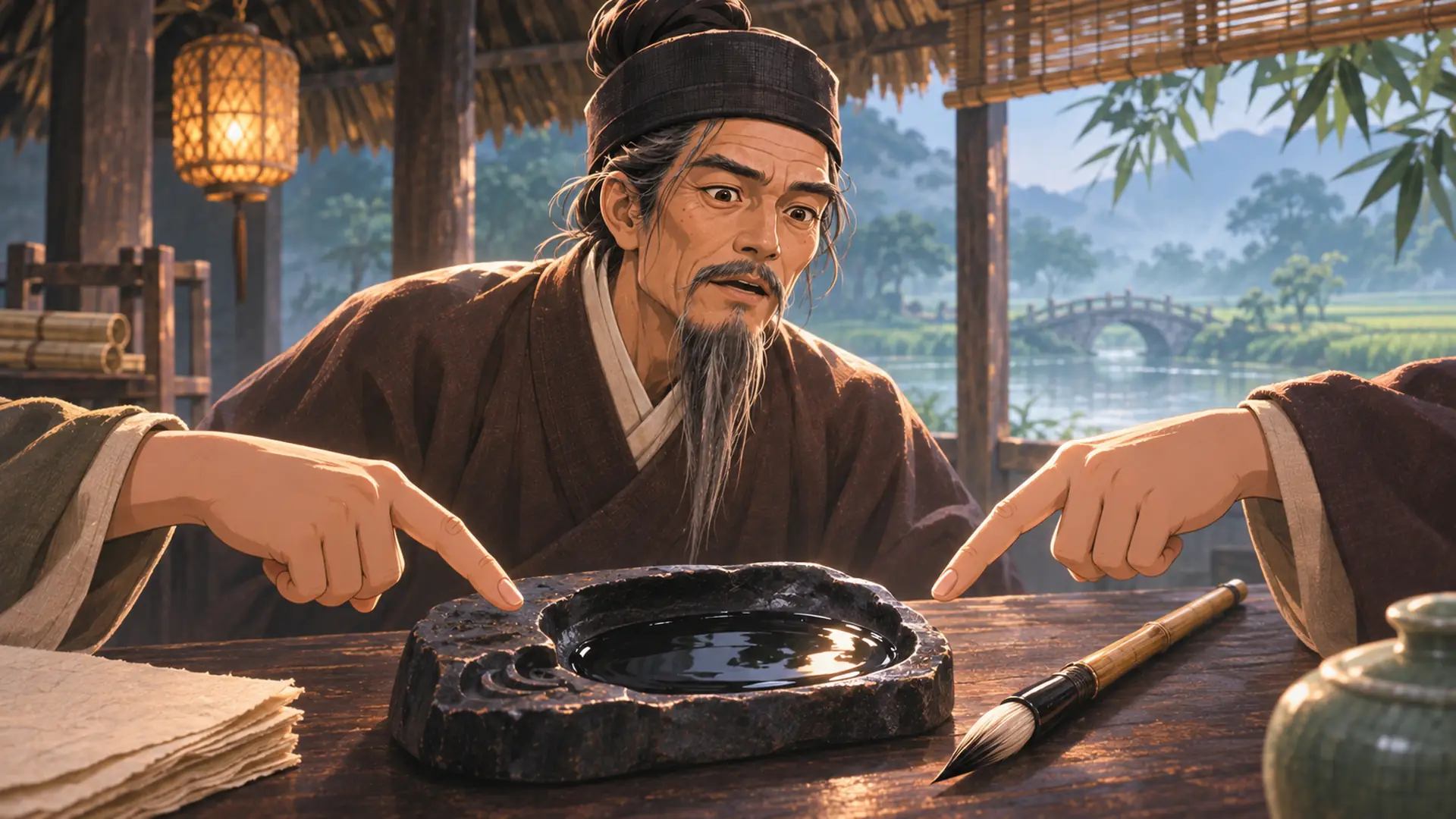
Close-up on the teacher's desk: an old black stone inkstone full of shining wet ink and a bamboo writing brush, two young hands pointing at it, Chu Van An's surprised face softly lit in the background.

Still, he begged them. The brothers looked at each other for a long time. Then they pointed at the inkstone on his desk.

This is the only water Heaven has not sealed.
The brothers
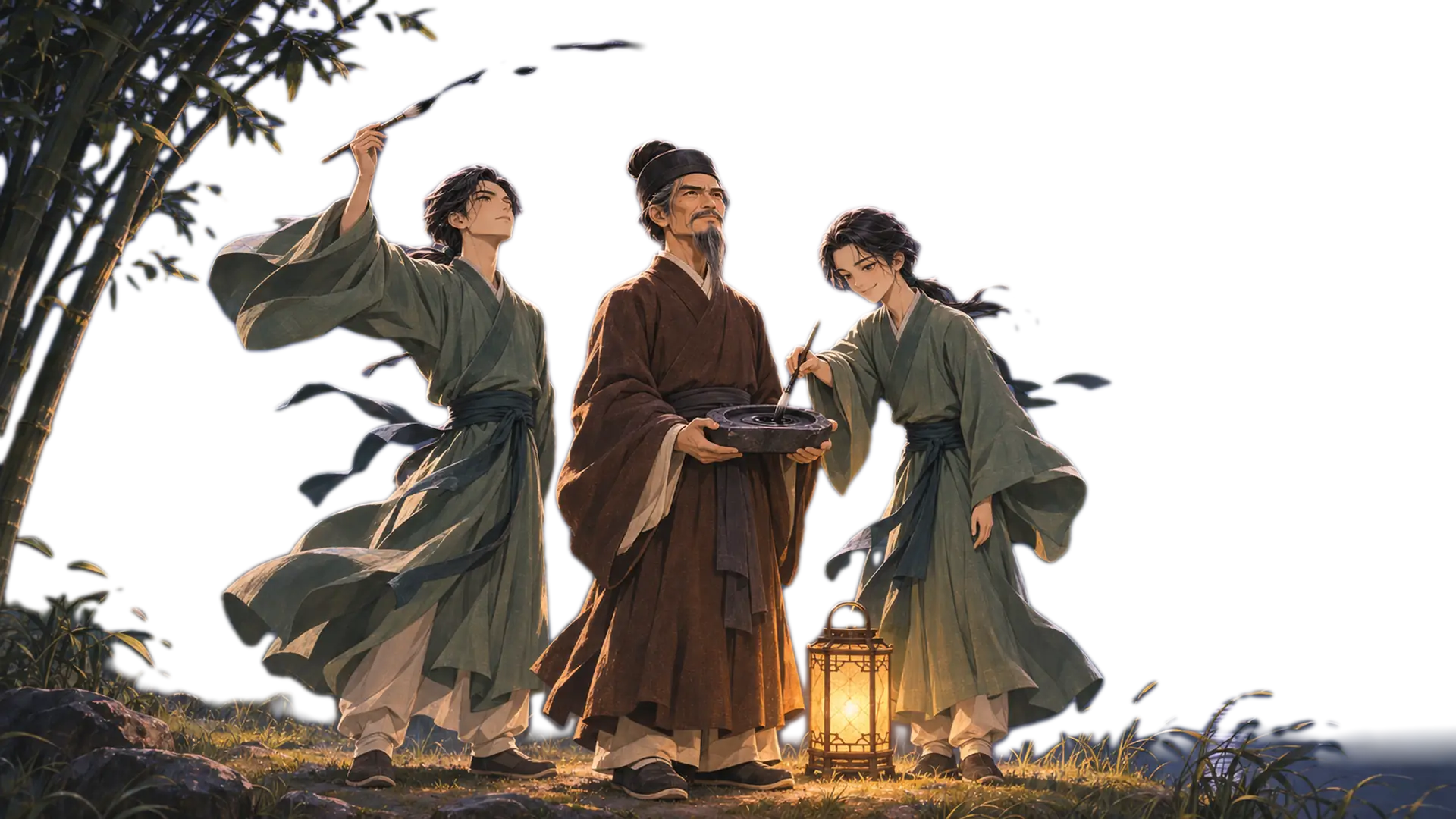
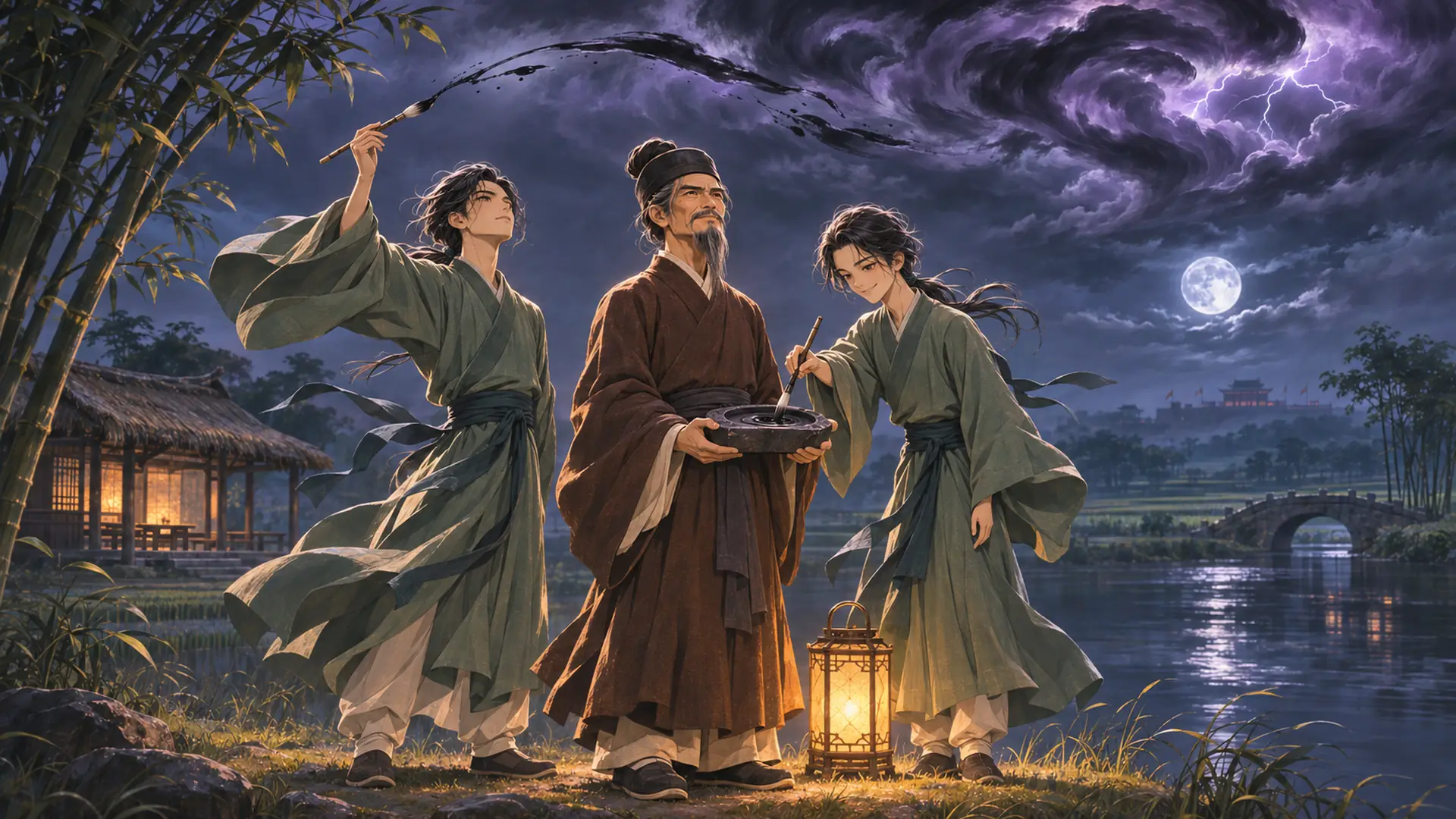
The riverbank at night: the two brothers dipping long brushes into the inkstone held by Chu Van An and flicking arcs of black ink up into a dark sky that is starting to swirl with clouds, a lantern on the ground, wind in their robes.

Chapter

Rain of Ink

That night, the teacher carried his inkstone and brushes to the riverbank. The brothers dipped the brushes in the ink and flicked it into the sky — again, and again, and again.
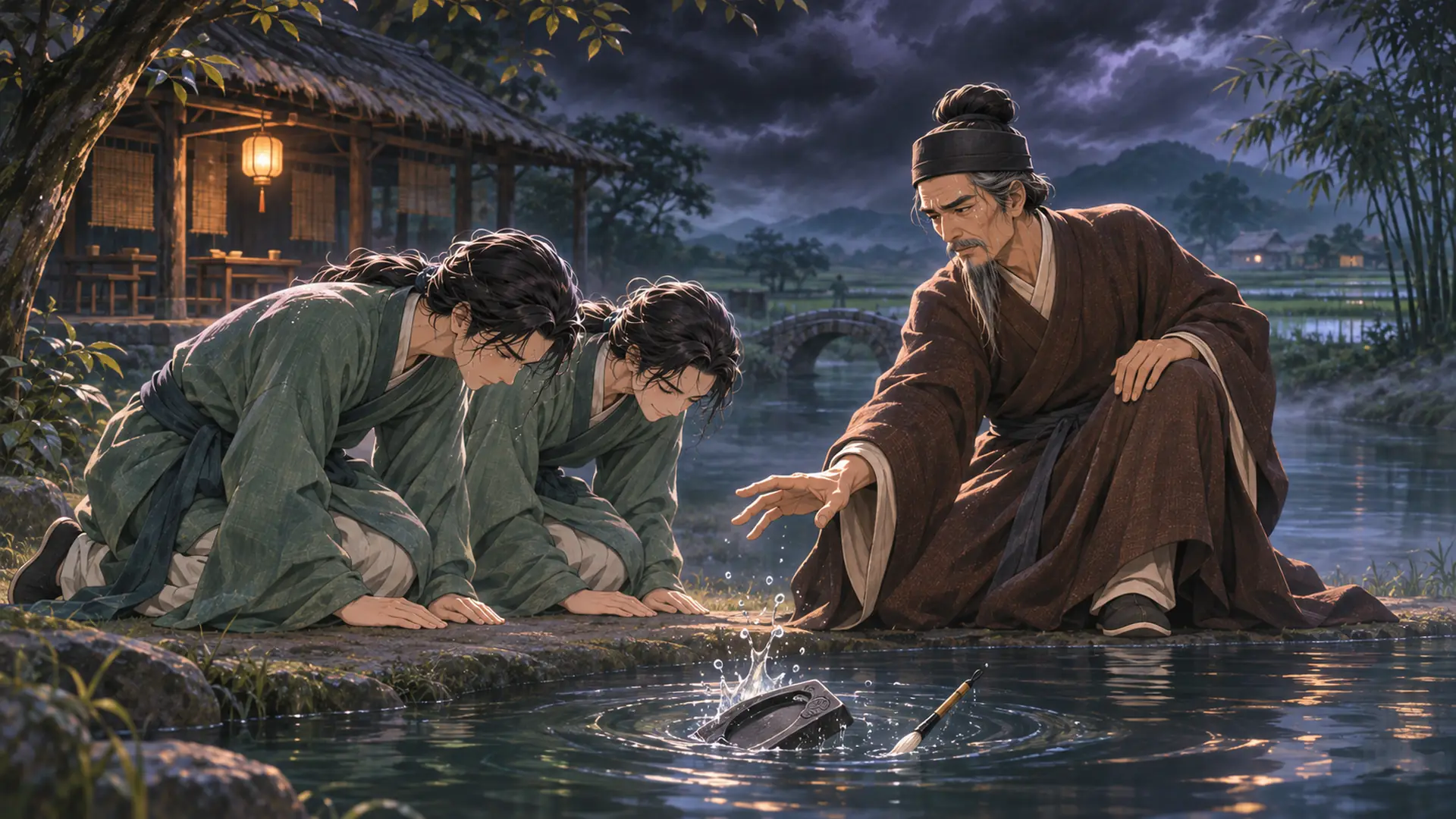
The riverbank at night: the two brothers kneeling and bowing low to Chu Van An, the inkstone and brush sinking into the dark river beside them in a small splash, the teacher reaching out a hand, sad and moved, clouds gathering.

Then they threw the inkstone and the brushes into the river, turned to their teacher, and bowed. And they were gone.
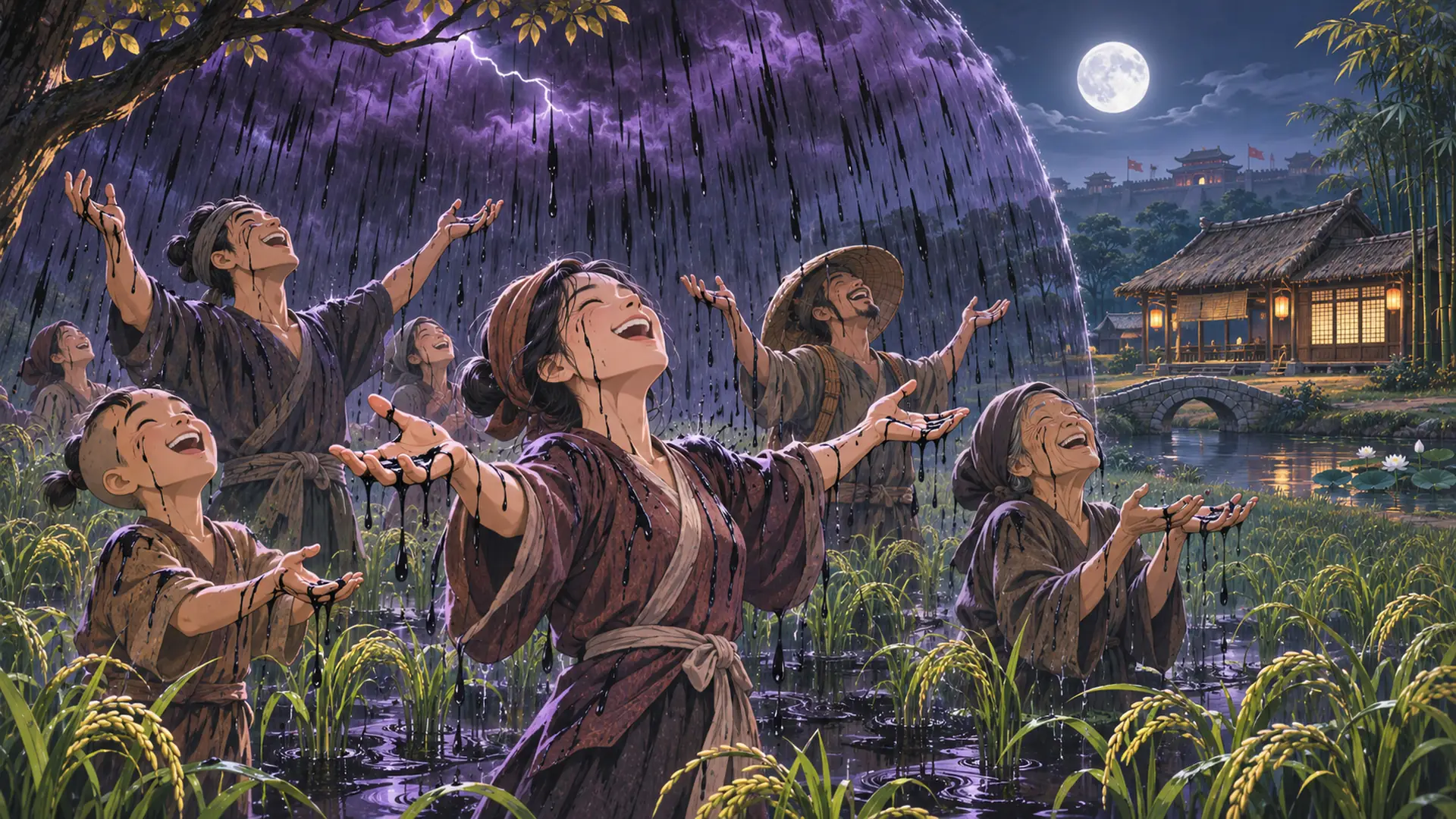
Midnight over the village fields: the falling rain is clearly black like ink — dark inky streaks and black droplets splashing, black puddles spreading between the rice plants, black ink-like drops running down the villagers' laughing faces and hands as they lift them to the sky; the rain falls only over these fields while the land beyond stays dry under the moon.

At midnight, black clouds rolled in. The rain came down in torrents. But strangely, the rain was black as ink — and it fell only on the fields of his village. The rice and corn came back to life.
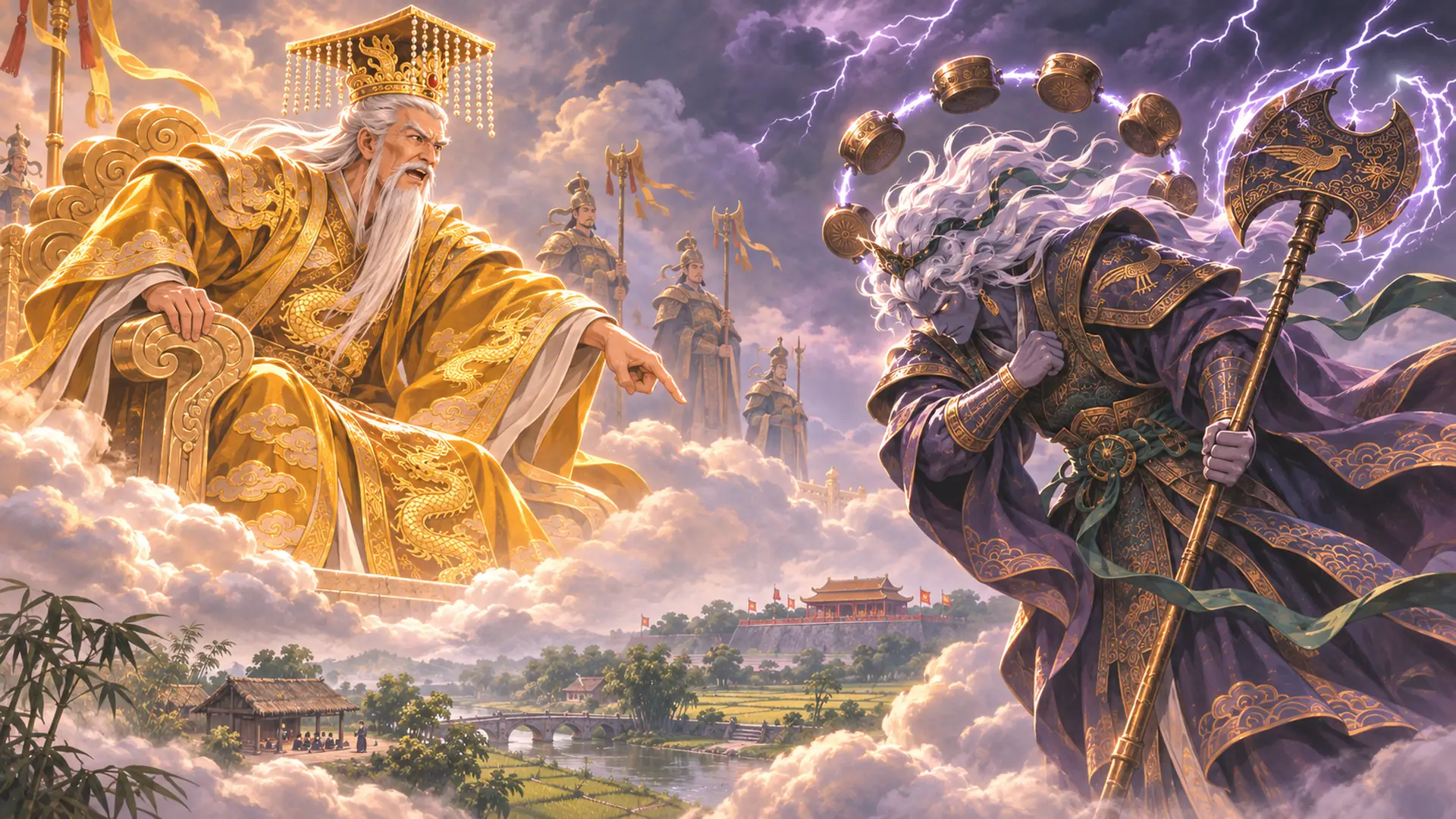
Heaven's court in the clouds: the Jade Emperor rising angrily from his golden throne and pointing down at the earth, and before him the Thunder God bowing, then turning with his crackling bronze axe, celestial guards, dark storm light.

Chapter

The Thunder God

In Heaven, the Jade Emperor was furious. Who dared to make rain against Heaven’s command? He sent the Thunder God down to punish them.
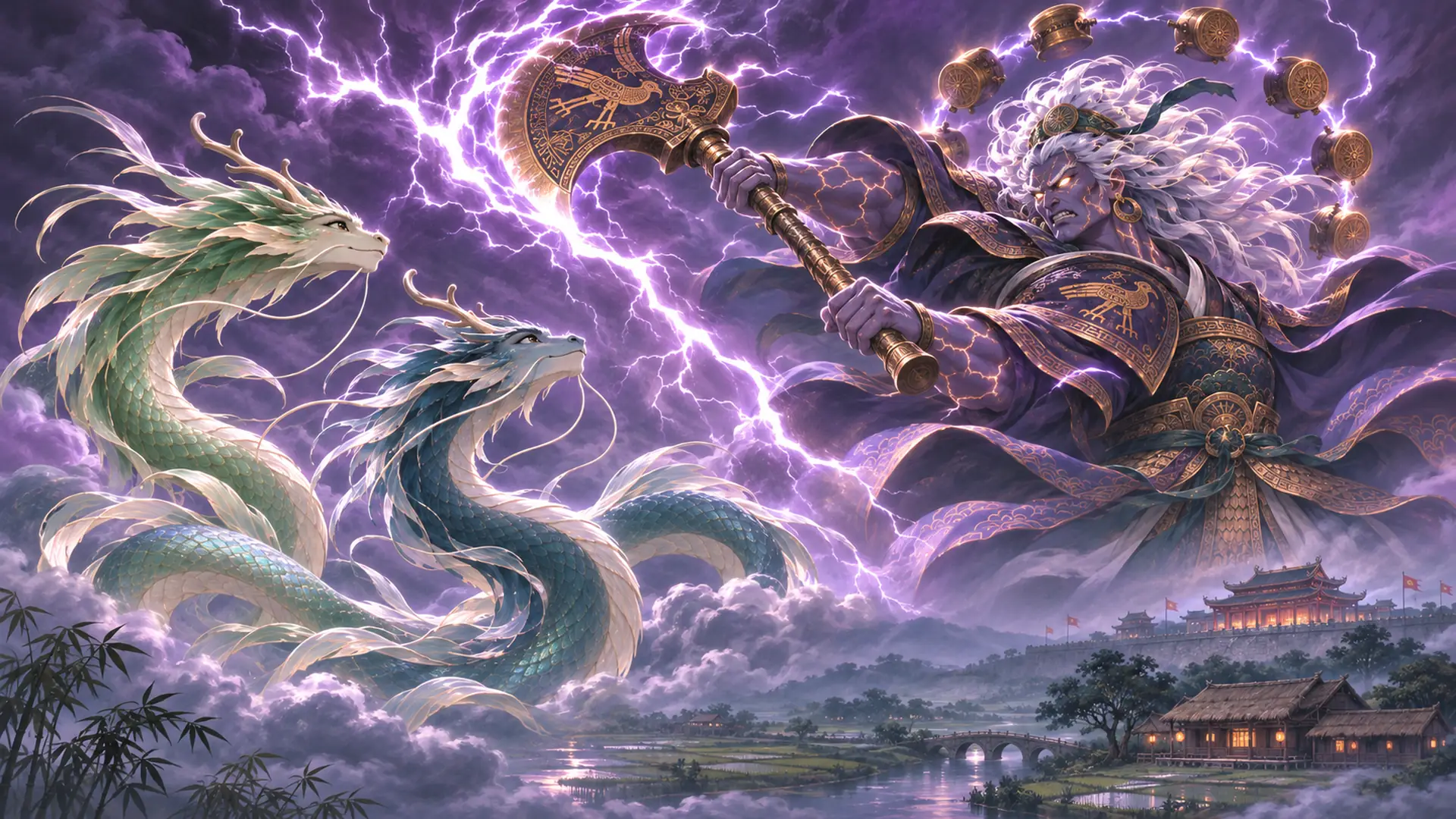
A violent storm in the sky: the Thunder God swinging his lightning-crackling bronze axe, and the two river dragons coiling together in the storm clouds facing him, a huge bolt of lightning, epic and dramatic, no blood.

In the storm, the brothers took their true form — two river dragons, twisting through the clouds. The Thunder God raised his axe. The thunder shook the sky.

The brothers could not escape. They had known the price from the start. And they did it anyway.
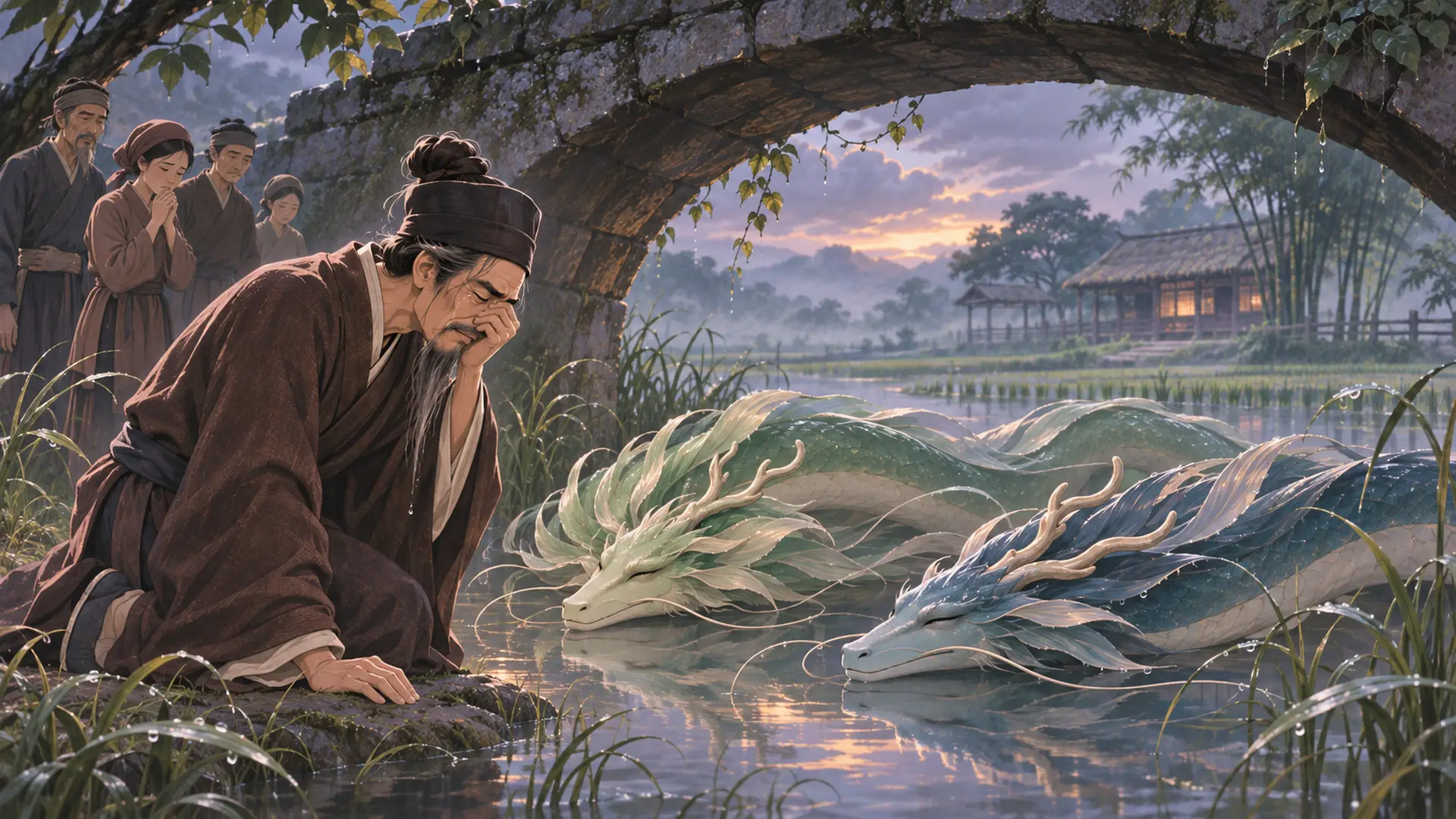
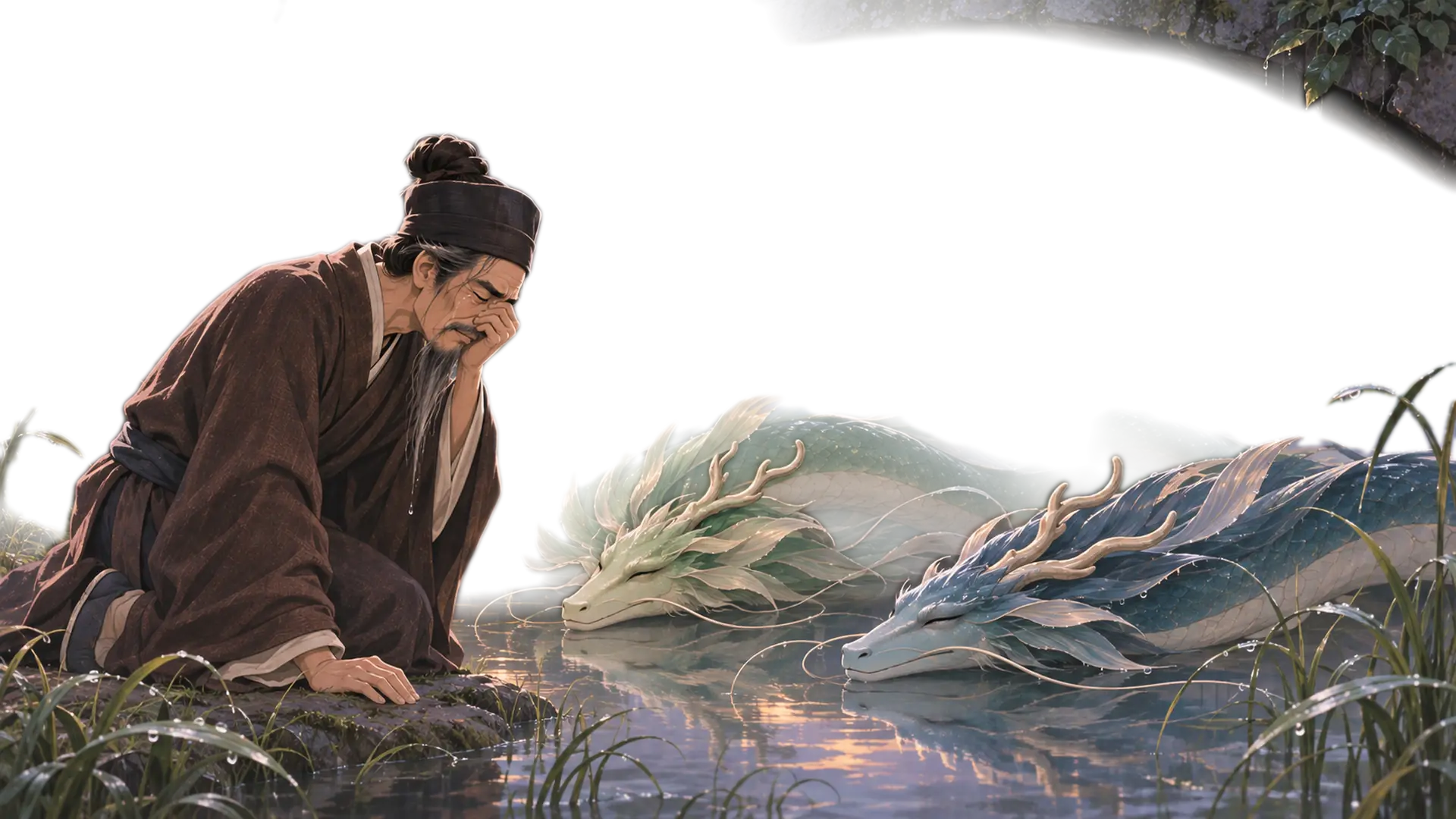
Dawn after the storm under a small stone bridge: the two river dragons lying still and peaceful in the shallow water among reeds, as if asleep, and Chu Van An kneeling on the bank weeping, a few villagers watching sadly, soft grey light.

Chapter

Two Graves by the Bridge

At dawn, the villagers found the bodies of two river dragons beneath the Buu bridge. Chu Van An knelt down and wept, as if he had lost his own sons.
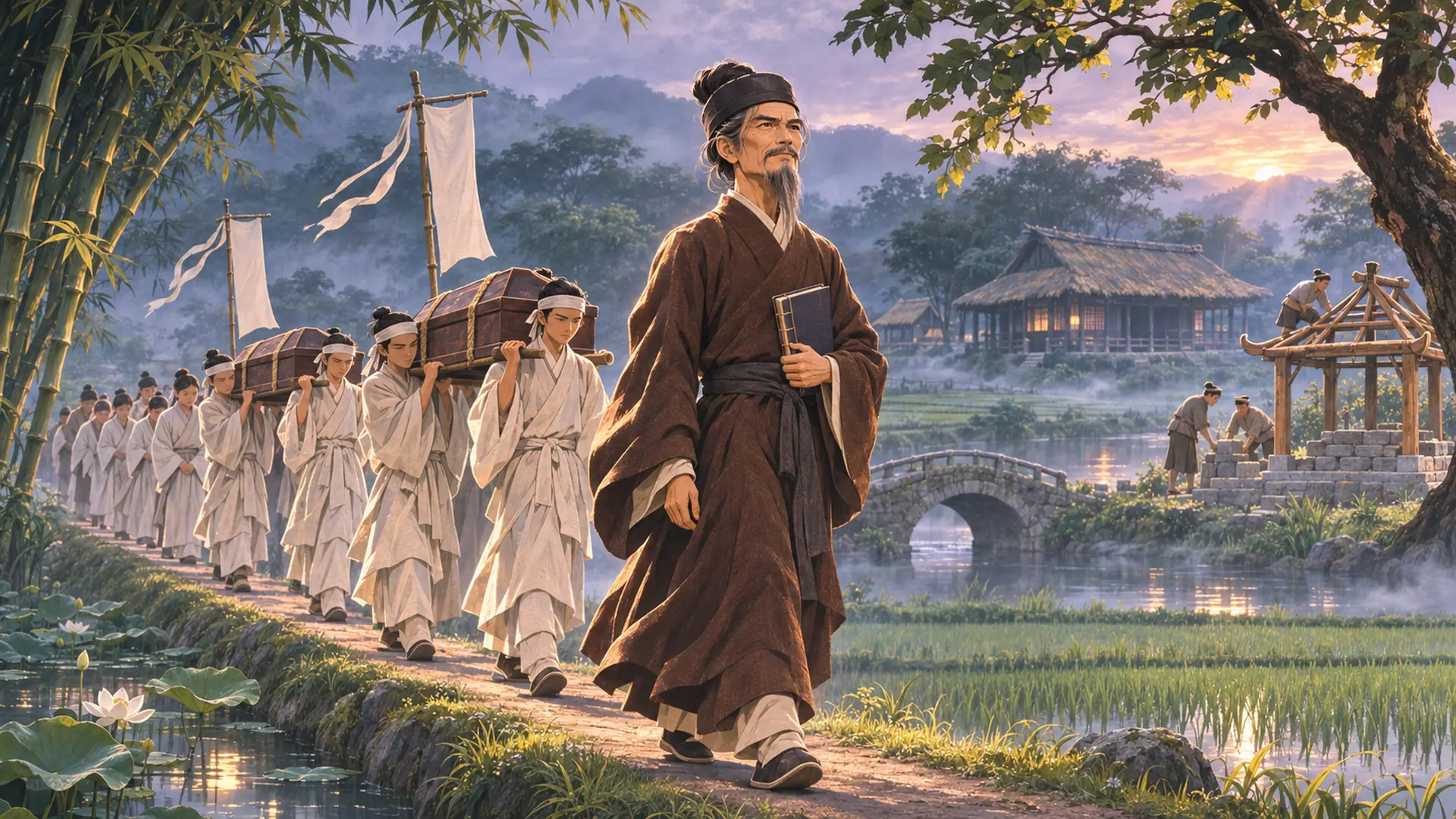
A village funeral procession on a dyke between green rice fields: students in white mourning clothes carrying two small coffins, Chu Van An walking in front, white banners, a new small shrine being built by the bridge.

He had his students hold a funeral, and buried the two brothers with honour, as people. Later, the villagers built a shrine on that spot.
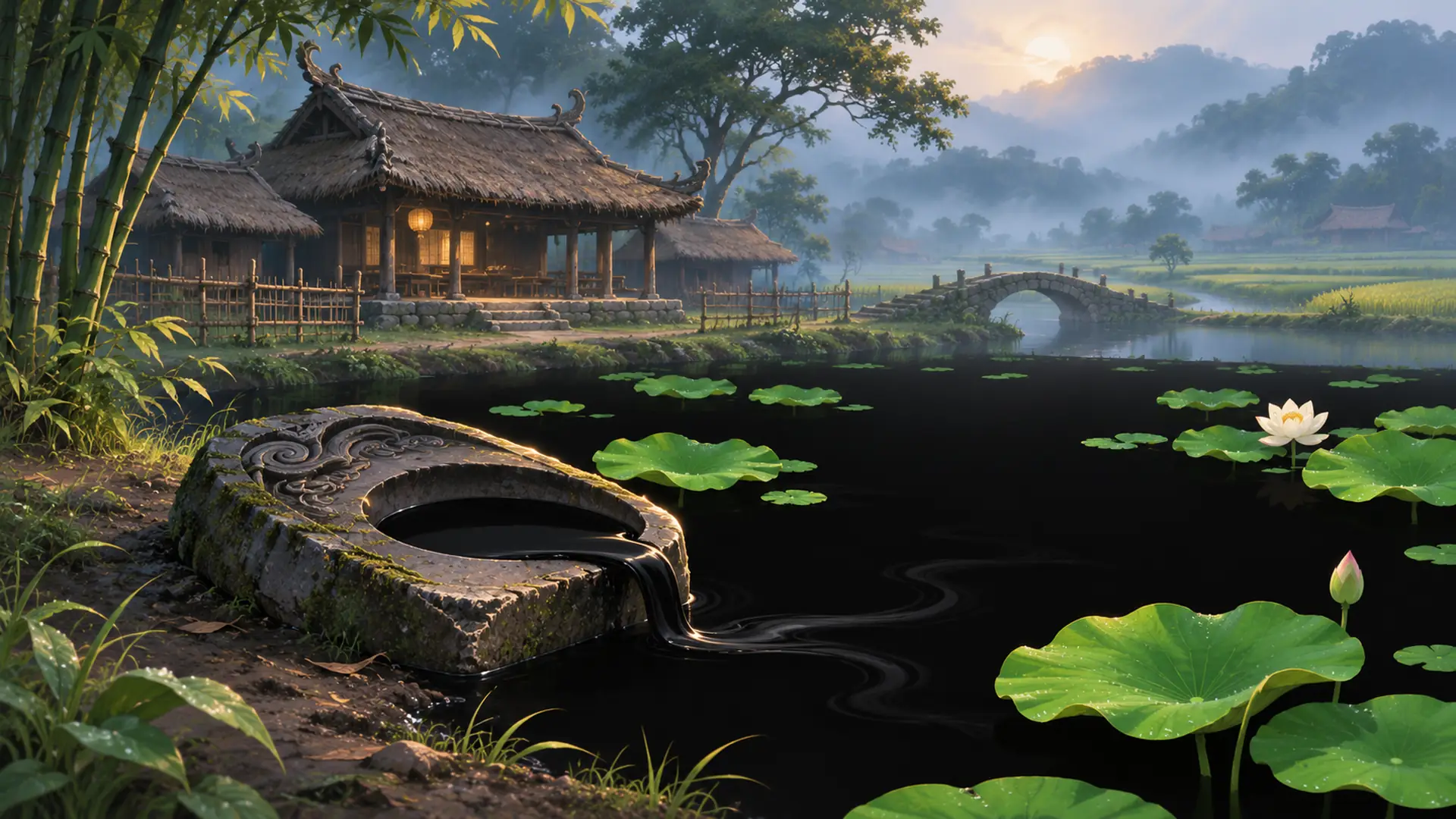
A quiet village pond whose water is opaque jet black like fresh ink, glossy and dark, not reflecting the sky, a thin trail of black ink still curling out from an old stone inkstone half-sunk at the muddy edge, bright green lotus leaves floating on the black surface for contrast, village and bamboo behind, misty morning, mysterious.

The inkstone drifted to the village of Quynh Do, and turned a whole pond black. People called it Dam Muc — the Ink Pond. And the brush drifted to the village of Ta Thanh Oai. They say that village went on to produce more scholars than any other.
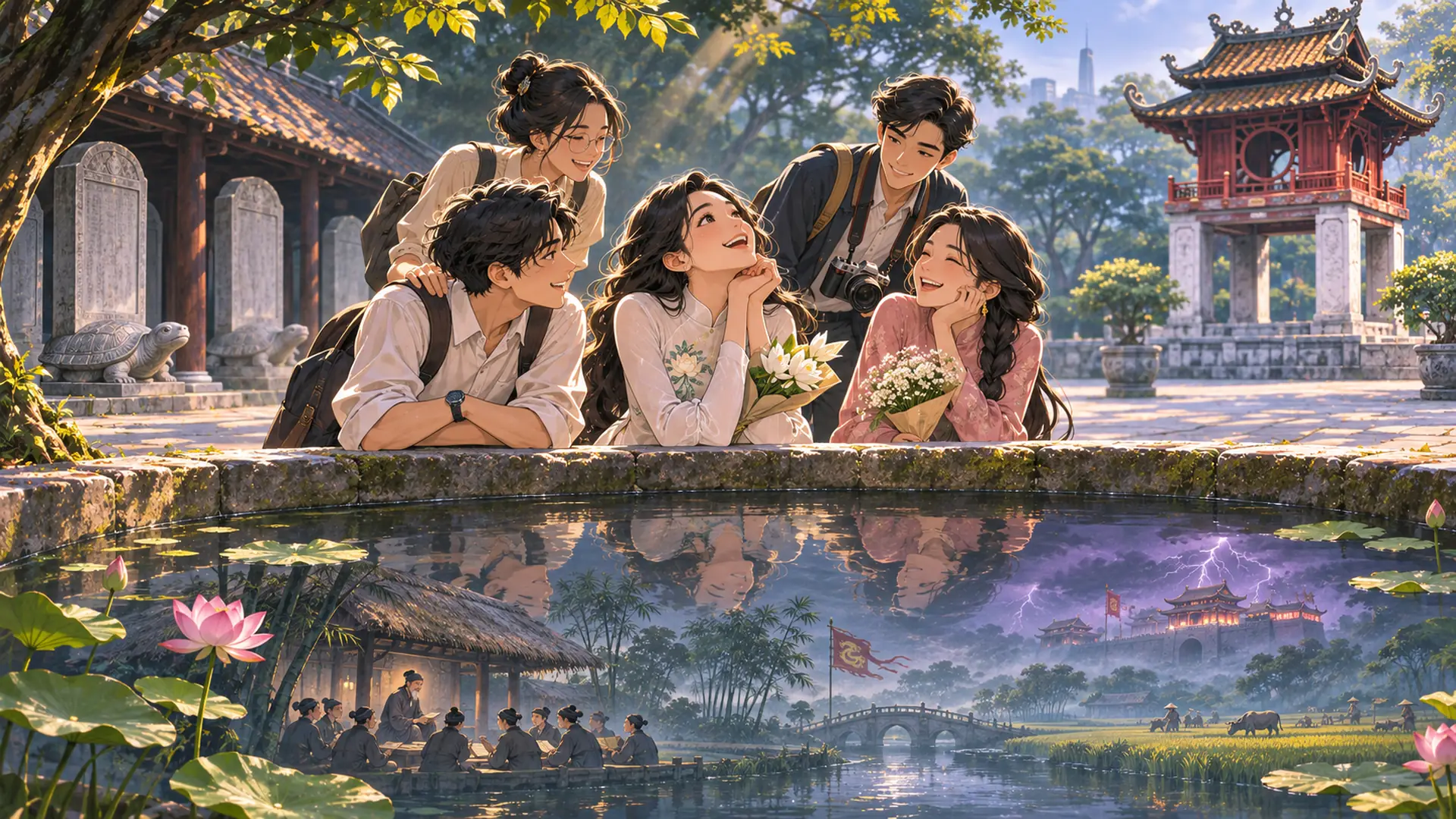
Present-day Hanoi: the Temple of Literature courtyard with its pavilion and pond, stone stelae on turtles, visitors and students in modern clothes with flowers, morning light.

Chapter

The Teacher of Ten Thousand Generations

Today, Chu Van An is honoured at the Temple of Literature in Hanoi as the teacher of ten thousand generations. In 2019, UNESCO recognised him as a world cultural figure.
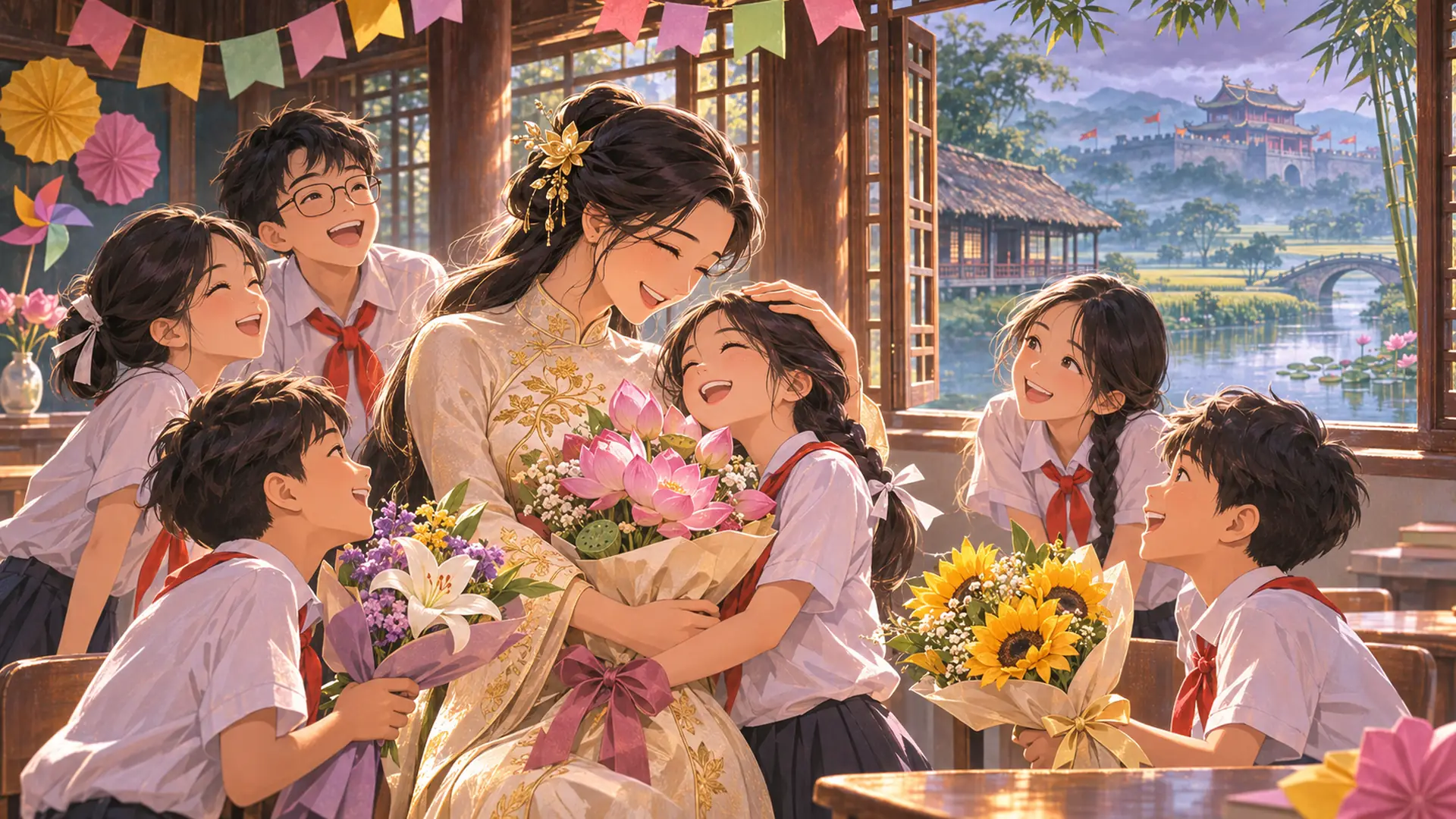
Present-day Vietnam: a bright school classroom on November 20, smiling students in white shirts and red scarves giving bouquets of flowers to their teacher, colourful paper decorations, warm and joyful.

And every year on the twentieth of November, students all over Vietnam bring flowers to their teachers. Vietnamese call it ton su trong dao: respect your teacher, honour the way of learning.

Happy Vietnamese Teachers’ Day. Today, send a word of thanks to a teacher who changed your life.