
Chapter
Fish for the Gods
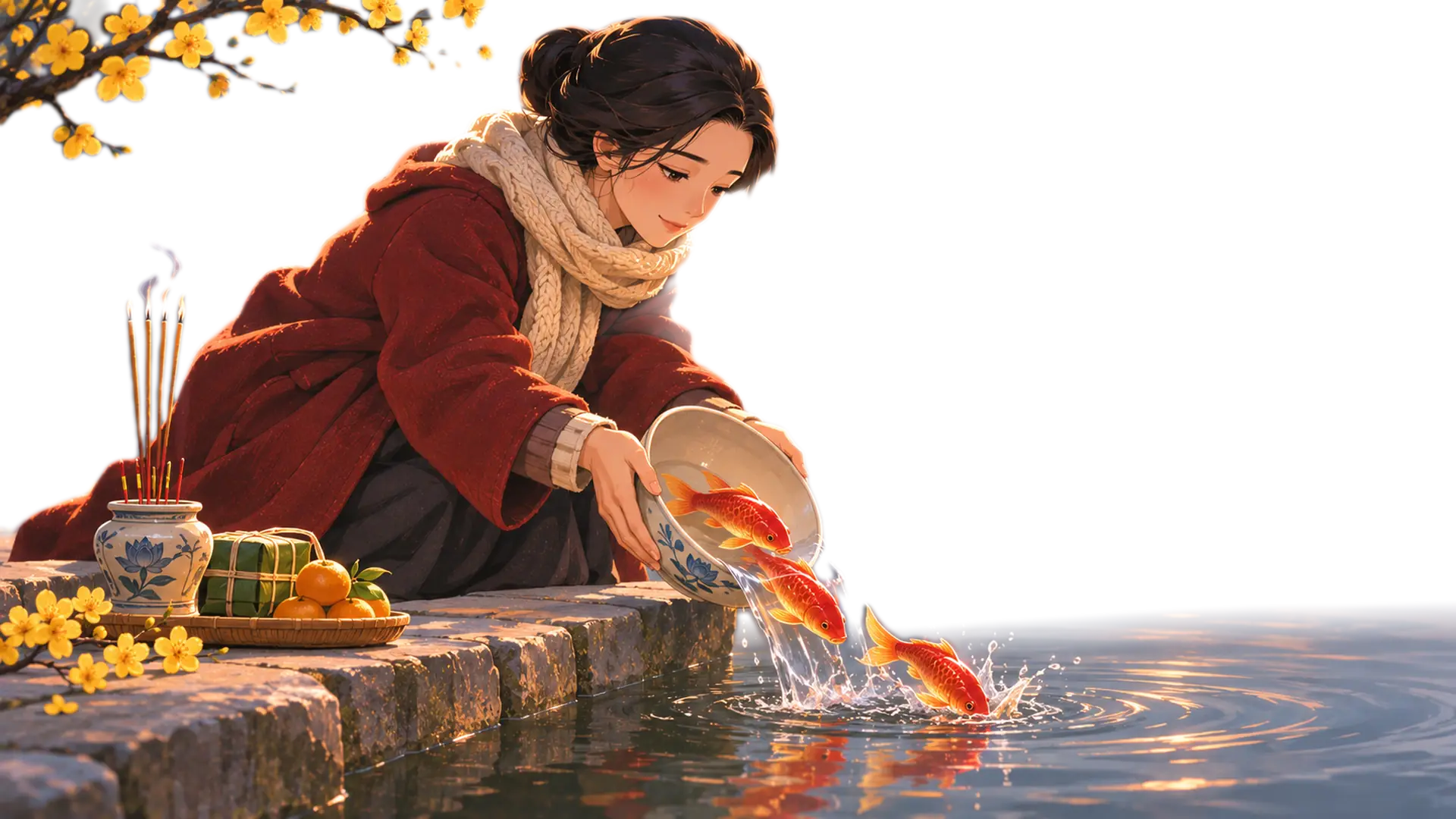
Every year, about a week before Lunar New Year, millions of Vietnamese families carry live carp to rivers and lakes — and set them free.
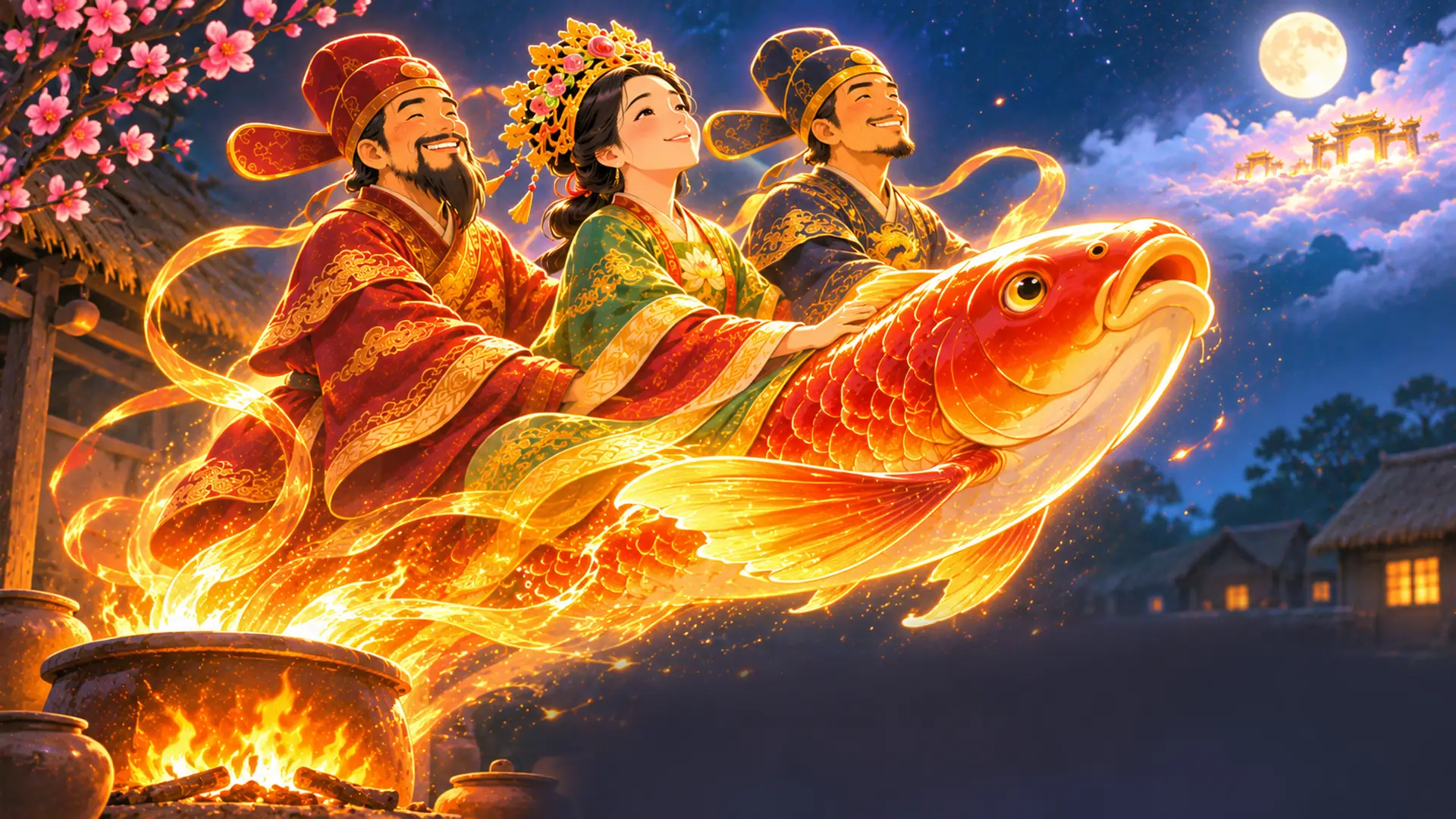
The fish aren’t for dinner. They are horses — for three gods who live in every kitchen, to ride up to Heaven. And their story begins with a tragedy.
Chapter
A Marriage Breaks
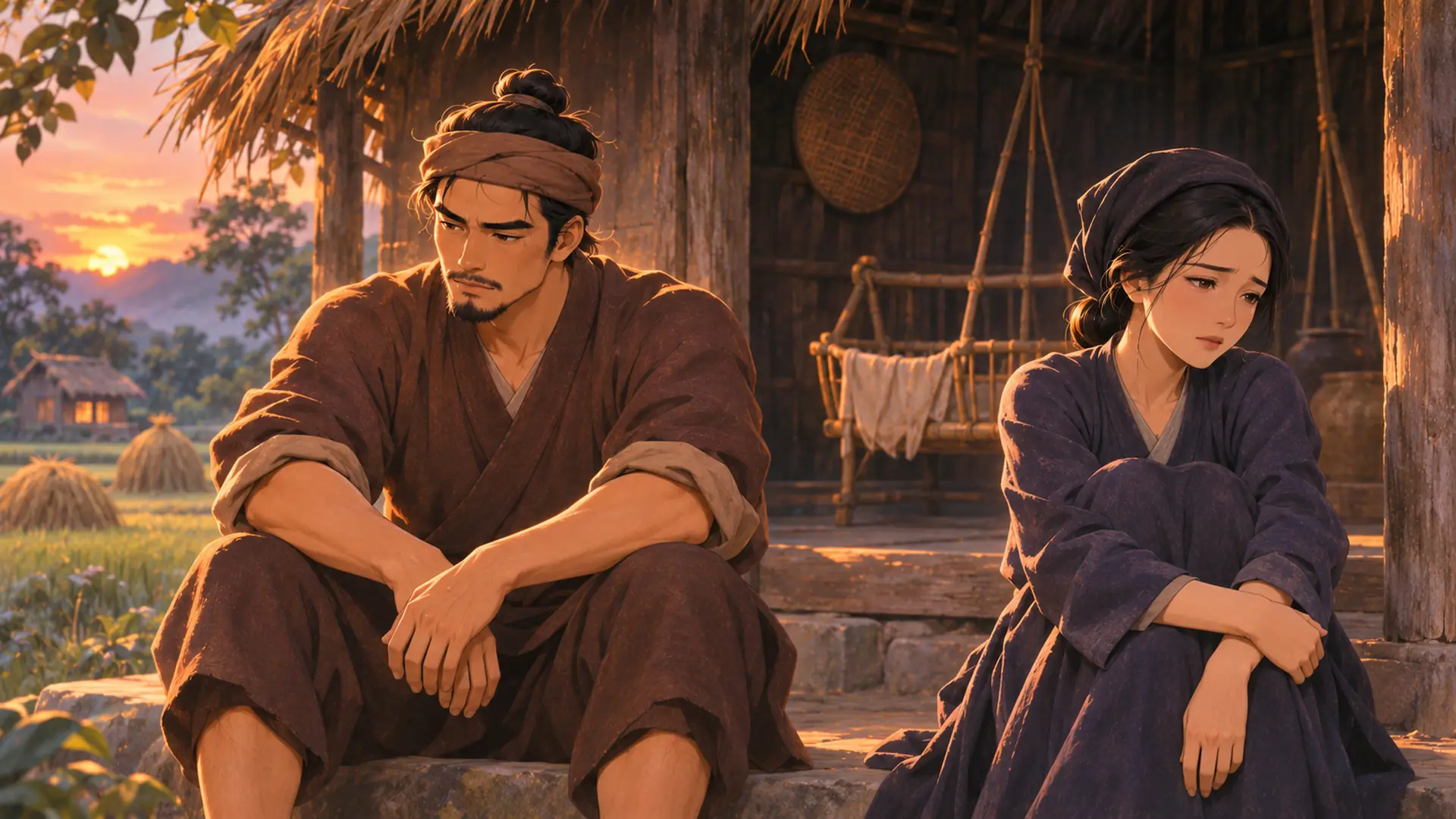
Long ago, there lived a husband and wife named Trong Cao and Thi Nhi. They had been married for years, but no child ever came. That sorrow grew and grew, until it turned into quarrels.
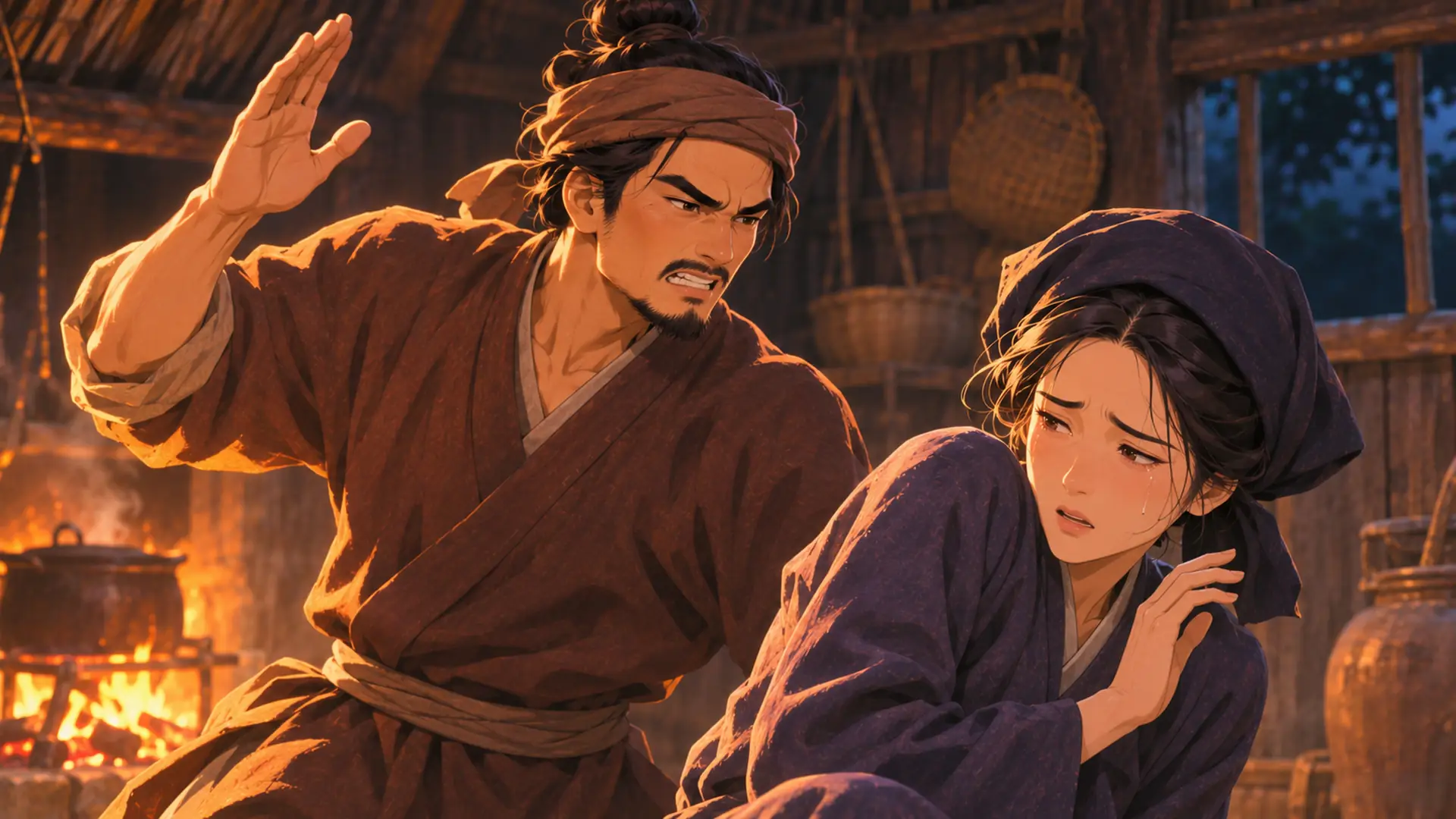
One day, in a fit of anger, Trong Cao struck his wife.
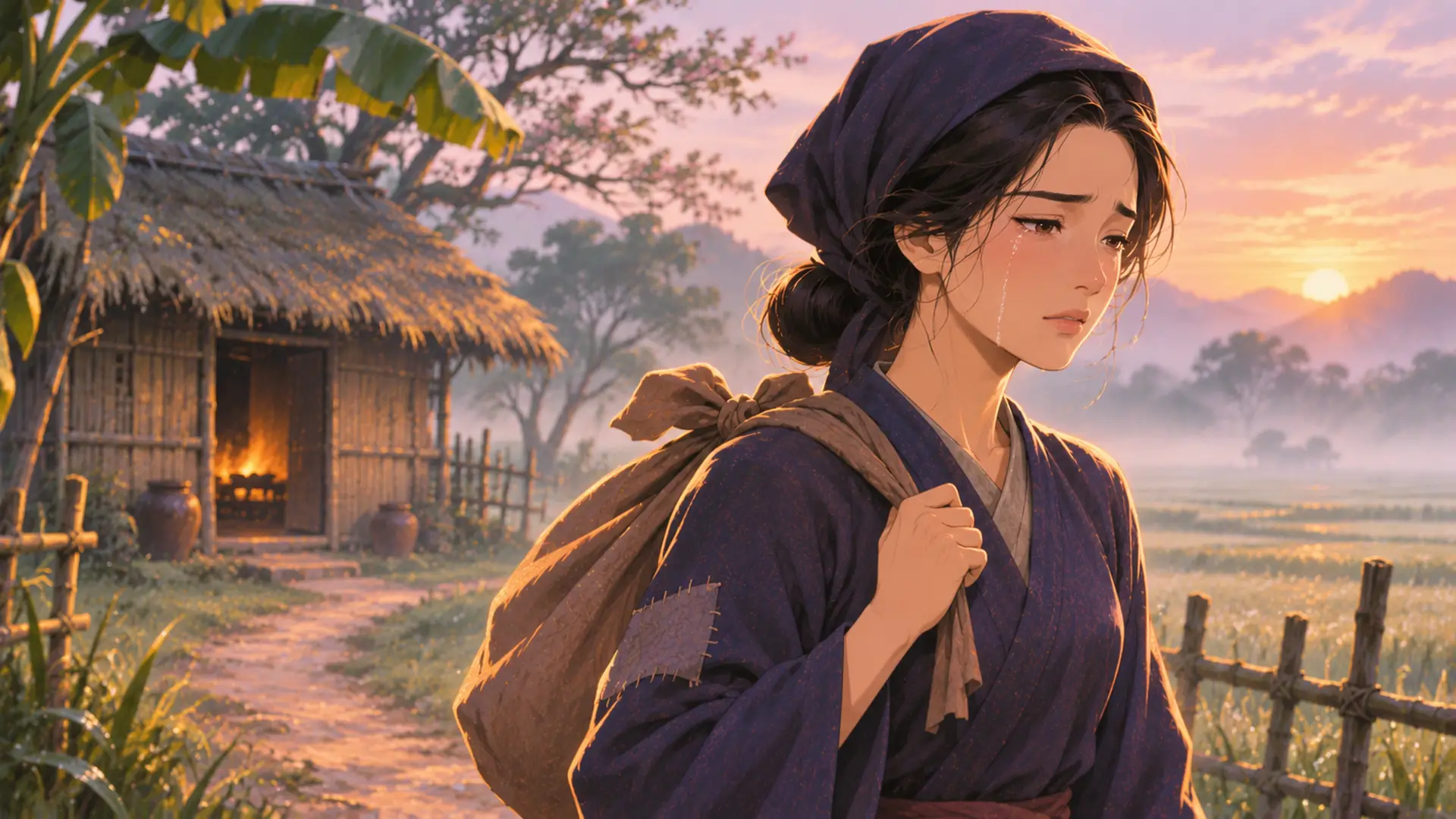
The next morning, Thi Nhi left. She walked until the village was far behind her, and in time she married another man — a hunter named Pham Lang.
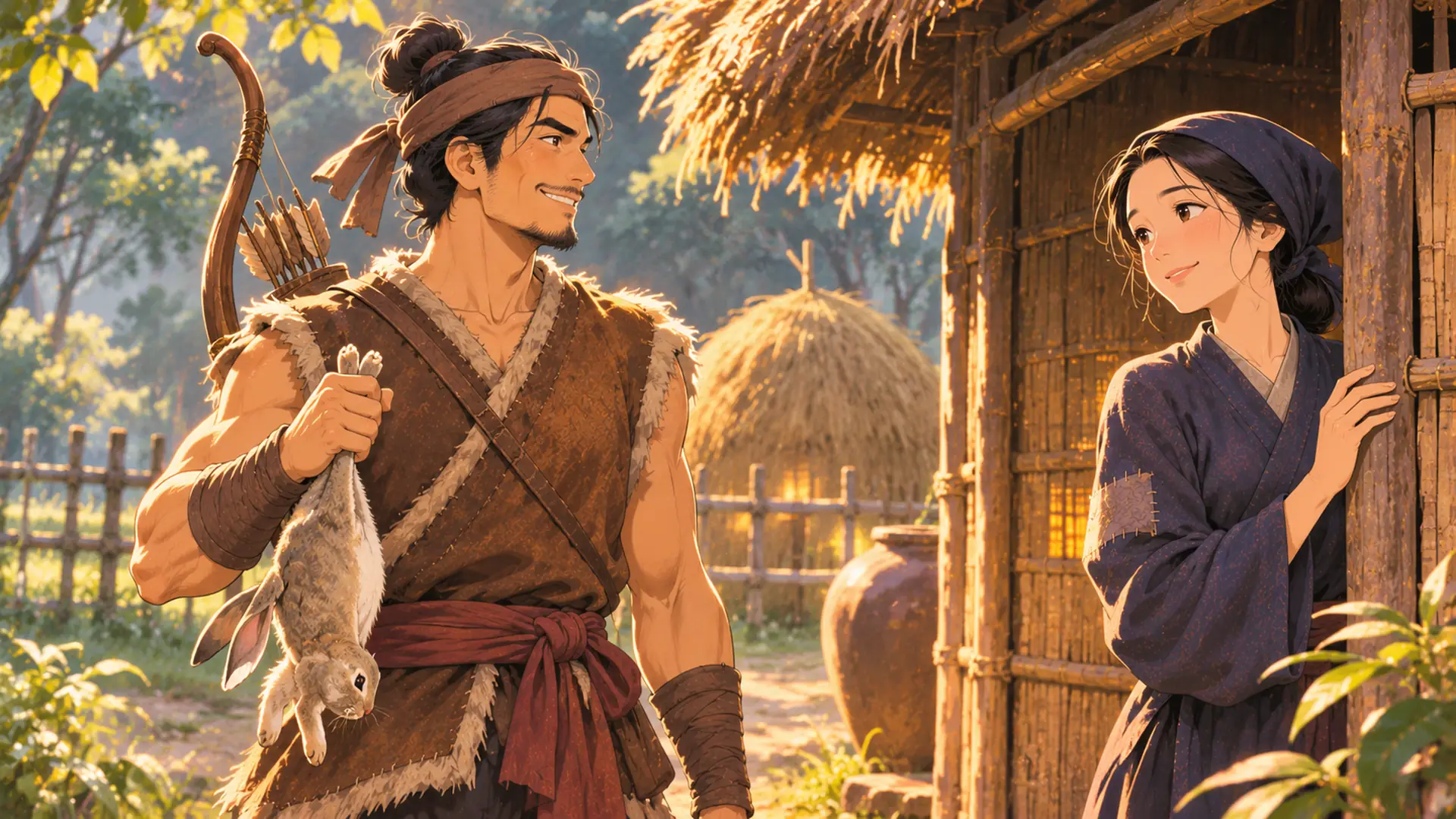
Pham Lang was gentle, and he loved her dearly. Her new life was peaceful. But sometimes she still stood looking down the long road, saying nothing.
Chapter
The Beggar at the Door
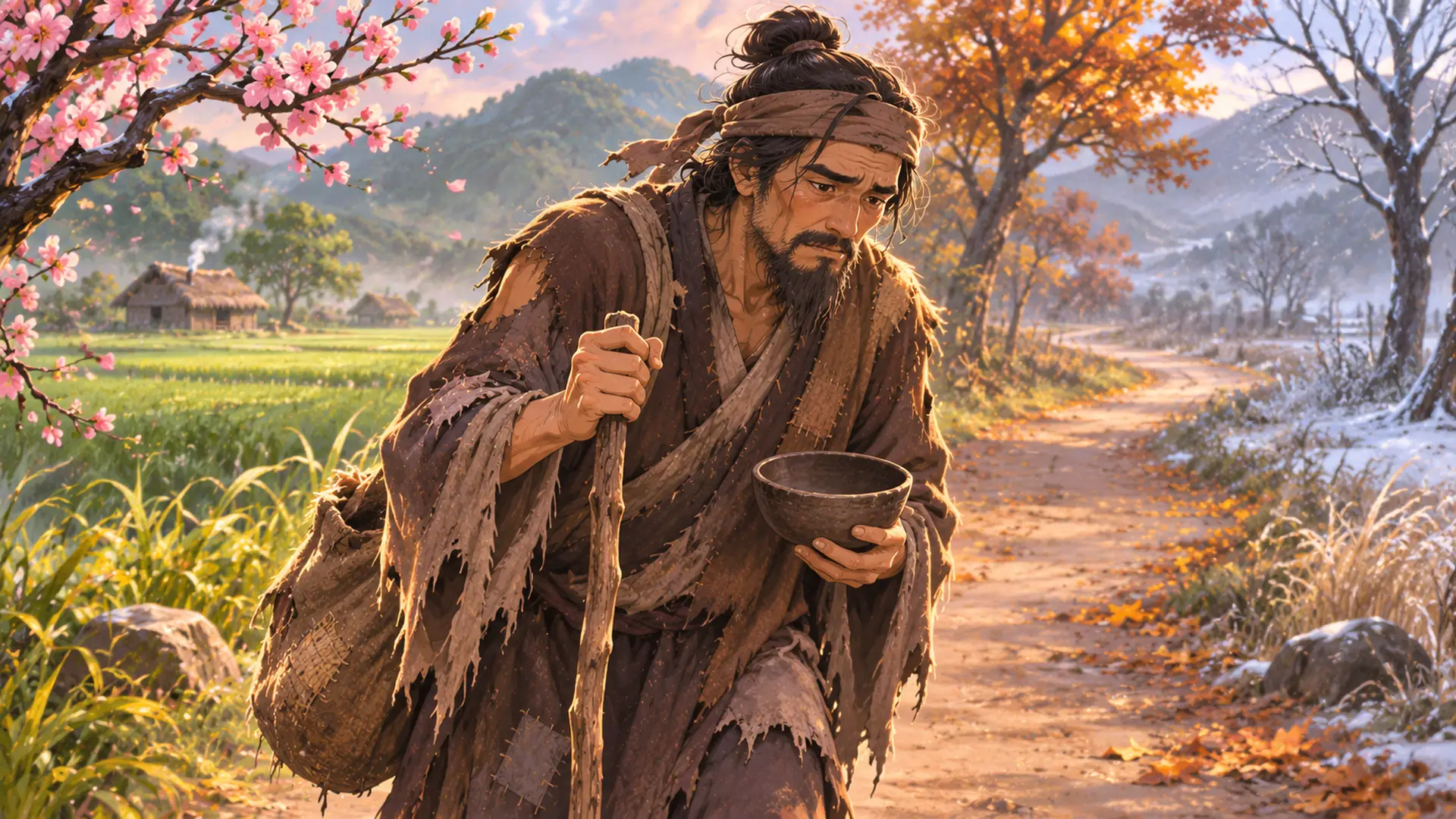
As for Trong Cao — only once she was gone did he understand what he had lost. He left home to find her. He searched through the seasons, until his money ran out, his clothes turned to rags, and he had to beg to stay alive.
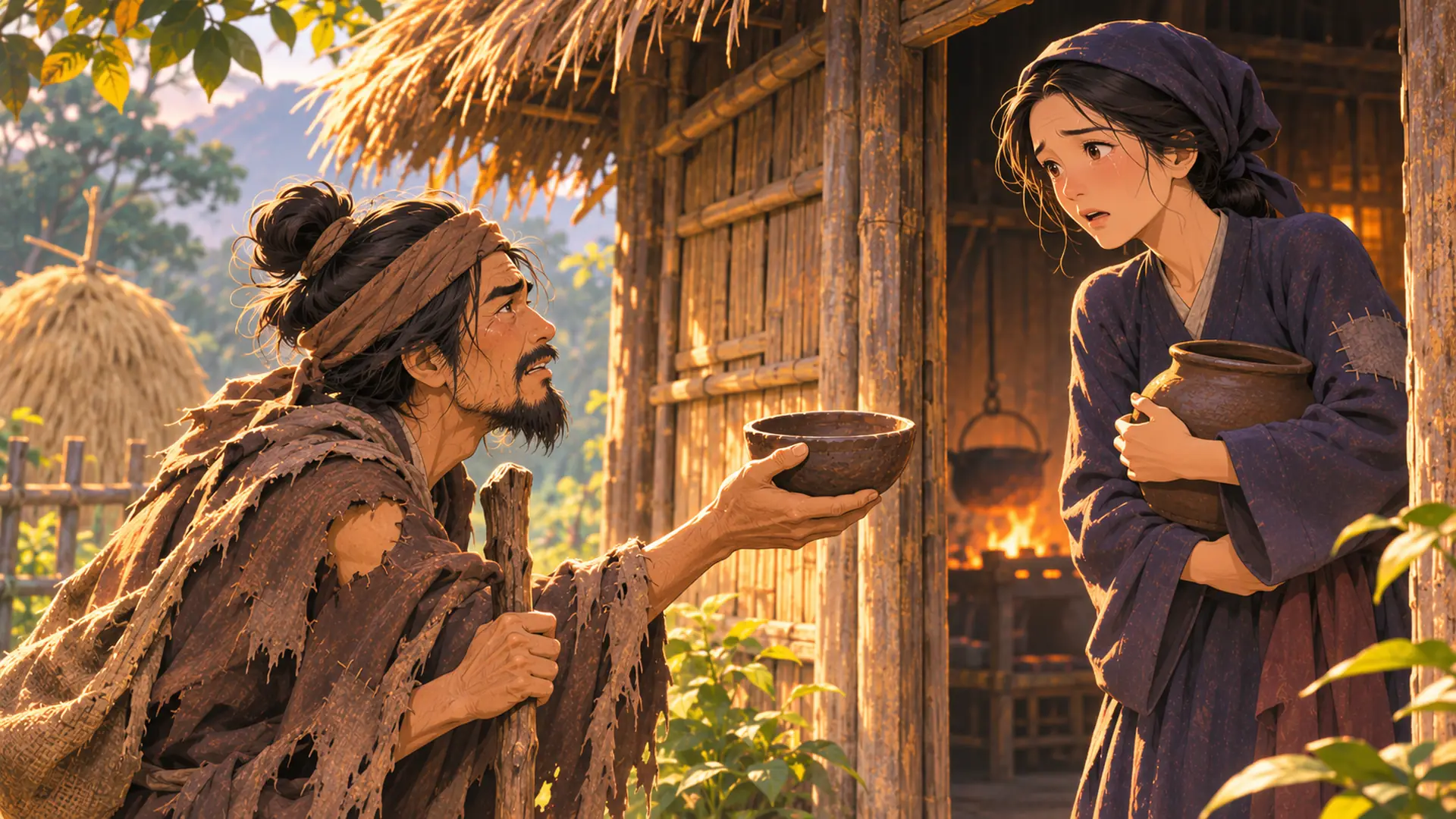
One day he stopped at a house to ask for food. The woman who opened the door froze. It was Thi Nhi.
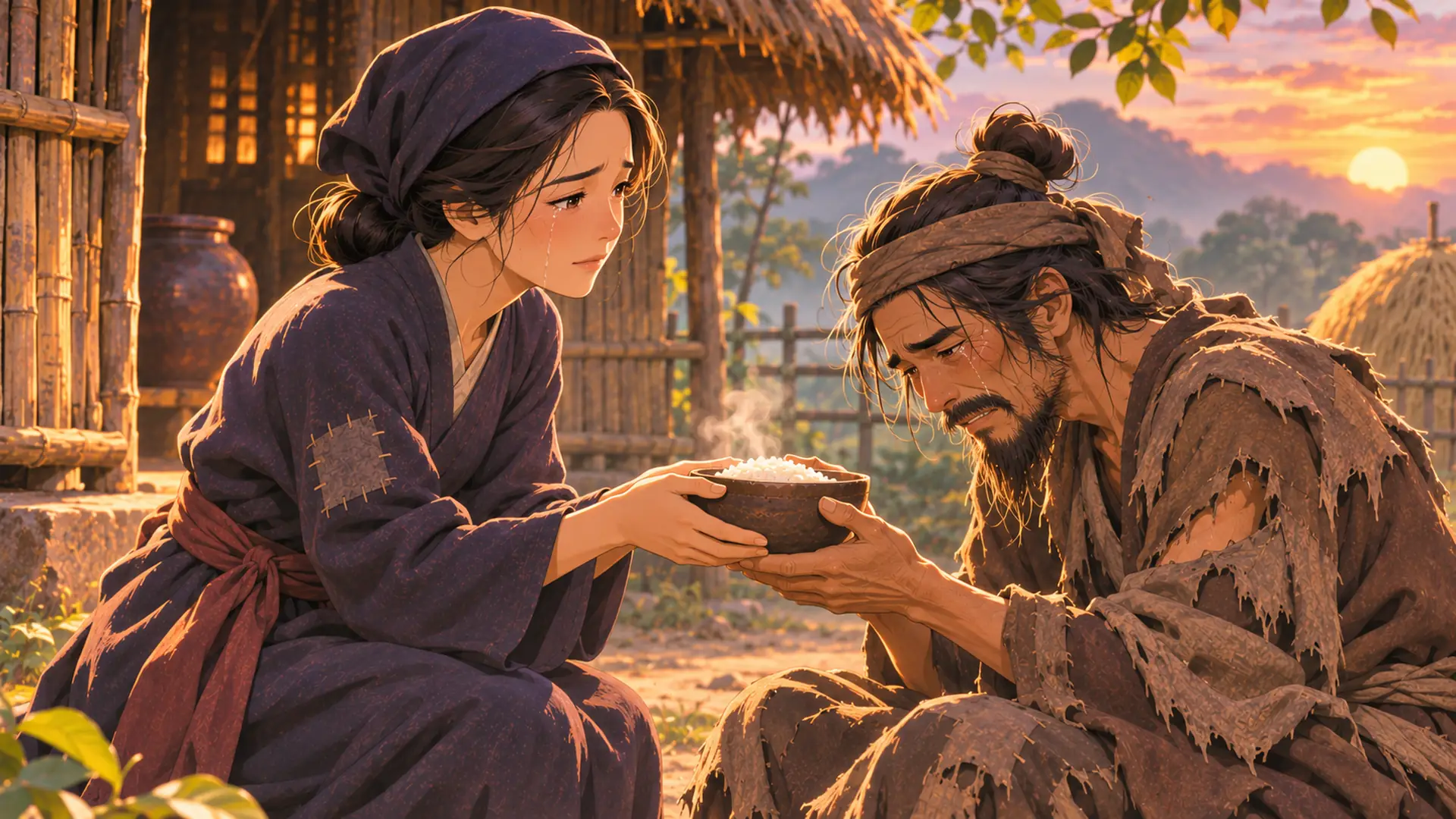
She still pitied the man she had once married. She brought him into the yard and cooked him a meal. The two of them looked at each other, and neither could speak.
Chapter
The Fire
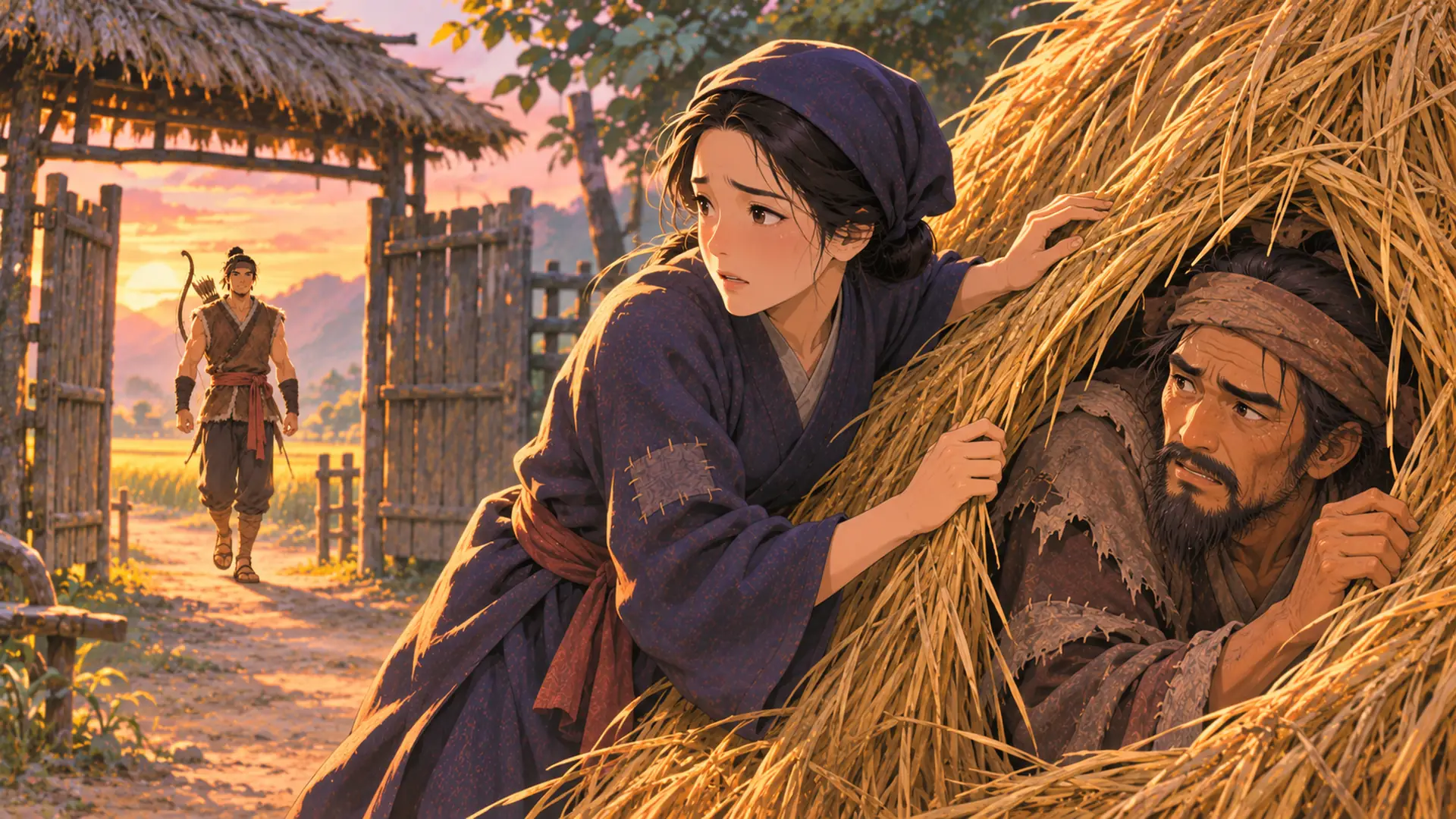
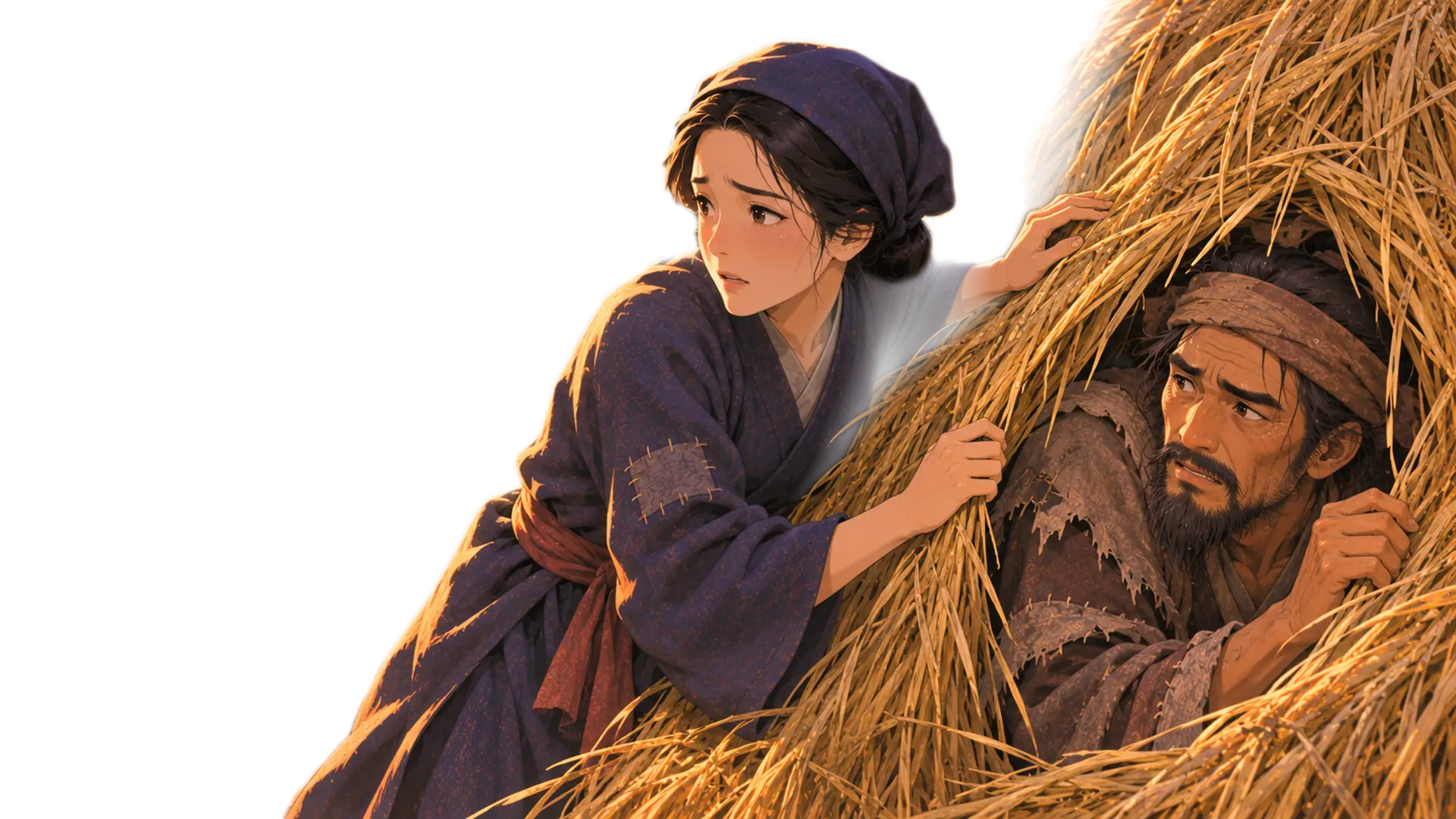
Then they heard Pham Lang coming home. Afraid her husband would misunderstand, Thi Nhi quickly hid Trong Cao inside the haystack behind the house.

That night, Pham Lang went out to burn the haystack, to make ash for his fields. He had no idea a man was lying inside.

When the flames leapt up, Thi Nhi knew what she had done. Heartbroken, she threw herself into the fire. Pham Lang, who loved her, leapt in after her.
By morning, only ashes were left. Three people — one full of regret, one full of pity, one faithful to the end. But their story did not end there.
Chapter
The Three Stones
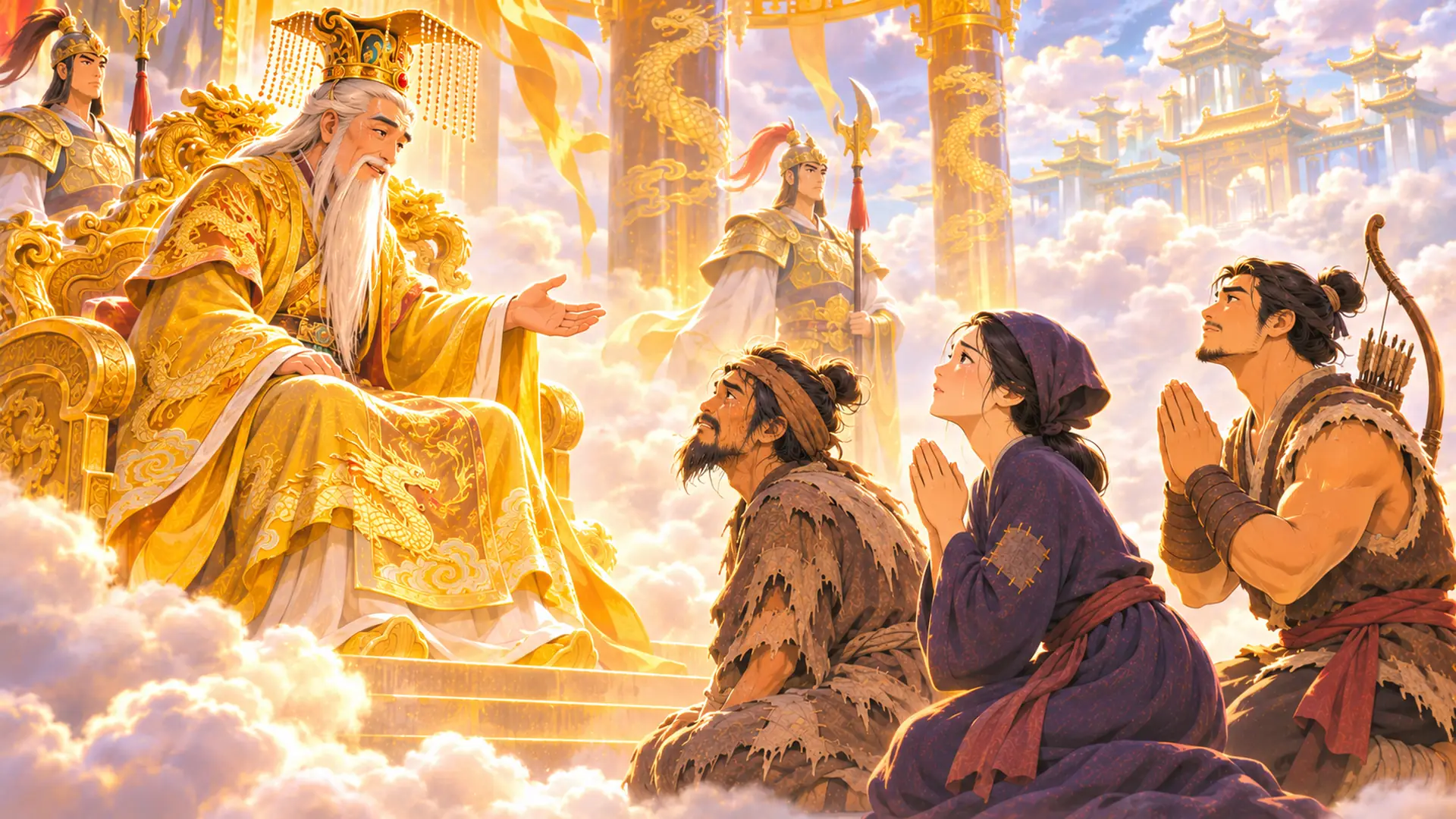
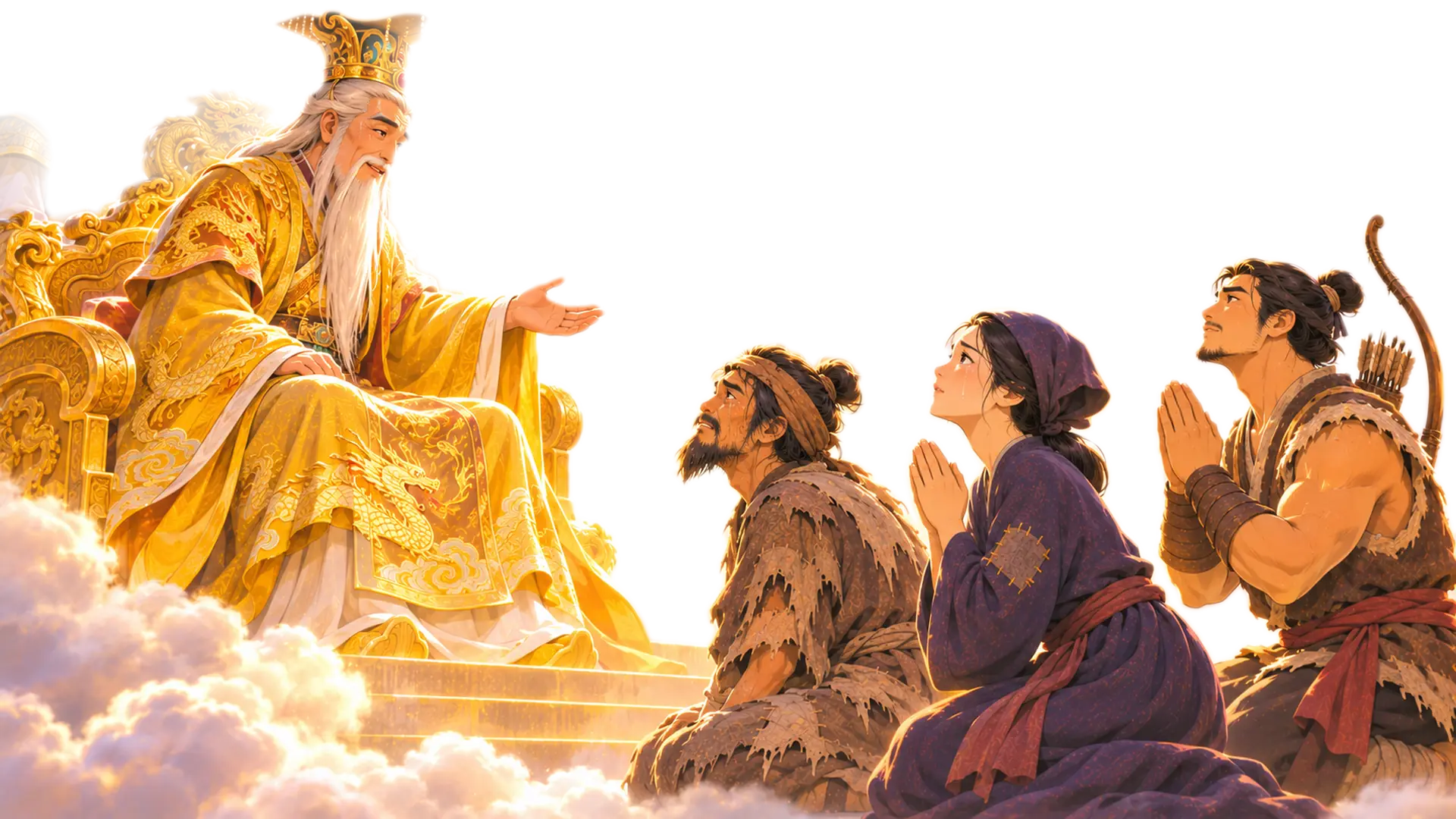
In Heaven, the Jade Emperor, ruler of all the gods, was moved by the hearts of all three. He decided they should never be parted again.
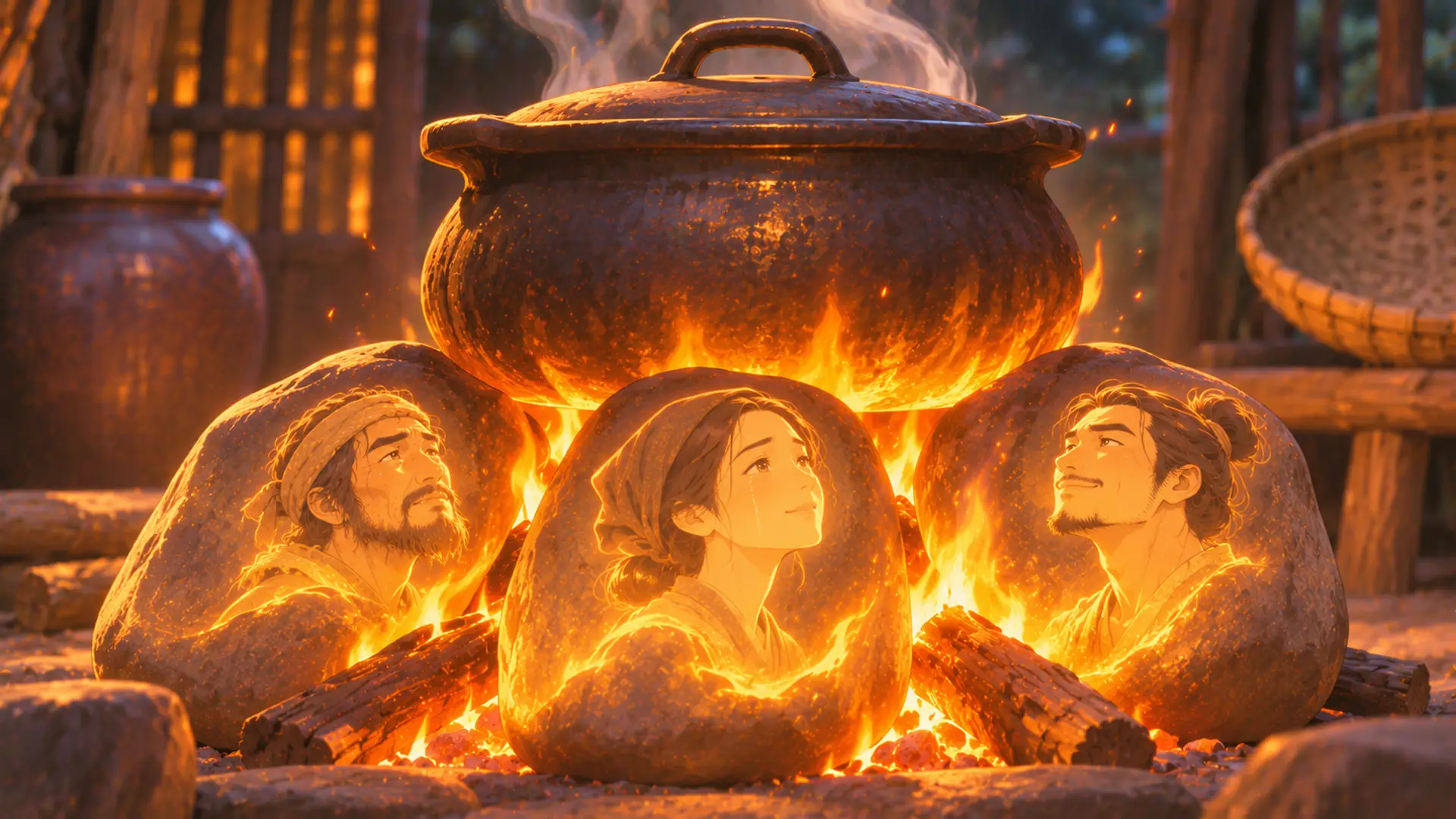
He turned them into the three stones of the kitchen hearth — the stones that hold up the cooking pot. Take one away, and the pot falls. From then on they were the Táo Quân, the Kitchen Gods, guardians of every household.
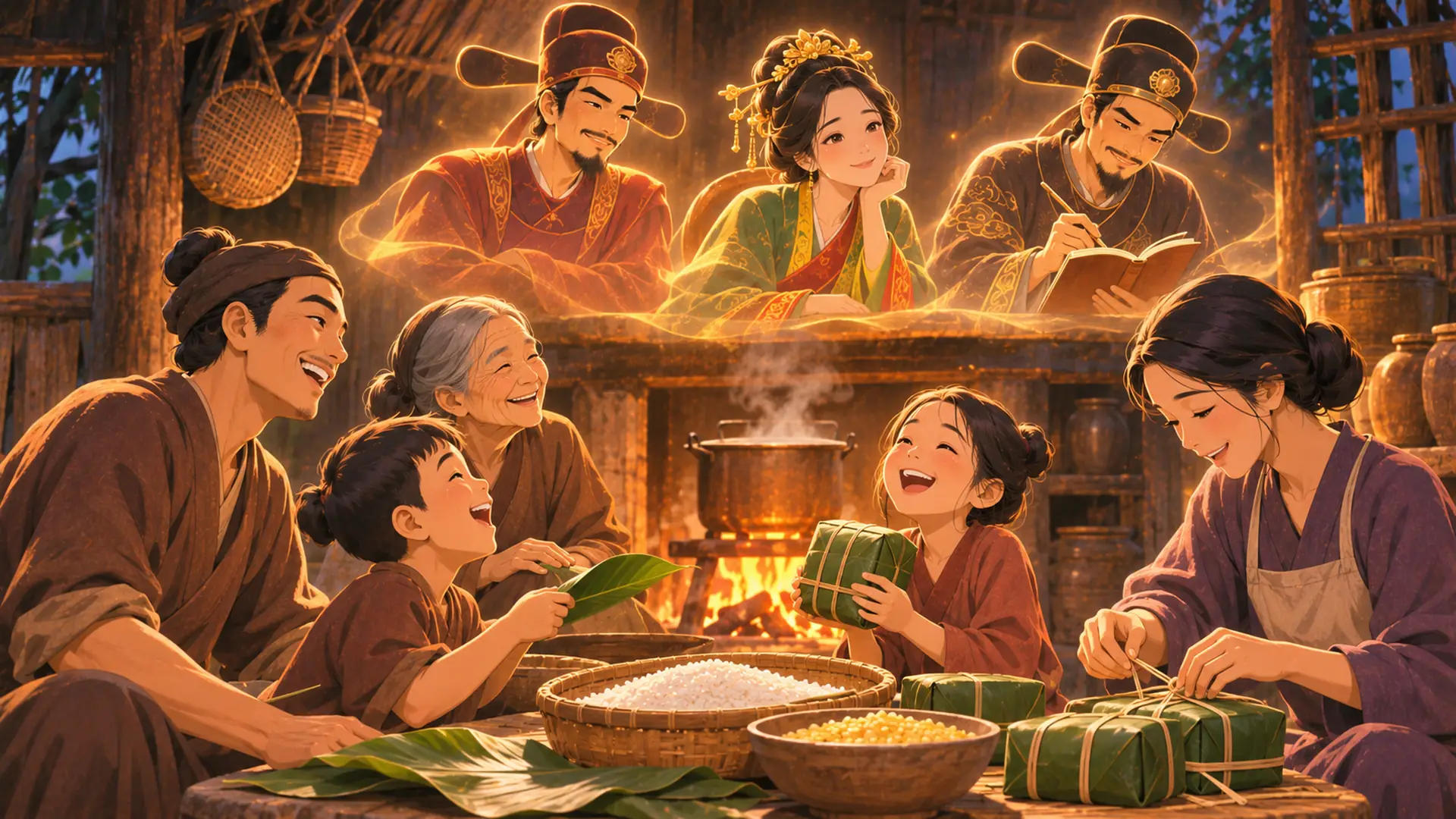
People say the Kitchen Gods sit in the kitchen all year, watching everything that happens in the house: who works hard and who is lazy, who is kind, and who has been quarrelling.
Chapter
The Carp Ride
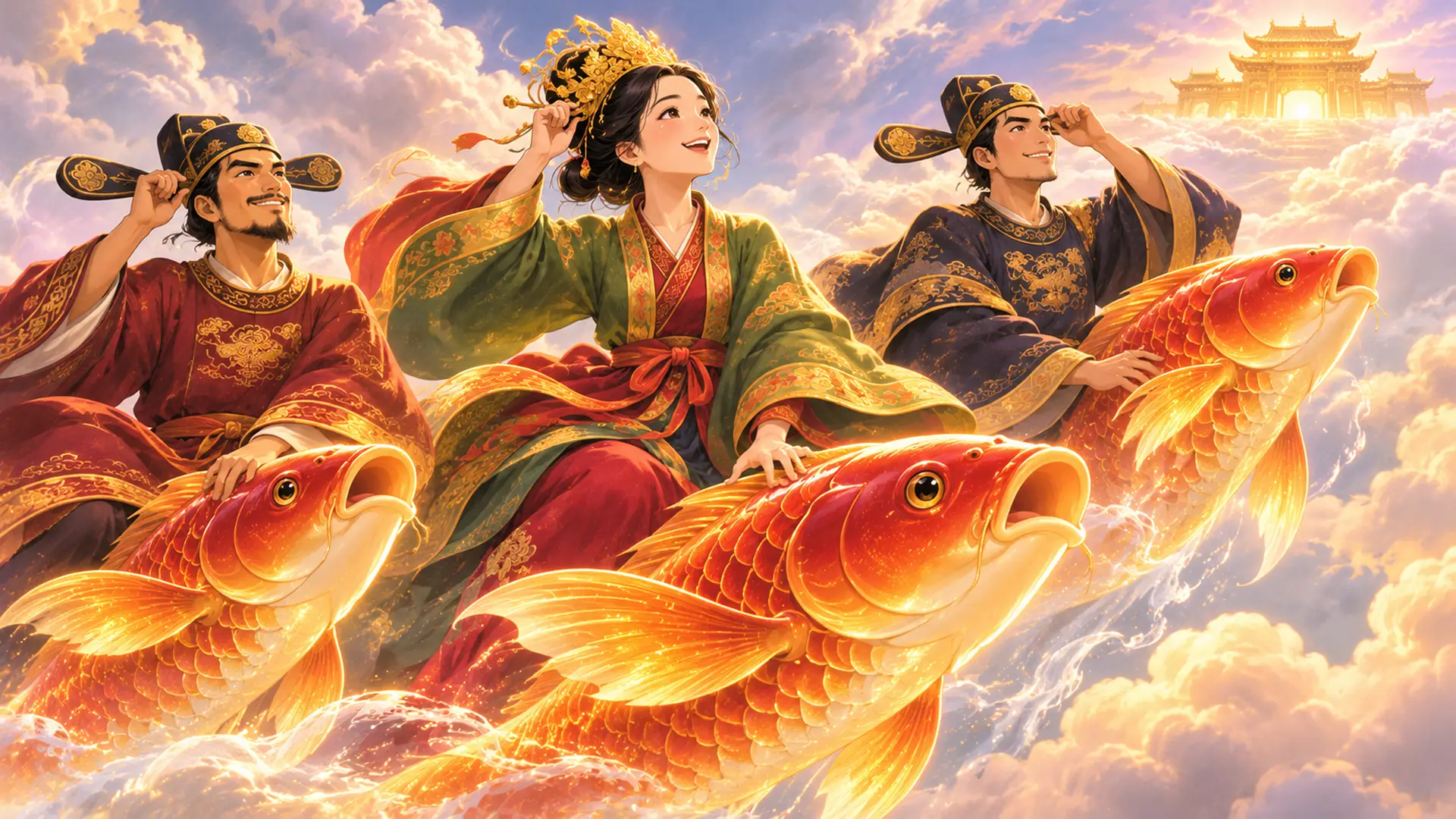
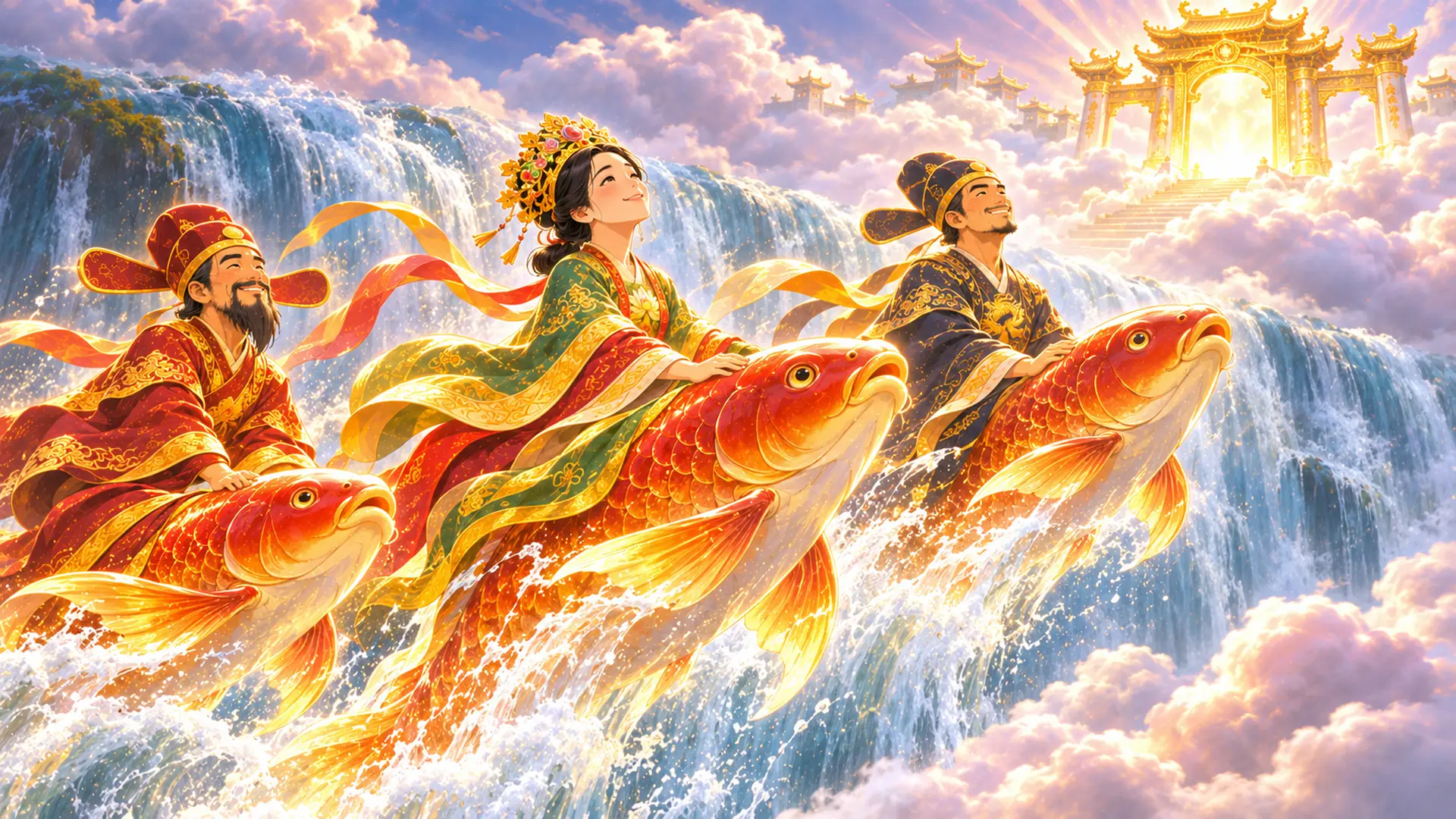
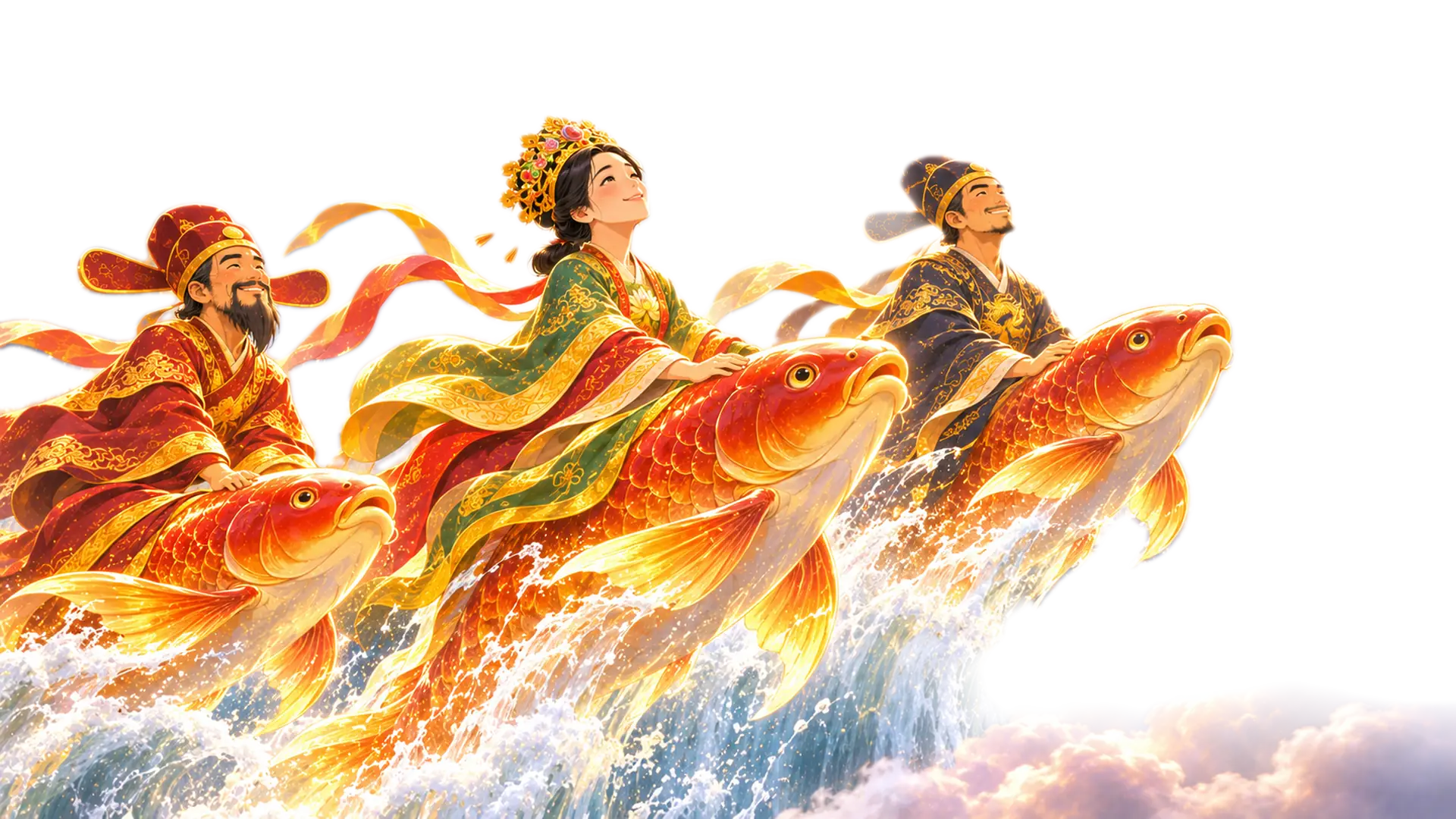
And every year, on the twenty-third day of the twelfth lunar month, the Kitchen Gods ride their carp up to Heaven.
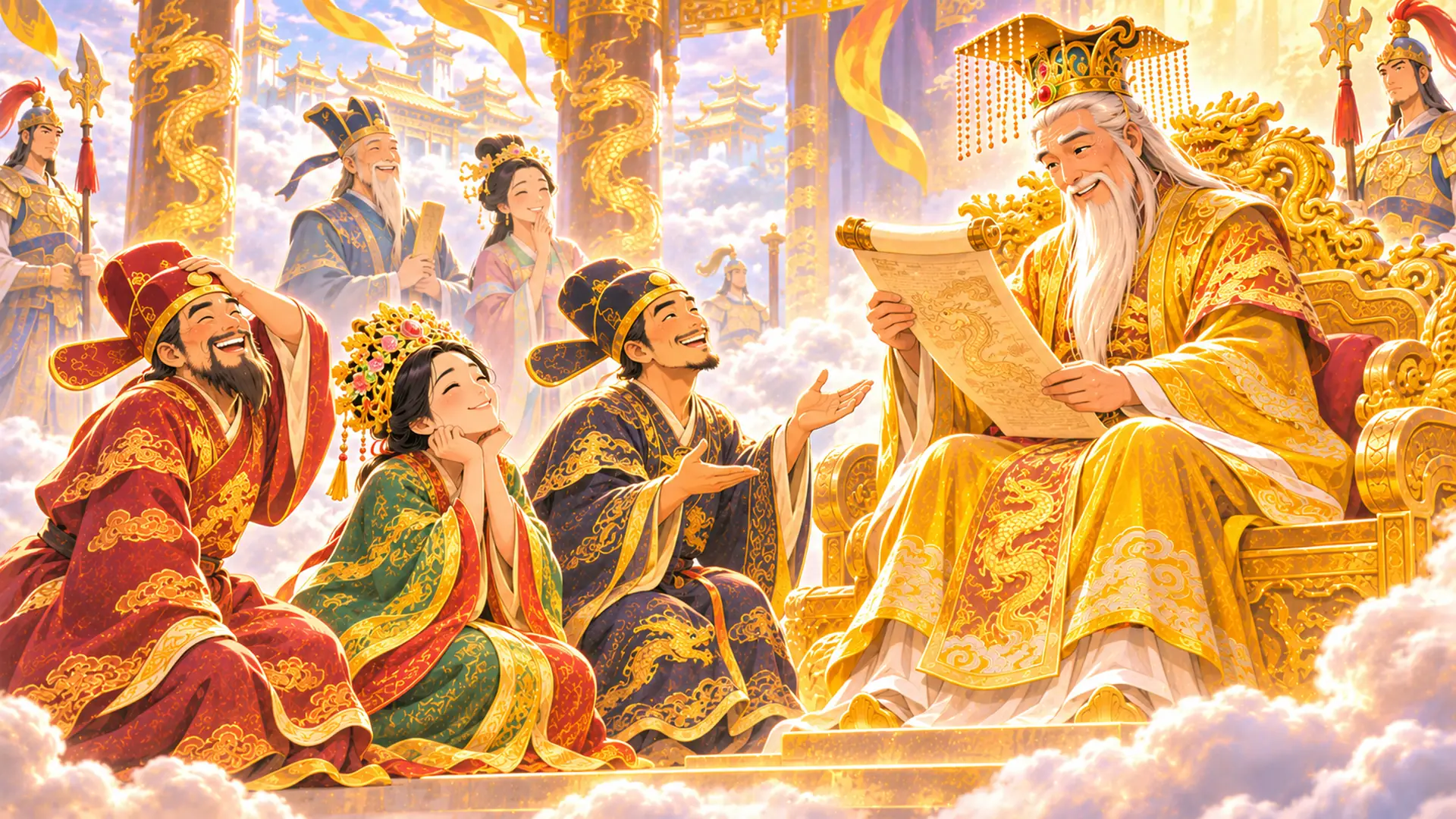
At the Heavenly court they report to the Jade Emperor everything the family did that year, the good and the bad. They come home only on New Year’s Eve.
Chapter
Sending Them Off
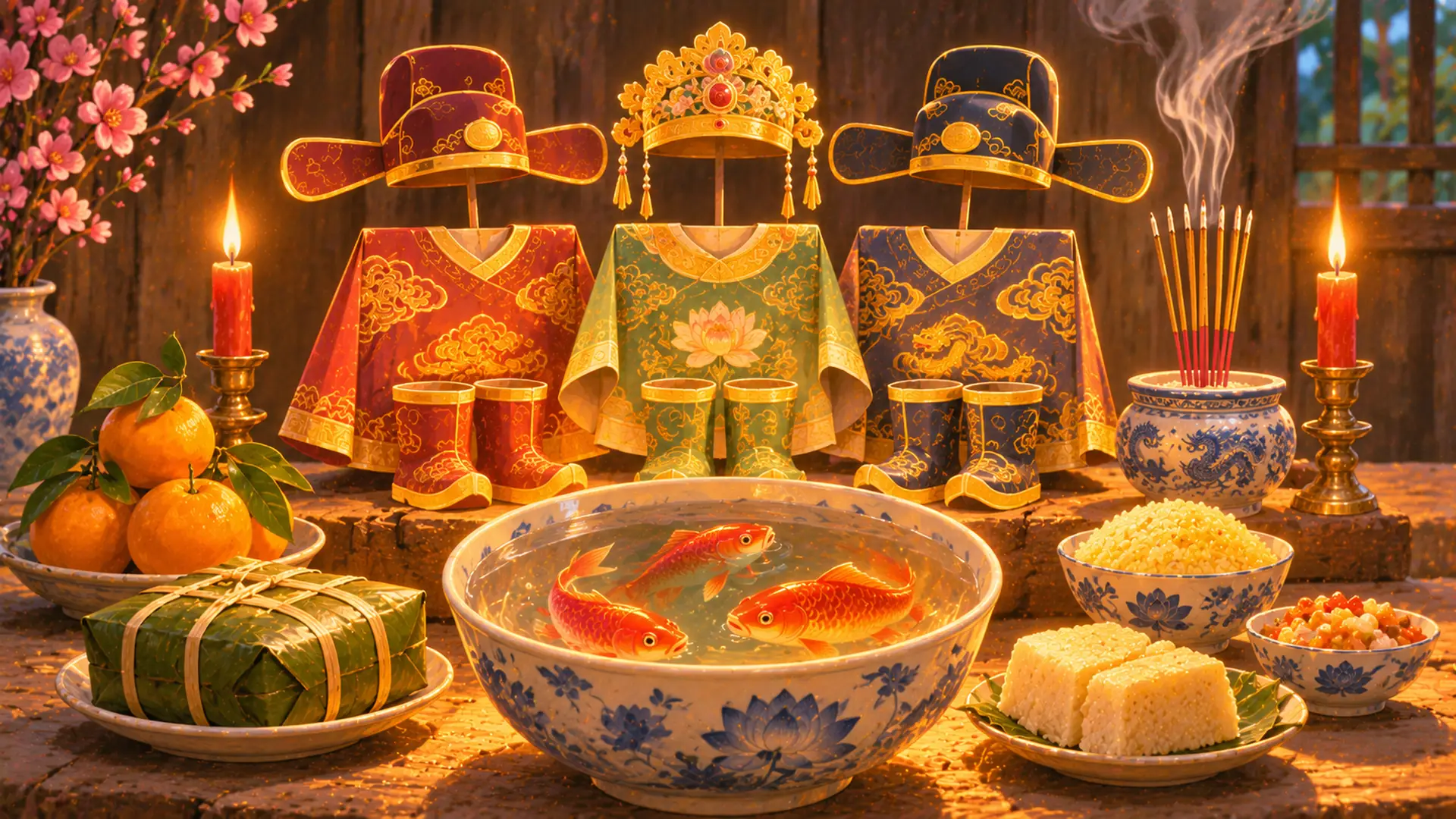
The tale has many versions, but the custom is alive today. On the twenty-third of the twelfth month, families clean their altars and lay out offerings to send the Kitchen Gods on their way: three paper hats — two for the men, one for the woman — with paper robes and boots. In the old folk paintings, the Kitchen God wears a hat and a robe… and no trousers.
Everyone hopes the gods will report only good things. So the offerings had better be generous.
After the offering, the carp are released into rivers and lakes, so the gods have something to ride. On that morning, every lakeshore is crowded. And Vietnamese folklore says a carp that leaps the great waterfall becomes a dragon — so that little fish might be a dragon in the making.

Sending off the Kitchen Gods is when Tet truly begins. For about twenty years, New Year’s Eve in Vietnam was also the night of a TV comedy called Táo Quân, in which the Kitchen Gods reported the whole country’s year to Heaven.
A story that began with a tragic fire became the warm fire in every Vietnamese kitchen. If the gods in your kitchen went up to Heaven this year, what would they say?