Chapter
Exiled for a Sentence
A king sends a man to an empty island, with food for just a few days.
A few years later, that same king sends a boat to bring him home. And the reason is a fruit.
Chapter
The Boy from the Ship
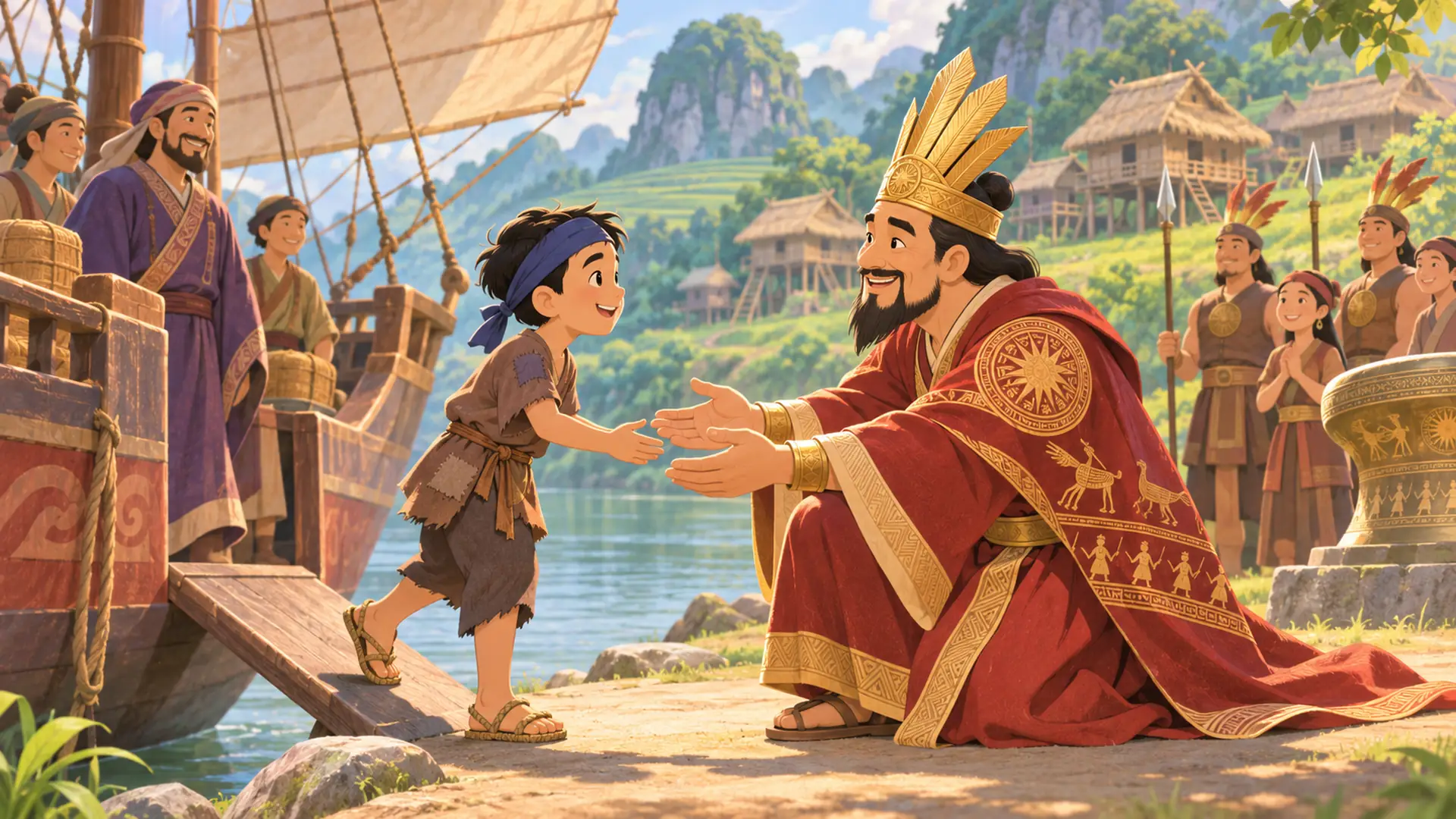
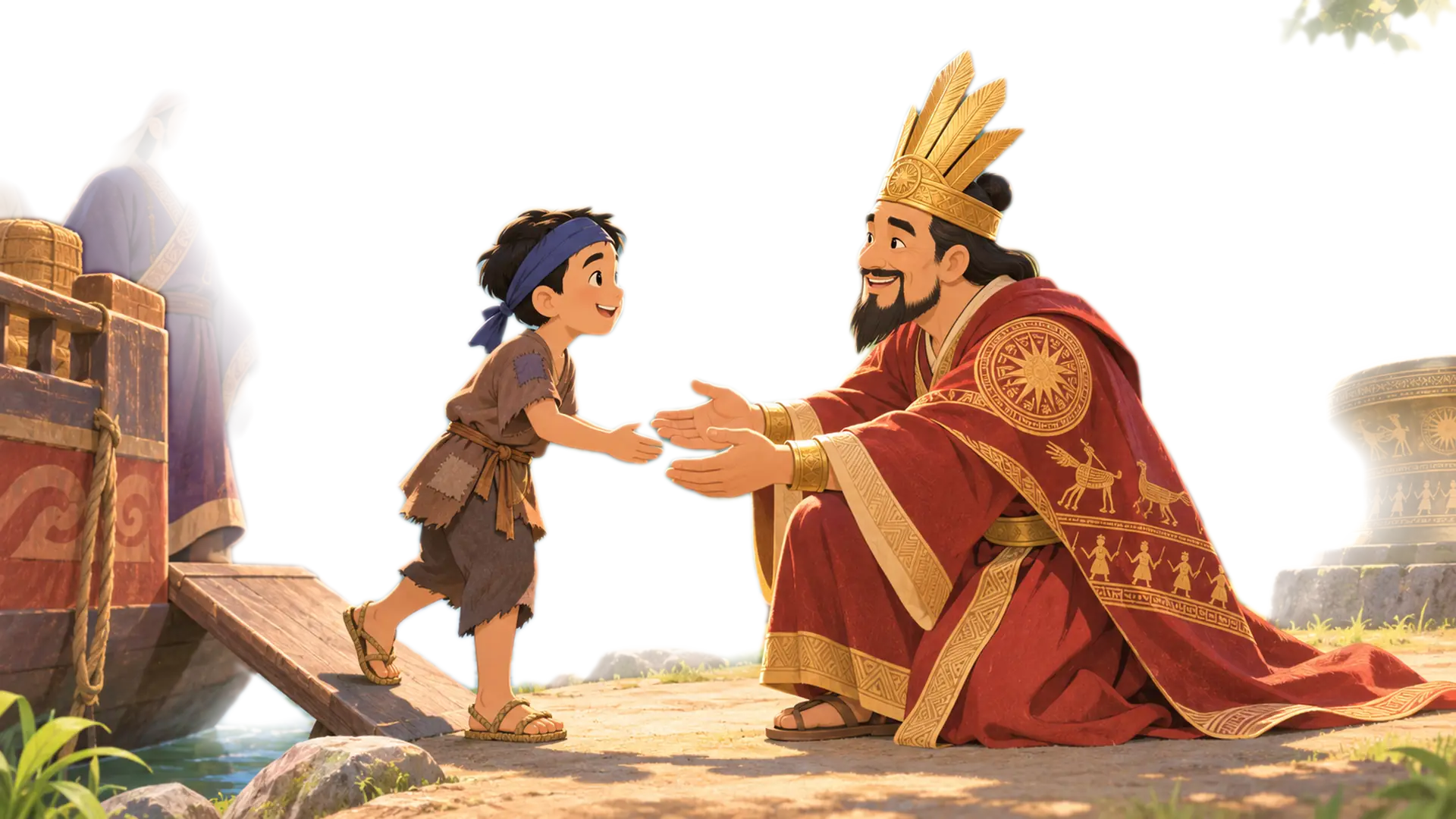
According to legend, in the time of the Hung Kings, a little boy arrived on a merchant ship from a faraway land. The king liked the bright-eyed boy, took him in, and named him Mai An Tiem.
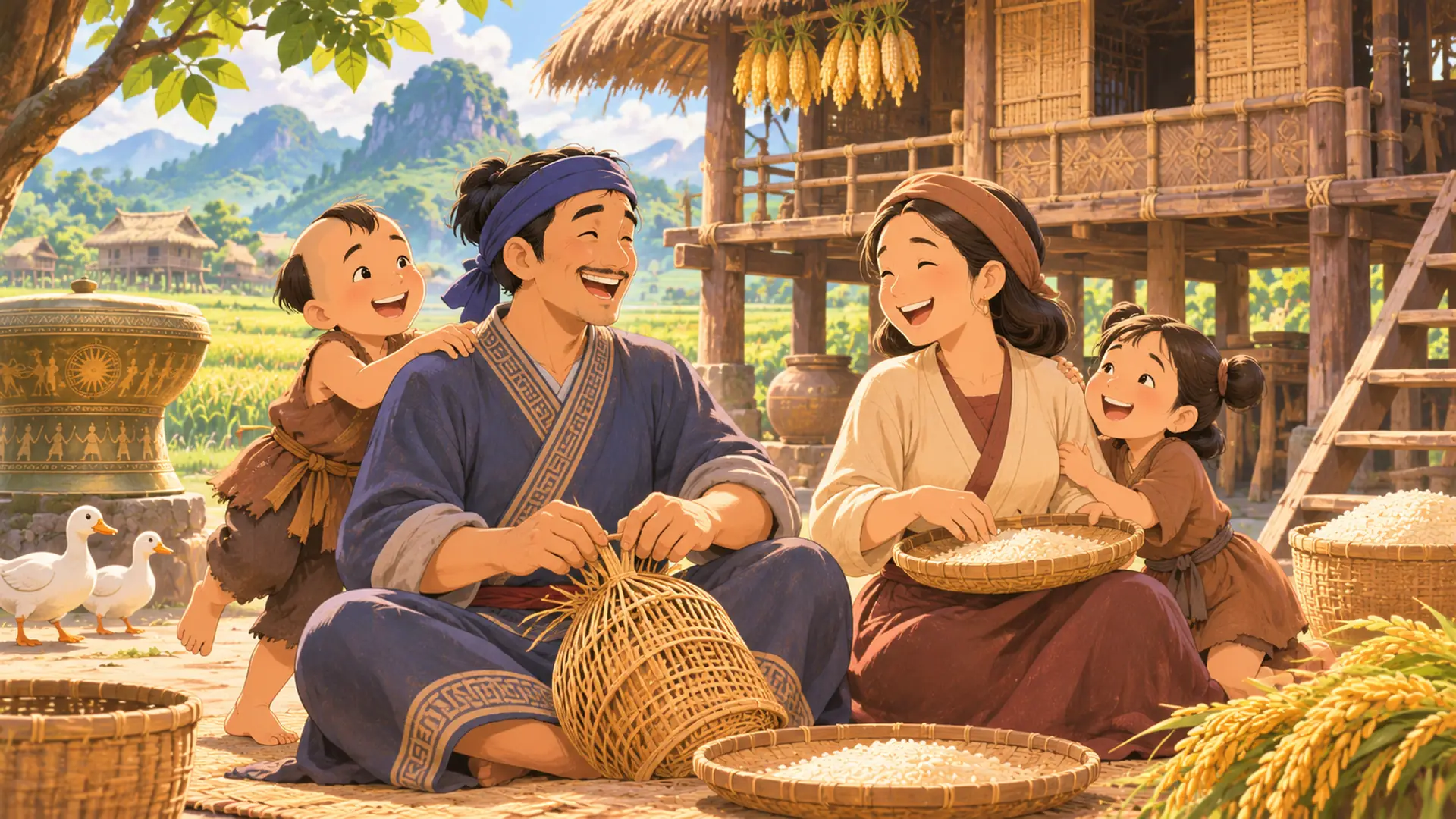
An Tiem grew up clever and hard-working. The king gave him a wife, a house and fields. The couple had a son and a daughter, and lived in comfort.
Chapter
The Feast
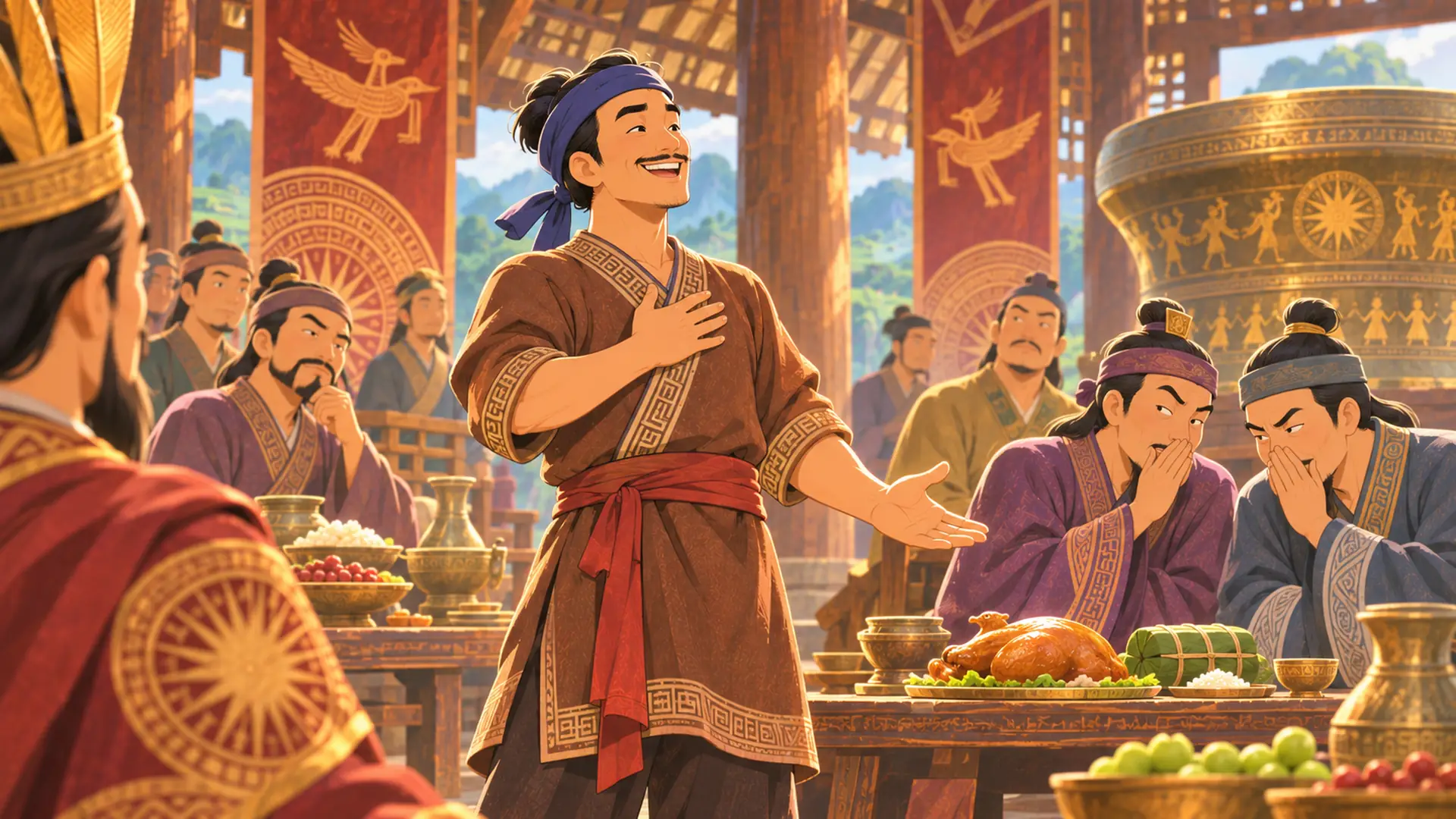
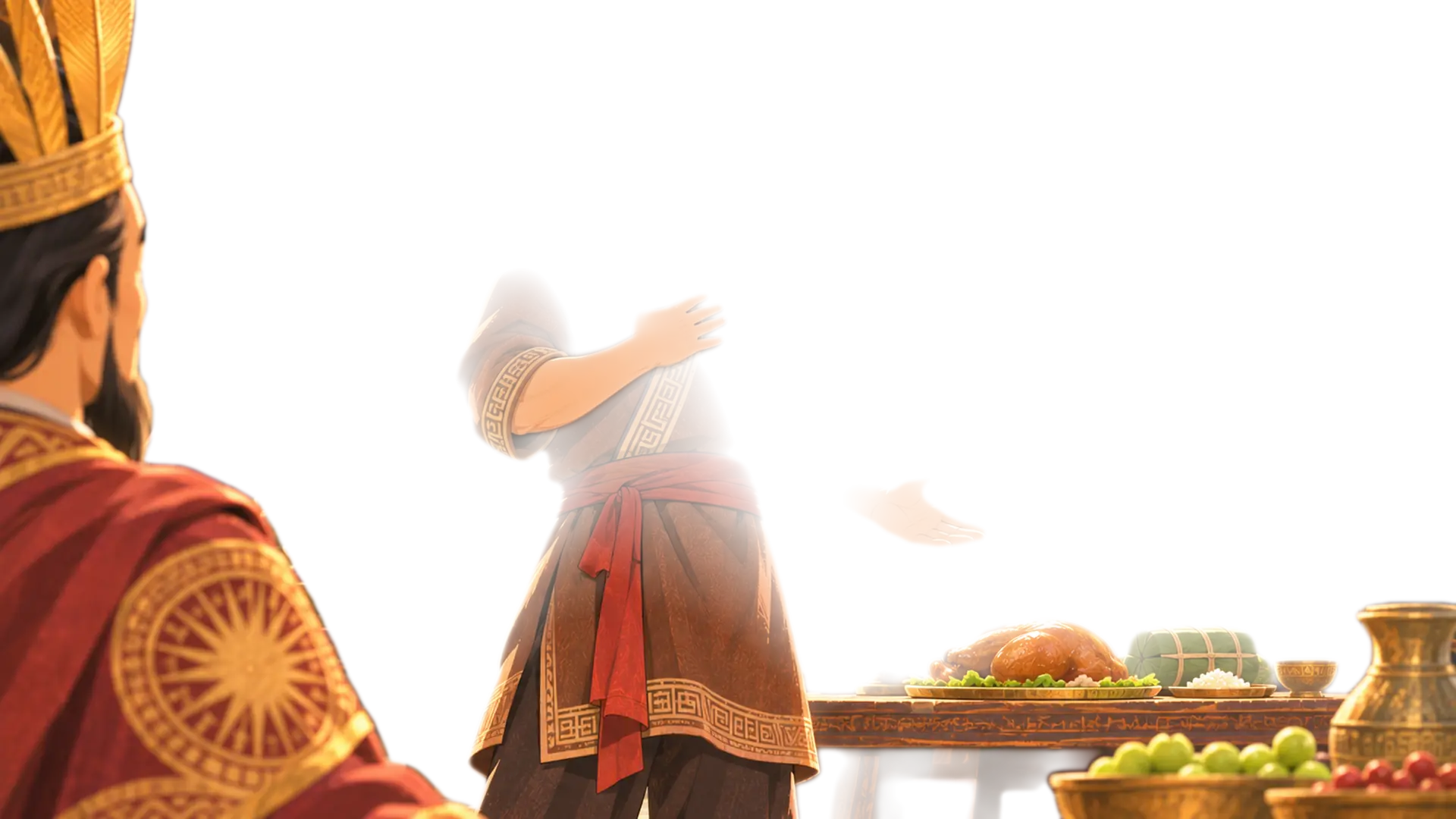
One day, at a feast, a guest told An Tiem how lucky he was — the king had given him so much. An Tiem only smiled.
A gift is a worry. What is given is a debt.
It is an old saying, and he meant it plainly: what I have, I earned with my own hands.
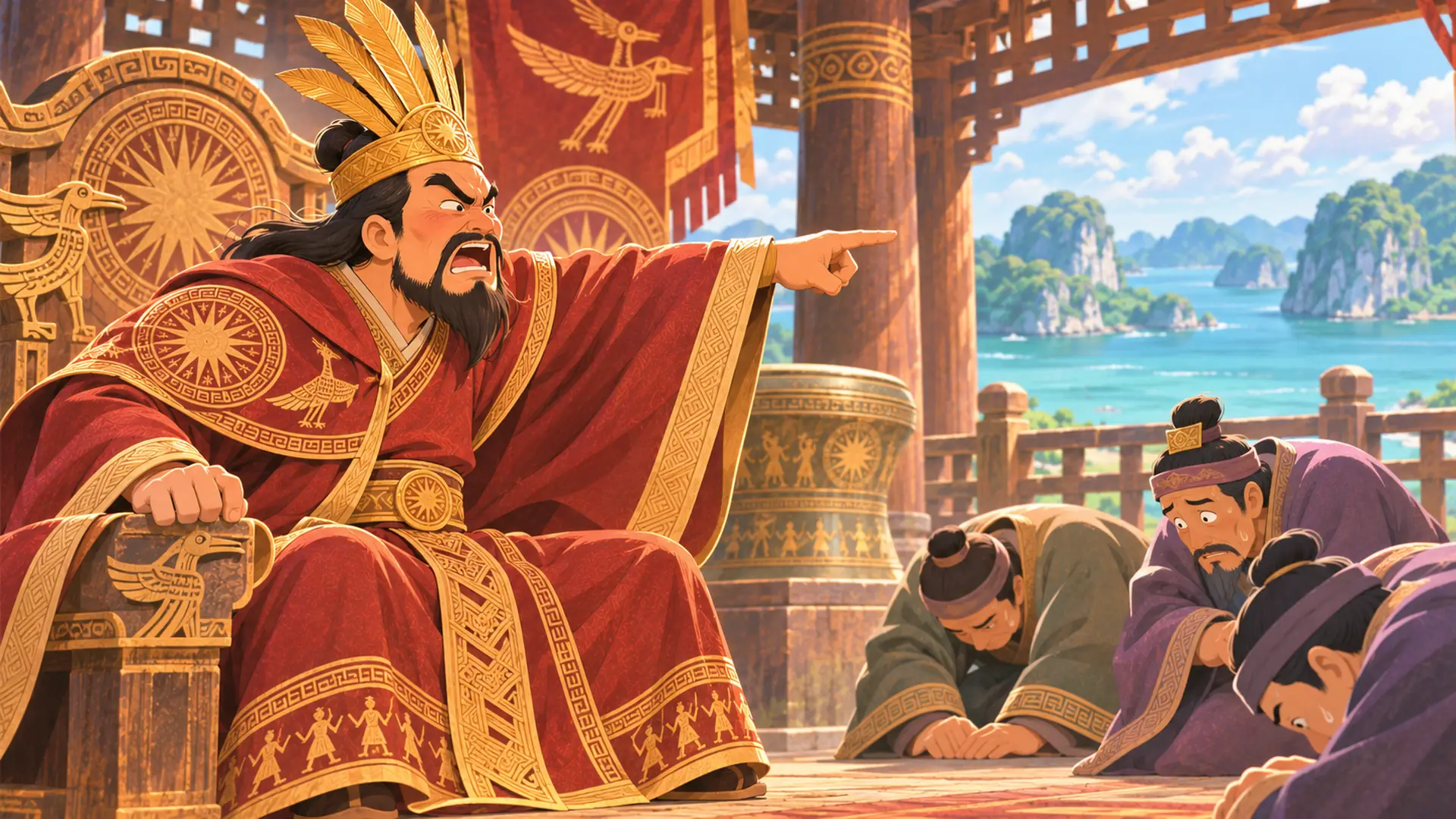
Those words reached the king, and the king was furious.
So you made it all yourself? Then go and live on a deserted island — and let’s see if you survive.
Chapter
The Empty Island
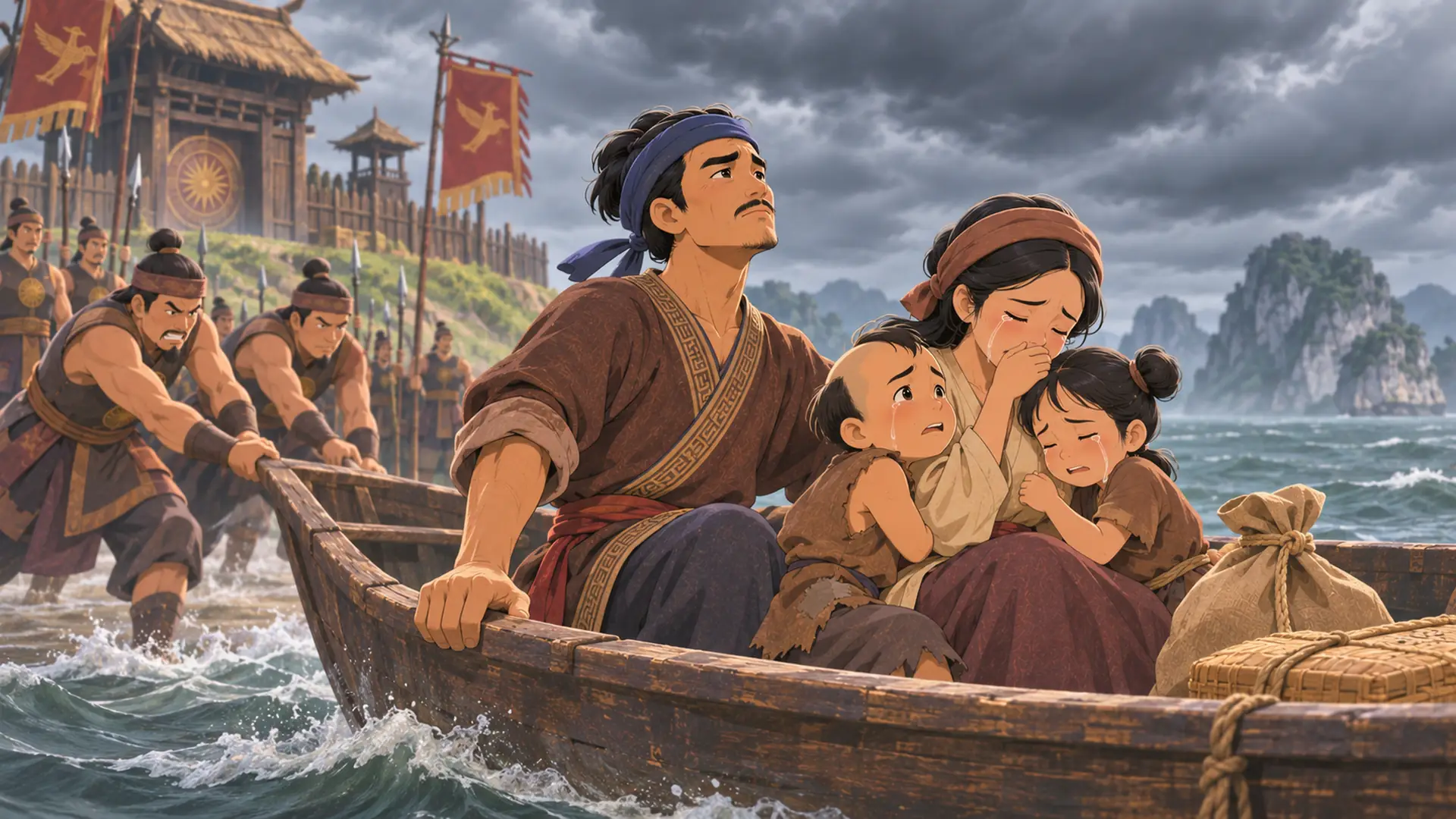
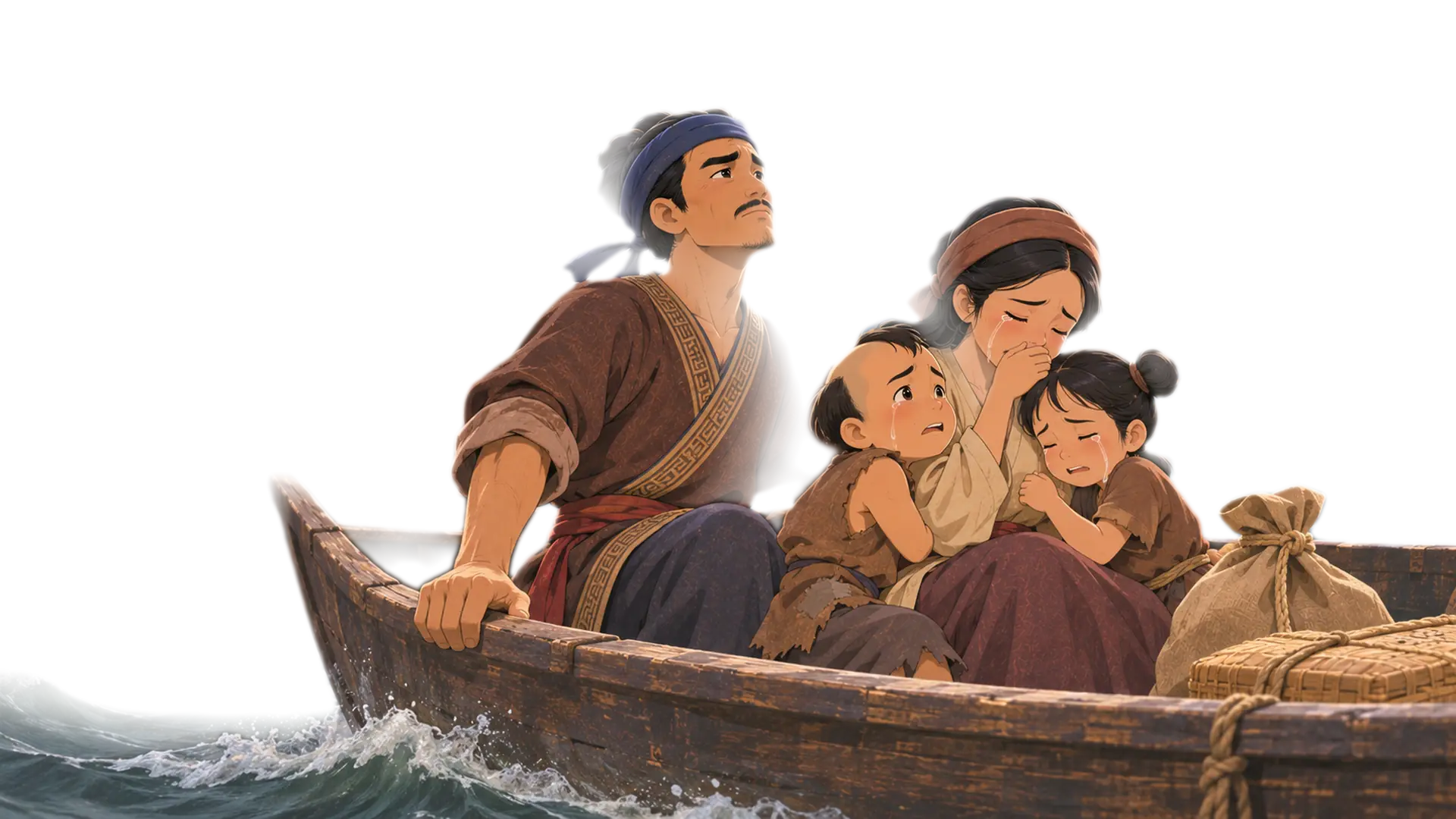
So An Tiem and his whole family were taken to an island in the middle of the sea, with only a few days of food.
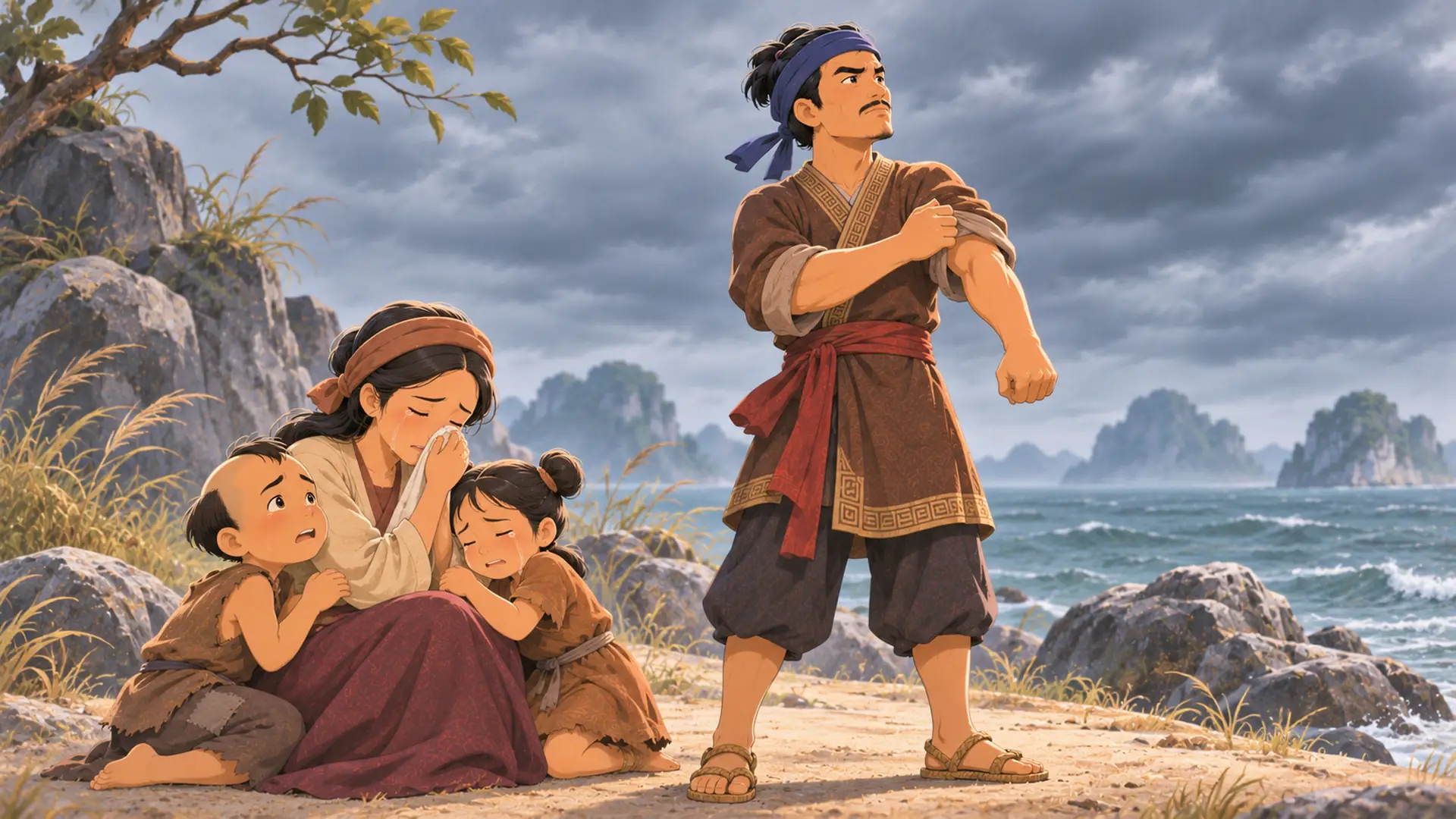
White sand and rocks. Not a soul. Not one tree you could eat from. His wife held the children and wept. But An Tiem rolled up his sleeves.
Heaven makes the elephant, and heaven makes the grass. As long as we have two hands, we can live.
Chapter
Two Hands
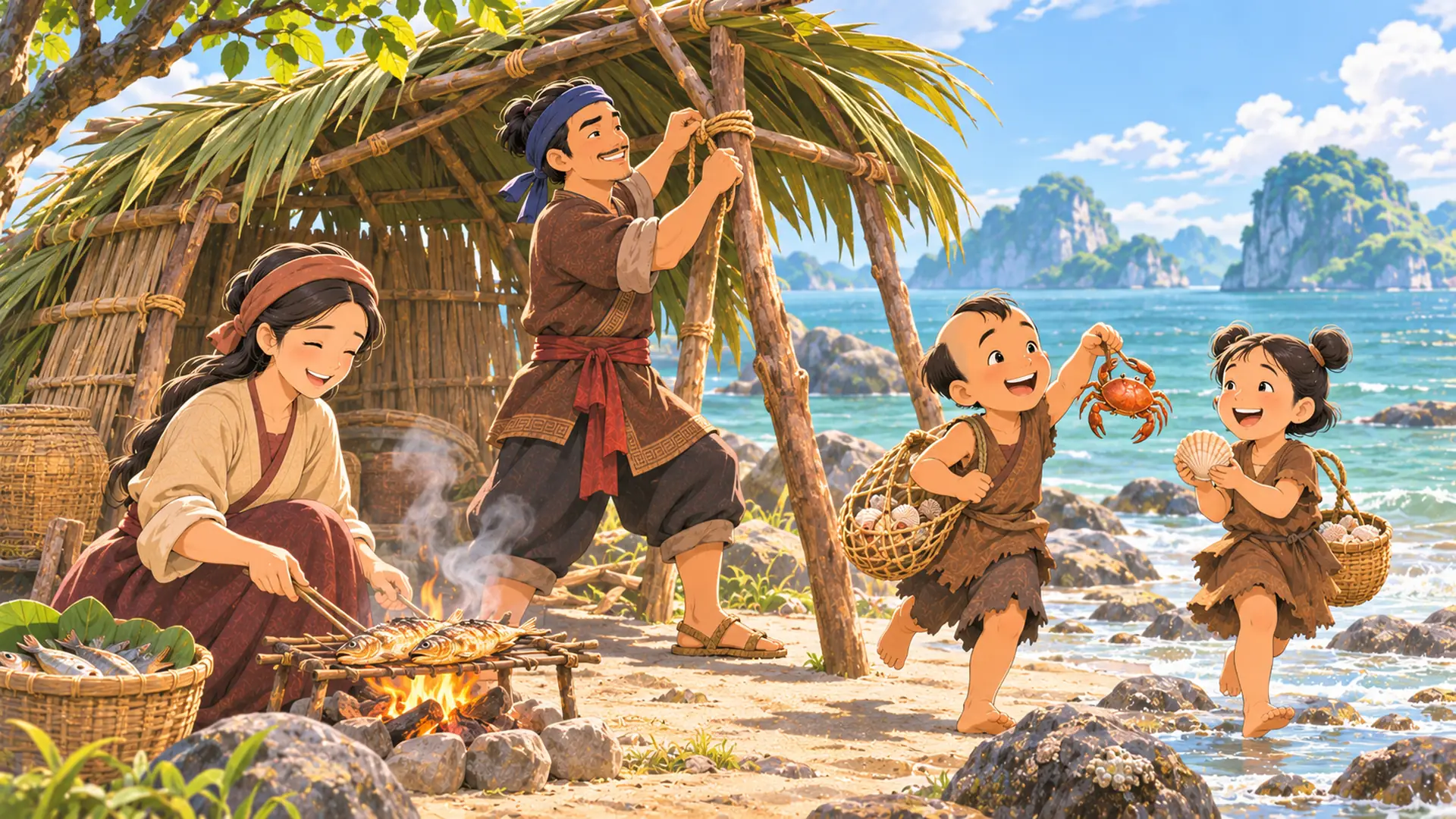
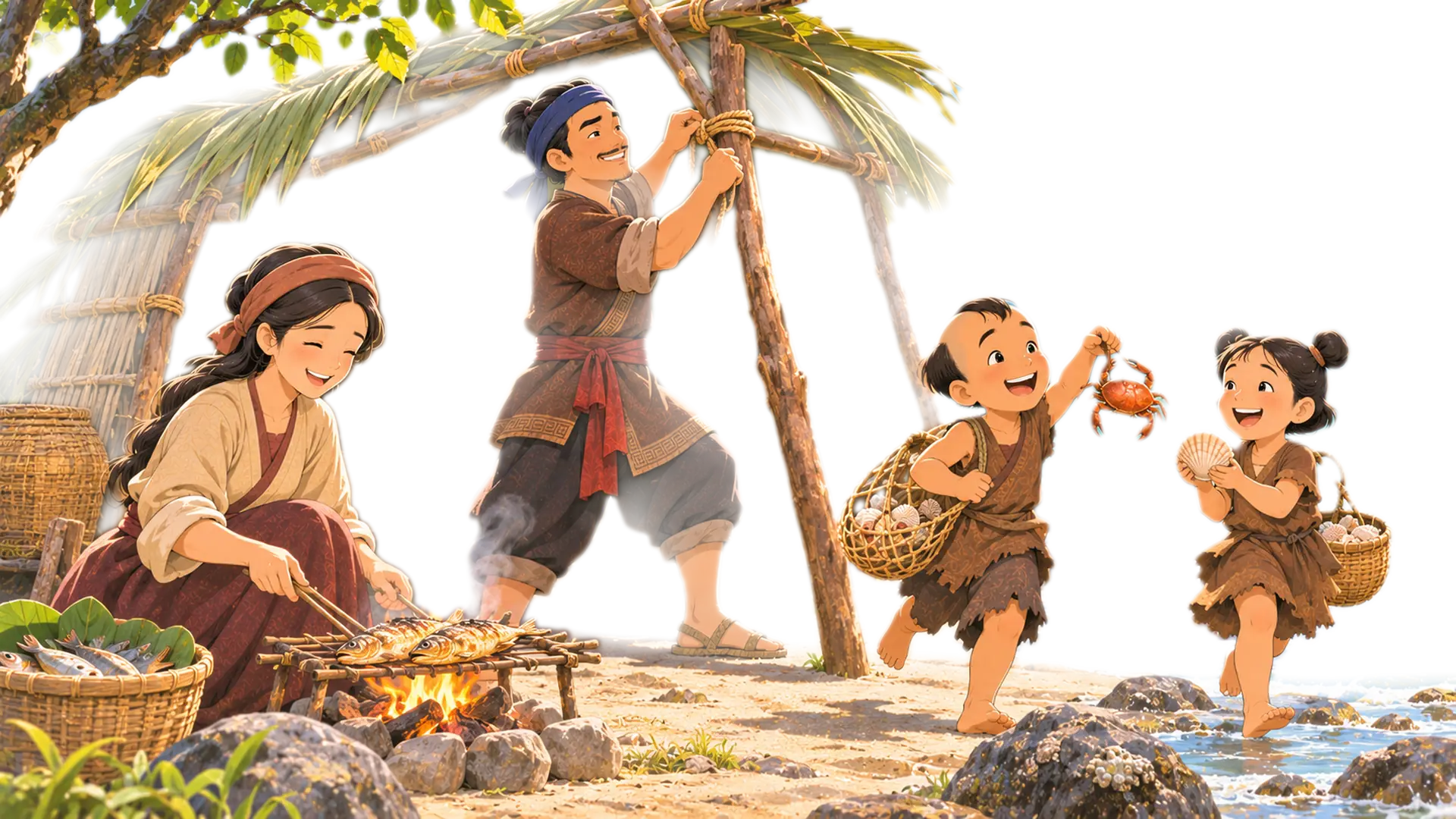
He built a hut from driftwood and roofed it with leaves. The family caught fish, picked snails and gathered crabs, one day at a time. Life was hard. But nobody gave up.
Chapter
Seeds from the Sky
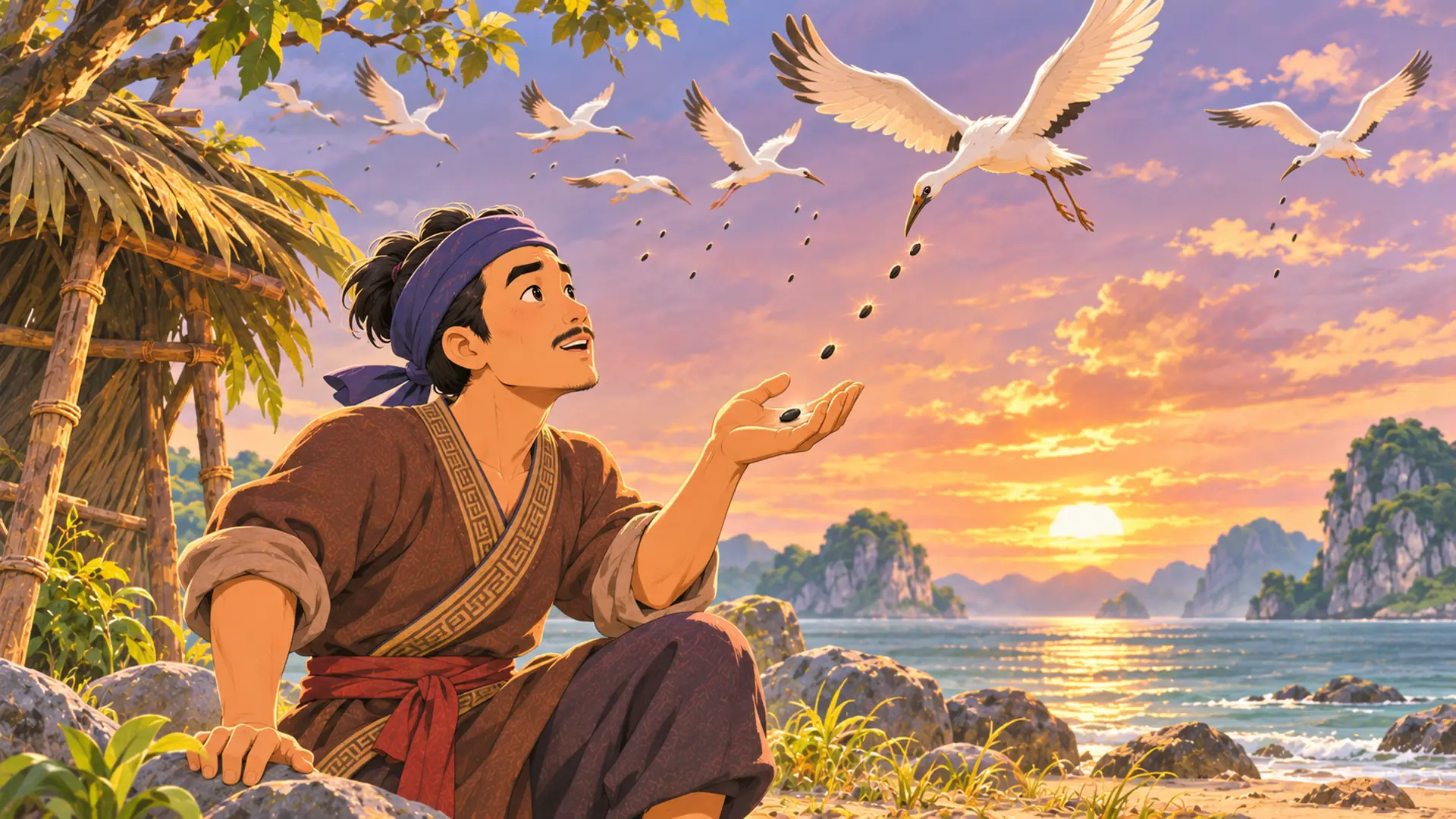
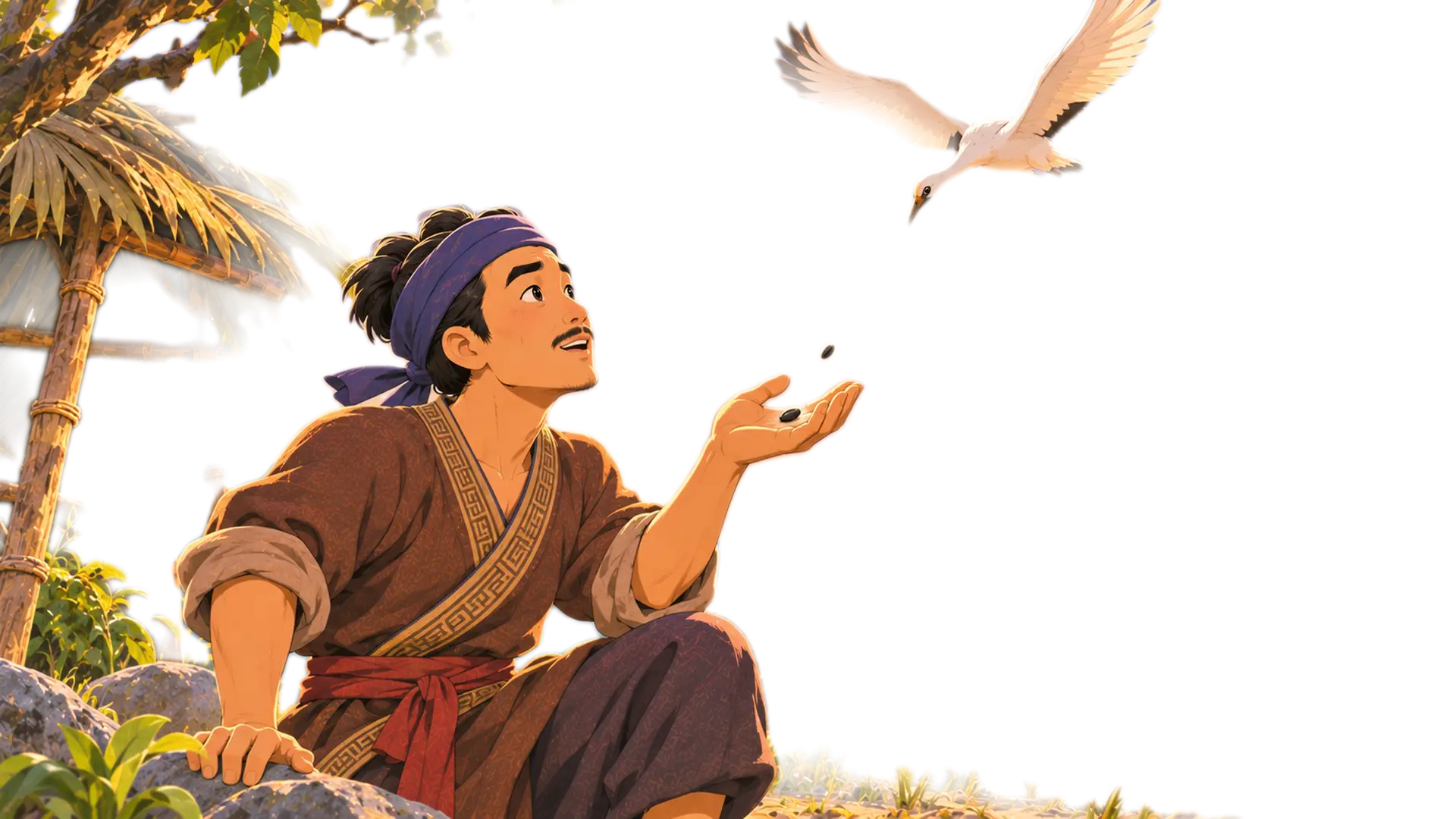
Then one day, a flock of birds flew over the island from the west. They dropped small, shiny black seeds onto the sand. An Tiem picked one up and turned it in his palm. If birds could eat this, he thought, so could people. And he planted the seeds.
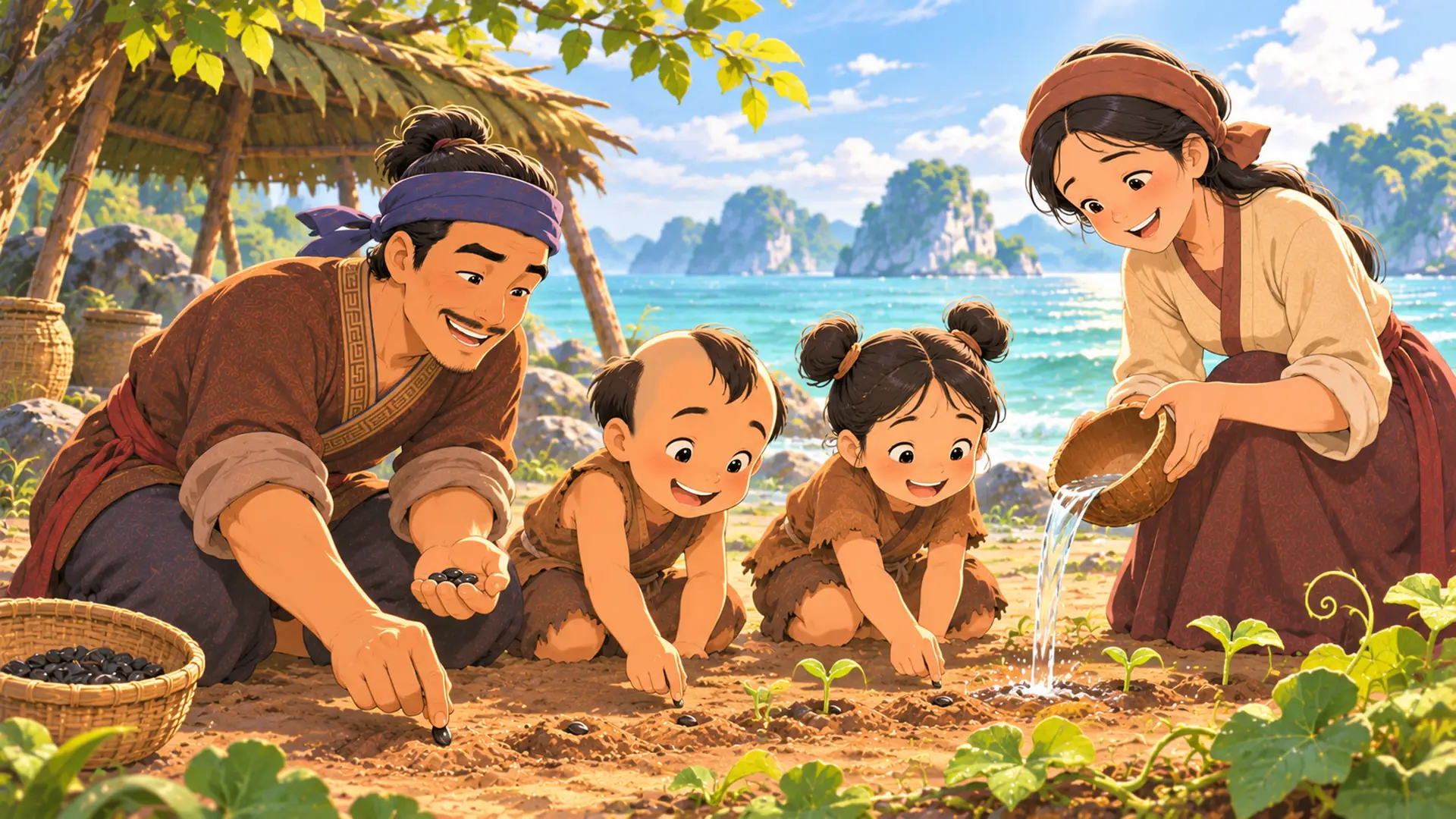
The family cared for every sprout. Soon, bright green vines covered a corner of the island — and grew round fruits with green skin.
Chapter
The Red Fruit
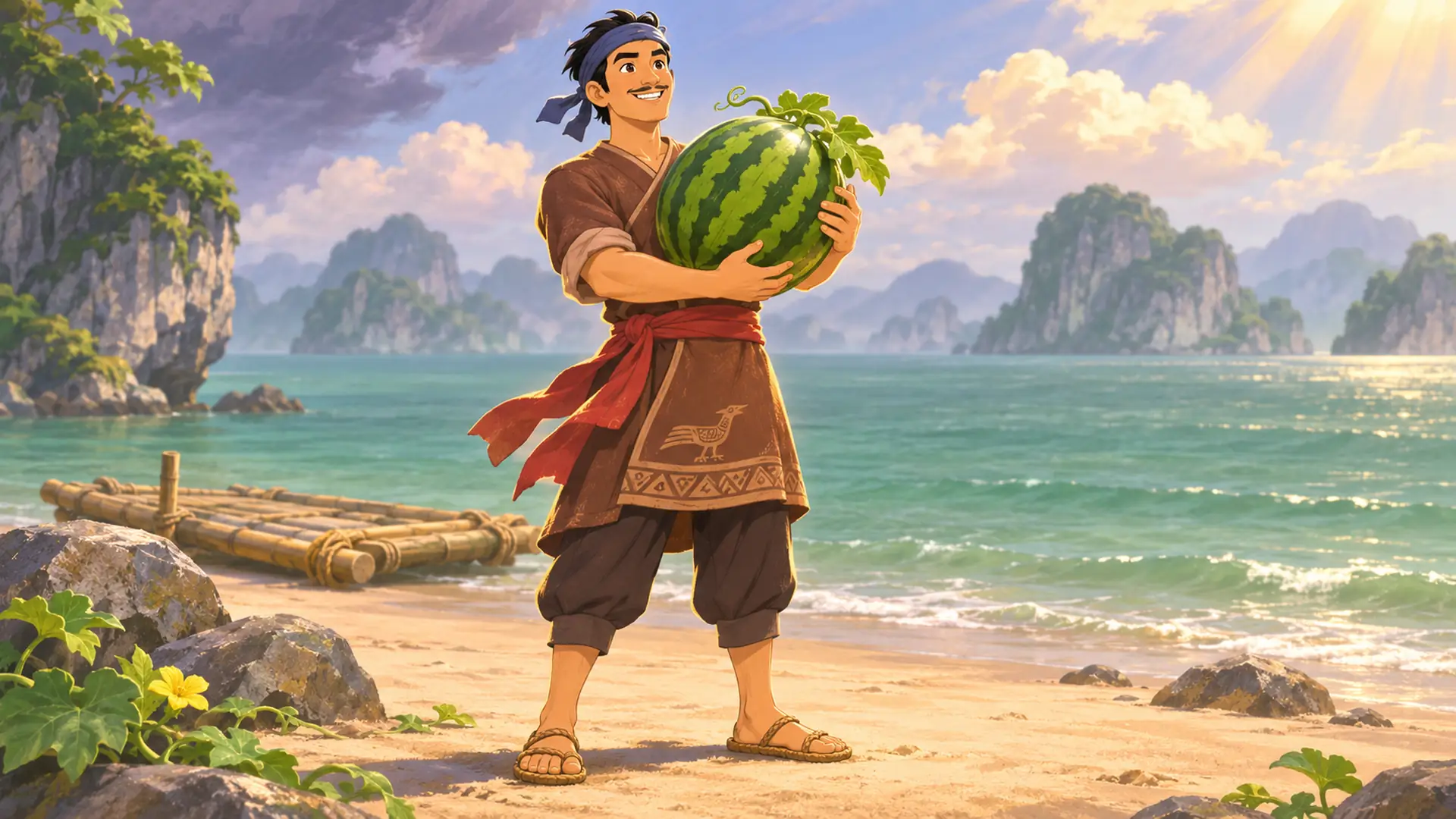
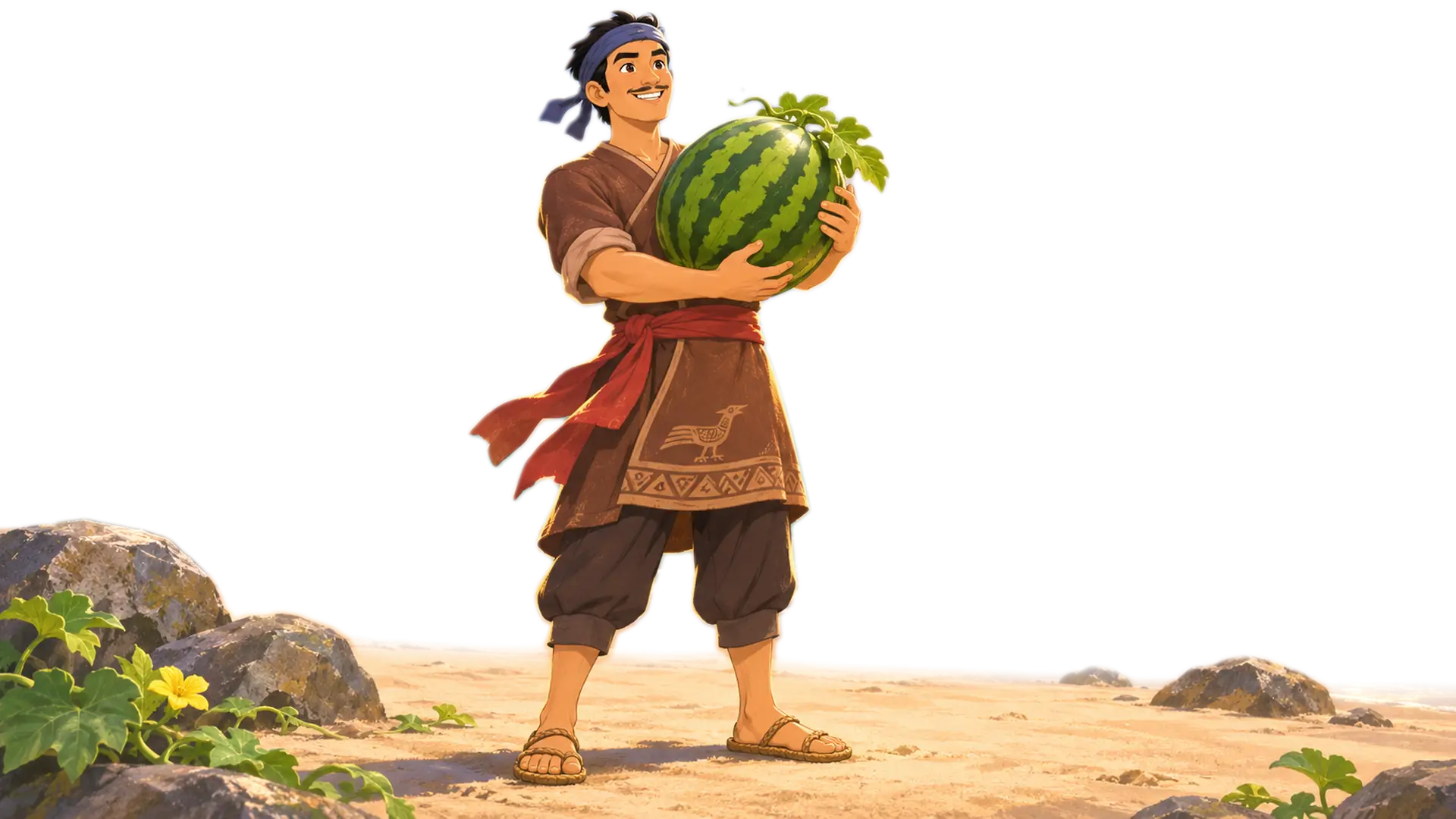
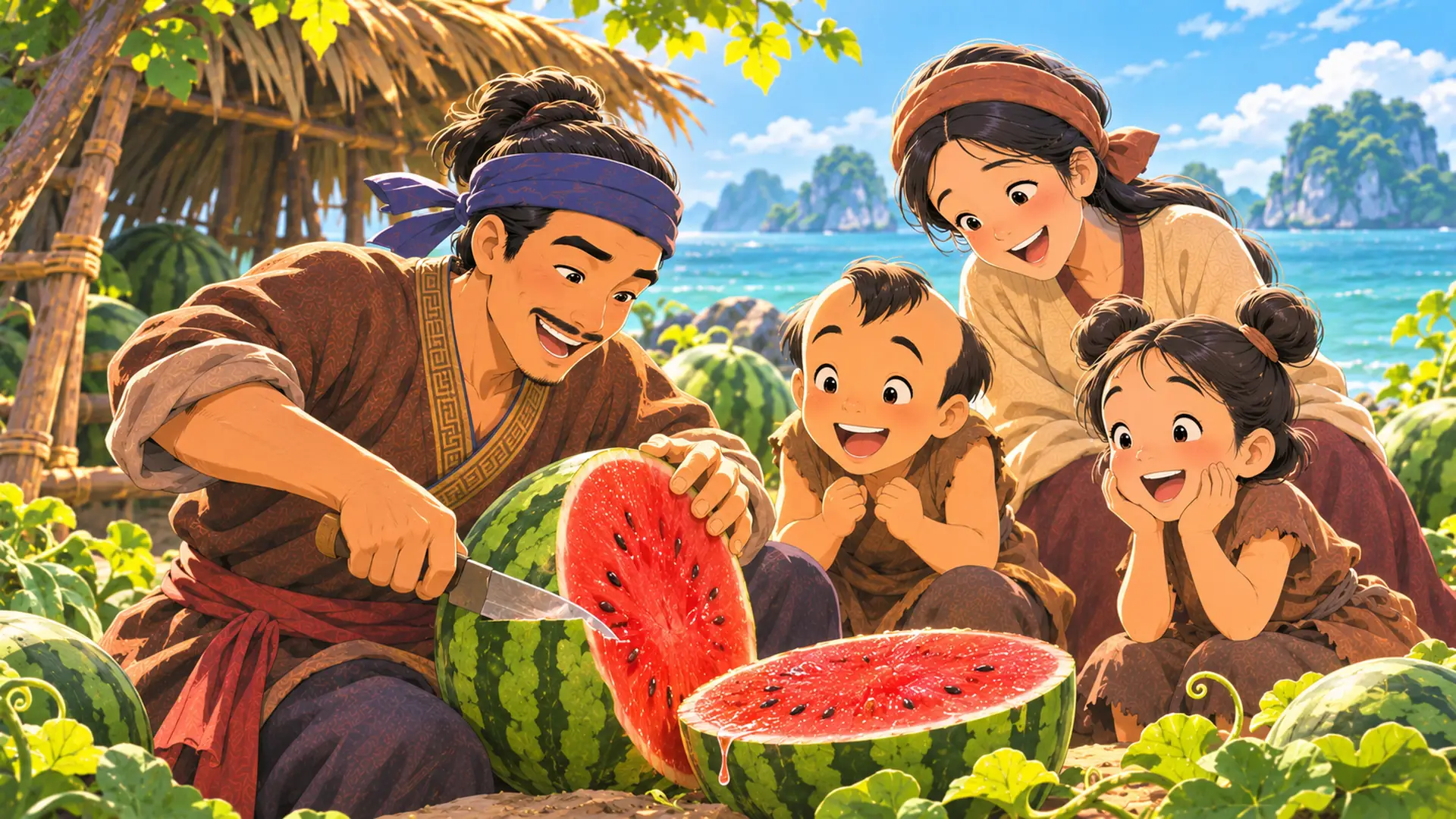
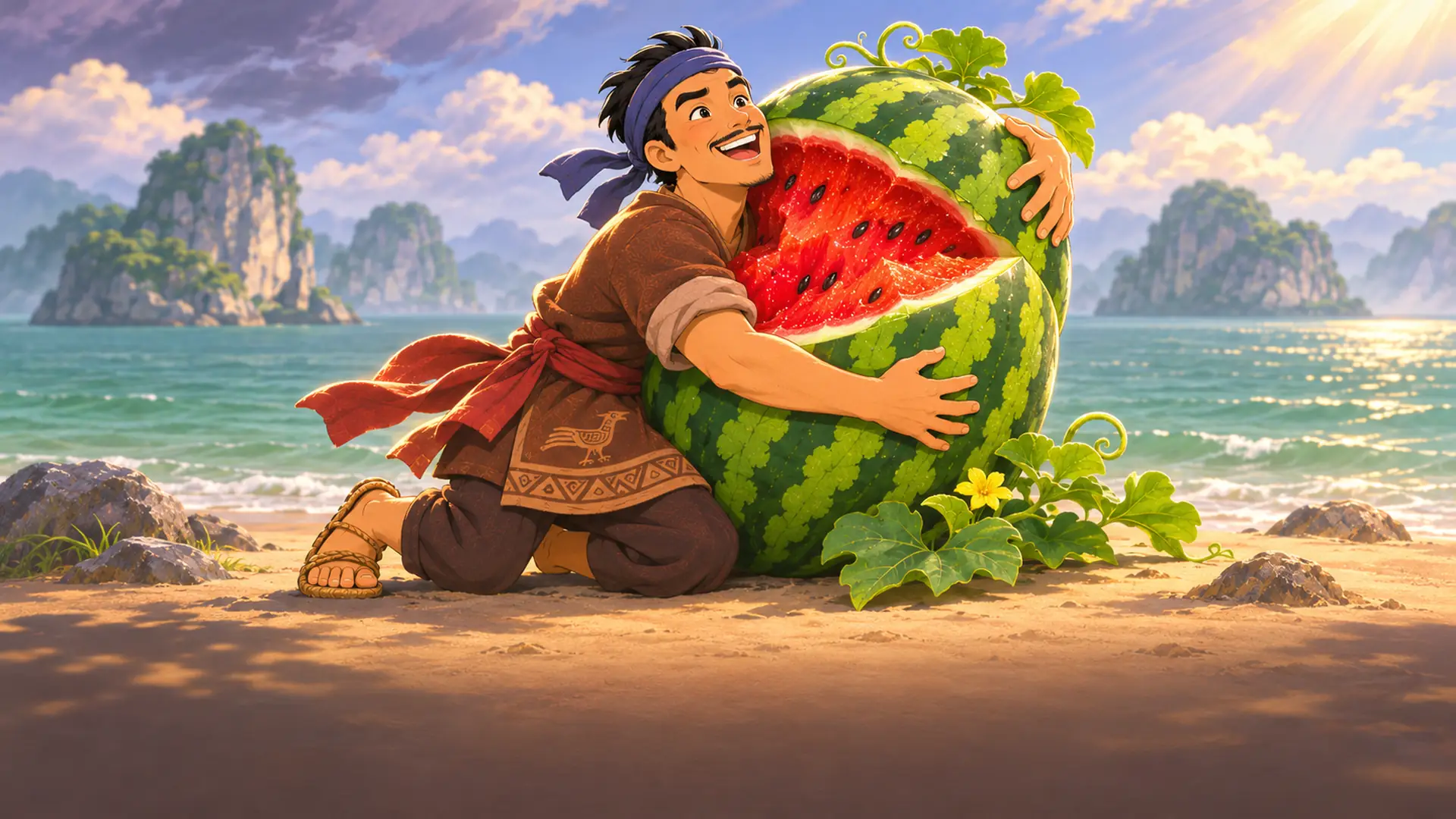
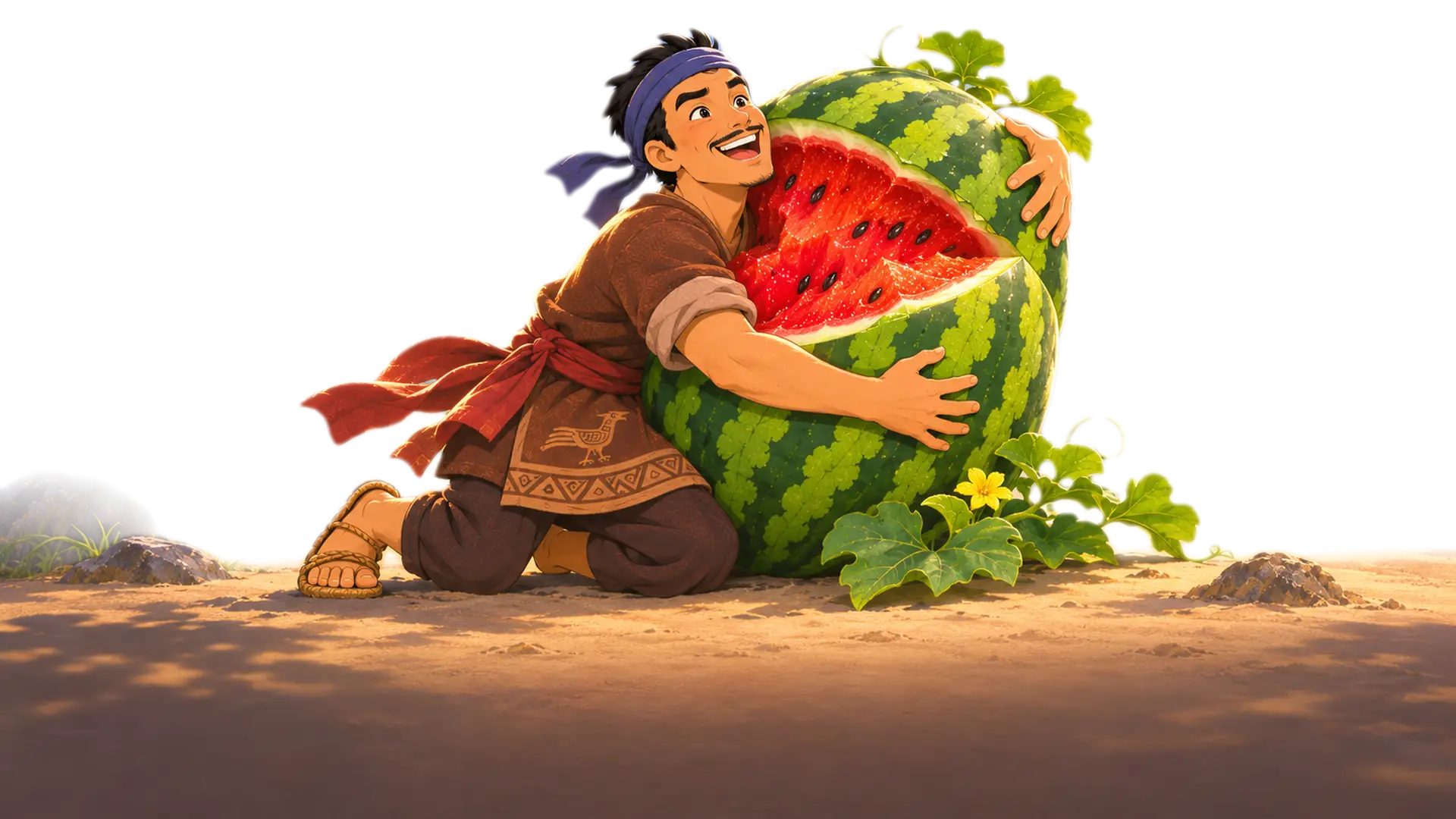
An Tiem picked one and cut it open.
Bright red inside, with shiny black seeds. Sweet. Cool. It was the watermelon. And because it came with the birds from the west, people of old called it tây qua — the melon from the west. Today Vietnamese call it dưa hấu.
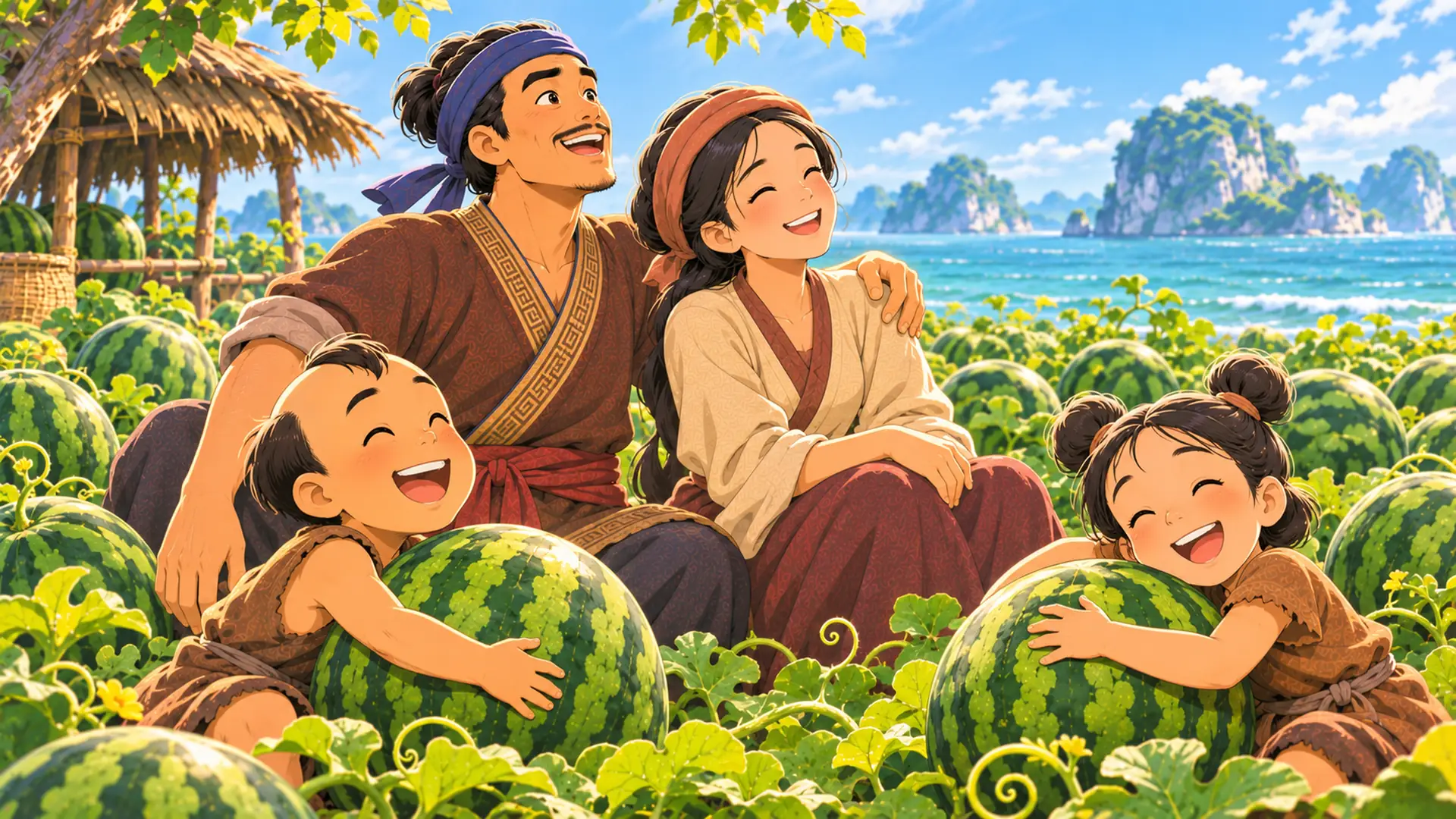
An Tiem kept the seeds and planted more. Before long, watermelons covered the whole island.
Chapter
A Message in a Melon
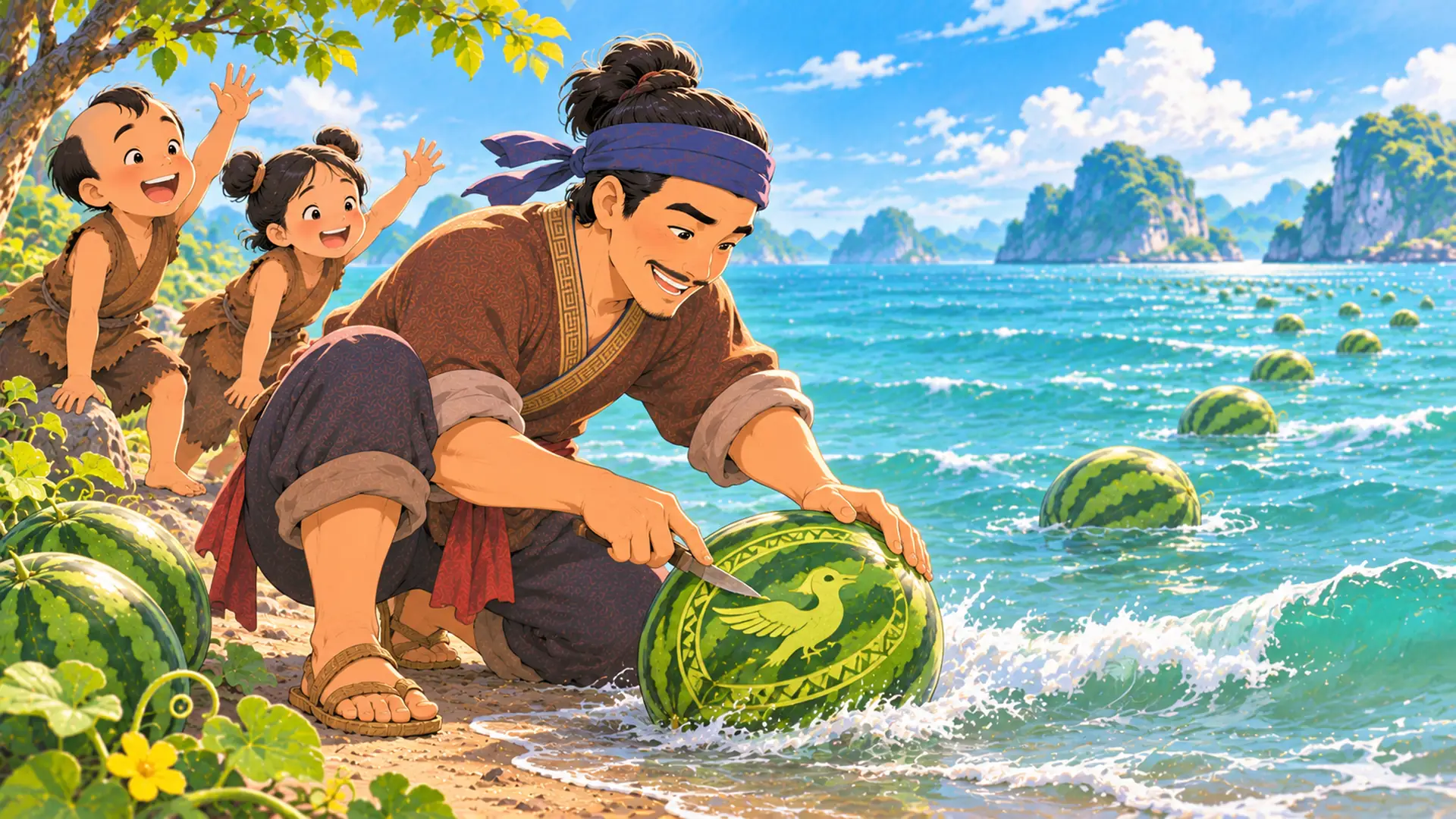
Then he had an idea. He carved his name into the rind and threw the melon into the sea. Then another, and another.
The waves carried the melons to the mainland. People fished them out, tasted them, loved them — and read the name: An Tiem.
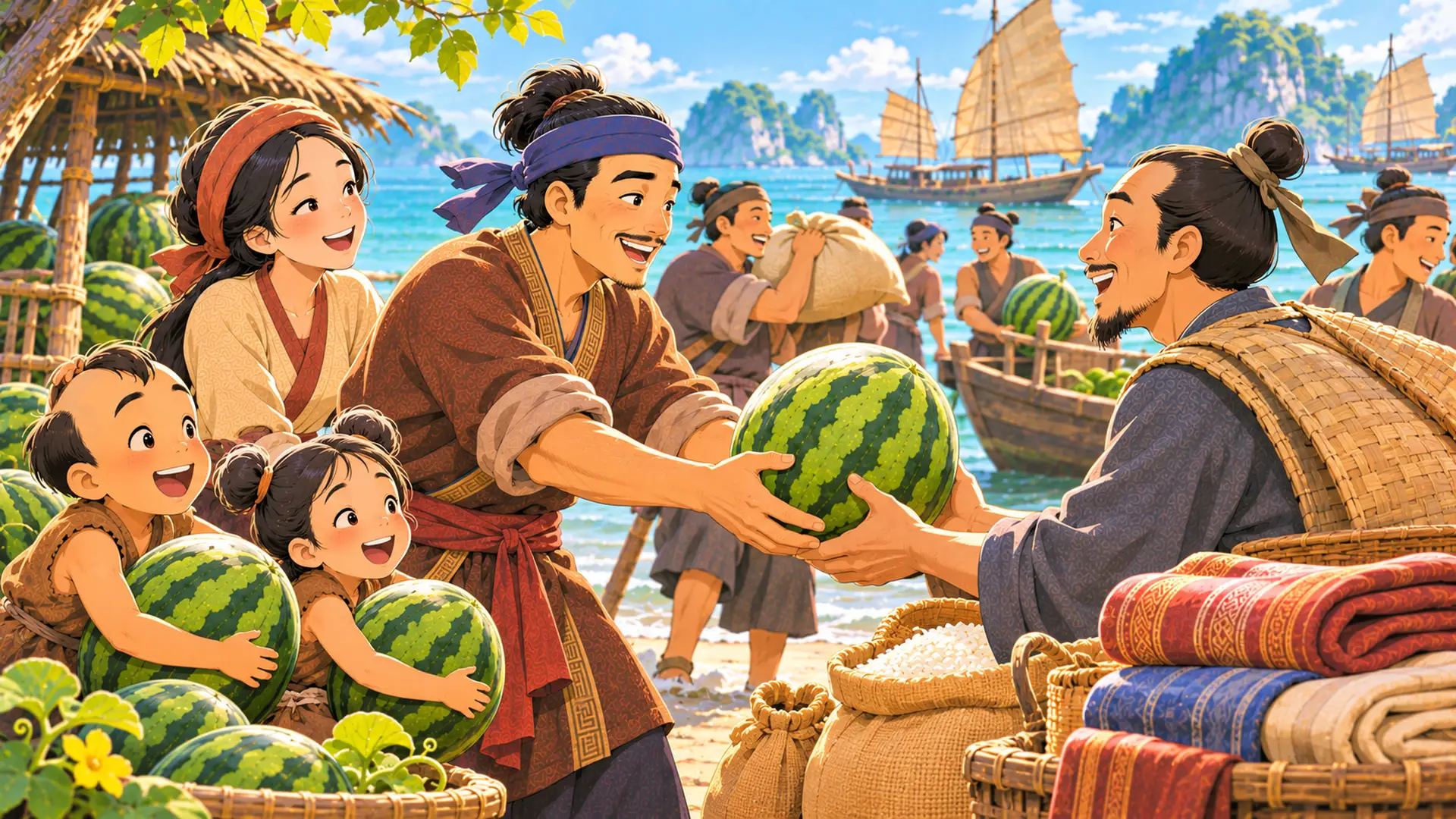
Merchant boats came looking for the island. They brought rice, cloth and tools to trade for melons. The empty island was now full of people coming and going.
Chapter
The King's Regret
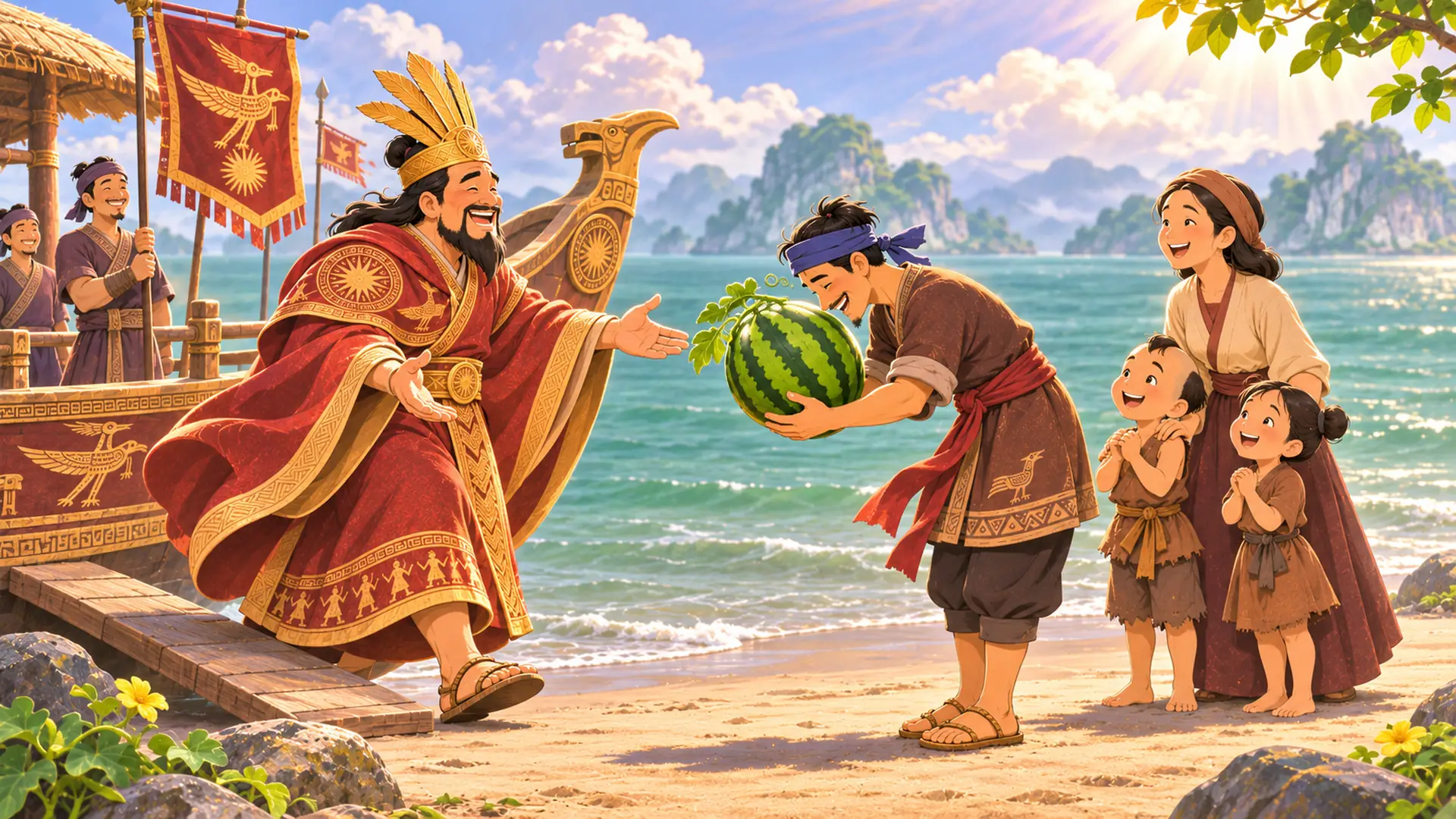
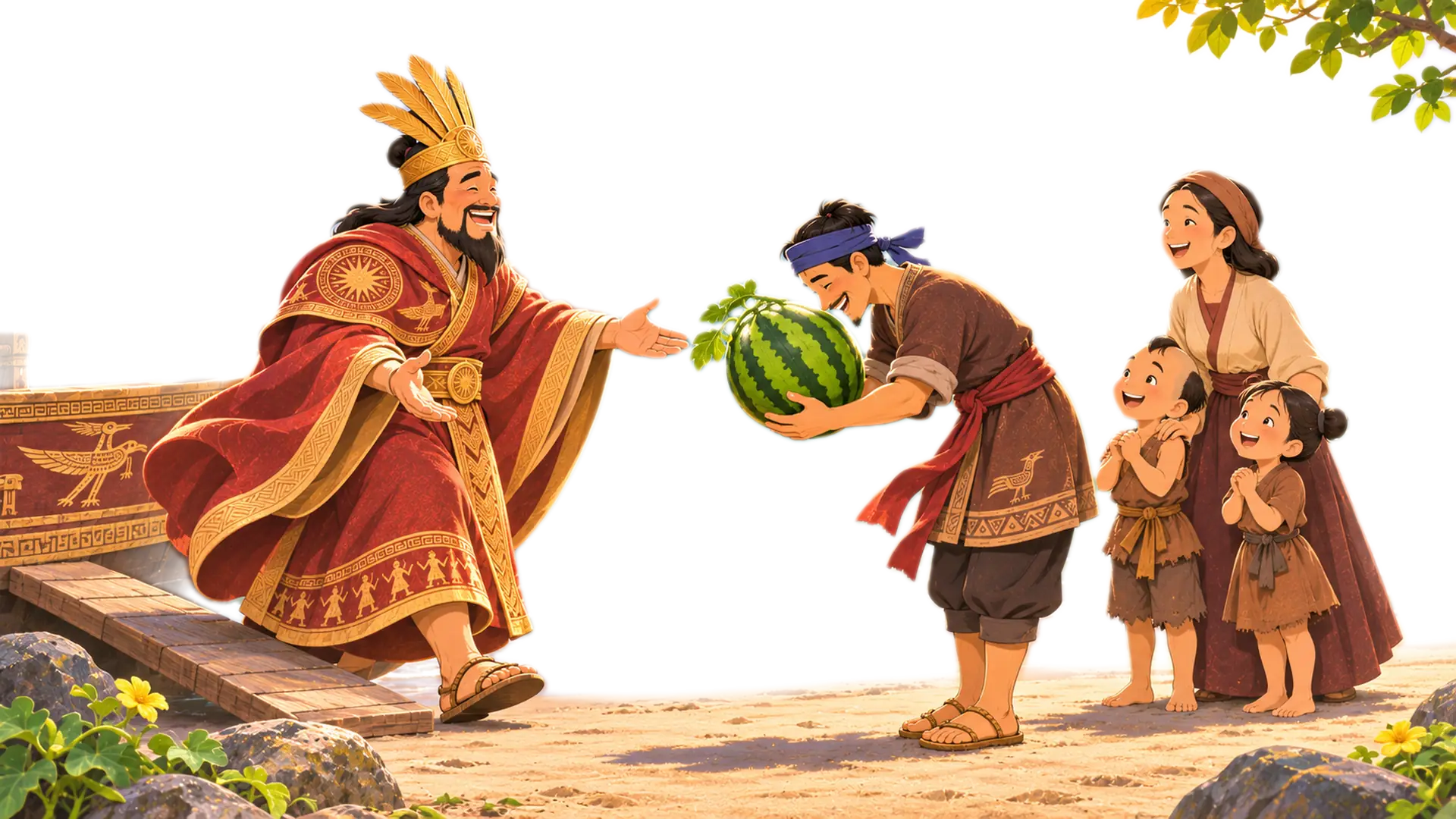
In time, the news reached the king. He thought it over, and saw that An Tiem had been right: he had survived with his own two hands.
The king sent a boat to bring the whole family home, and gave An Tiem back everything he once had.
An Tiem brought the seeds with him and shared them with the villagers. And from then on, watermelons grew all over the land.
Chapter
The Legacy
In Nga Son, in Thanh Hoa province — said to be the island of the legend — there is still a temple to Mai An Tiem today.
And every Lunar New Year, many Vietnamese families place a watermelon on the family altar. On the first morning of the year, they cut it open. The redder the inside, the luckier the year.
The story reminds us: what others give can be taken away — what you build with your own hands lasts. But when you eat the fruit, don’t forget the one who planted the tree.