
Chapter
Return the Sword
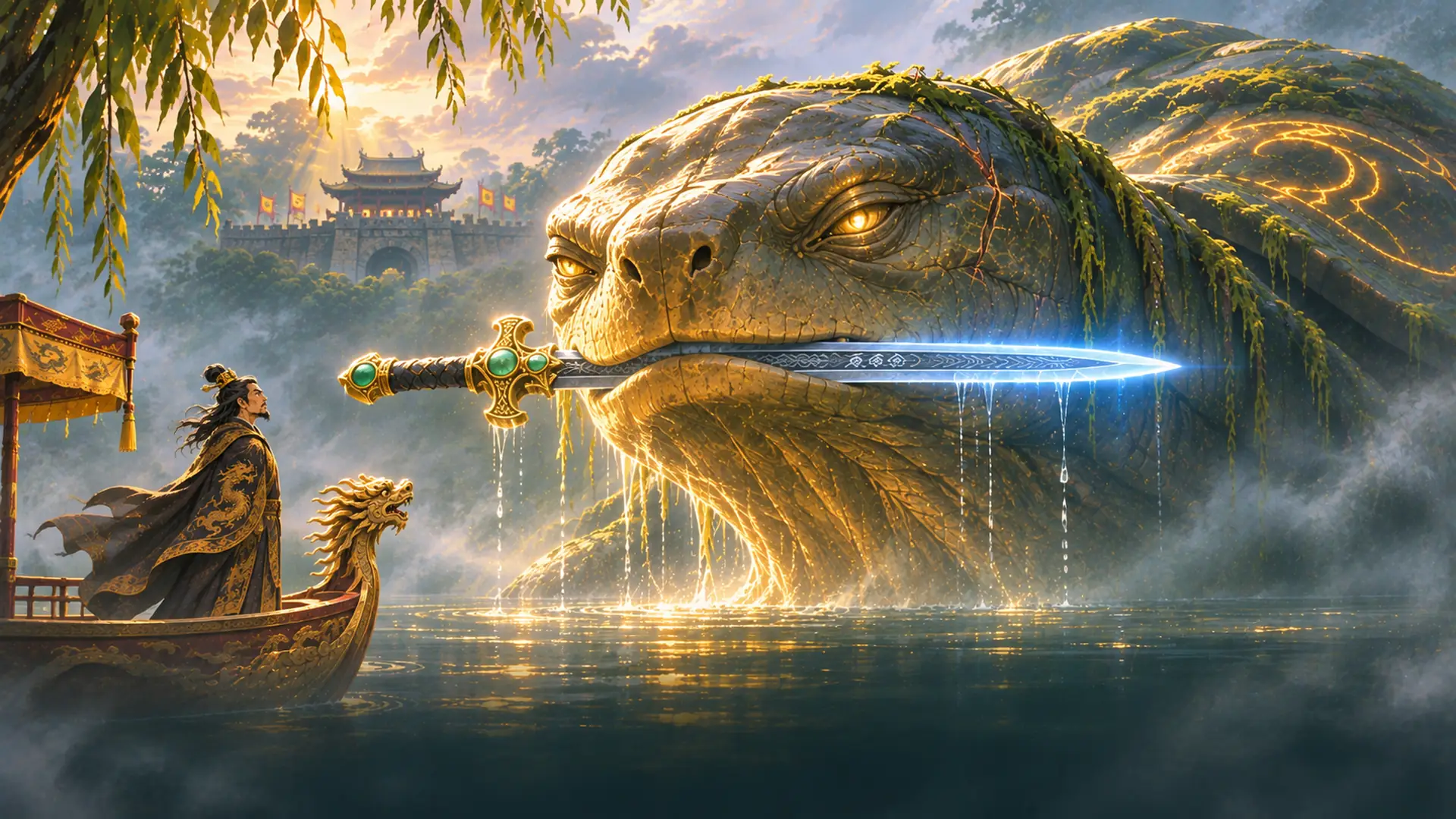
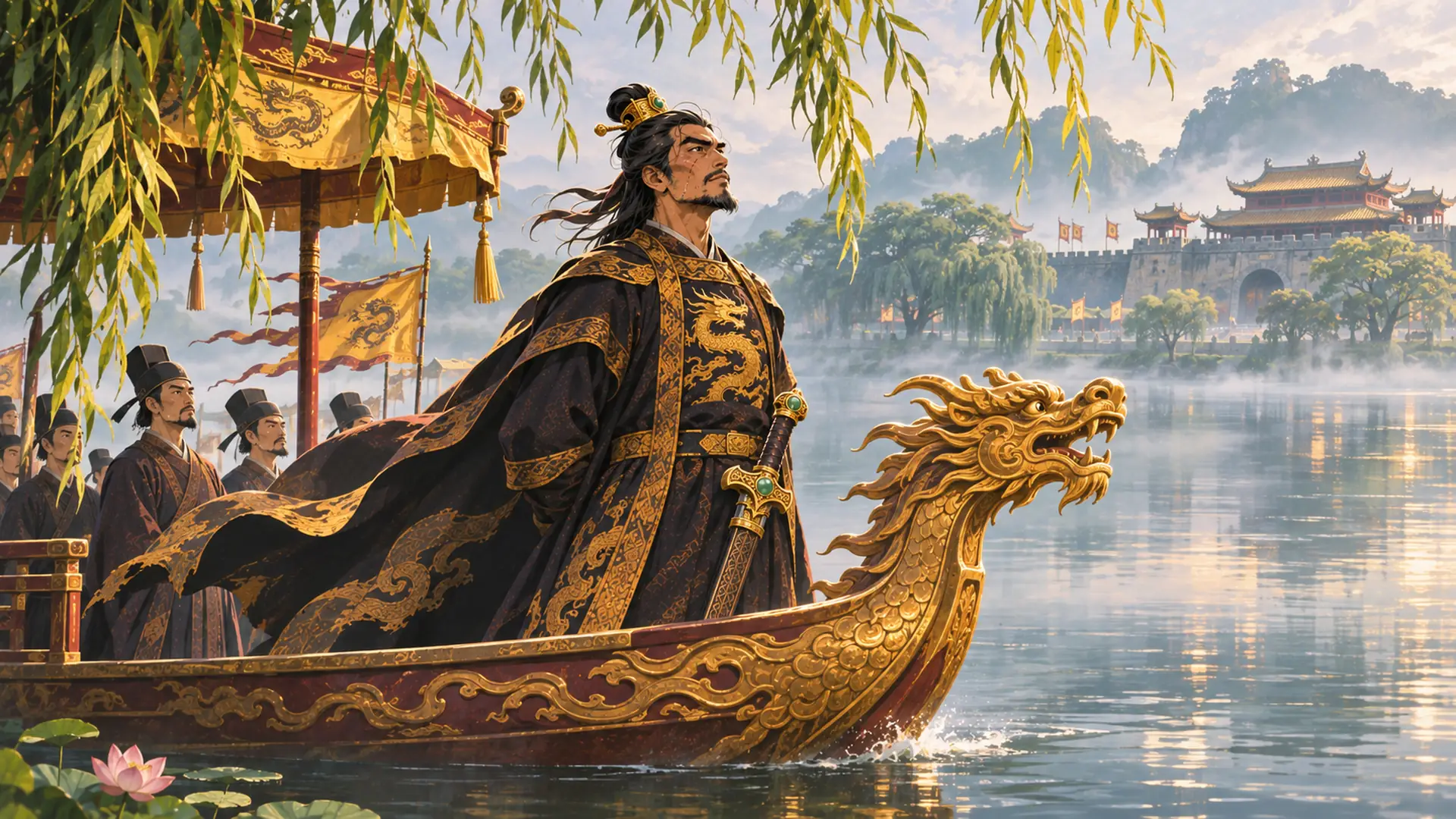
It is a misty morning, and a royal dragon boat is gliding across a lake in the heart of the capital. The king stands at the bow. At his side hangs a sword — the sword that won him back an entire country.
Then the water swells. Out of the lake rises a turtle so old that no one alive could say how old, moss trailing from its shell, its eyes glowing like dull gold. It turns toward the boat and speaks with a human voice:
Your Majesty… return the sword to the Dragon King.
Where did that sword come from? And why would the gods want it back? According to Vietnamese legend, it all began with a fishing net — and a banyan tree deep in the forest.
Chapter
A Land Under Occupation
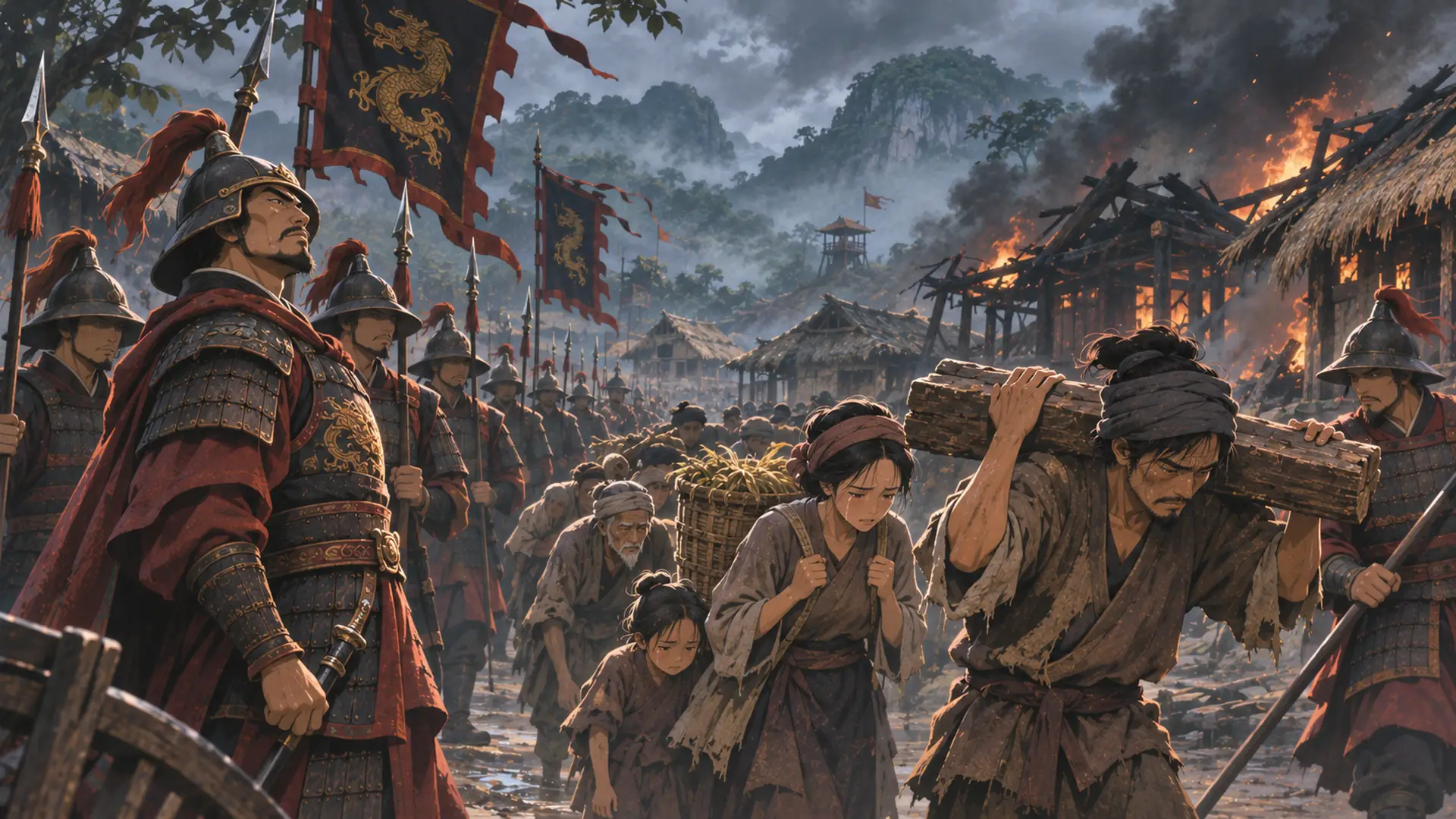
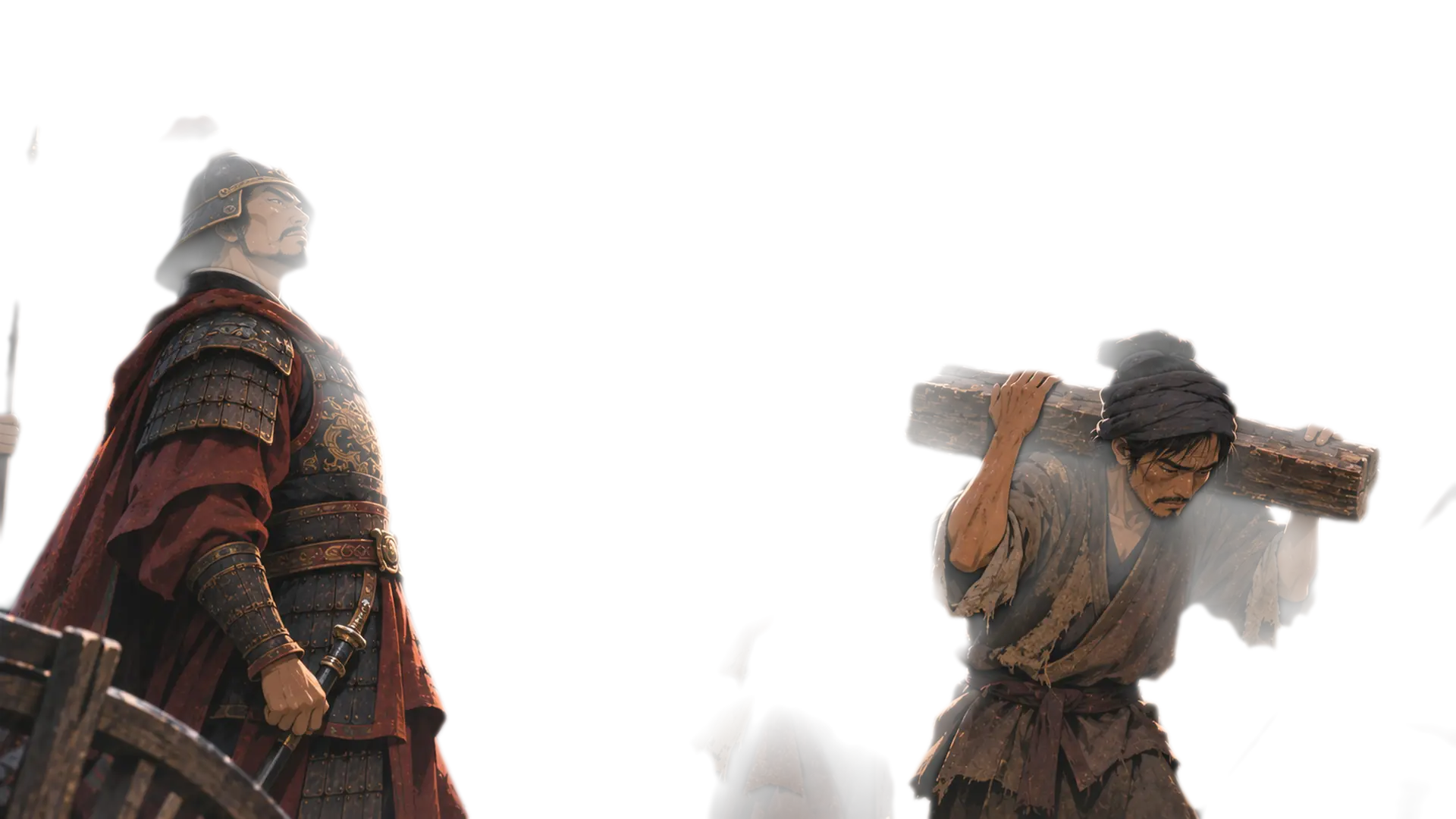
In the early fifteenth century, the Ming army from the north occupied Dai Viet, as Vietnam was then called. People were forced to cut timber, dig mines and dive for pearls for their new masters. Villages lay in ruins.
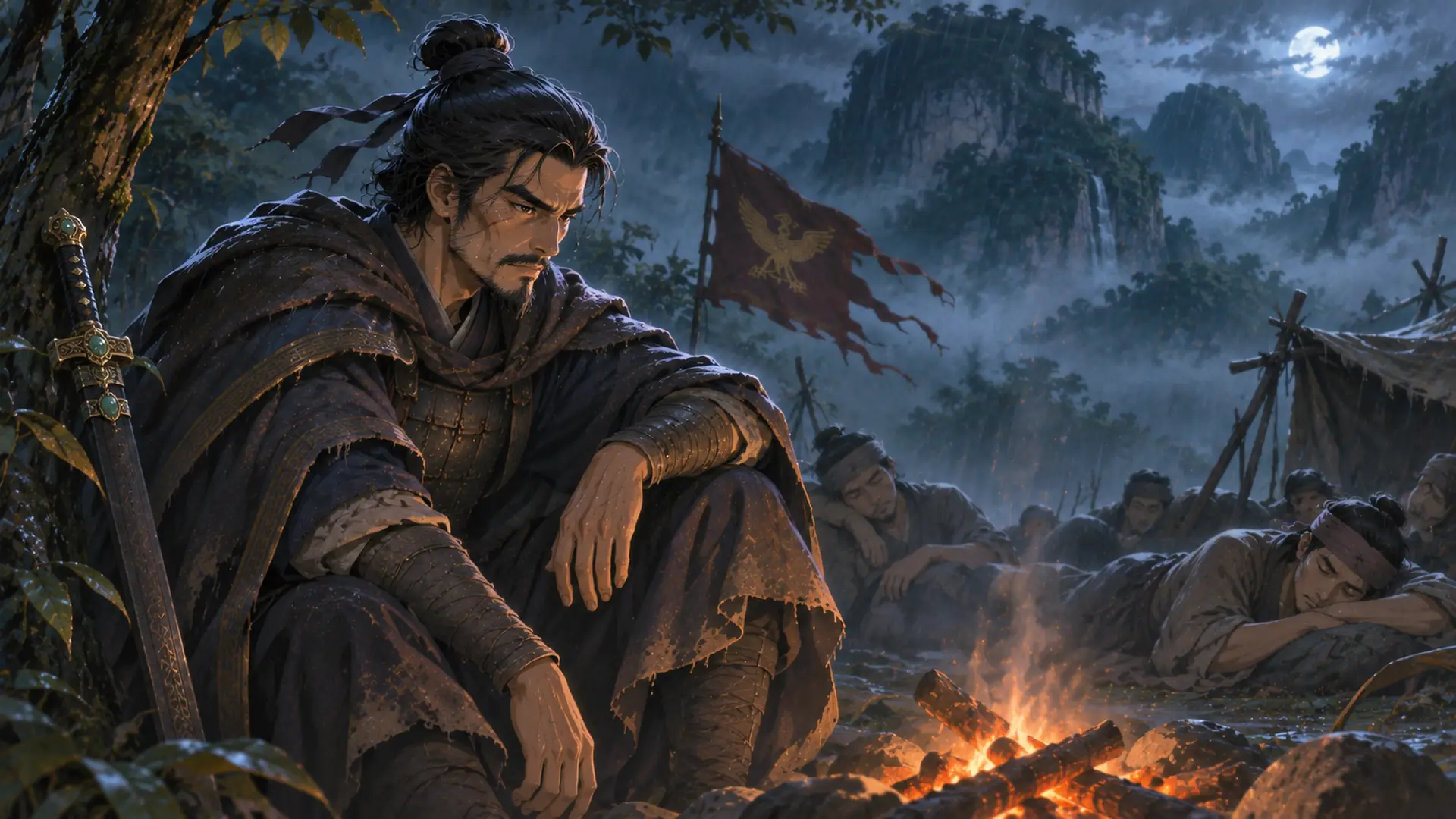
In the mountain forests of Lam Son, in Thanh Hoa, one man raised the flag of rebellion. His name was Le Loi. He was no king, only a local landowner — but he refused to bow.
The enemy was too strong. The rebels lost and fled, again and again; at times they were so starved that they had to kill their own war elephants for food. Sitting by a dying fire, Le Loi asked himself how they could ever win.
Chapter
The Dragon King's Gift
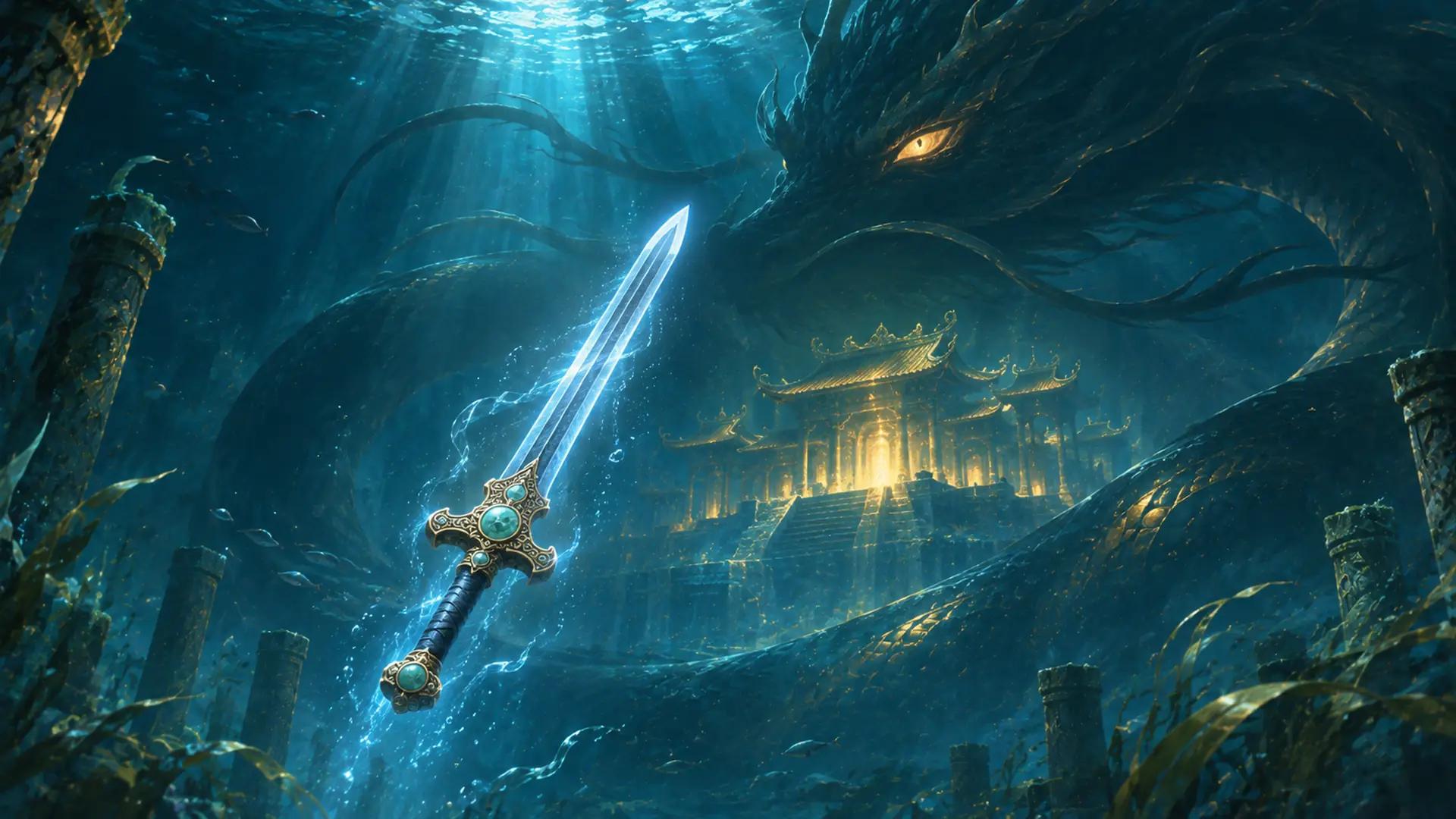
The story goes that deep beneath the waters, Long Quan — the Dragon King — saw everything. And he decided to lend the rebels a divine sword.
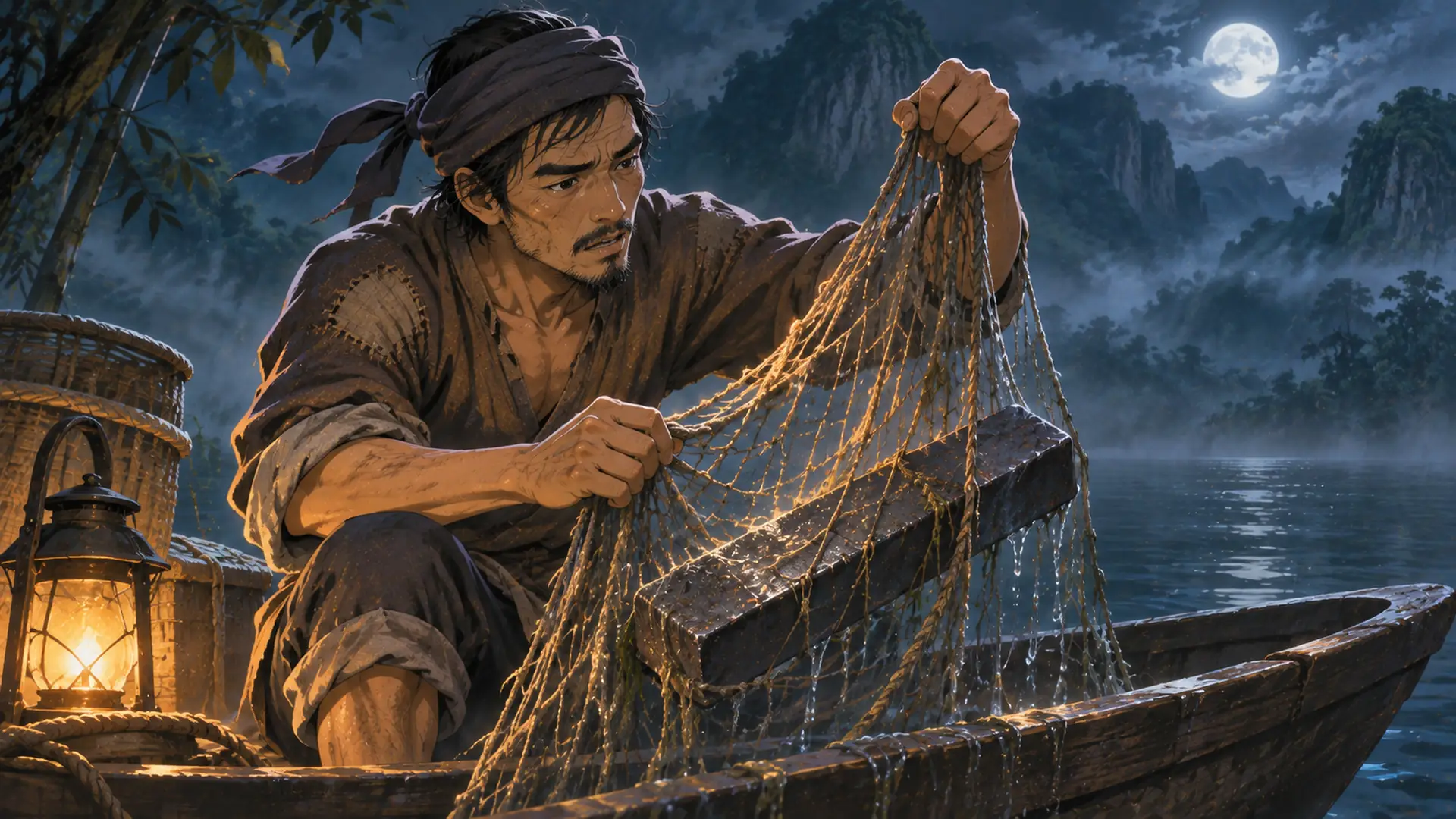
At a river landing in Thanh Hoa lived a fisherman named Le Than. One night he cast his net, and when he hauled it in there was not a single fish in it — only a bar of black iron. He threw it back and cast somewhere else. The second time, the same iron bar. The third time, there it was again.
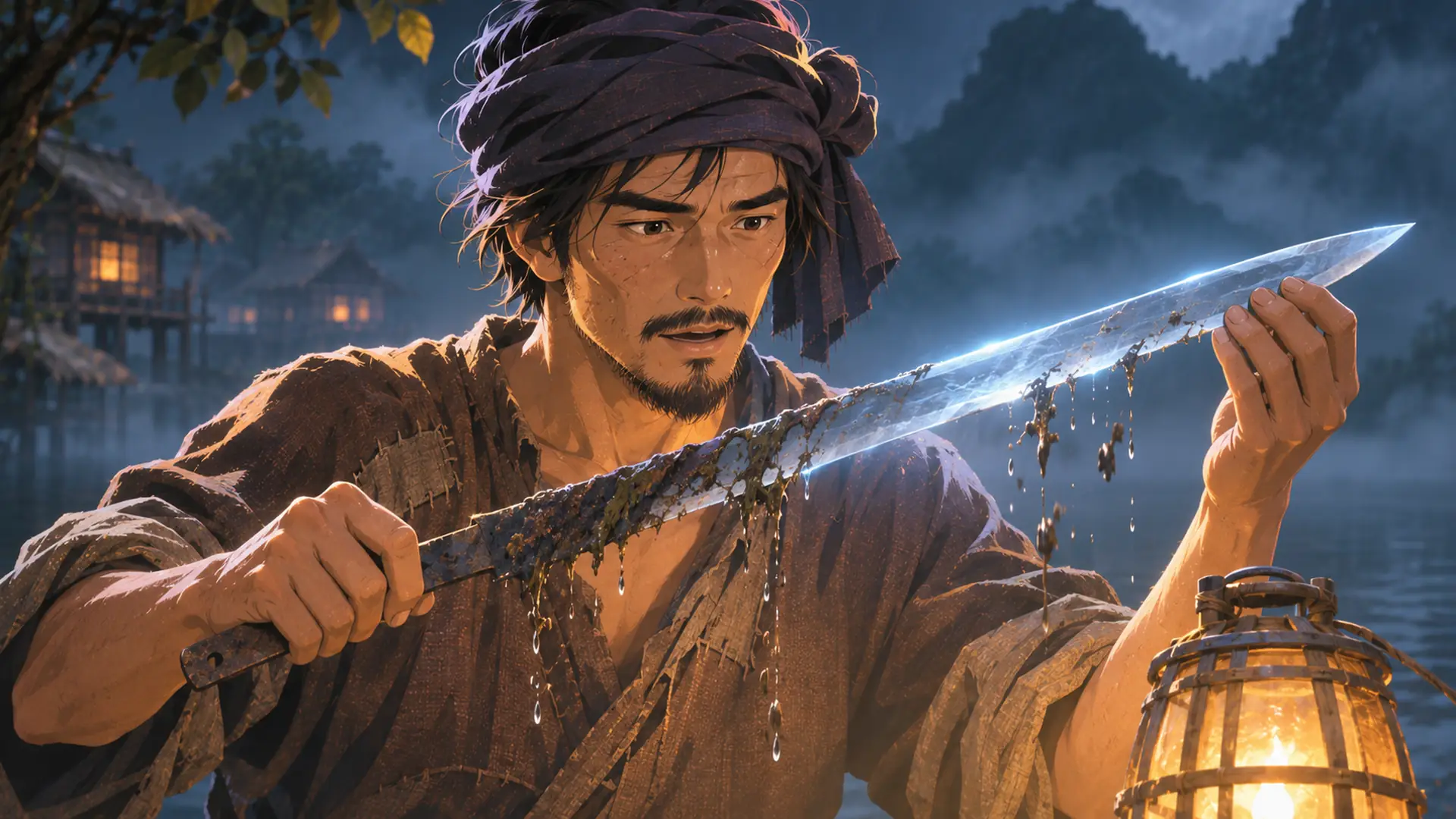
Le Than held it up to his lamp. It was not scrap iron at all. It was a sword blade. He took it home, leaned it in a dark corner of his hut, and forgot about it.
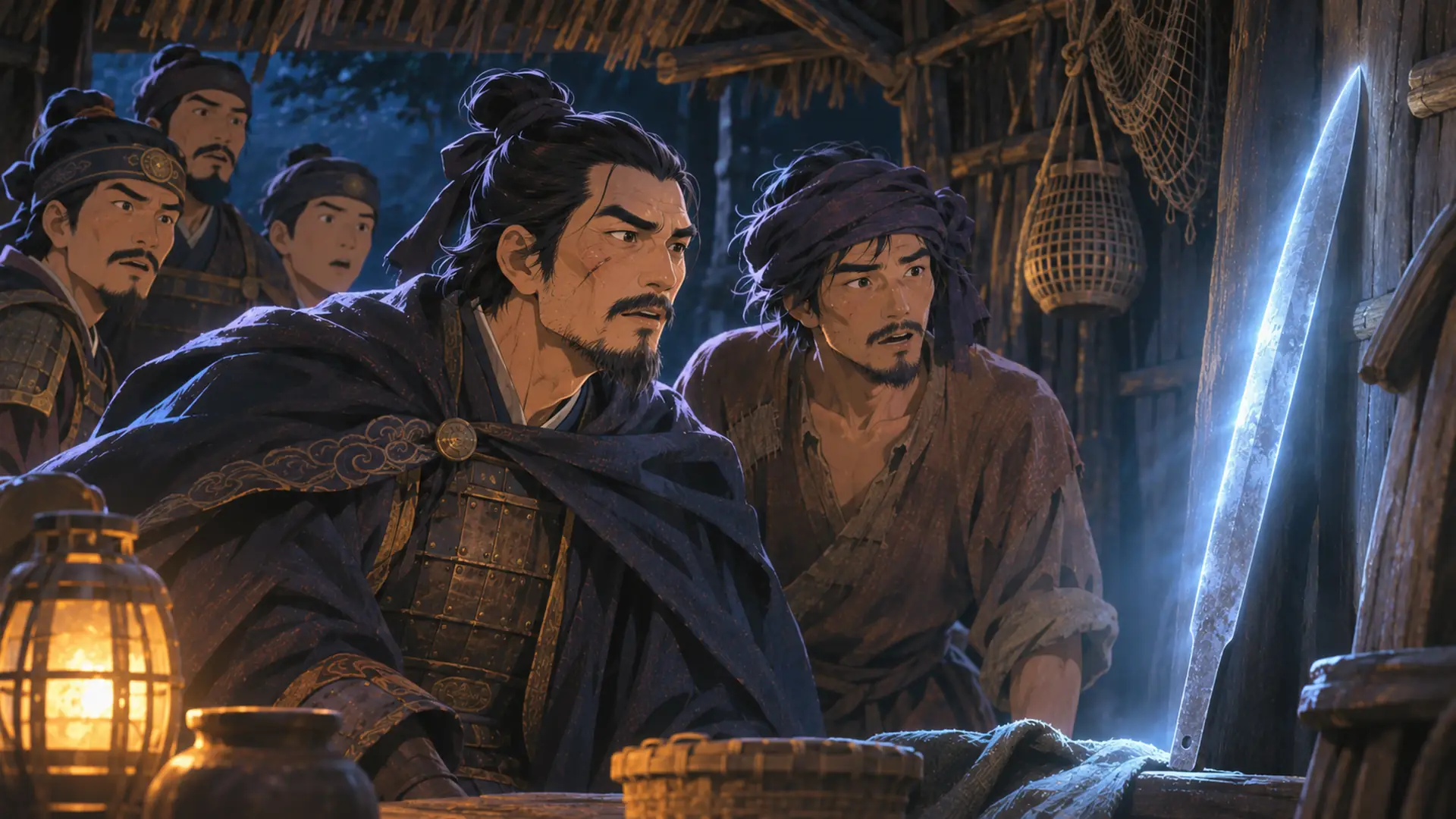
Years later, Le Than joined the Lam Son rebels. One day Le Loi and his officers came to his house — and the moment they stepped inside, the dark room filled with light. It was coming from the corner.
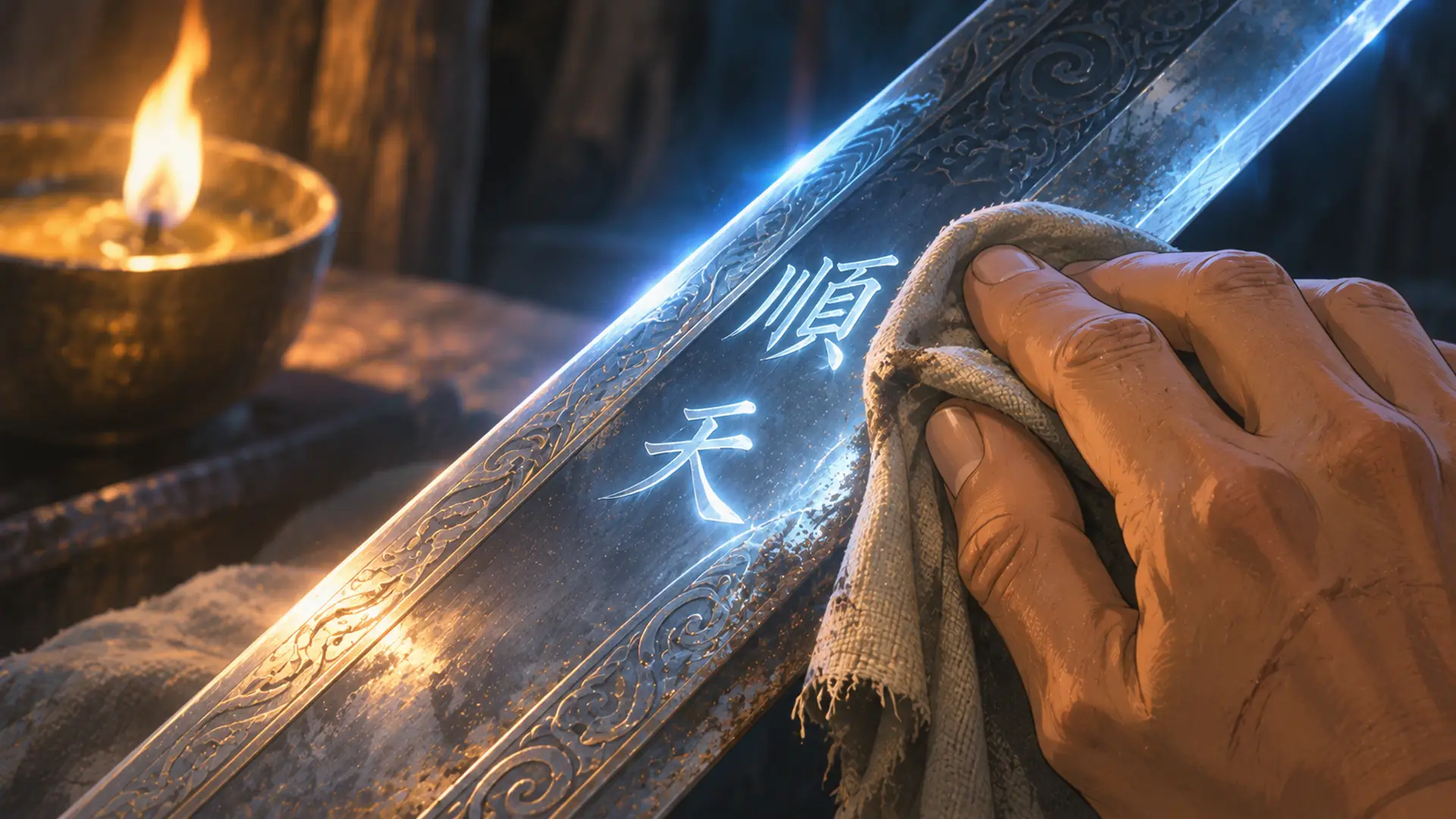
They wiped away the dust and found two words carved into the blade: Thuan Thien — by the will of Heaven. But the blade had no hilt, and no one understood what the sign could mean.
Chapter
The Hilt in the Banyan Tree
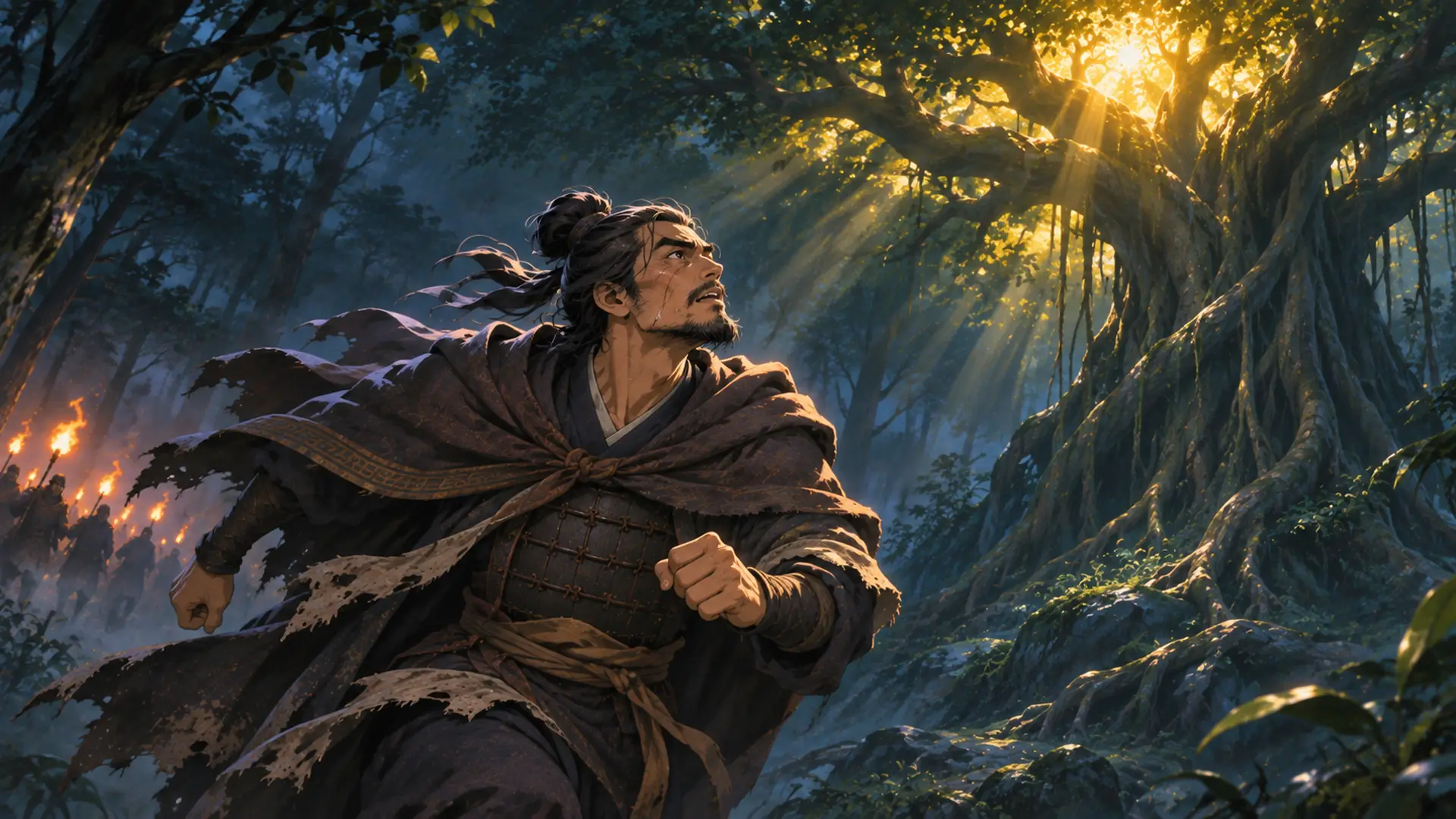
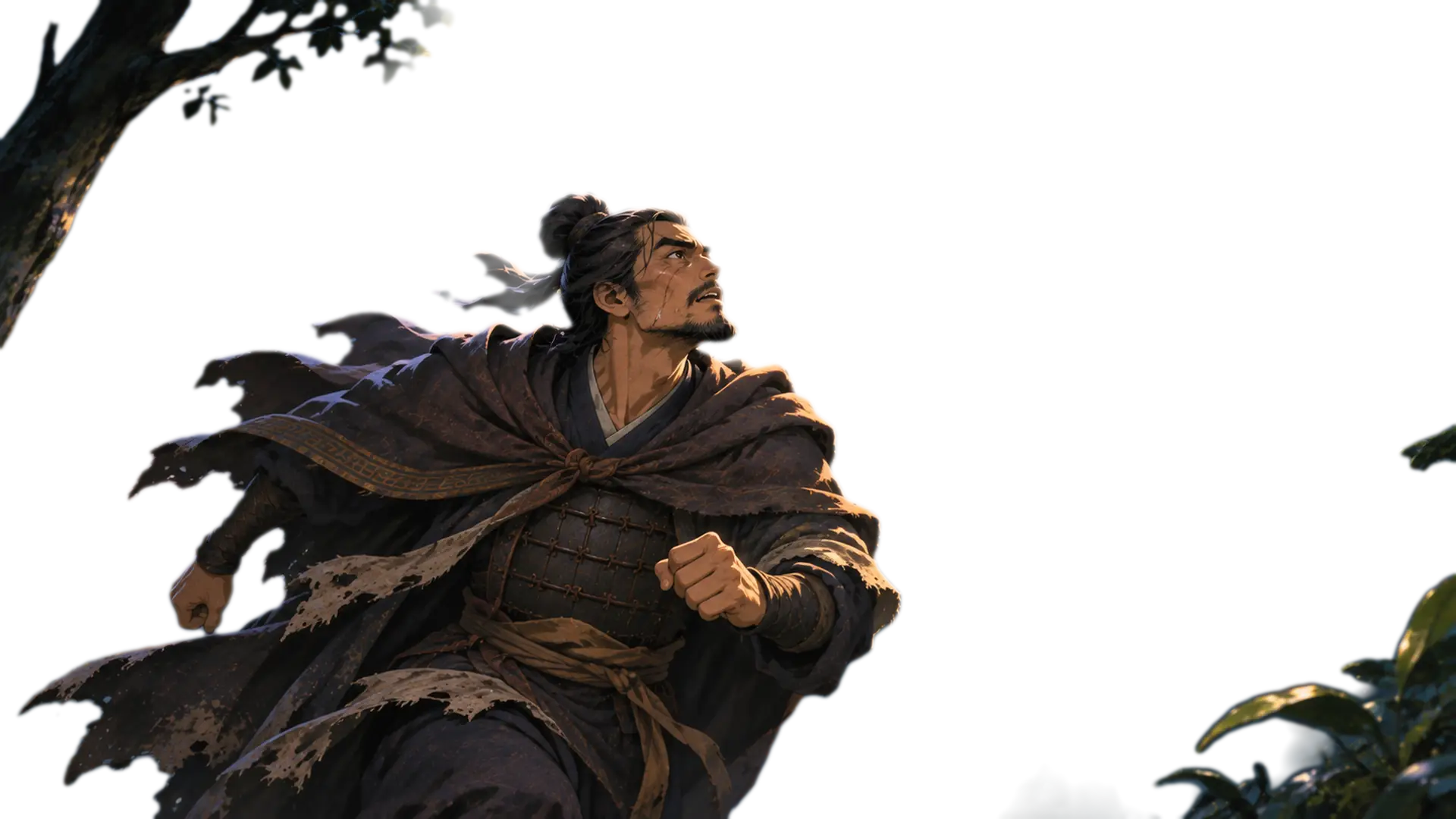
Not long after, Le Loi was hunted hard by the enemy. He fled alone into the deep forest, their torches flickering somewhere behind him. Then, in the darkness, he saw a strange light at the top of an ancient banyan tree.
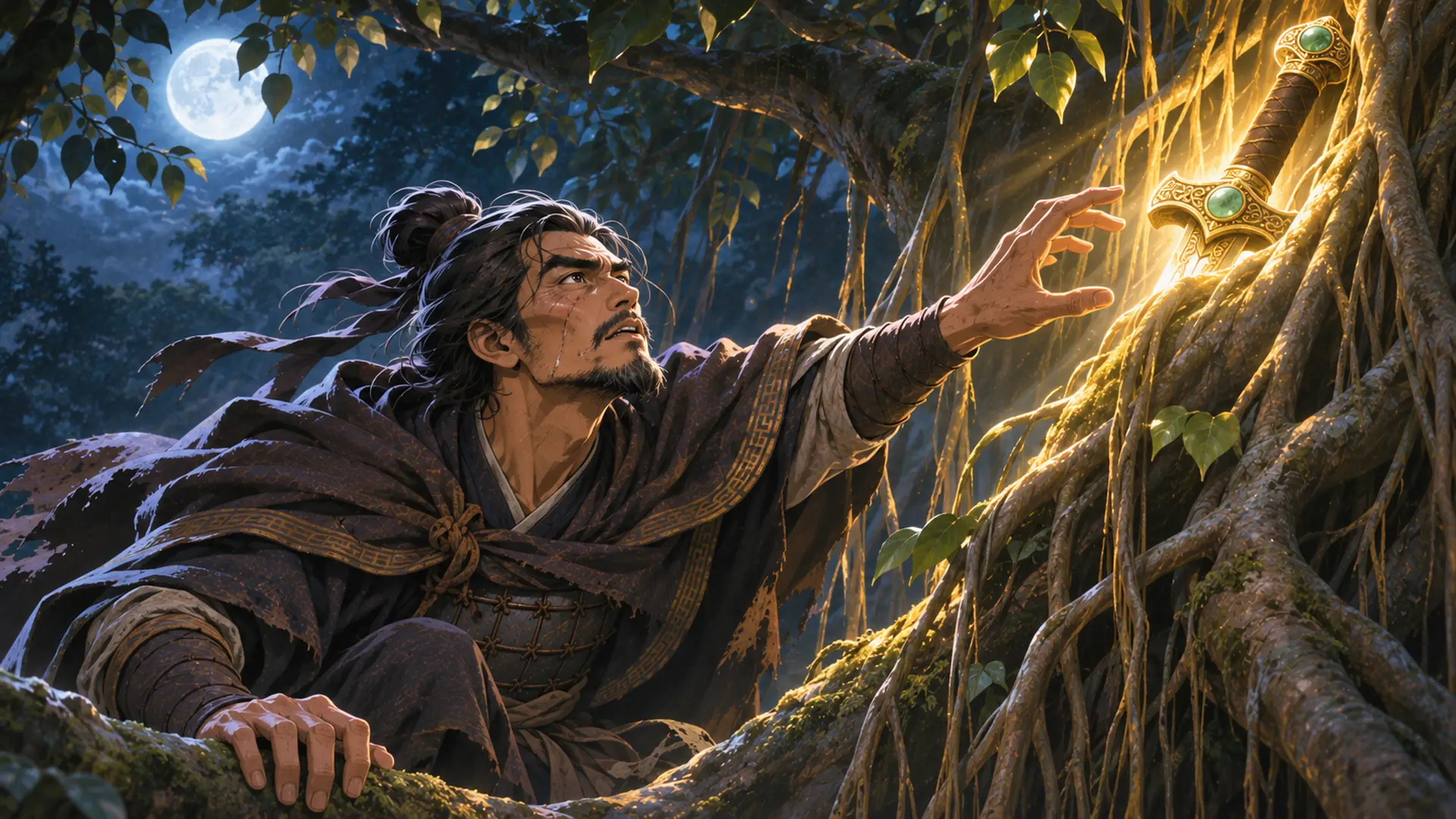
He climbed up. Tucked among the branches and hanging roots was a sword hilt studded with jewels, glittering in the dark. He remembered the blade in Le Than’s hut, and took the hilt with him.
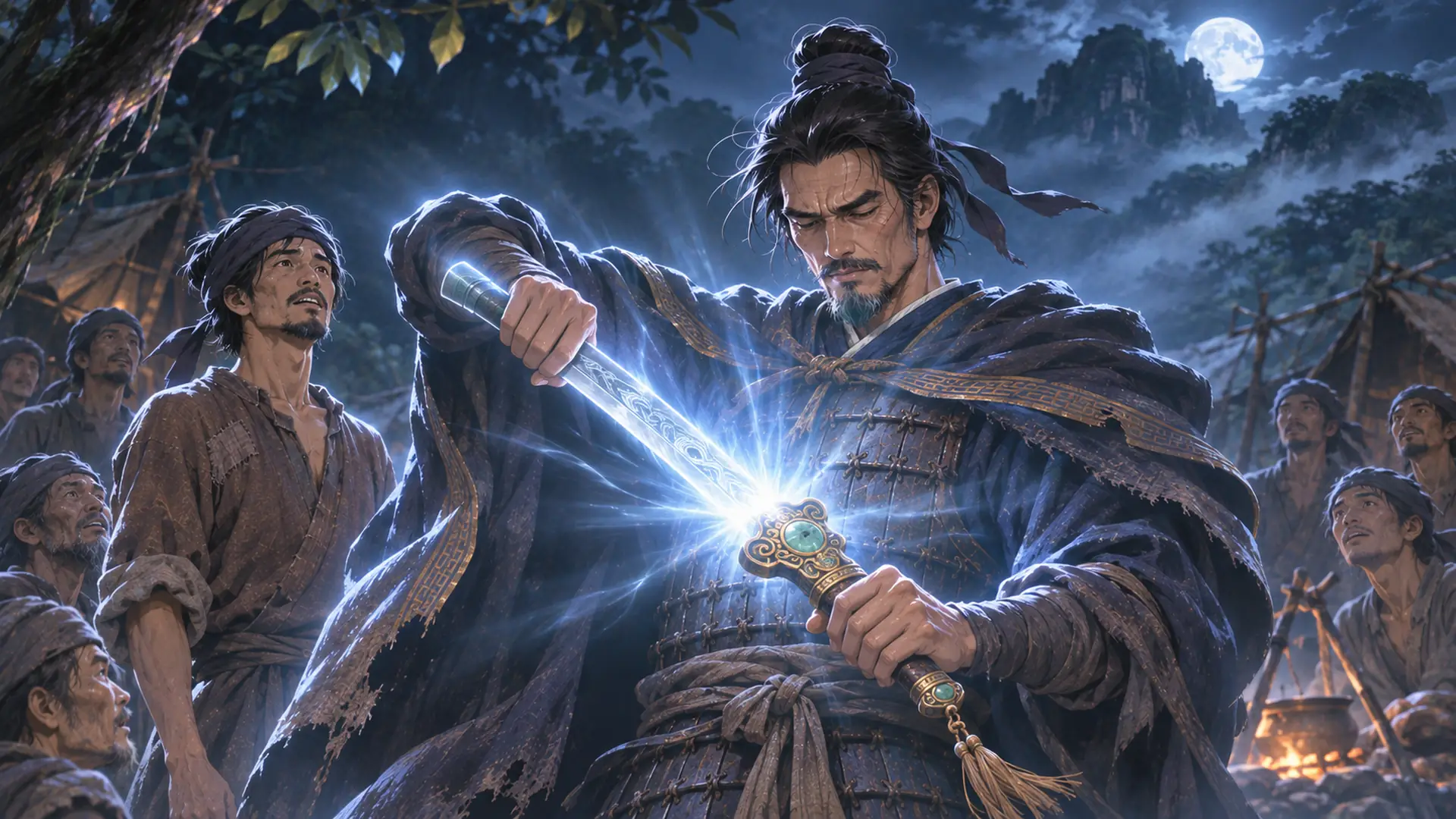
That night they slid the blade into the hilt. It fitted perfectly — as if the two pieces had always been one, waiting for the right person to bring them together.
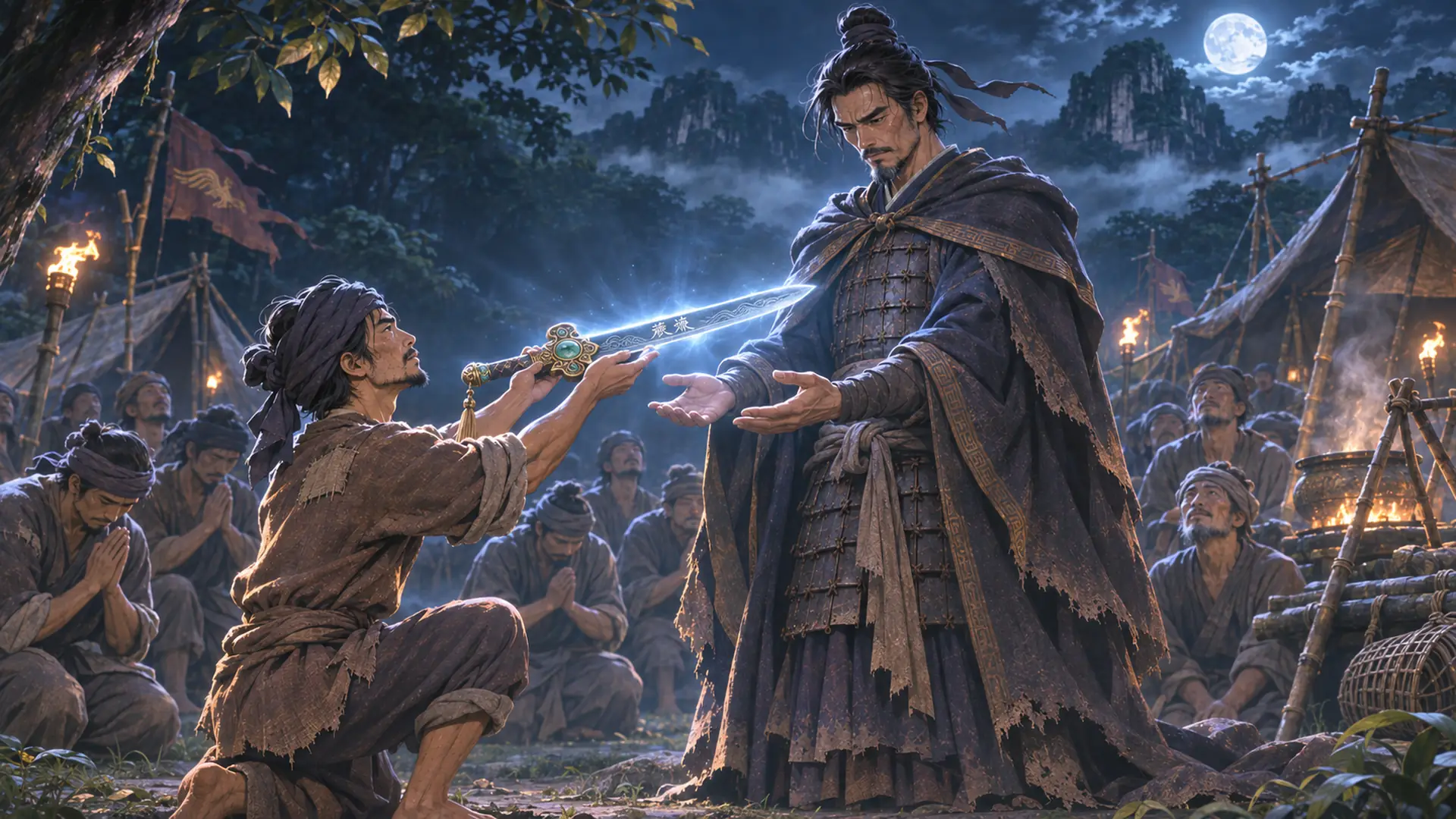
Le Than lifted the sword and knelt before his leader:
Heaven has used our hands to give you this sword, my lord. Use it for the great task ahead.
Chapter
Ten Years of War
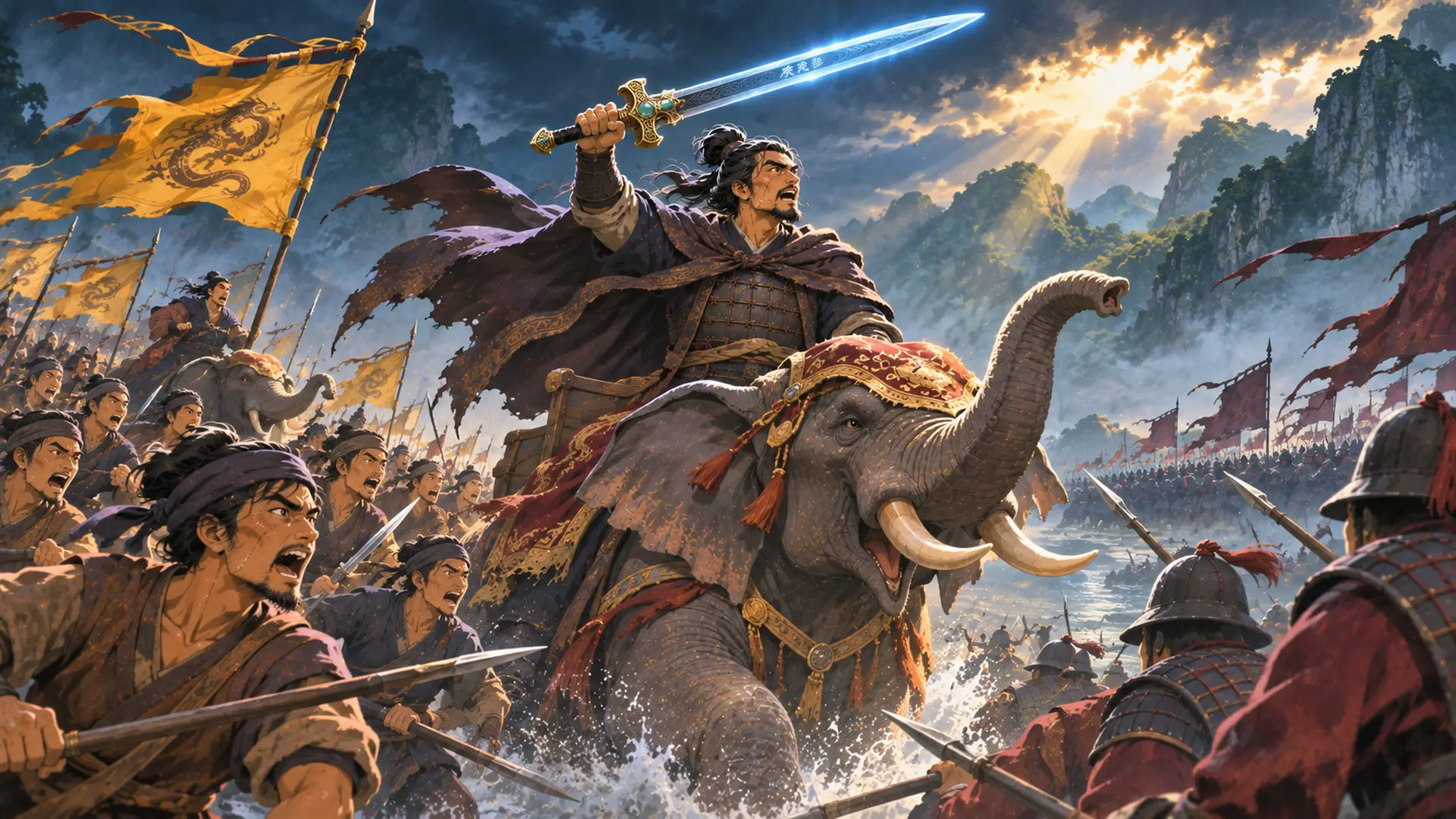
With the divine sword in hand, the rebels seemed to find a new strength. Wherever the sword was raised, the enemy fell apart. From the forests of Thanh Hoa they struck south into Nghe An, then pushed steadily north — war elephants, bamboo spears, and the fury of an entire people.
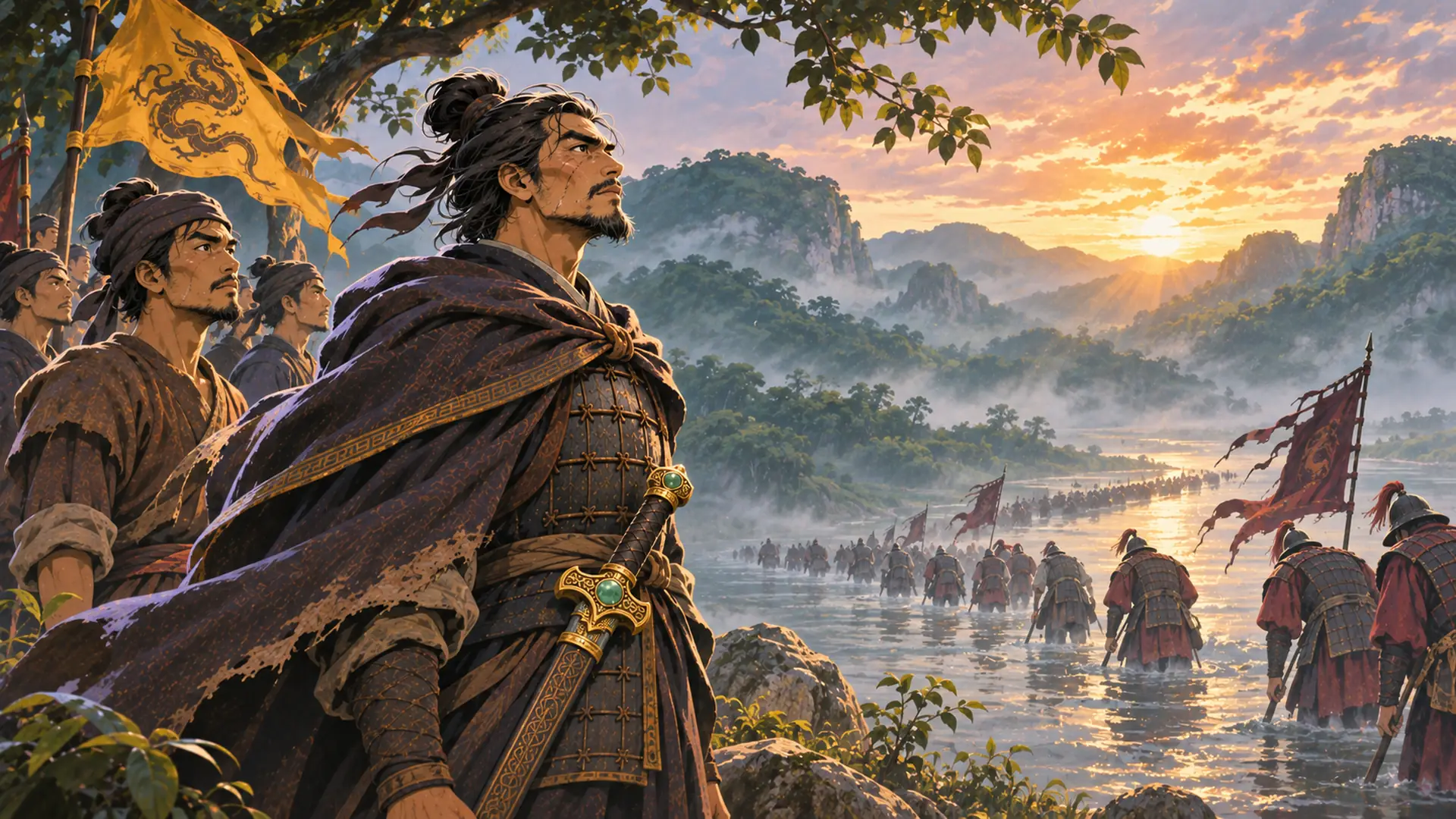
After ten years of fighting, at the end of 1427, the Ming army suffered a crushing defeat and withdrew to the north. The country was free.
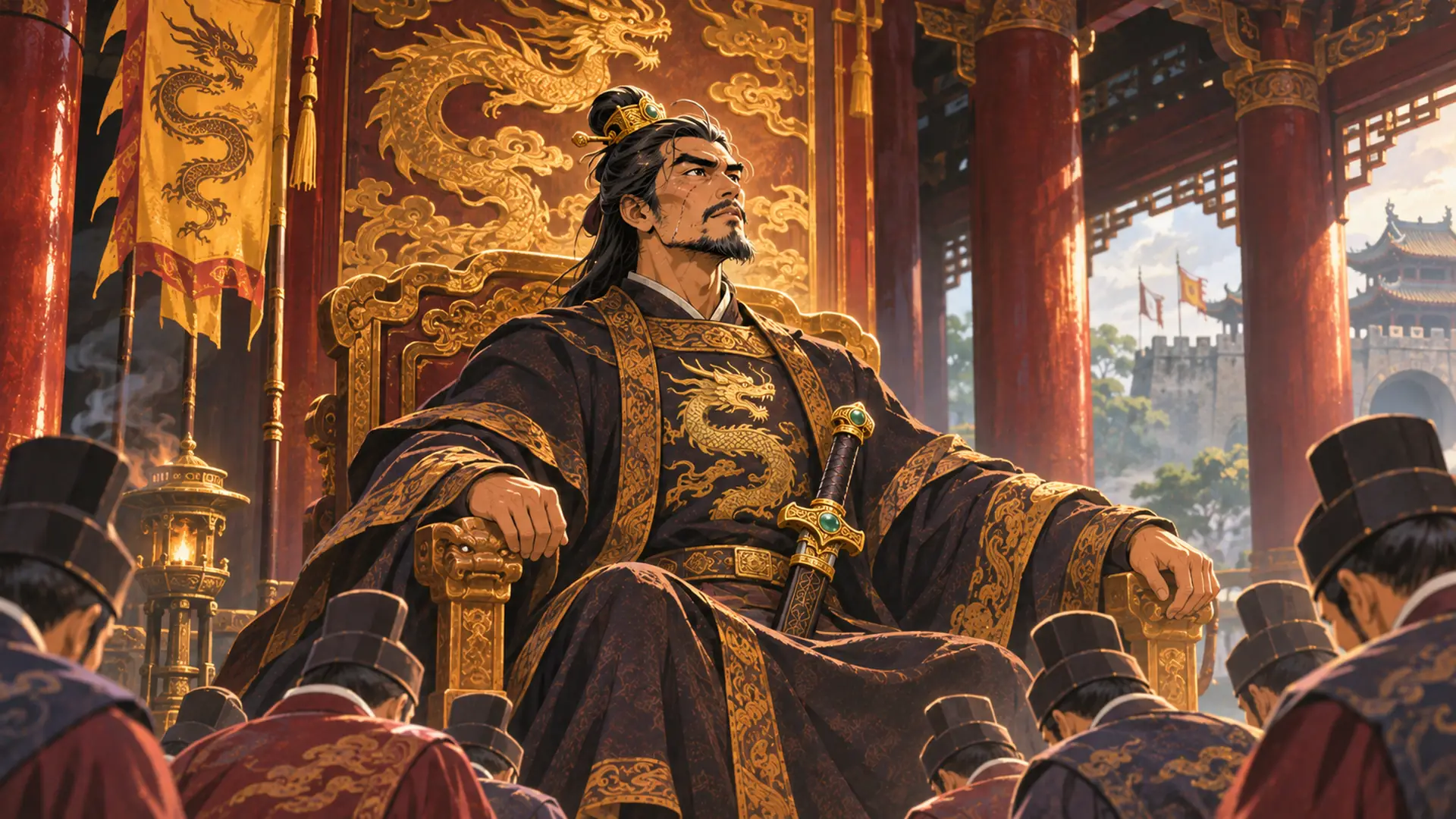
Le Loi took the throne as Emperor Le Thai To, and made his capital at Thang Long — the city we now call Hanoi.
Chapter
The Lake of the Returned Sword
About a year later, on a fine day, the king went out in his dragon boat on Ta Vong lake, right in the middle of the capital. The divine sword still hung at his side.
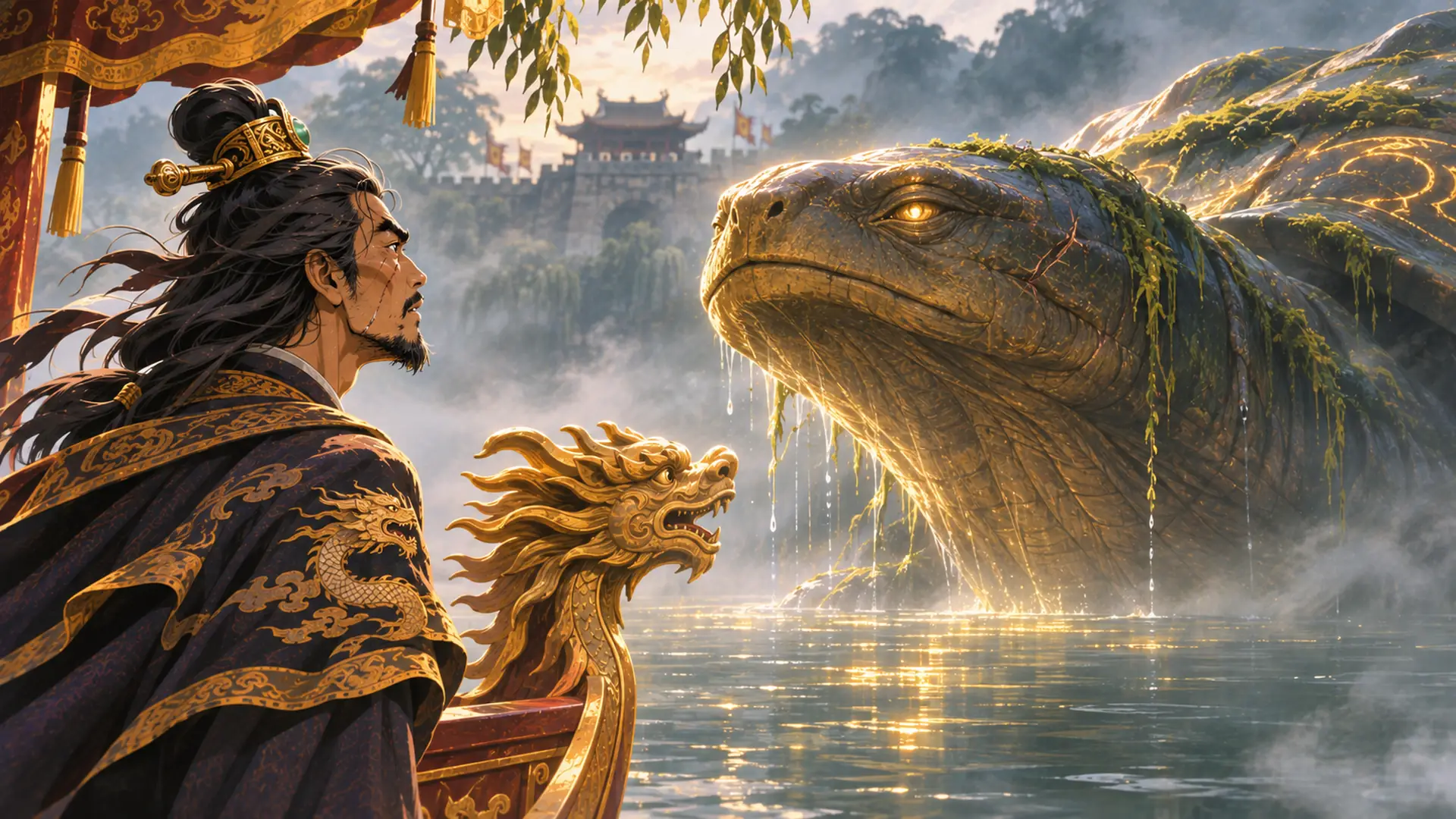
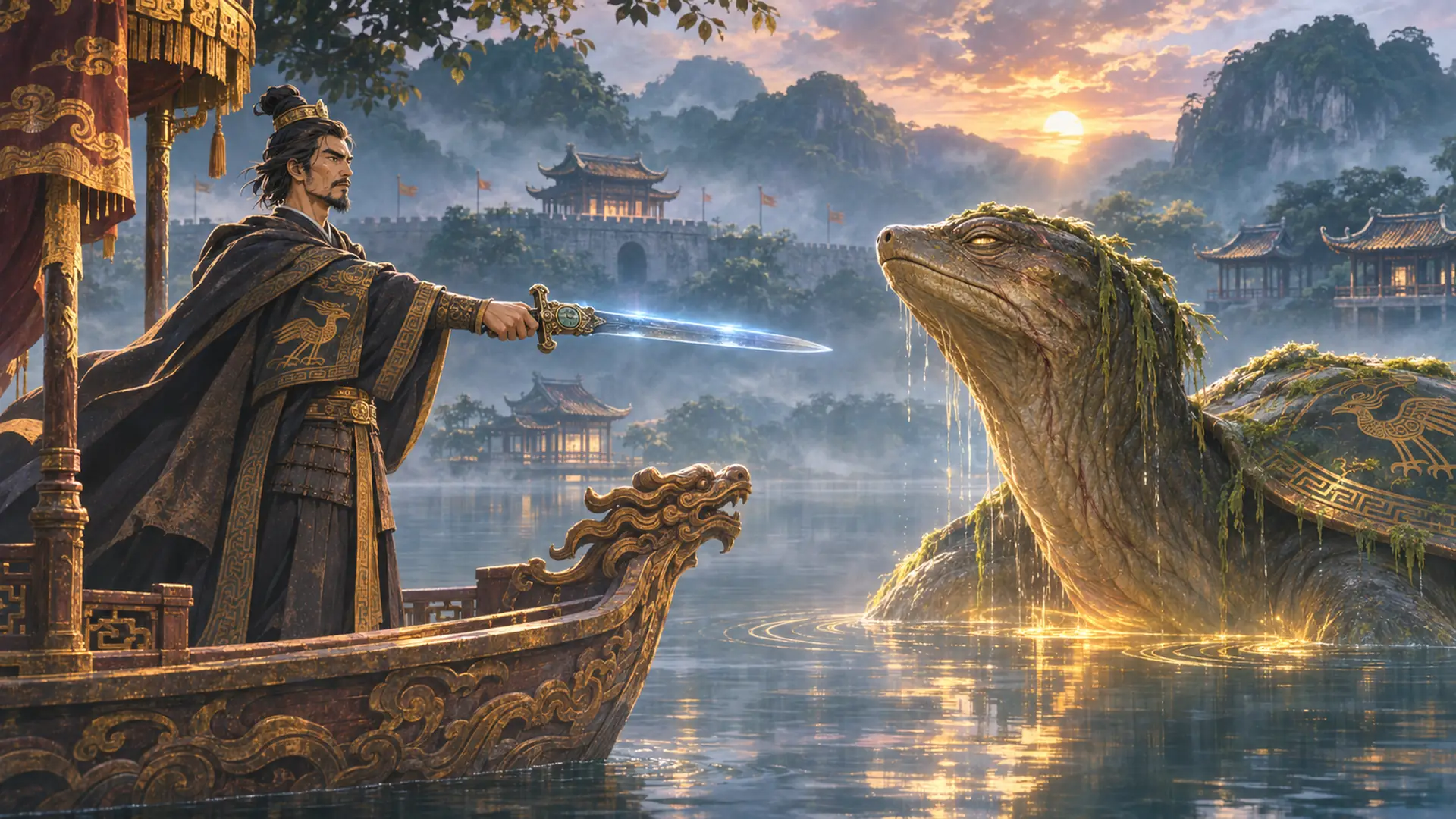
Suddenly a great turtle — the Golden Turtle, the story calls it — rose from the water and stretched its neck toward the boat. Its eyes looked straight at the king.
Your Majesty, return the sword to the Dragon King!
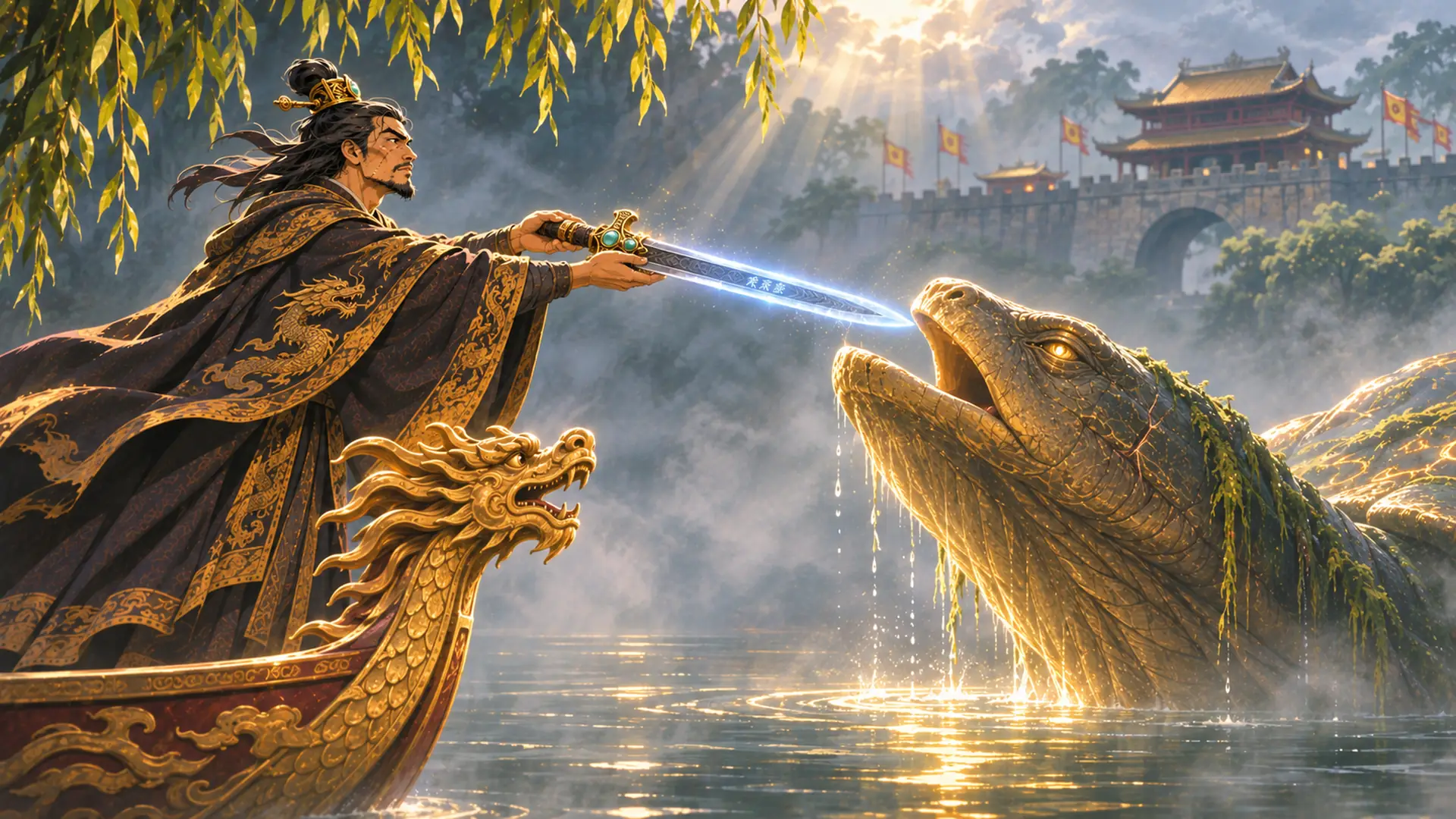
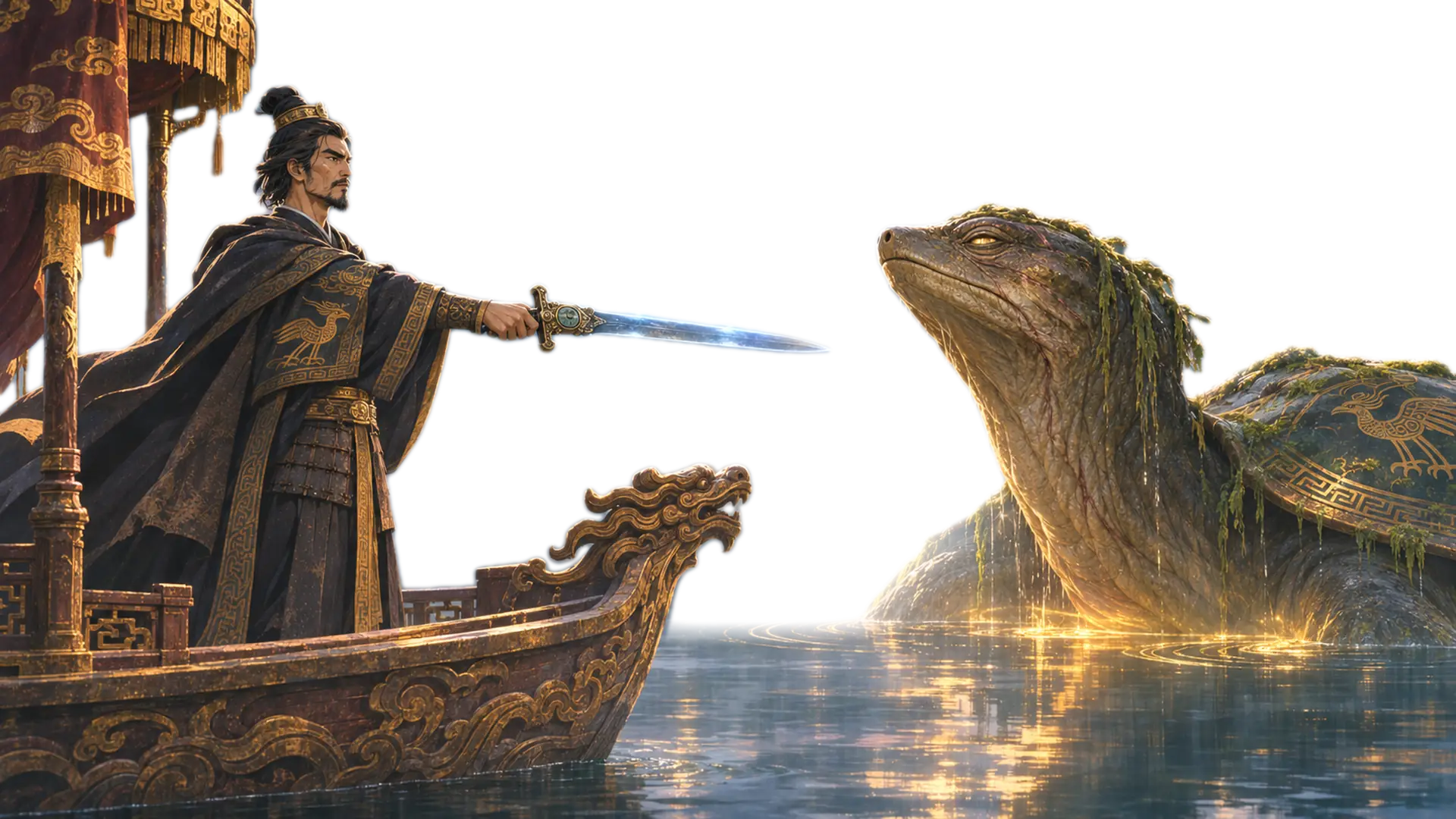
At that very moment the sword at the king’s side began to tremble on its own. And the king understood: the sword had only been lent — to save the country, not to keep forever. He raised it toward the turtle.

The turtle took the sword in its mouth and dived deep into the lake. For a long, long time, a light kept glowing beneath the surface.
From then on the lake had a new name: Hoan Kiem, the Lake of the Returned Sword. The people of Hanoi simply call it Ho Guom — Sword Lake.


Chapter
The Turtle Was Real
Today Sword Lake lies in the very centre of Hanoi. The little Turtle Tower stands on an islet in the middle; on the shore are Ngoc Son temple and the bright red The Huc bridge.
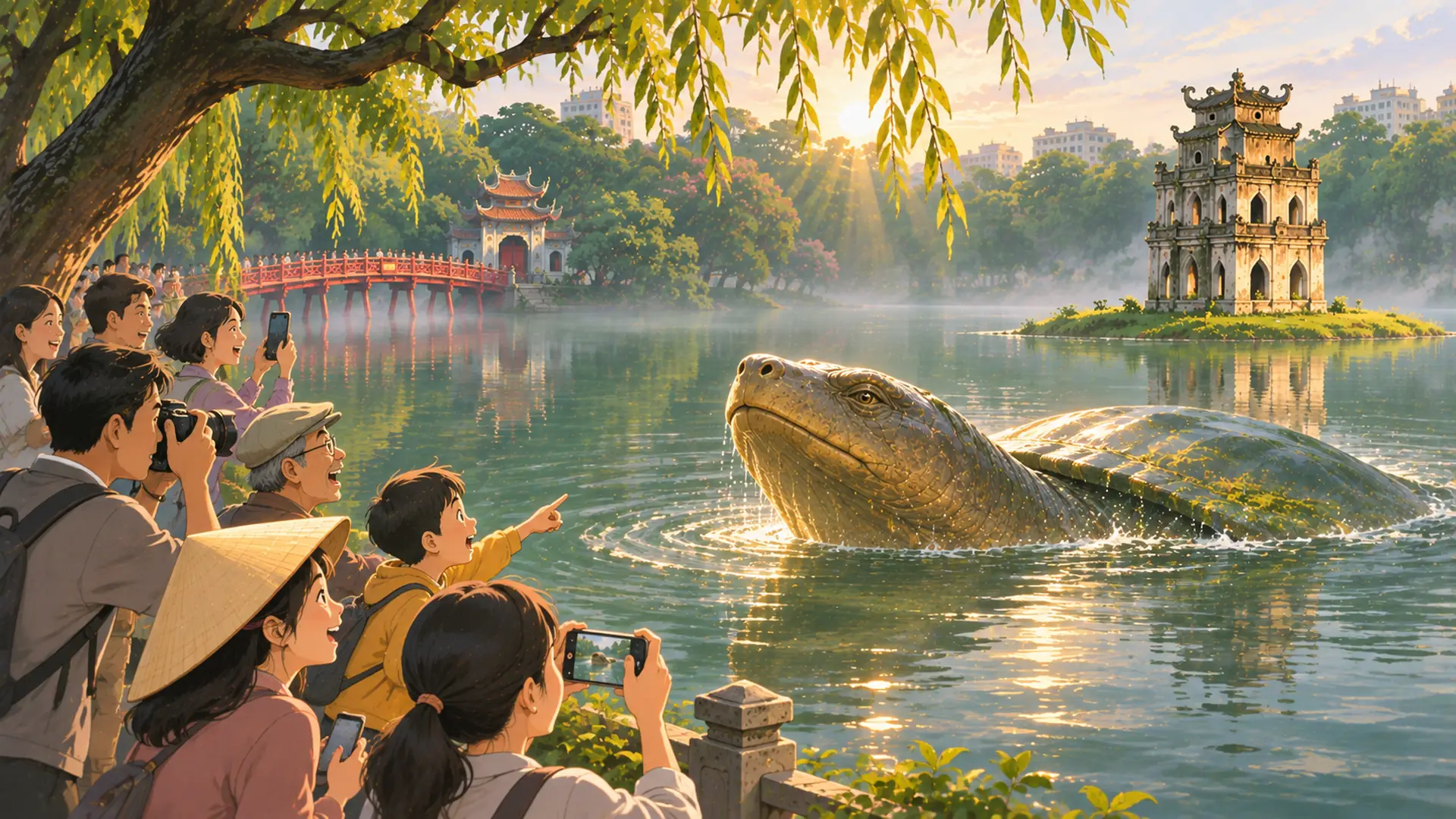
And here is the strangest part: real turtles lived in this lake. Giant softshell turtles weighing well over a hundred kilos would now and then surface in the middle of the water, and every time, crowds rushed to the shore to see Cu Rua — Great-Grandfather Turtle.
The last turtle of Sword Lake died in 2016. One of the lake’s turtles is still preserved and on display at Ngoc Son temple, and only a handful of its kind are known to survive anywhere in the world.
And the sword? No one knows. But Vietnamese people still tell this story to their children as a reminder: power is only ever borrowed. Use it to save others — and then give it back.