Chapter
The Coconut Groom
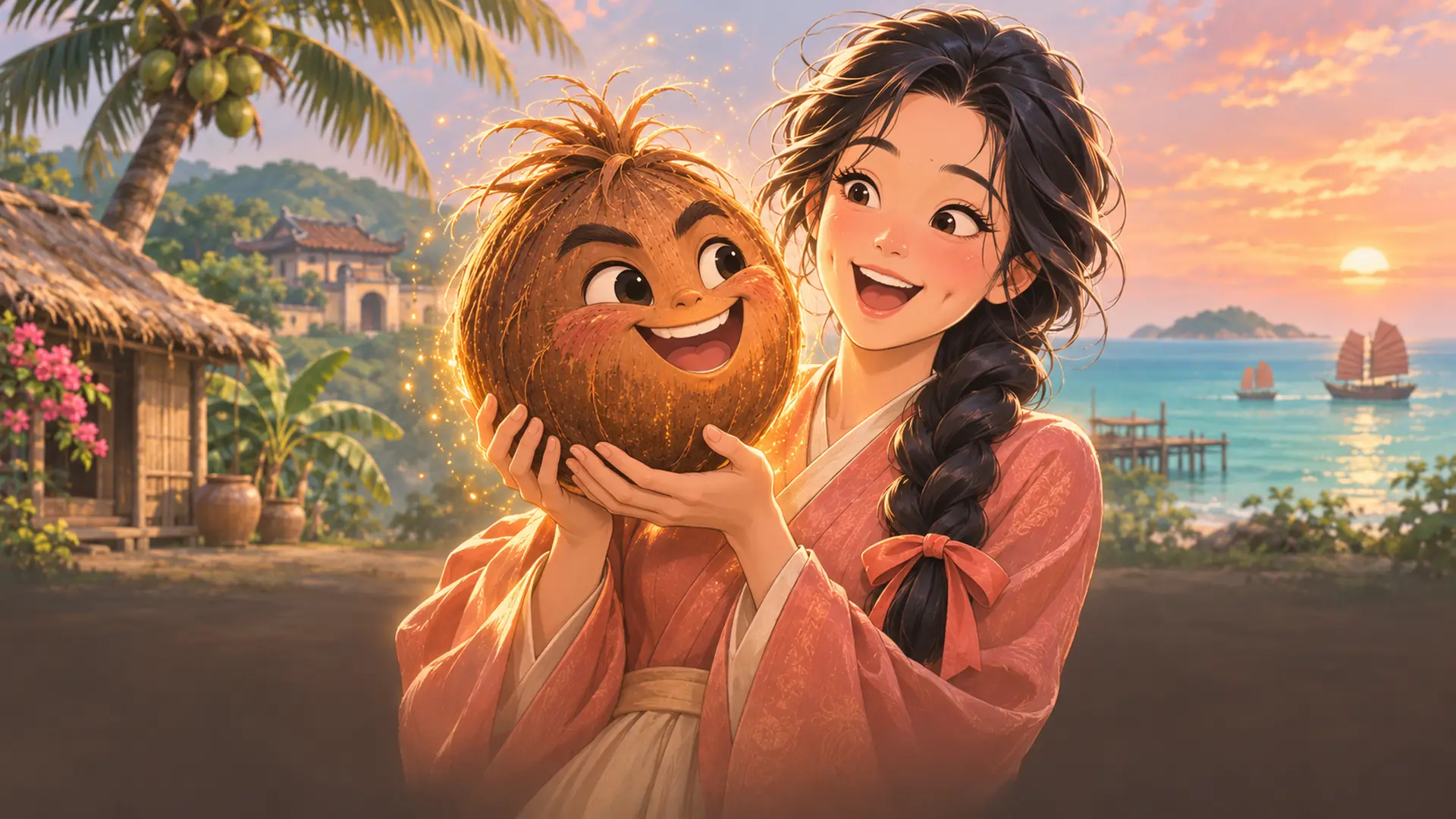
In one Vietnamese fairy tale, a rich man’s youngest daughter married a coconut. The whole village laughed.
But she knew a secret that no one else did.
Chapter
Born From a Coconut Shell
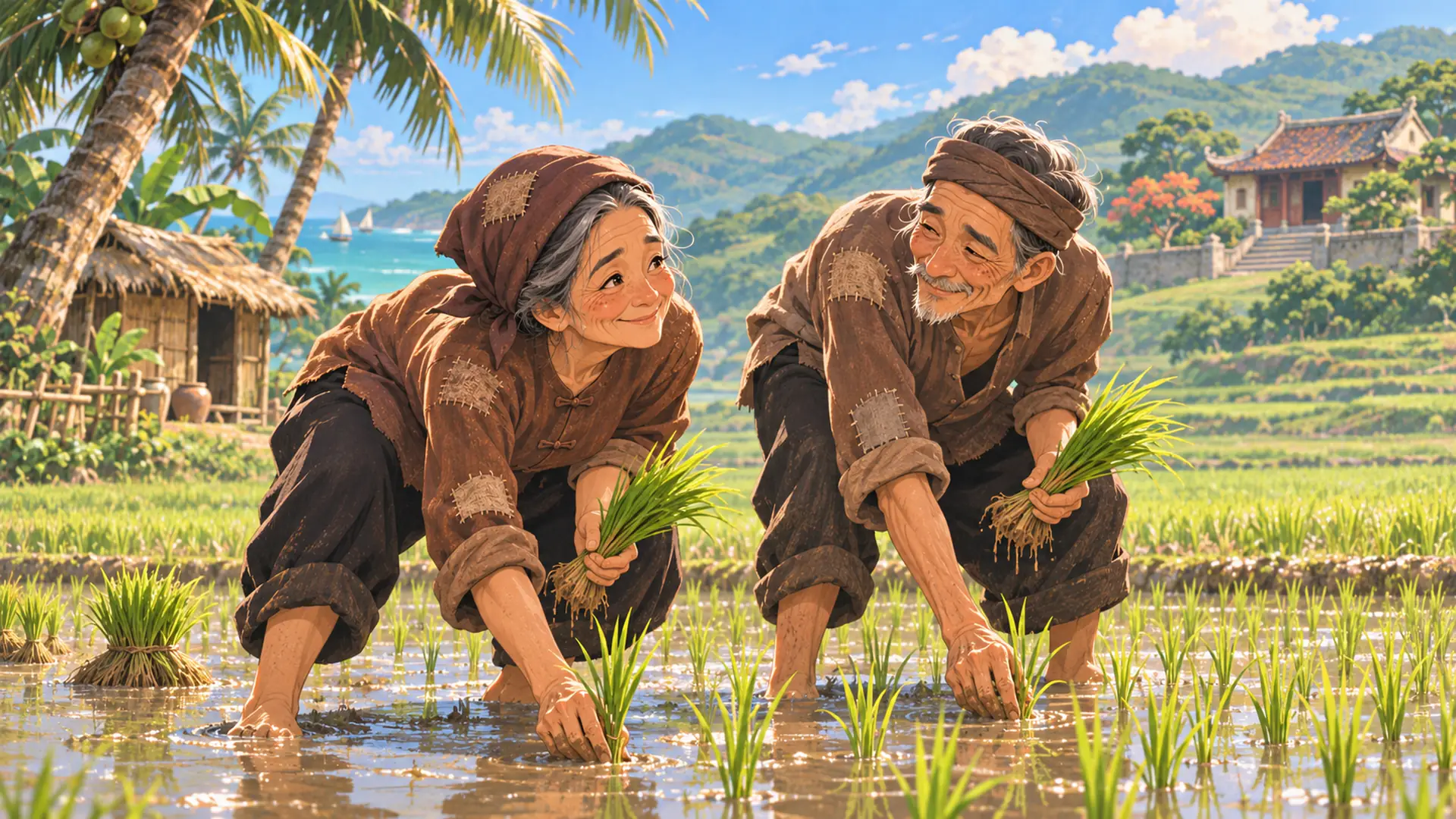
Long ago, a poor old couple worked as servants for a rich man. They were past fifty, and they still had no child.
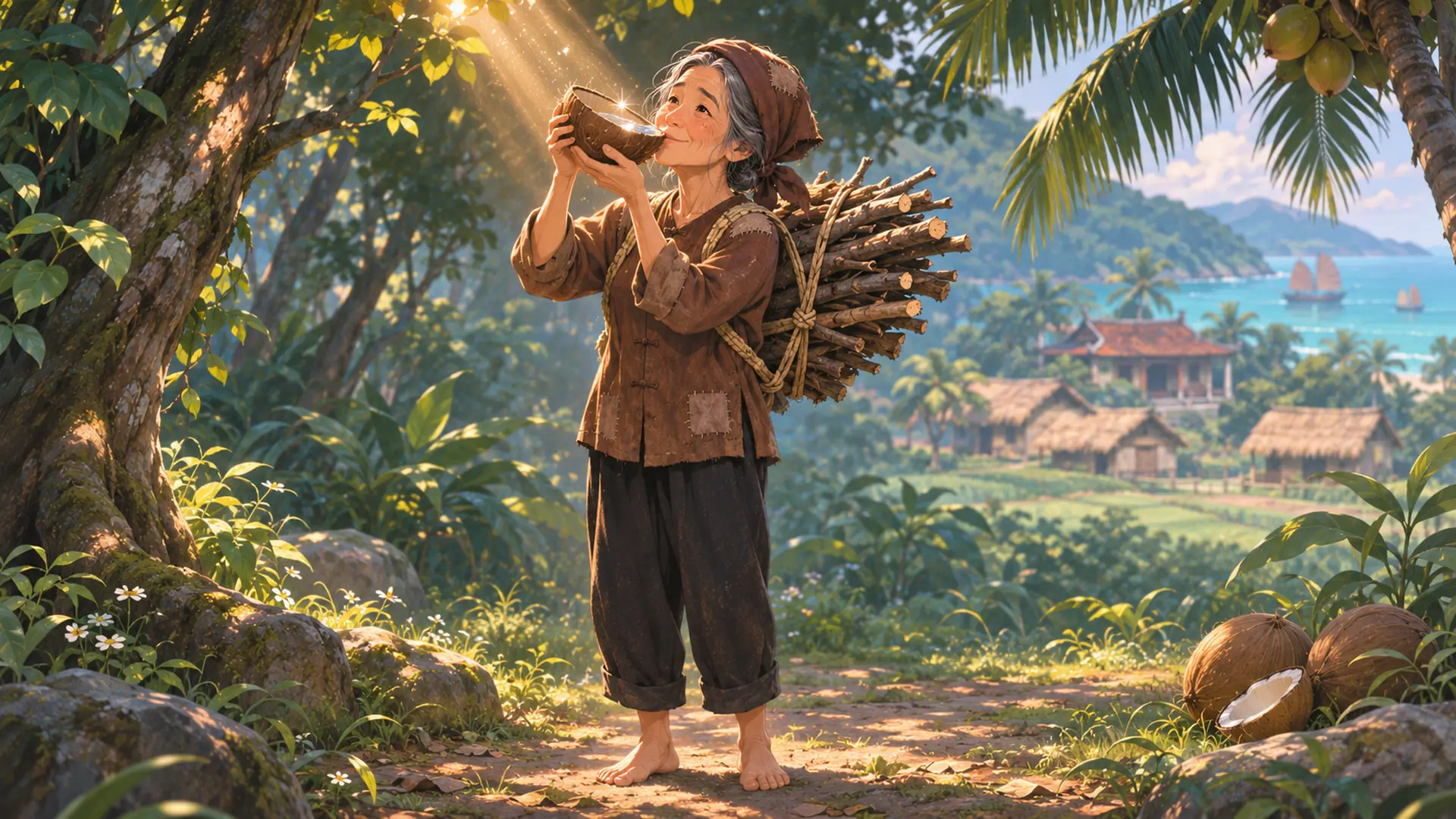
One day the old woman went into the forest for firewood. It was hot, and she was thirsty. At the foot of a tree she found an old coconut shell full of rainwater, and she drank it all.
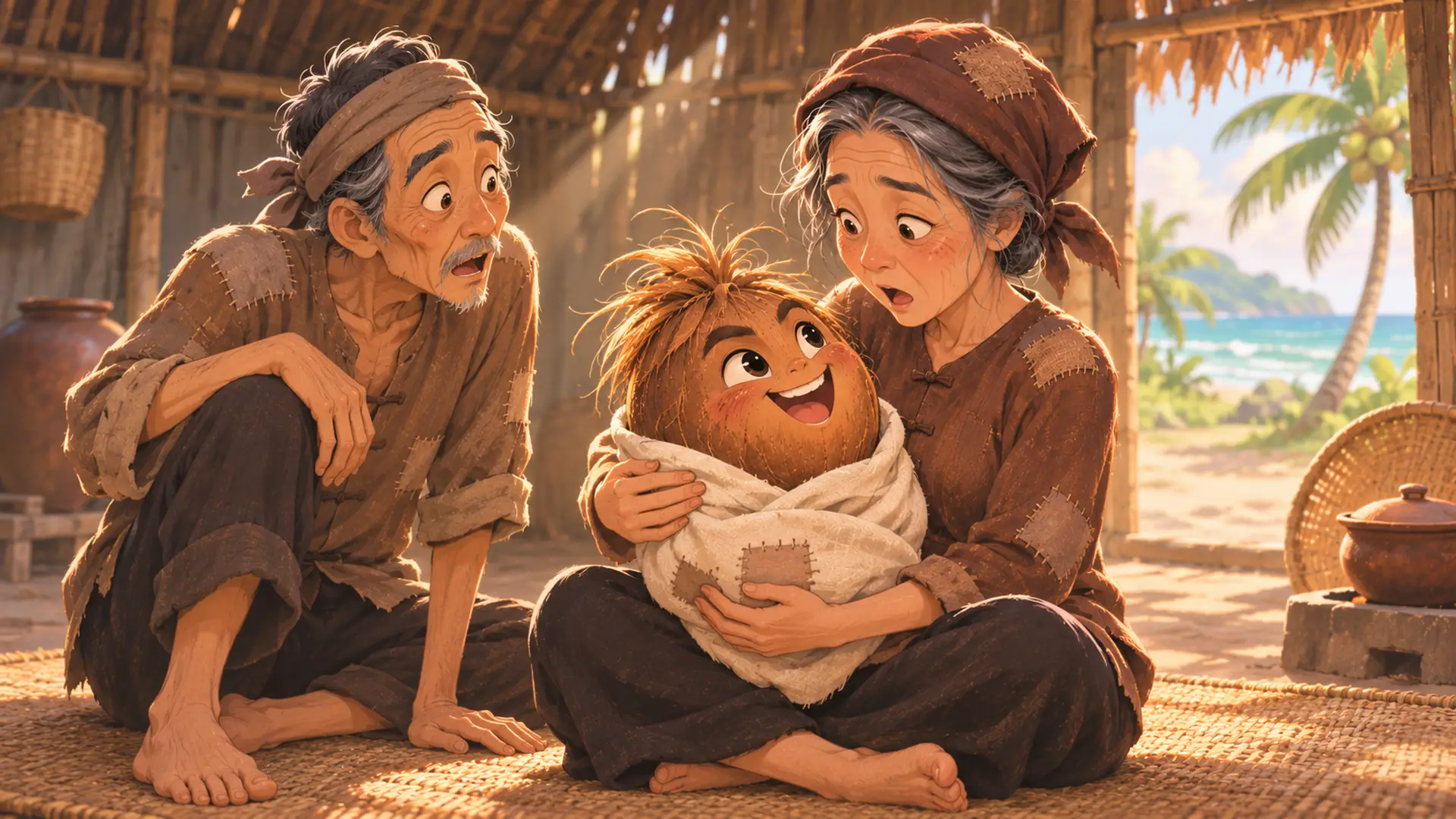
Soon after, she was with child. And when the baby came, it had no arms and no legs. It was perfectly round, like a coconut.
Heartbroken, she thought of leaving it in the forest. Then the baby spoke.
Mother, I’m a person! Please don’t throw me away.
So she kept him, and she named him So Dua — “Coconut Shell”.
Chapter
The Goatherd
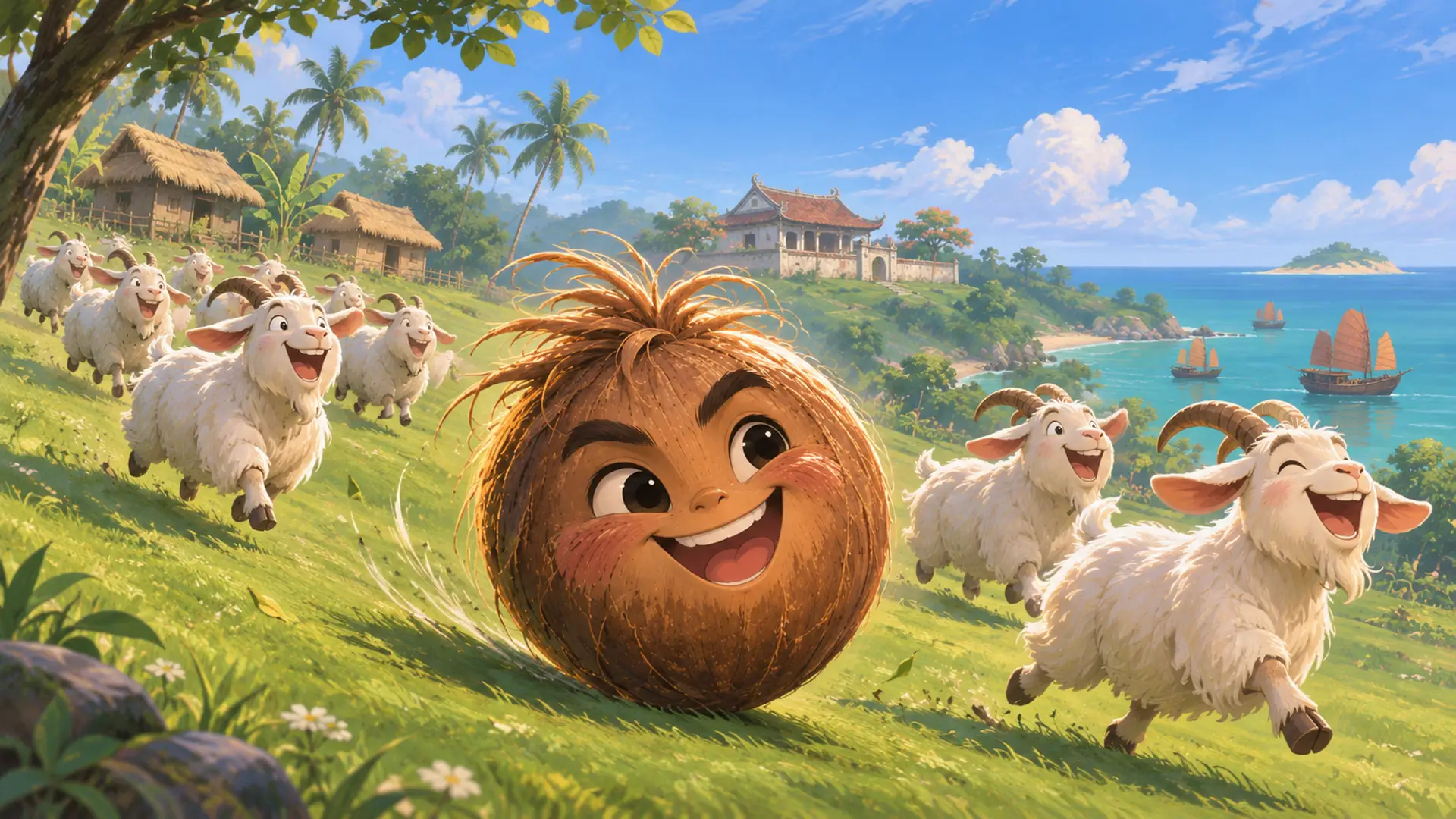
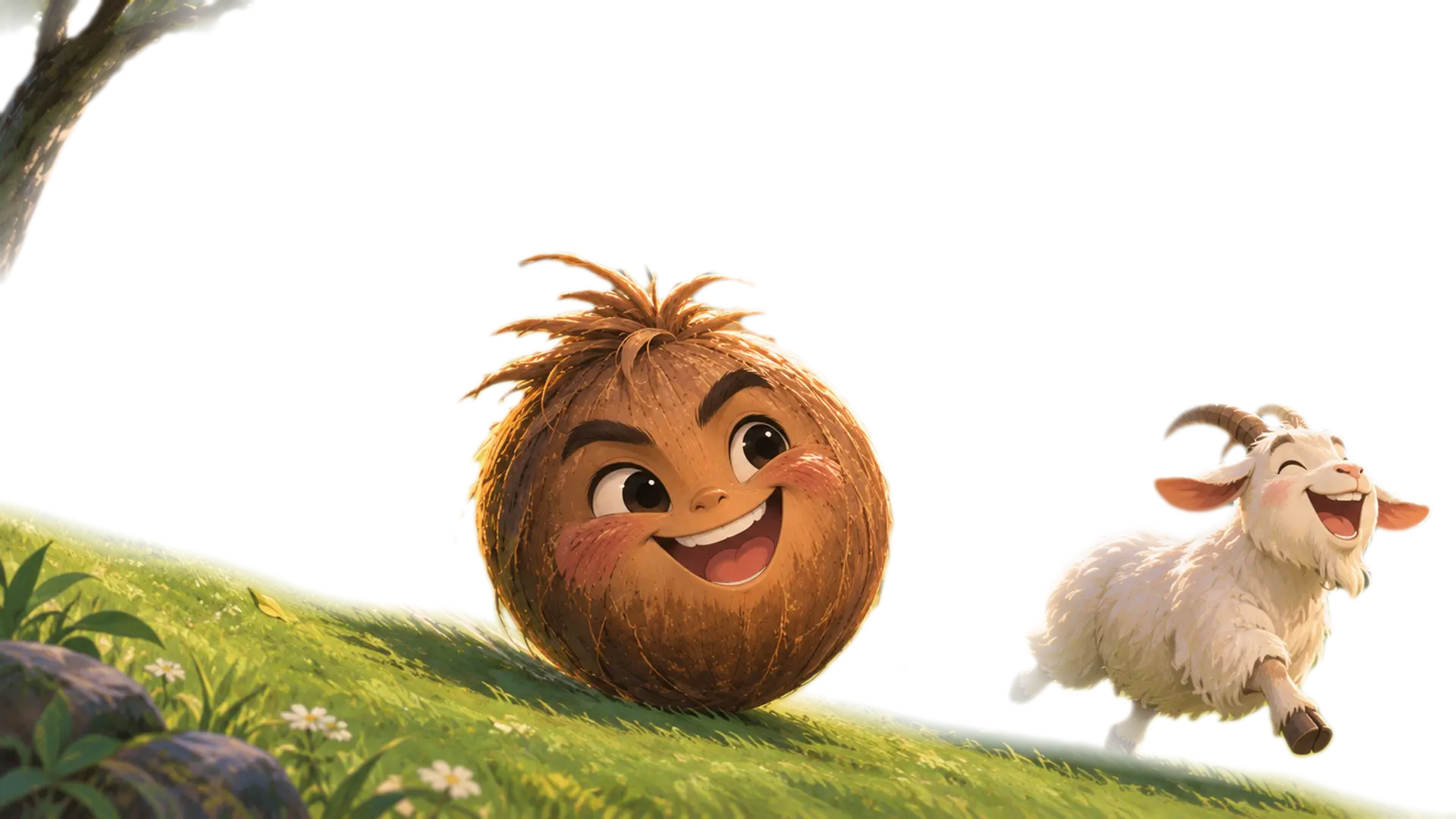
So Dua grew up, but he still could only roll. One day he asked to herd the rich man’s goats. Everyone laughed. But he rolled after the herd from morning to night — and every goat grew round and fat.
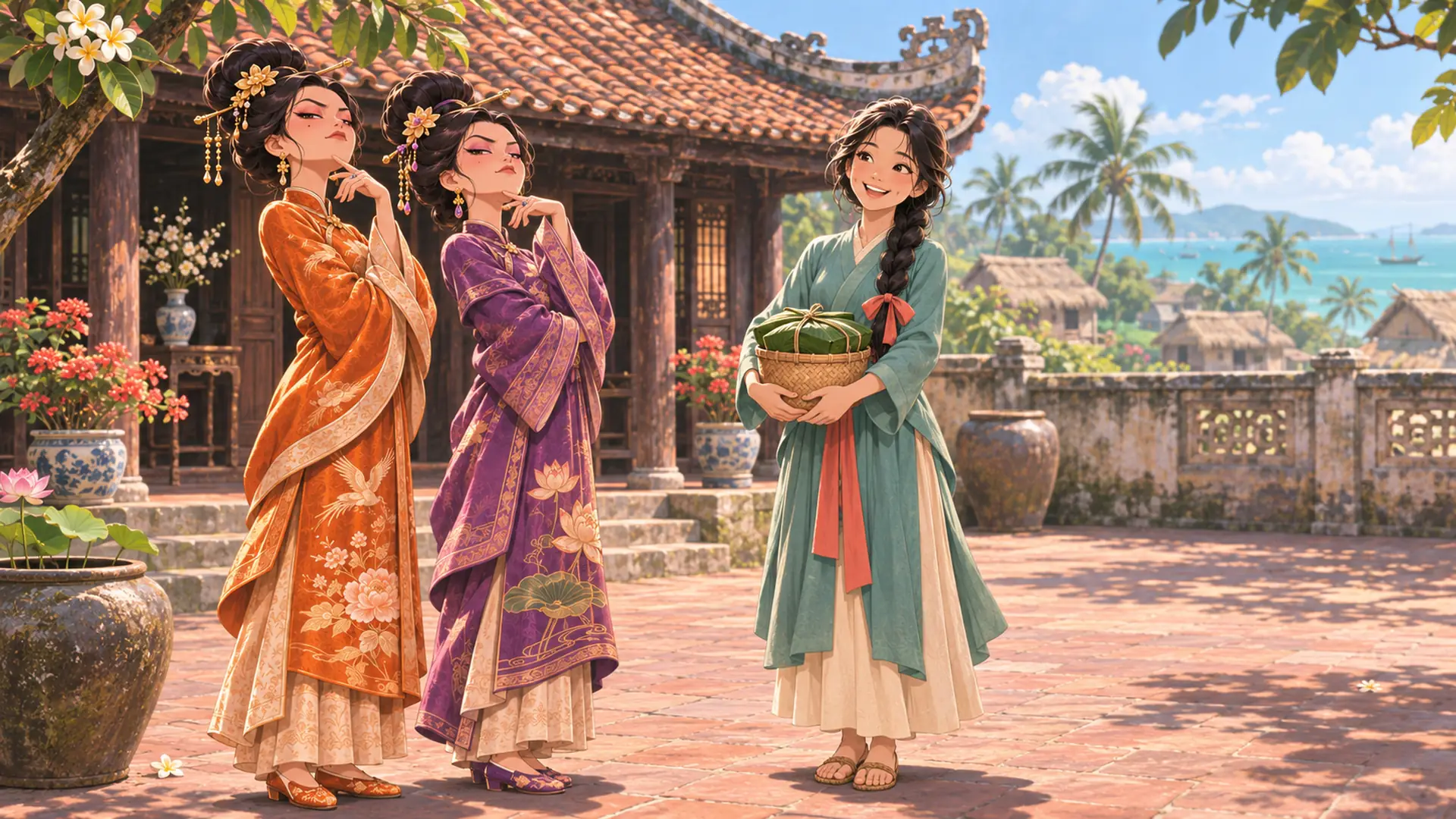
The rich man had three daughters, and they took turns bringing So Dua his lunch. The two elder sisters were proud, and treated him with contempt. Only the youngest was kind to him.
Chapter
The Secret Under the Tree
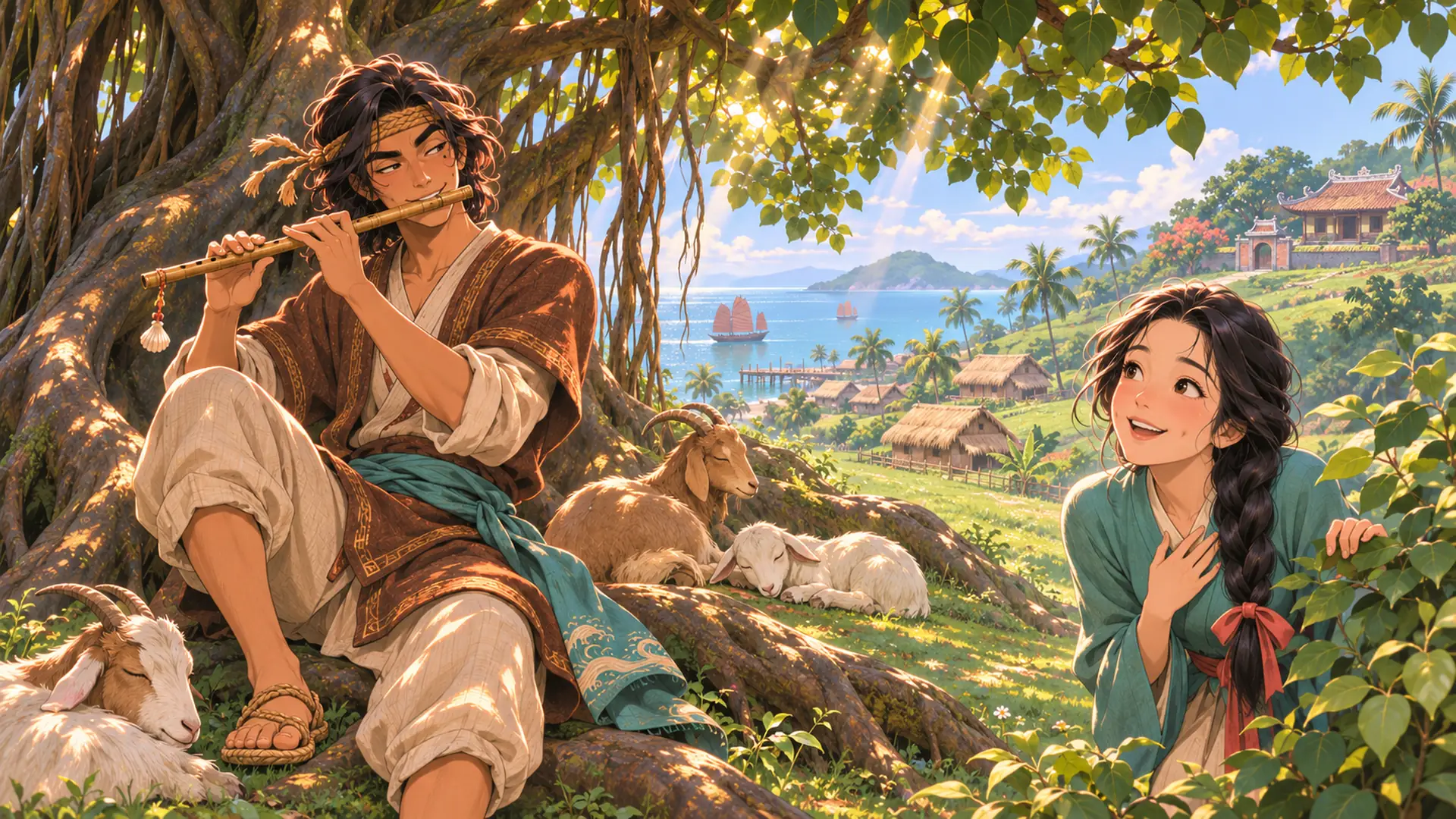
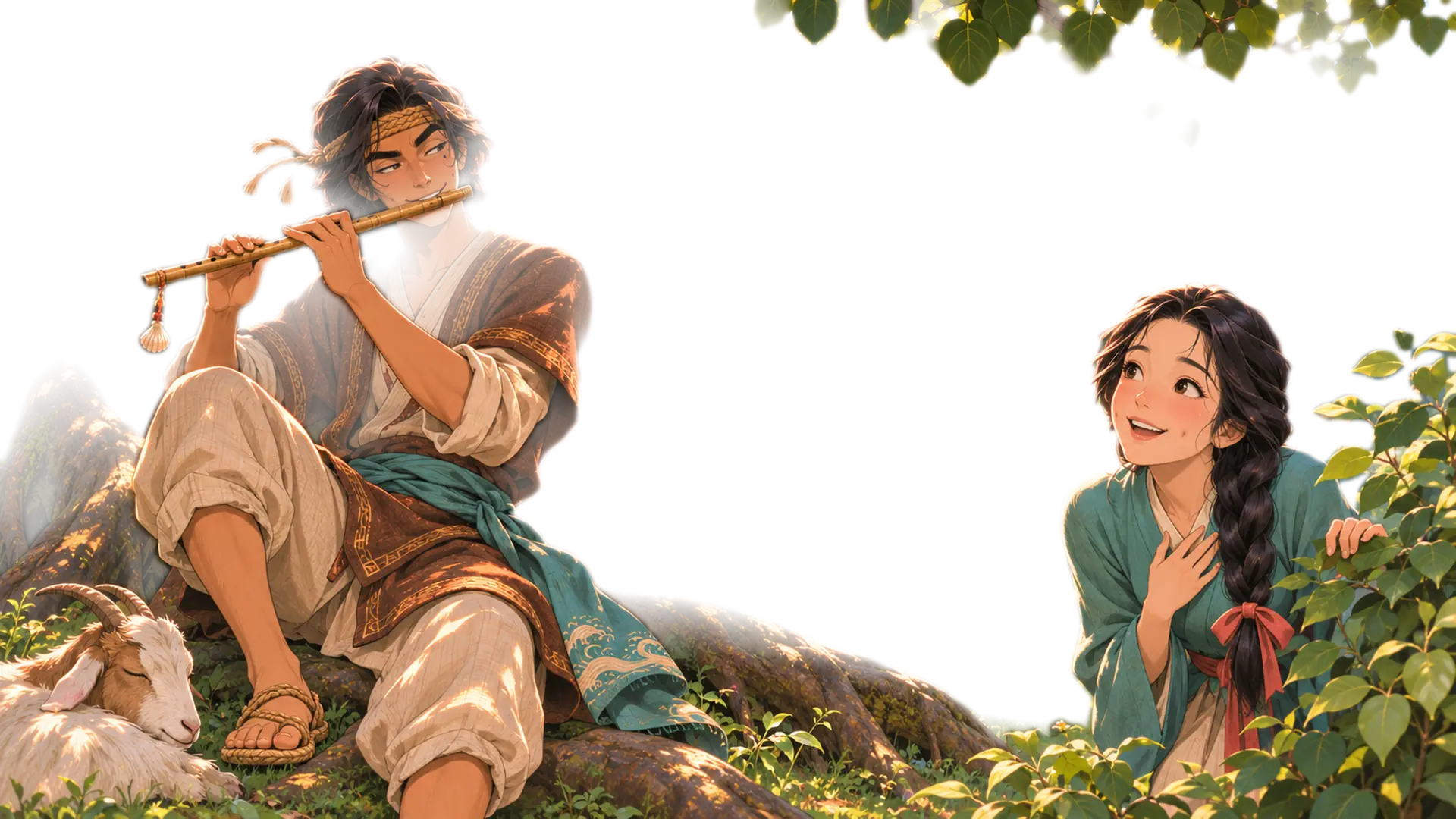
One noon, the youngest daughter climbed the hill with his lunch. From far away she heard a flute. Under a banyan tree, a handsome young man was playing, and the goats lay all around him, listening.
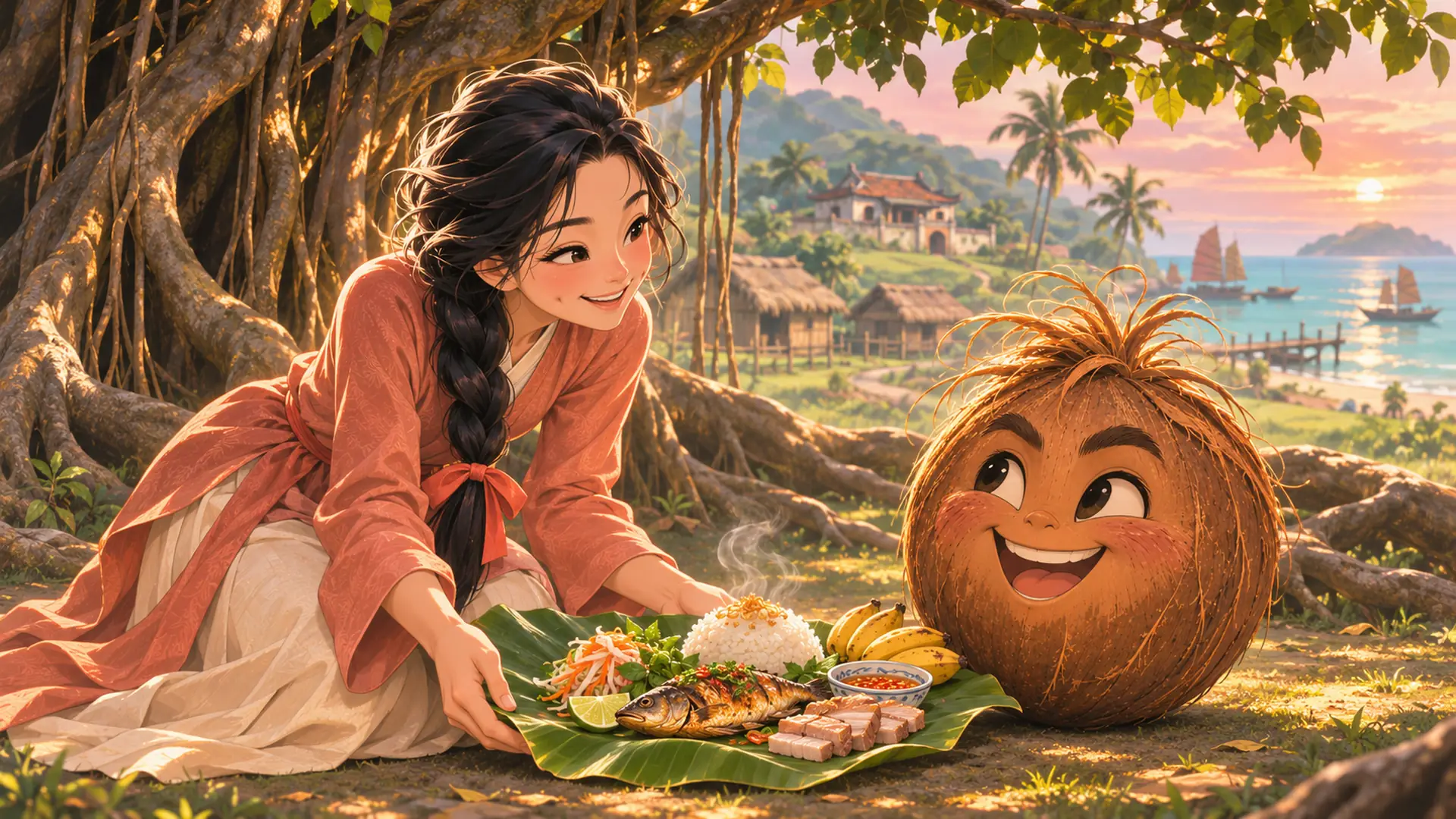
But when she came closer, there was only So Dua, lying in the grass. It happened again, and again. She understood: So Dua was no ordinary boy. From then on, she brought him the best food of all.
Chapter
The Impossible Bride Price
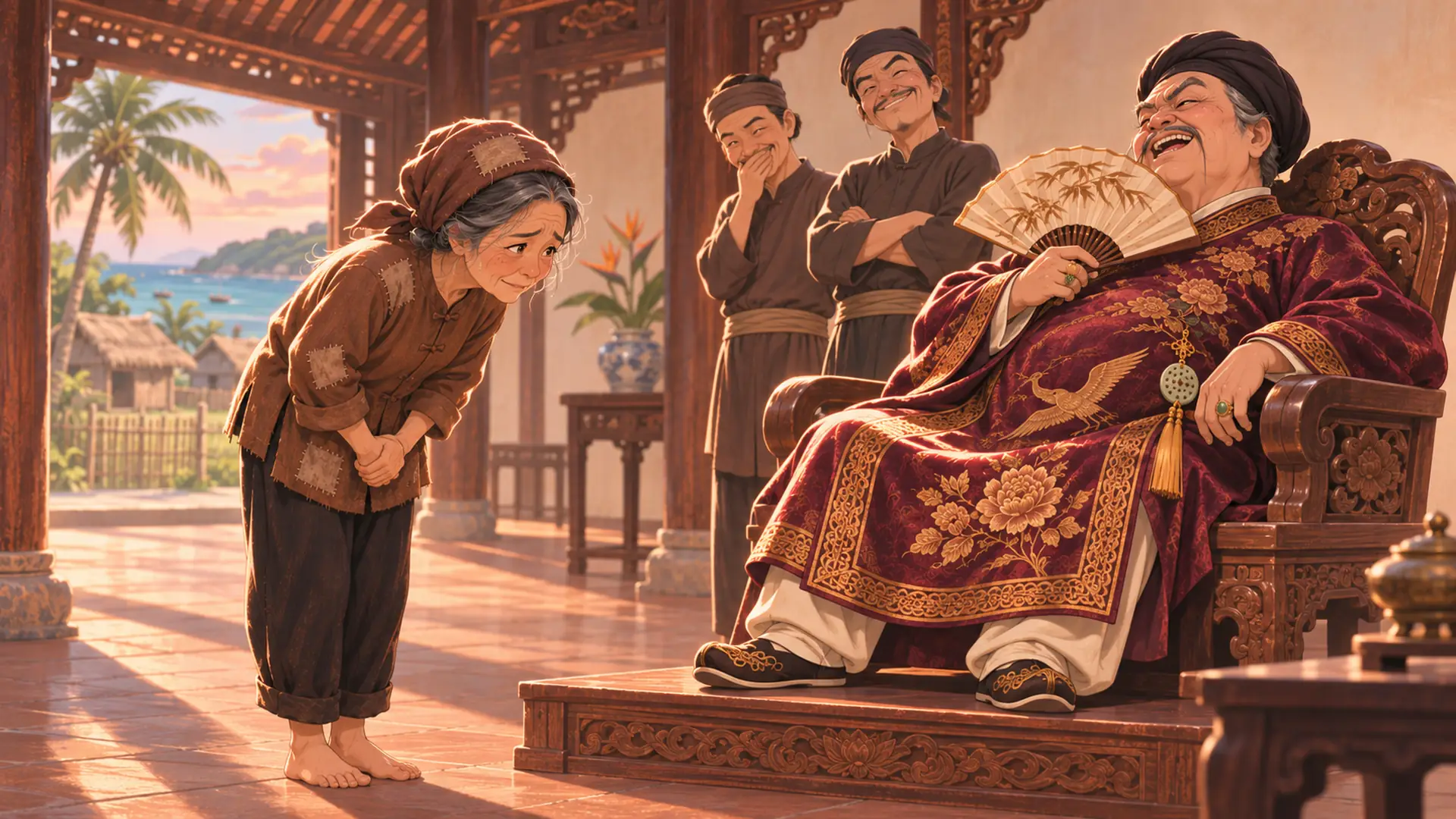
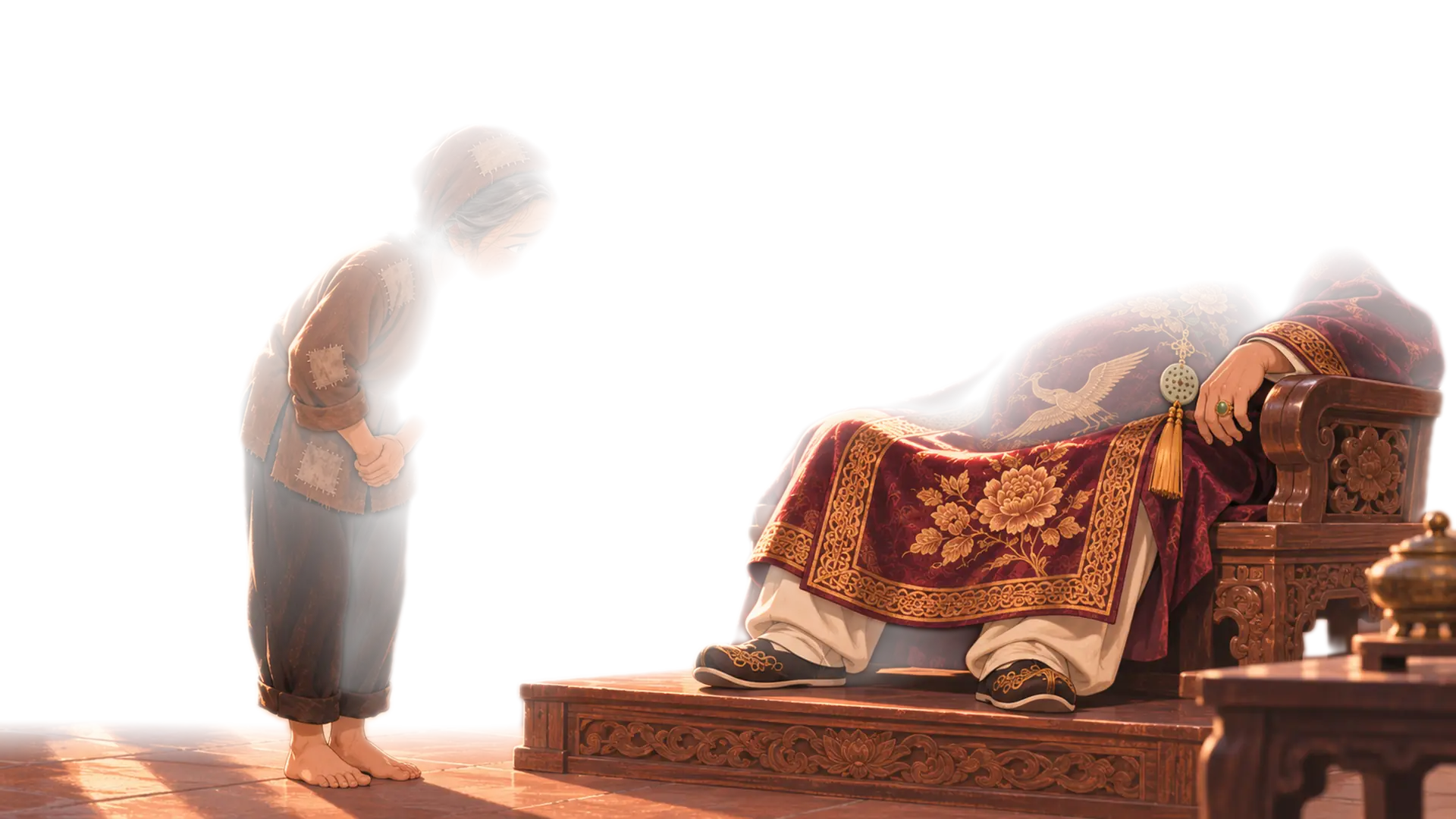
When the season was over, So Dua begged his mother to go to the rich man and ask for one of his daughters. She was terrified, but she went. The rich man roared with laughter.
Then he named his price: a jar of gold, ten rolls of silk, ten fat pigs and ten jars of rice wine. A family that poor, he thought, could never pay it in a hundred lifetimes.
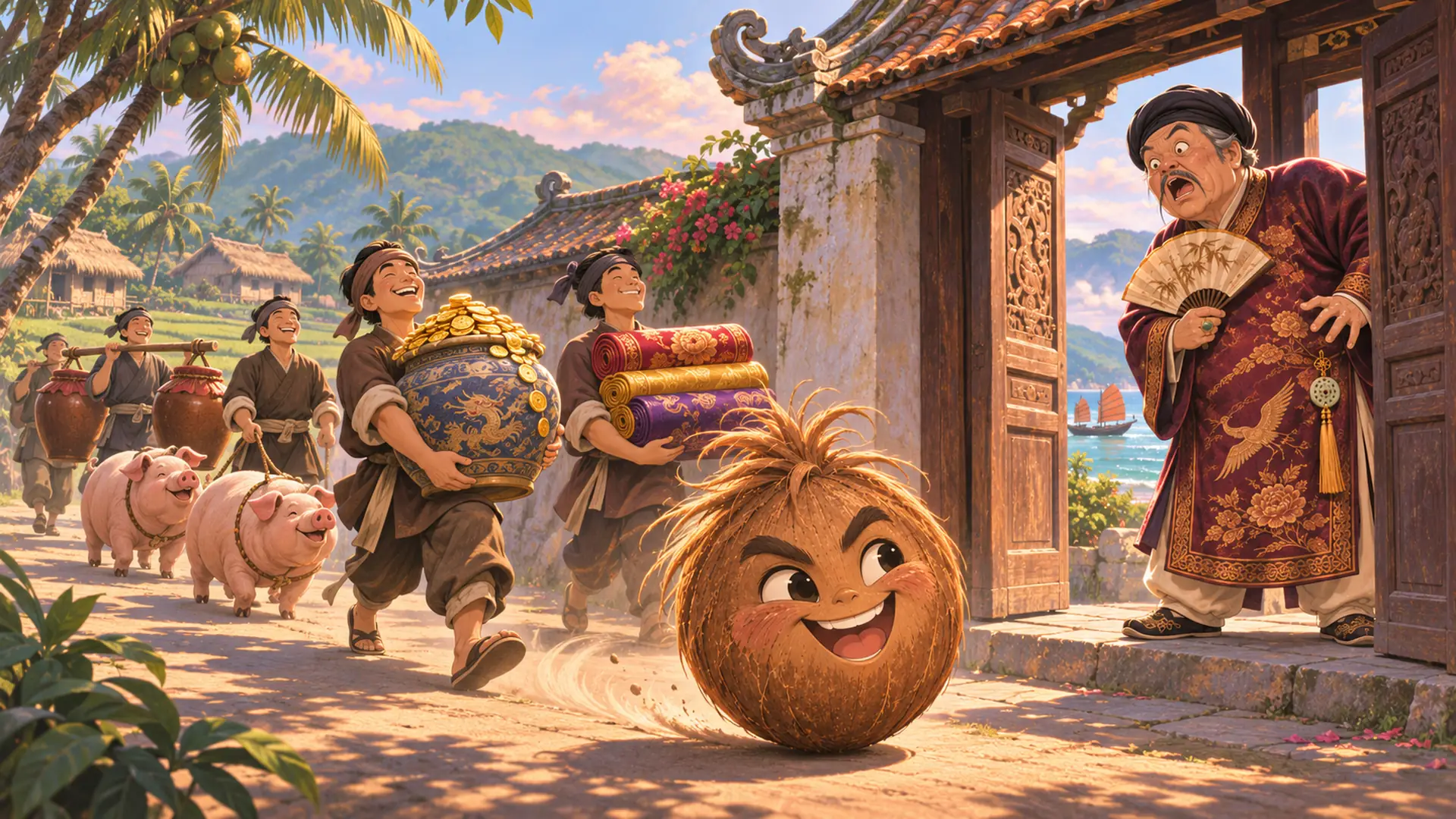
On the appointed day, So Dua’s hut was suddenly full of gifts. Servants carried every one of them to the rich man’s door. The rich man’s jaw dropped.
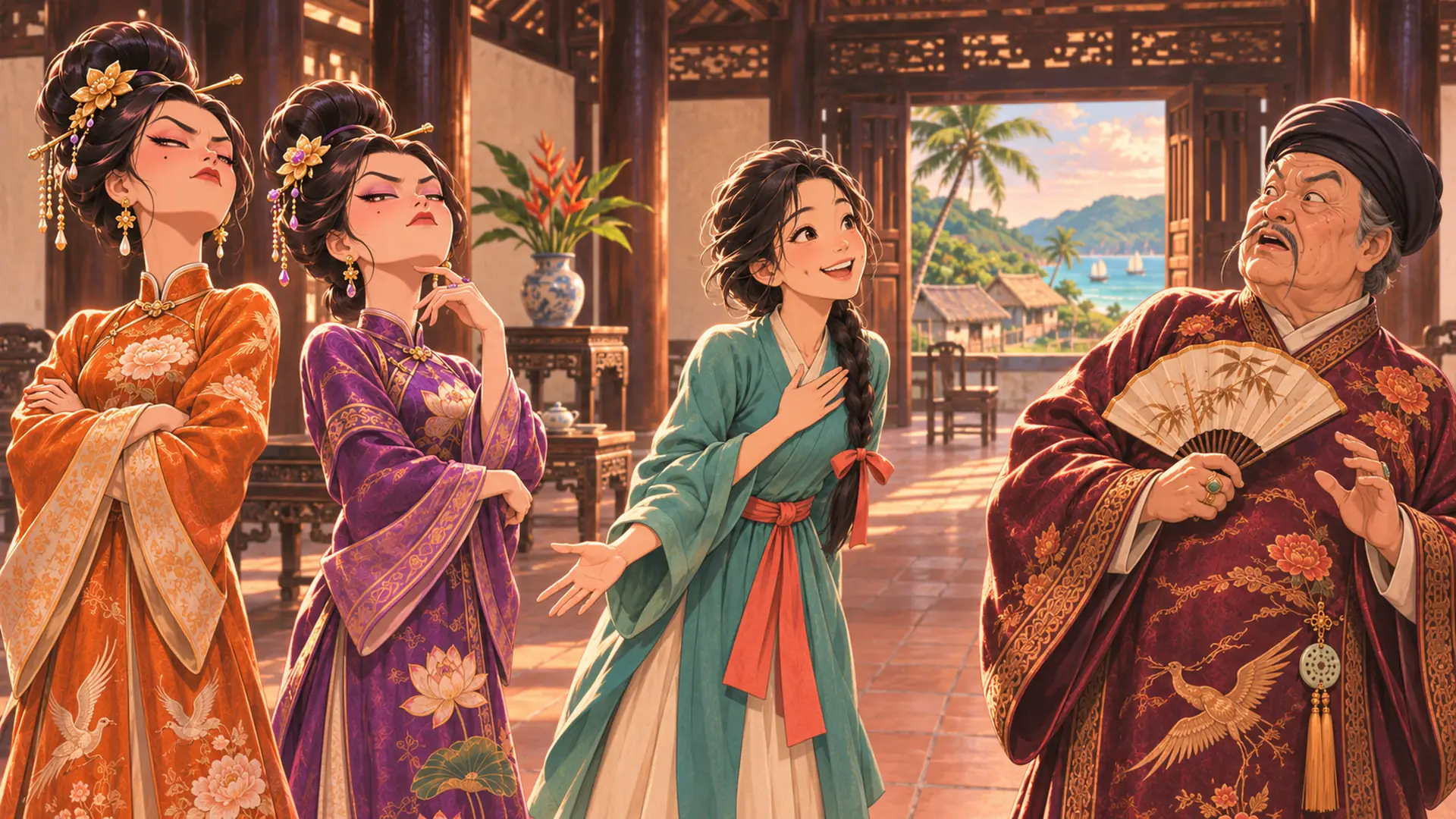
So he had to ask his daughters. The two elder sisters sneered and turned away. Only the youngest lowered her head, and quietly said yes.
Chapter
The Shell Cracks Open
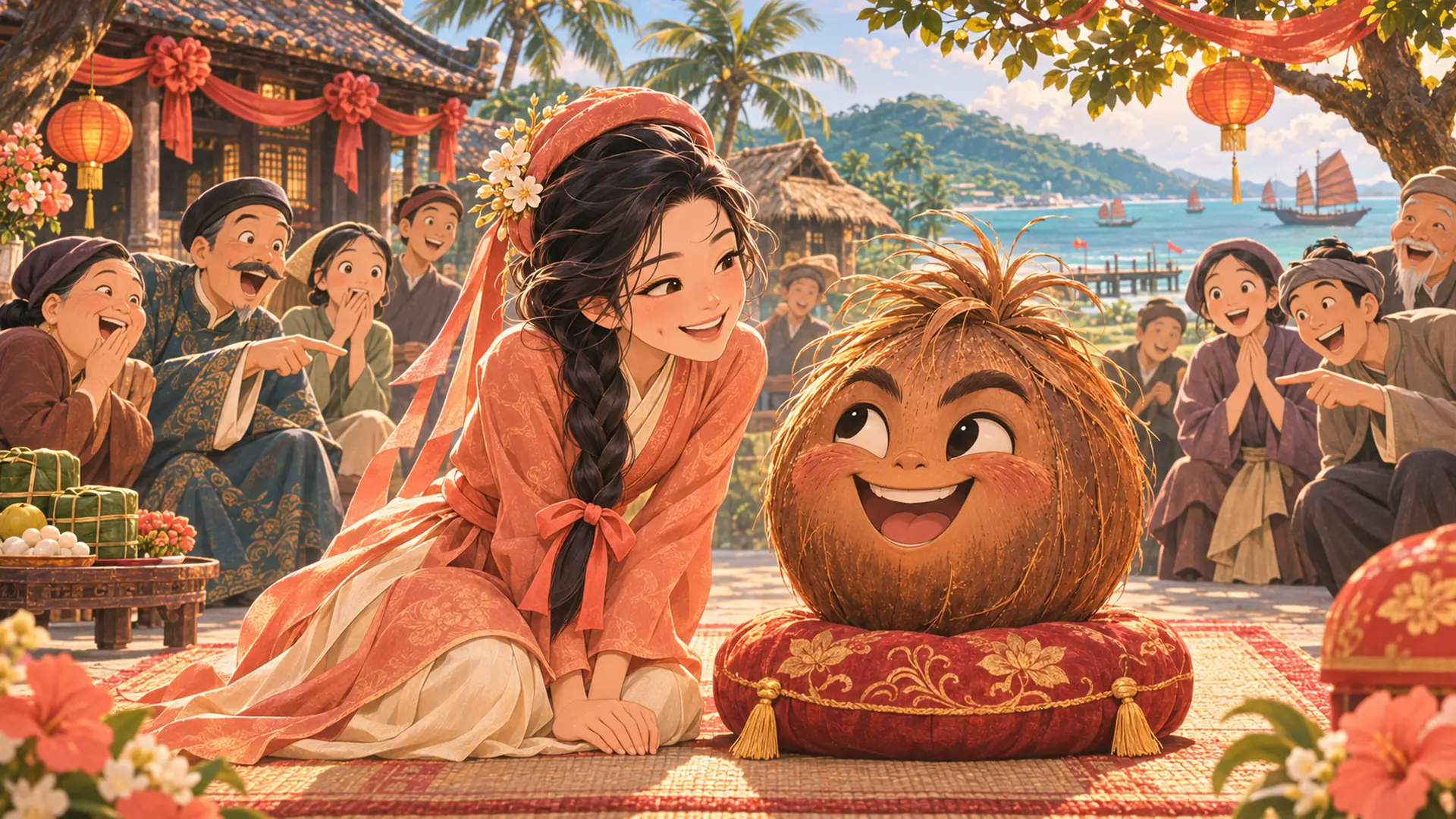
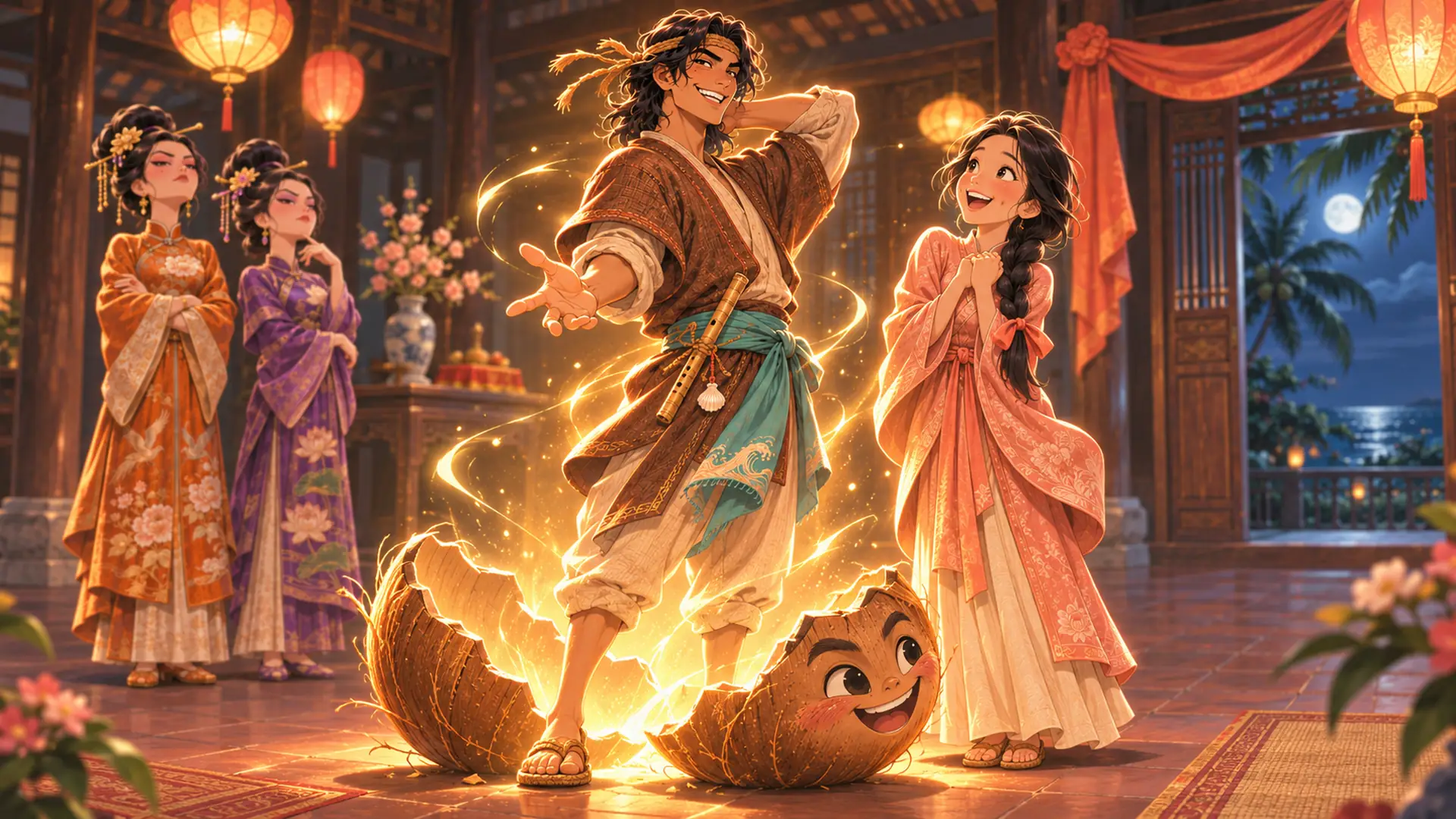
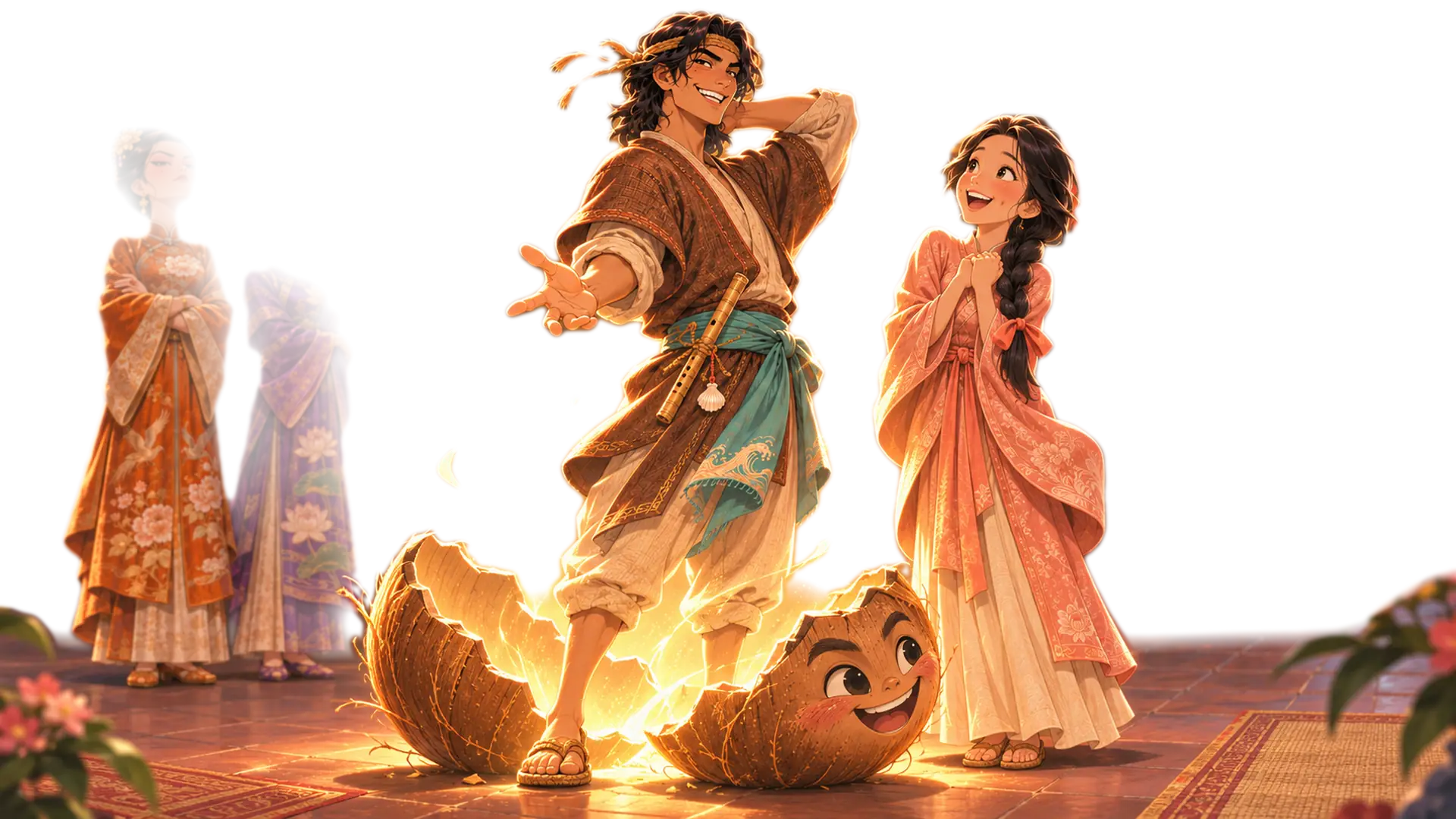
The wedding was a grand feast. And when it was time to welcome the bride, the coconut shell cracked open — and So Dua stepped out as a handsome young man.
The whole village gasped. The youngest daughter was overjoyed. And her two sisters? Full of regret — and burning with jealousy.
Chapter
The Top Scholar
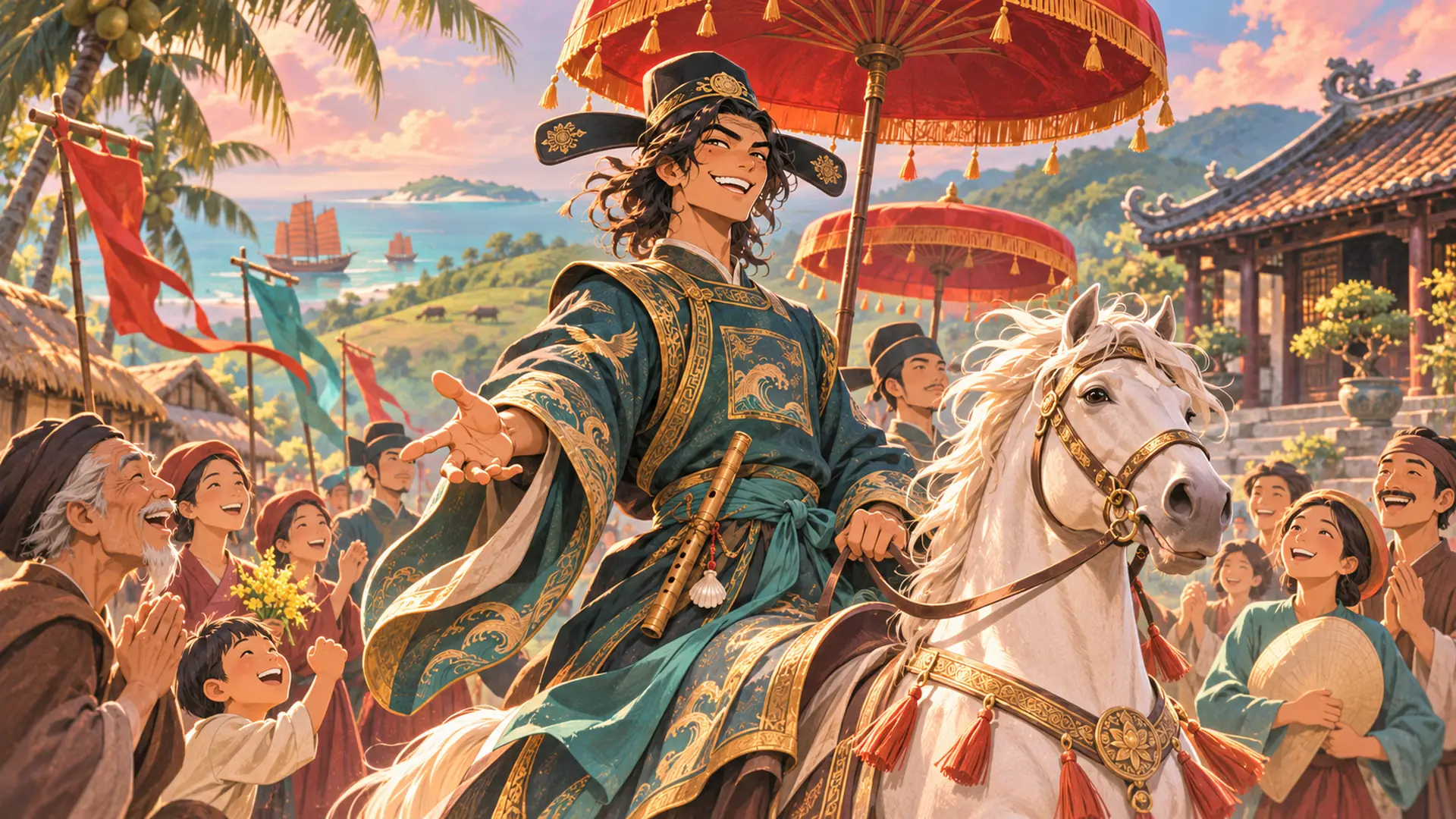
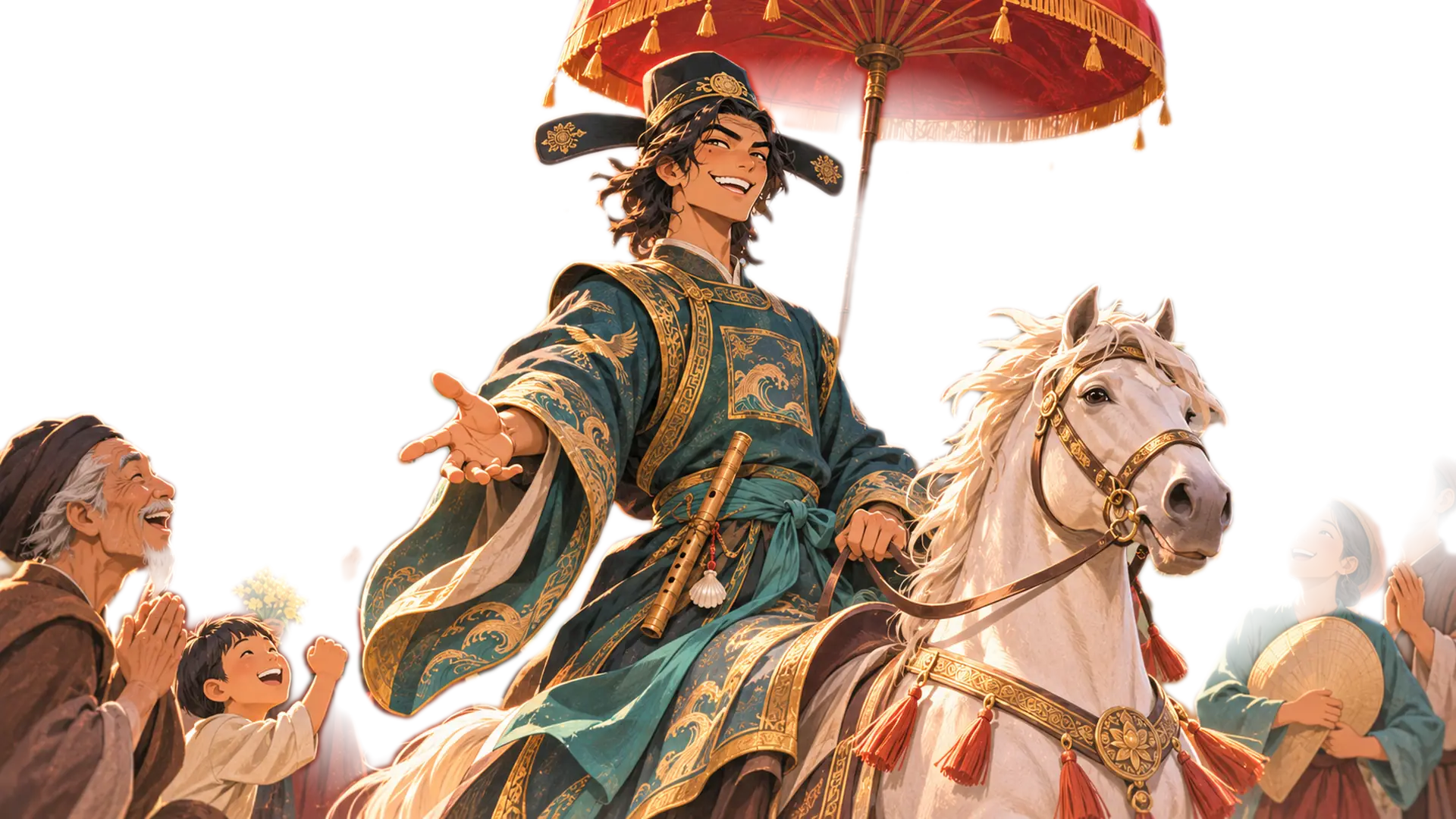
So Dua studied day and night, and passed the royal examinations as the top scholar of the land. Soon the king sent him as an envoy to a faraway country.
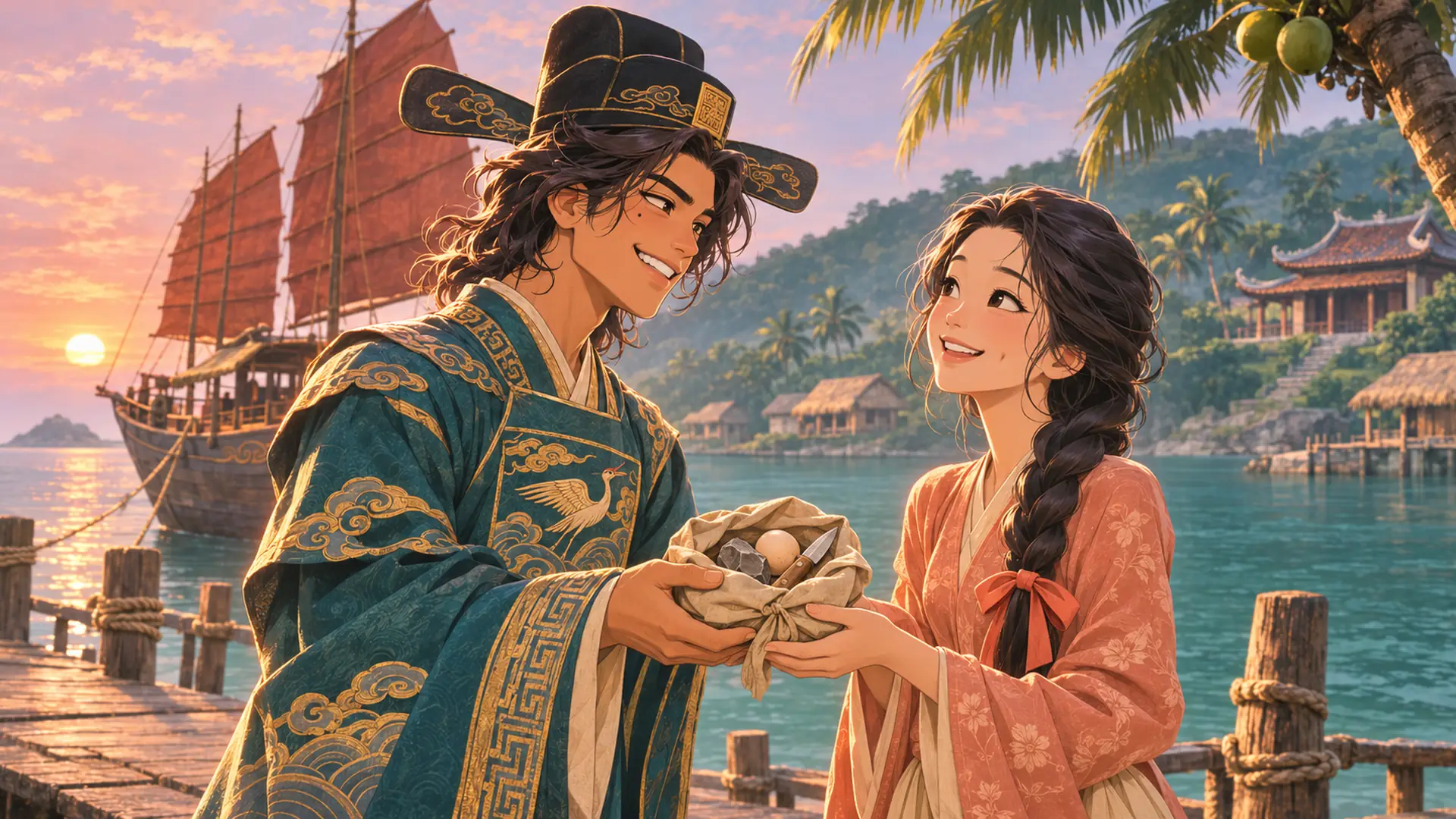
Before he left, he gave his wife three things: a flint stone, a small knife and two eggs. “Keep them with you,” he told her. “Always.”
Chapter
The Giant Fish
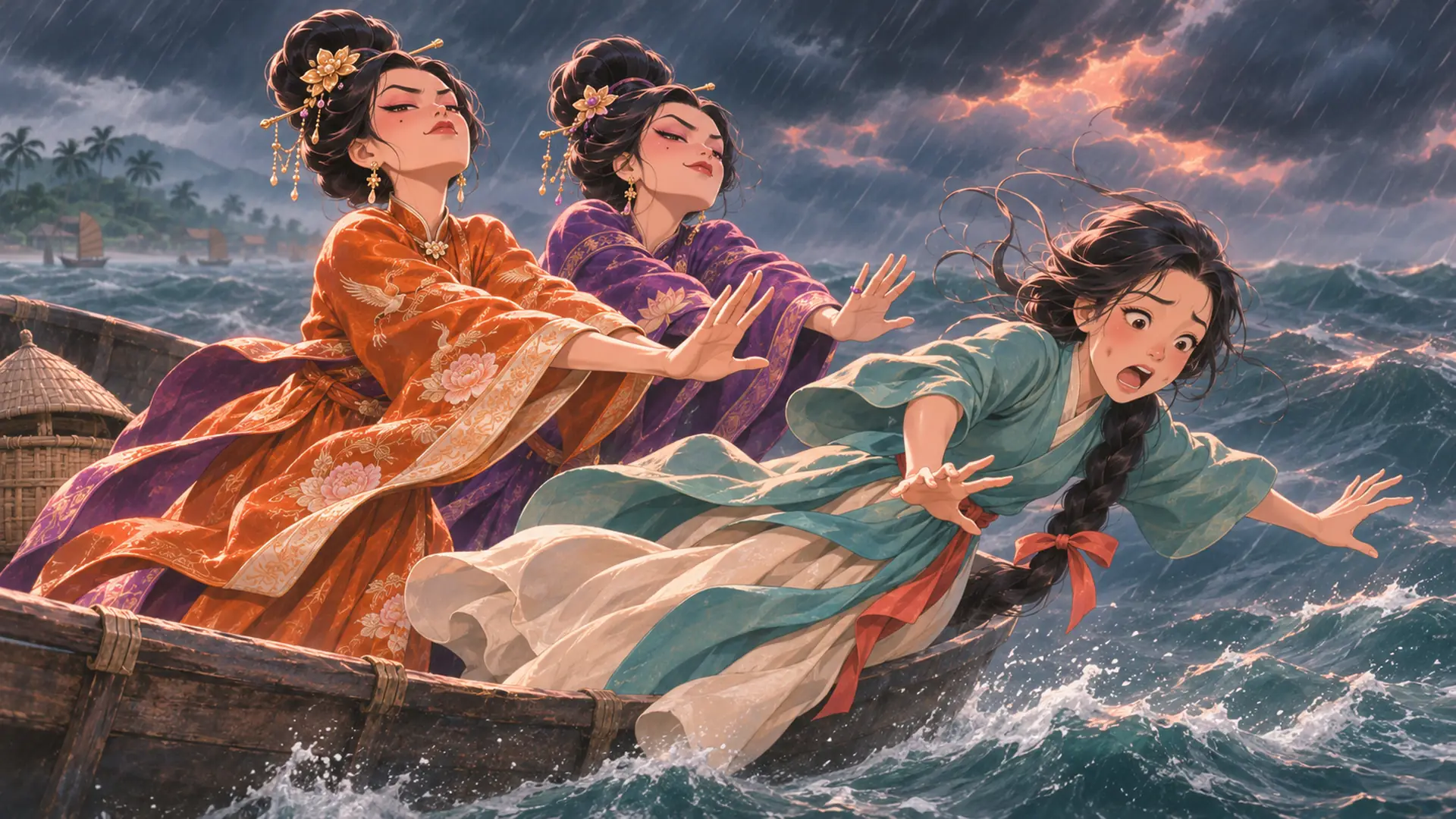
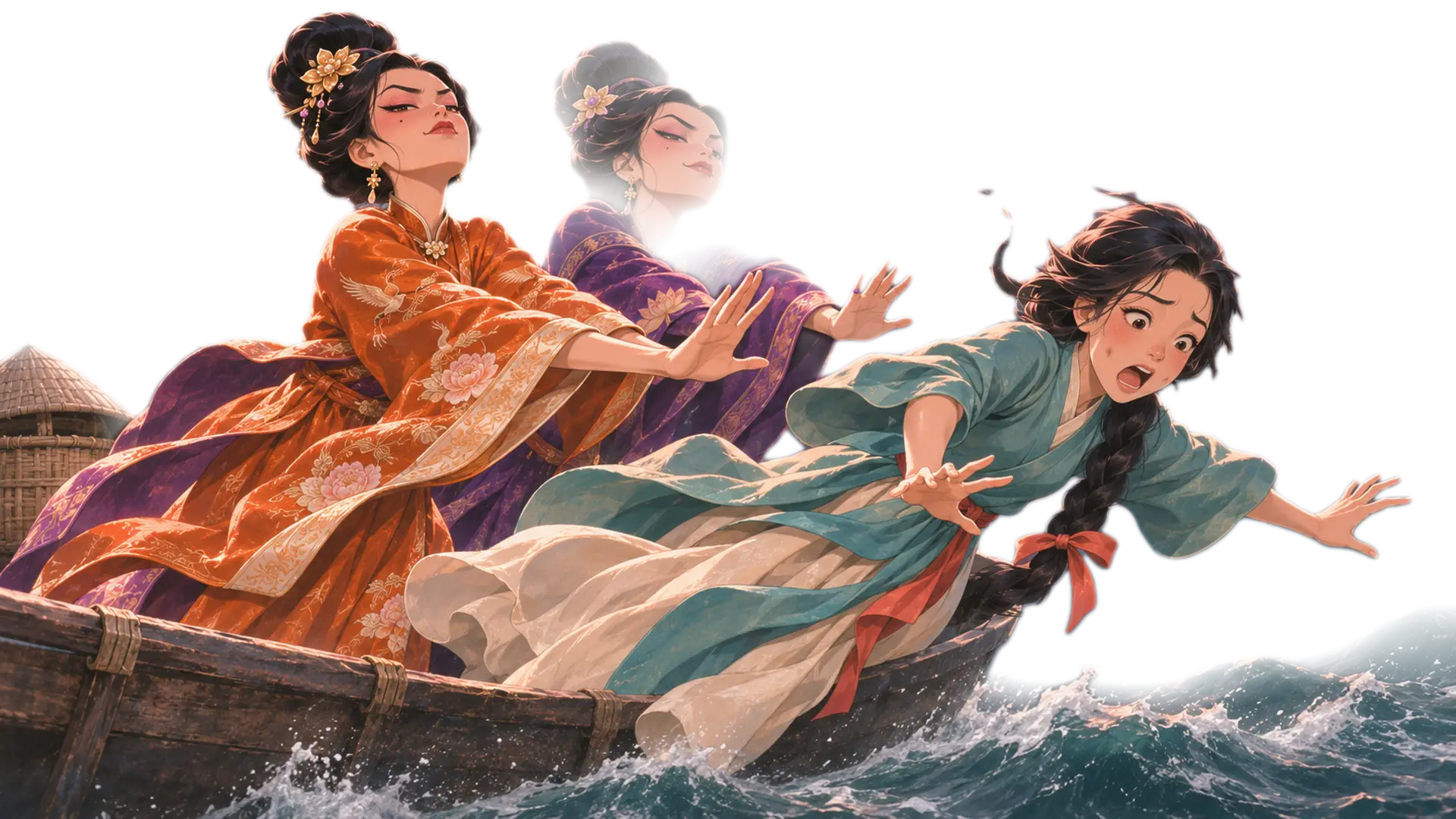
The moment he was gone, the two sisters invited their little sister on a boat trip. Out on the open sea, they pushed her overboard.

A giant fish swallowed her whole. But she still had the knife her husband had given her. She cut her way out of the fish, and escaped.
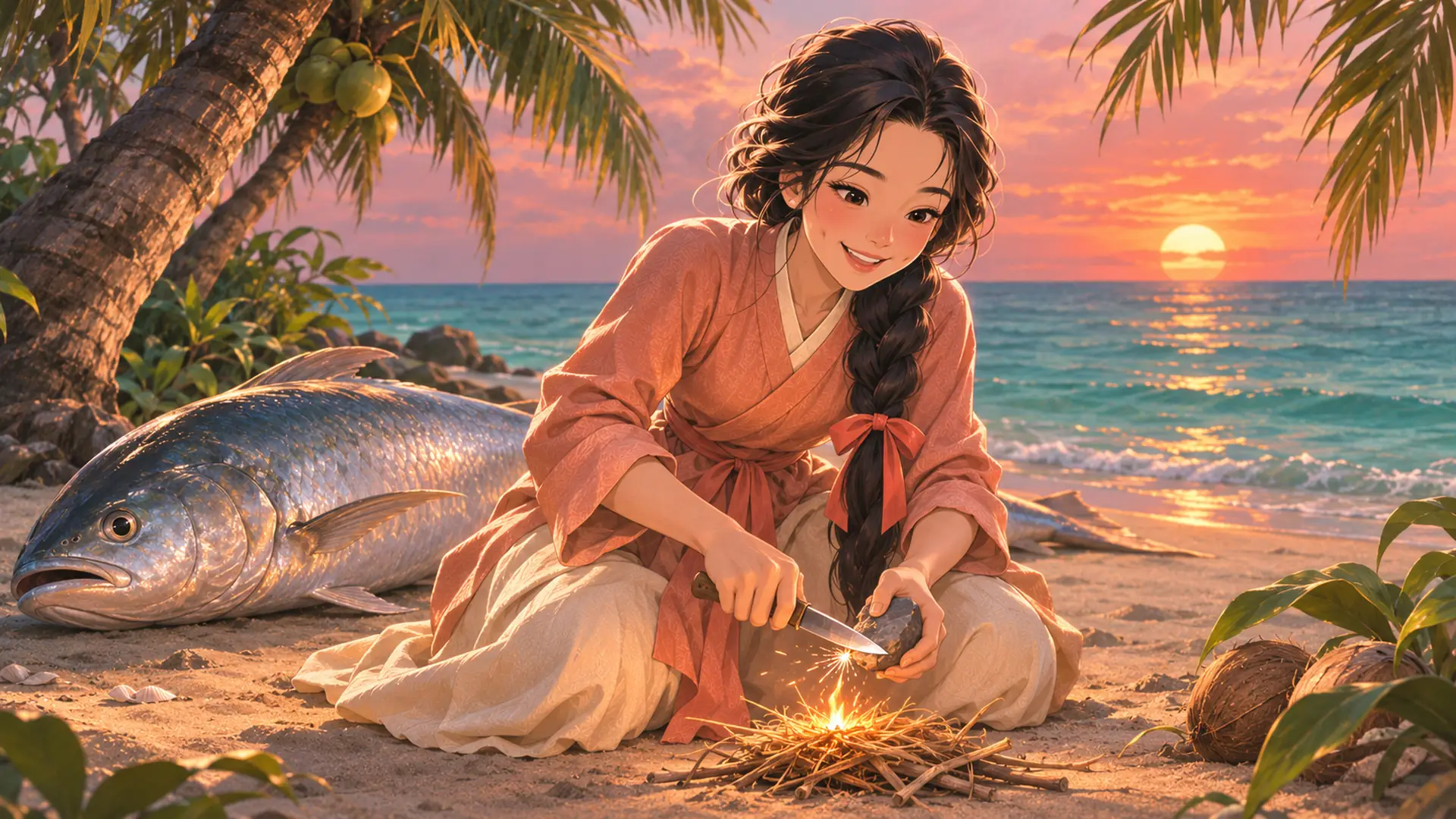
The fish drifted onto a desert island. With the flint, she struck a fire, cooked the fish, and survived.
Chapter
The Rooster Crows
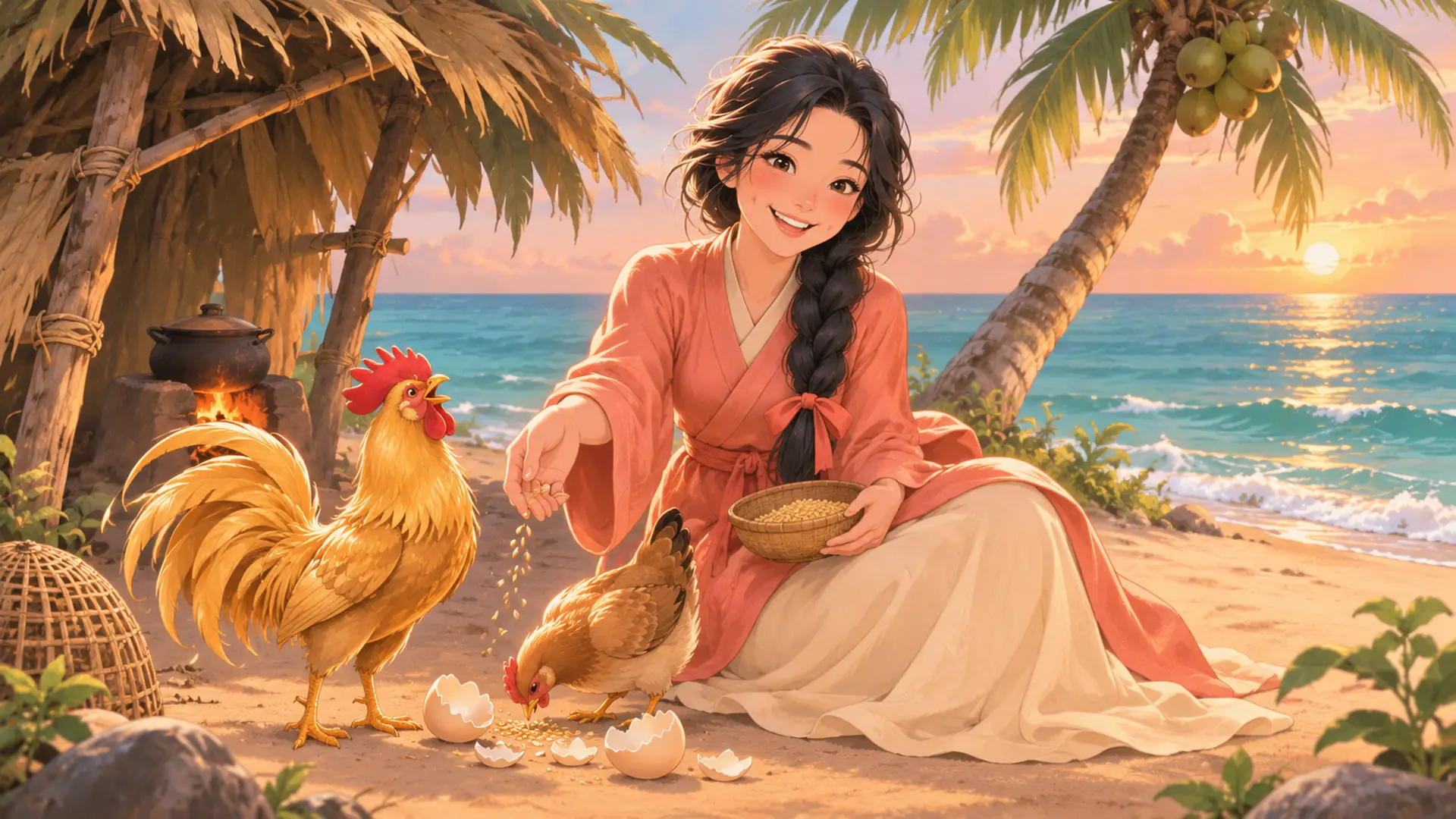
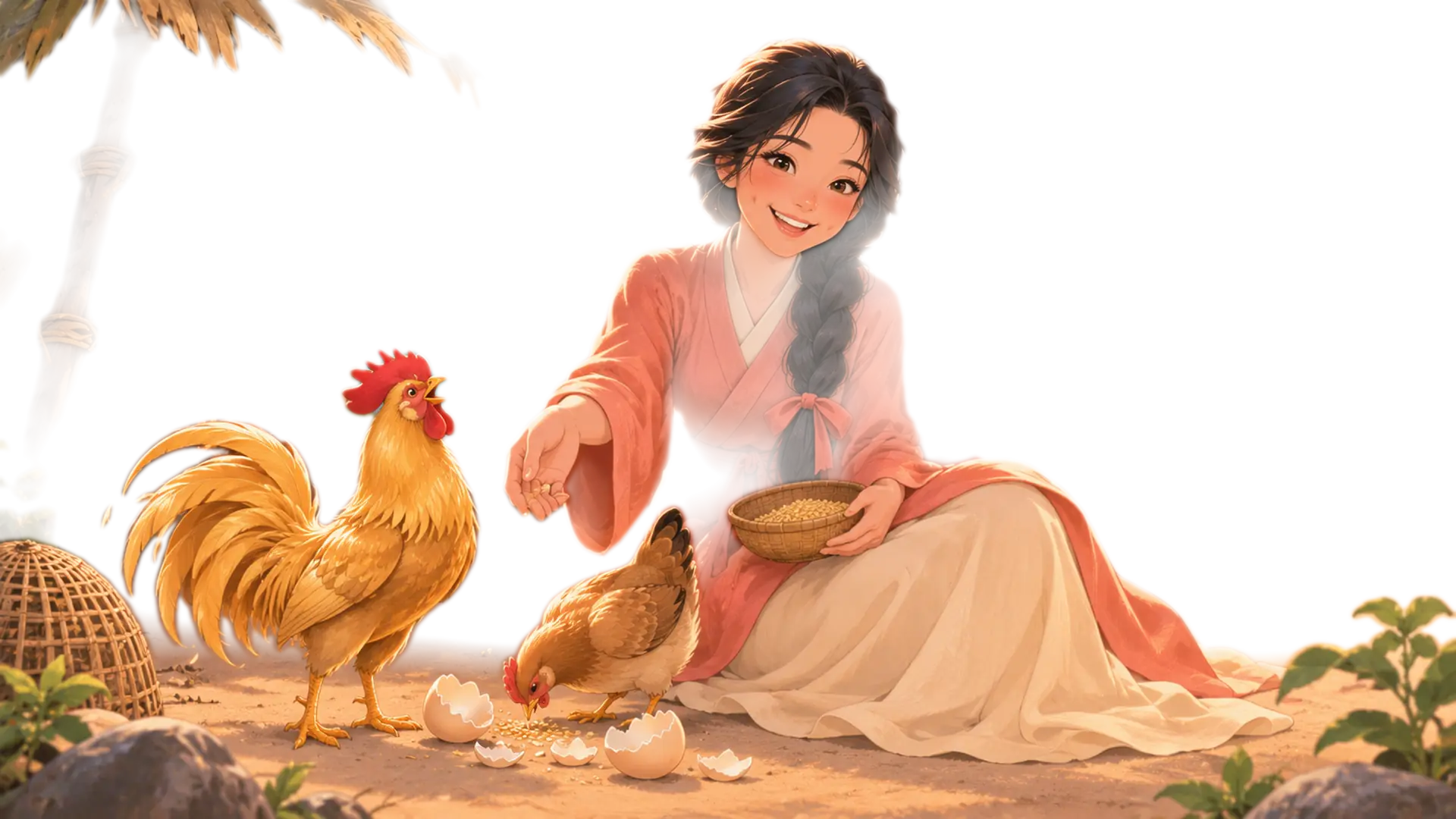
The two eggs hatched into a rooster and a hen. Day after day she lived with her two chickens, looking out to sea — waiting.
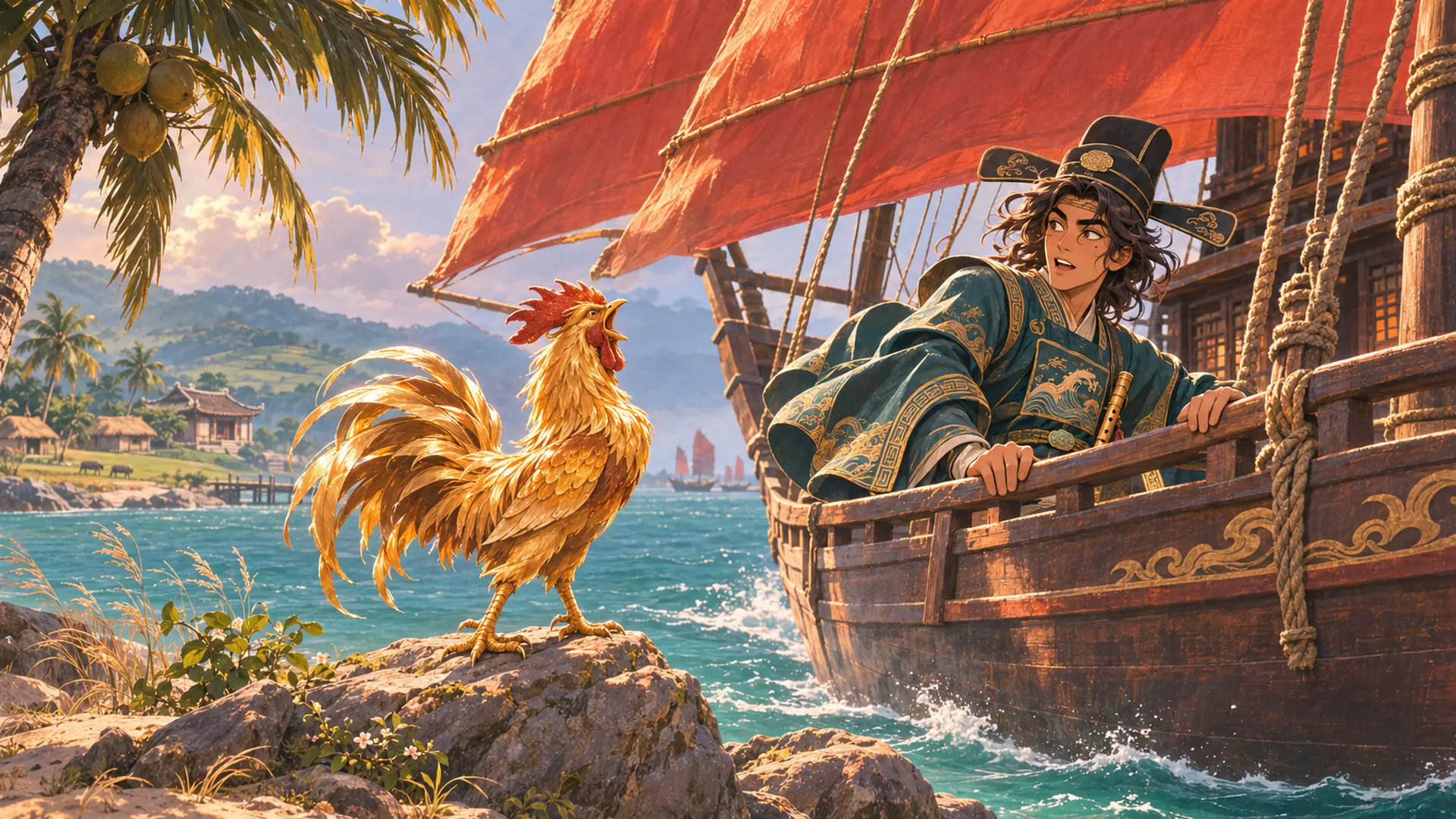
Then one day a great ship sailed past the island. The rooster leapt onto a rock and crowed with all its might:
Cock-a-doodle-doo! Is that the scholar’s ship? Come and take my lady home!
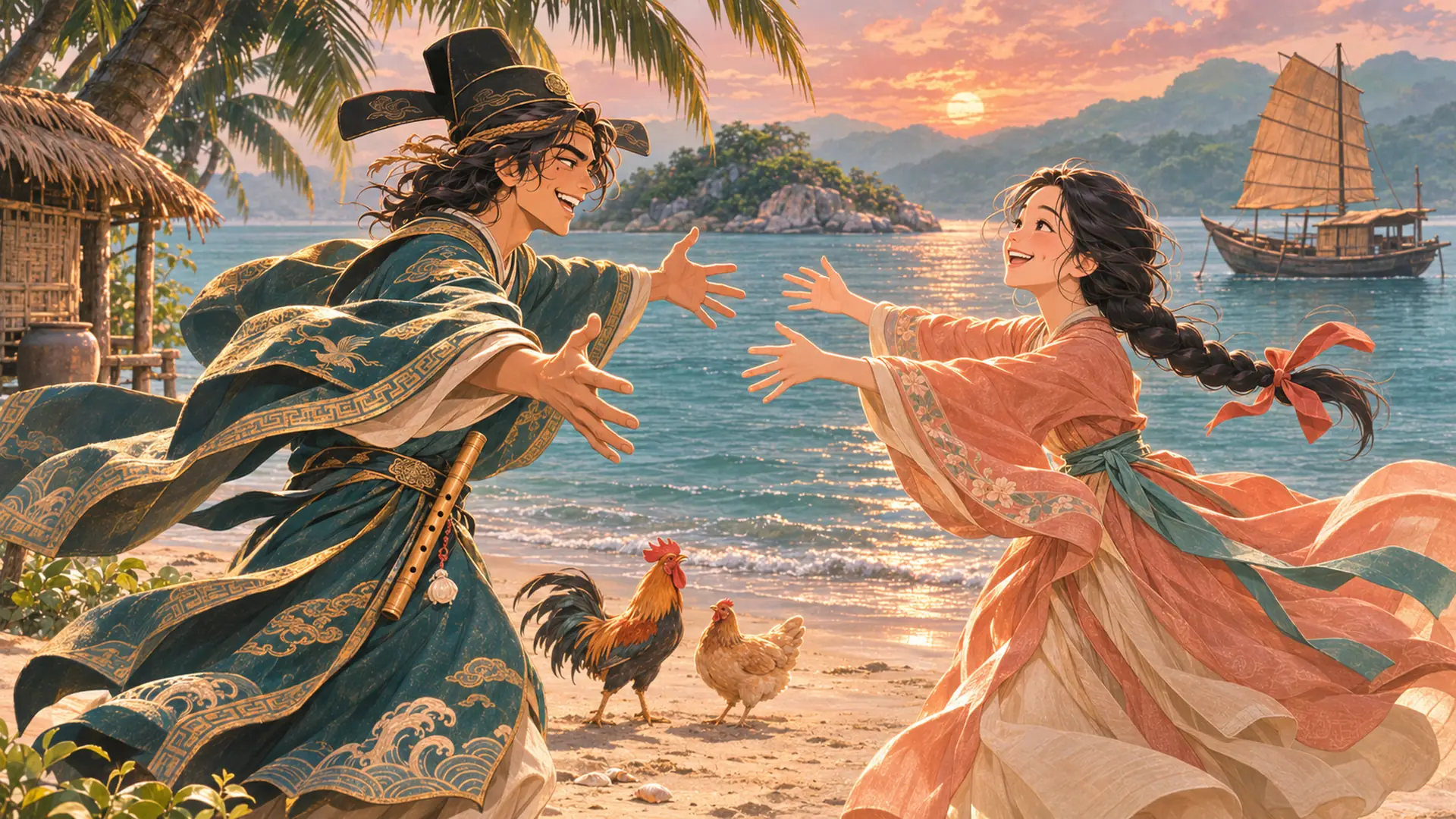
It was So Dua’s ship. He brought it ashore — and husband and wife were together again, laughing and crying at once.
Chapter
The Homecoming
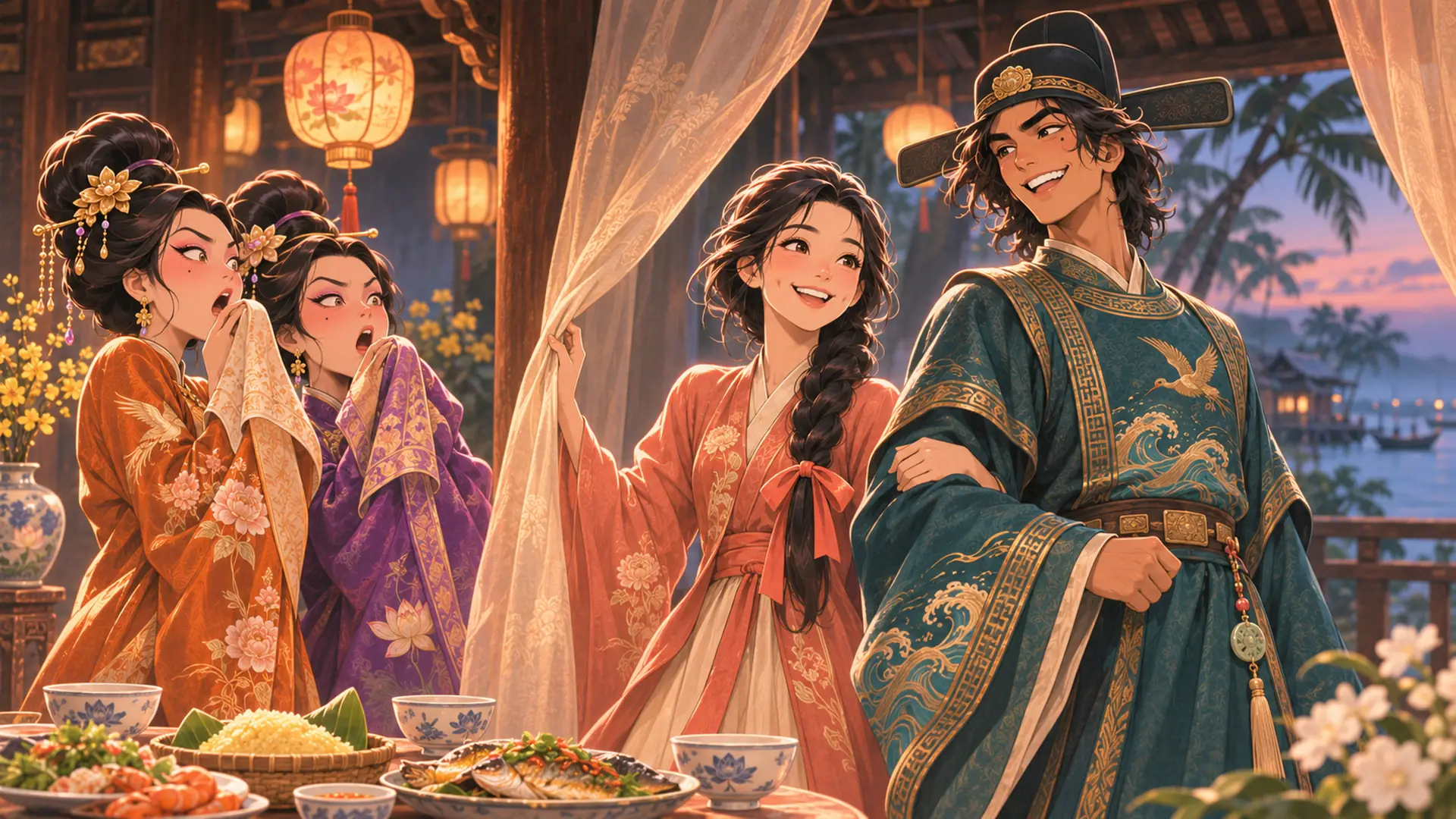
Back home, So Dua hid his wife in the next room and threw a feast. The two sisters came, pretending to weep for their poor lost sister. And at that very moment, she stepped out.
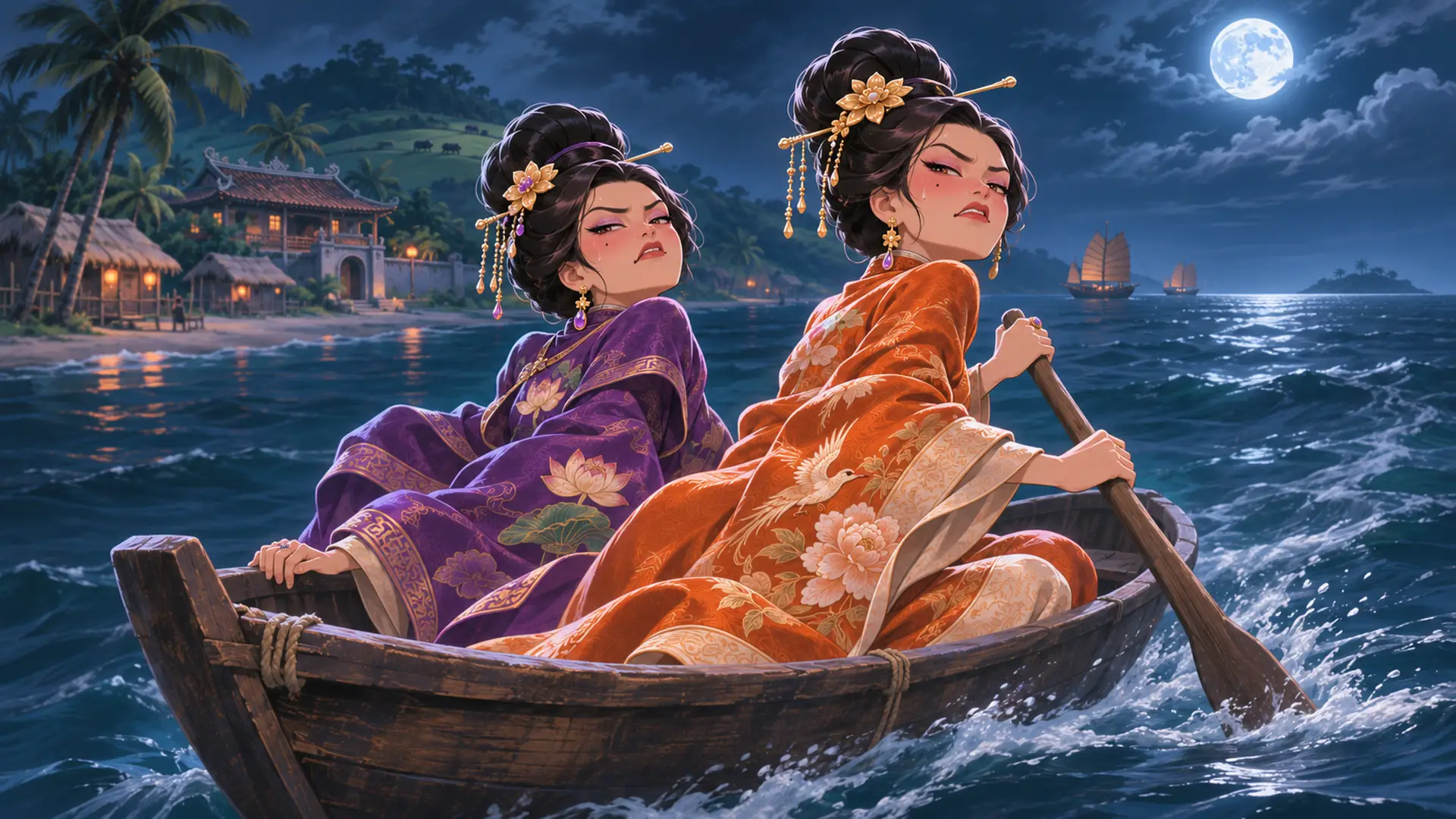
The sisters were so ashamed that they slipped away that night, far across the sea, and never dared to come back.
Chapter
The Legacy
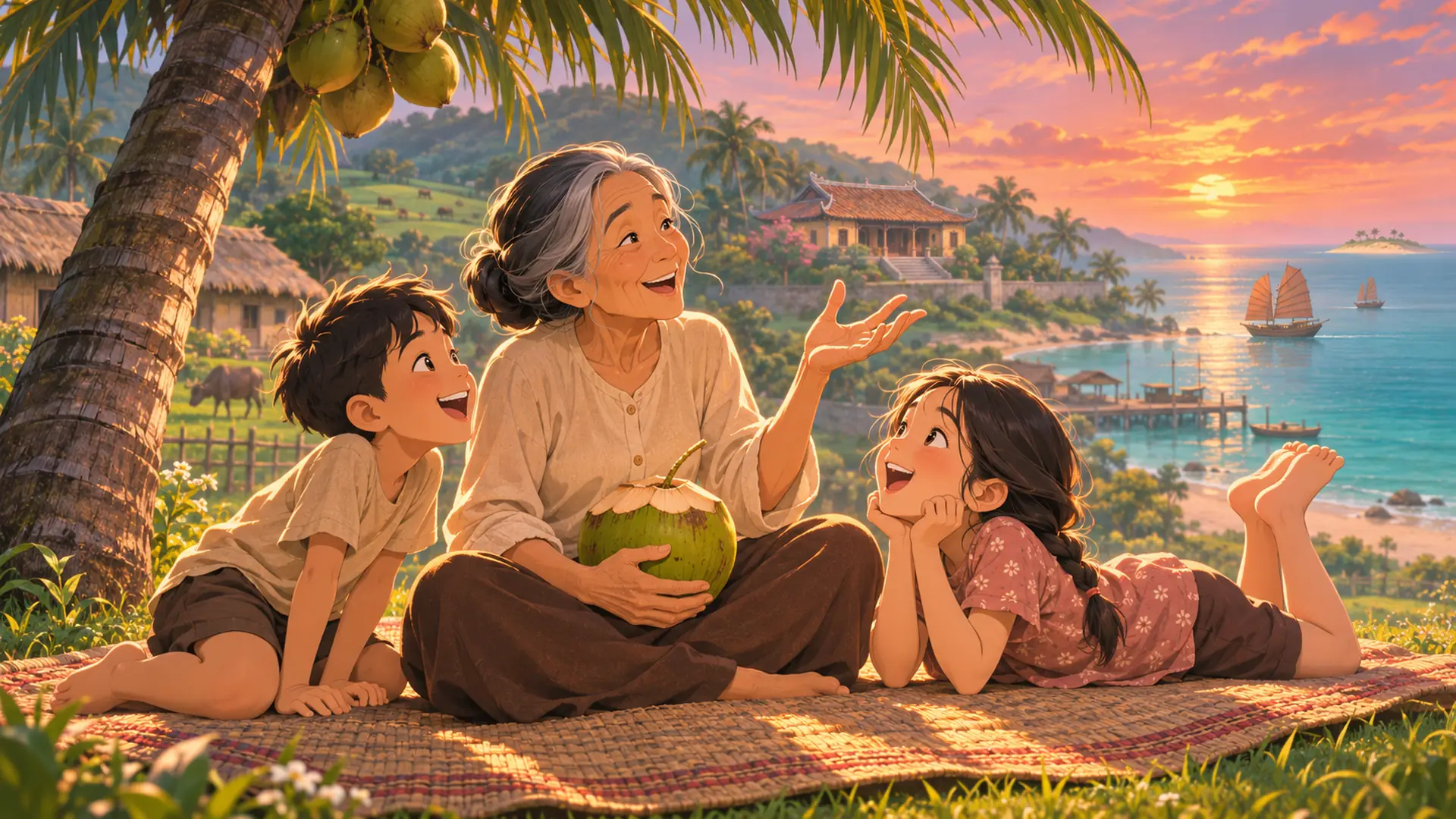
The tale has many versions, but So Dua is one of the best-loved fairy tales in Vietnam — children even read it at school. And everyone remembers its lesson: don’t judge anyone by their shell.
As Vietnamese grandparents like to say: “Tốt gỗ hơn tốt nước sơn” — good wood is better than good paint.