Chapter
The Wedding Tray
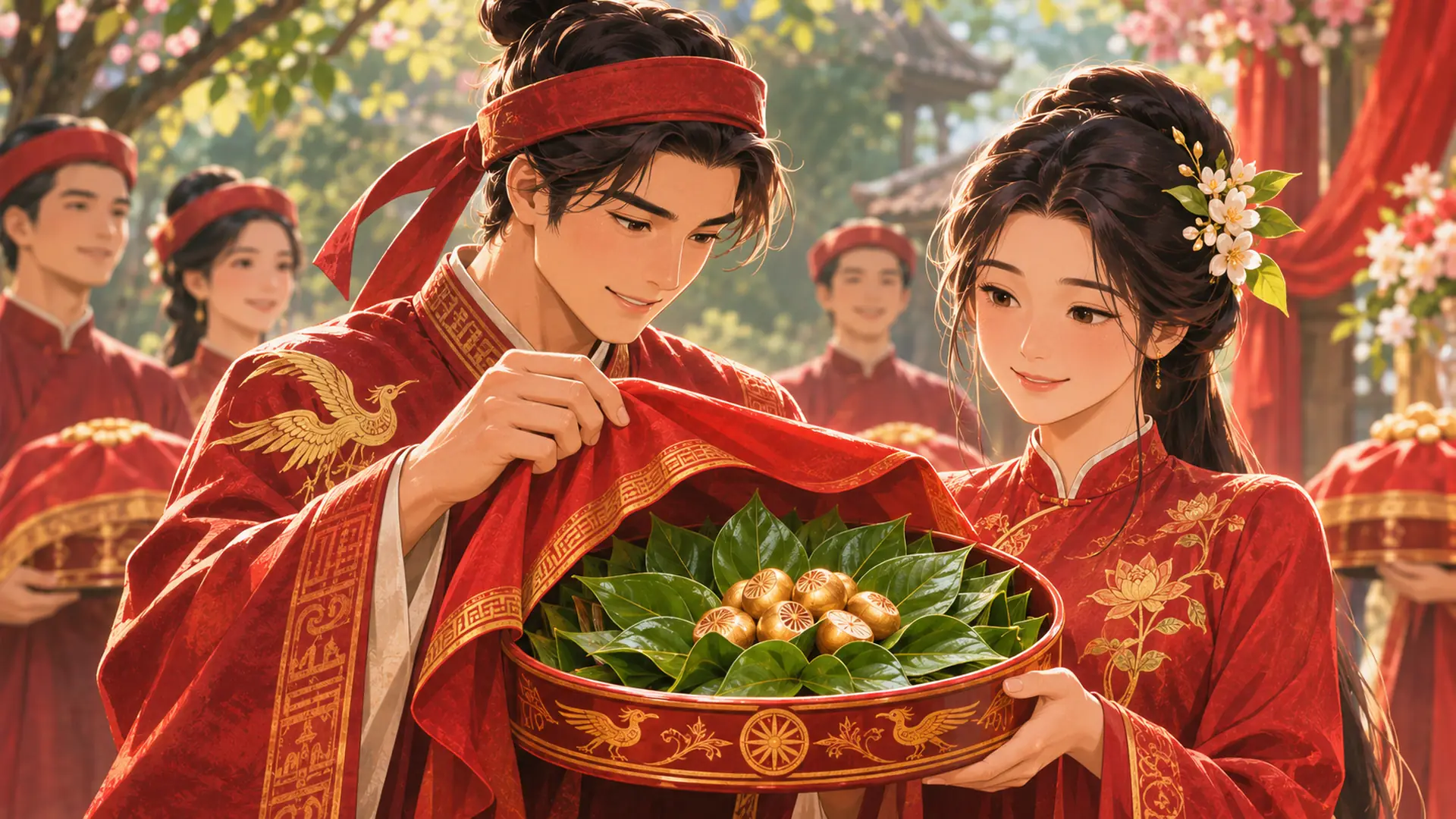
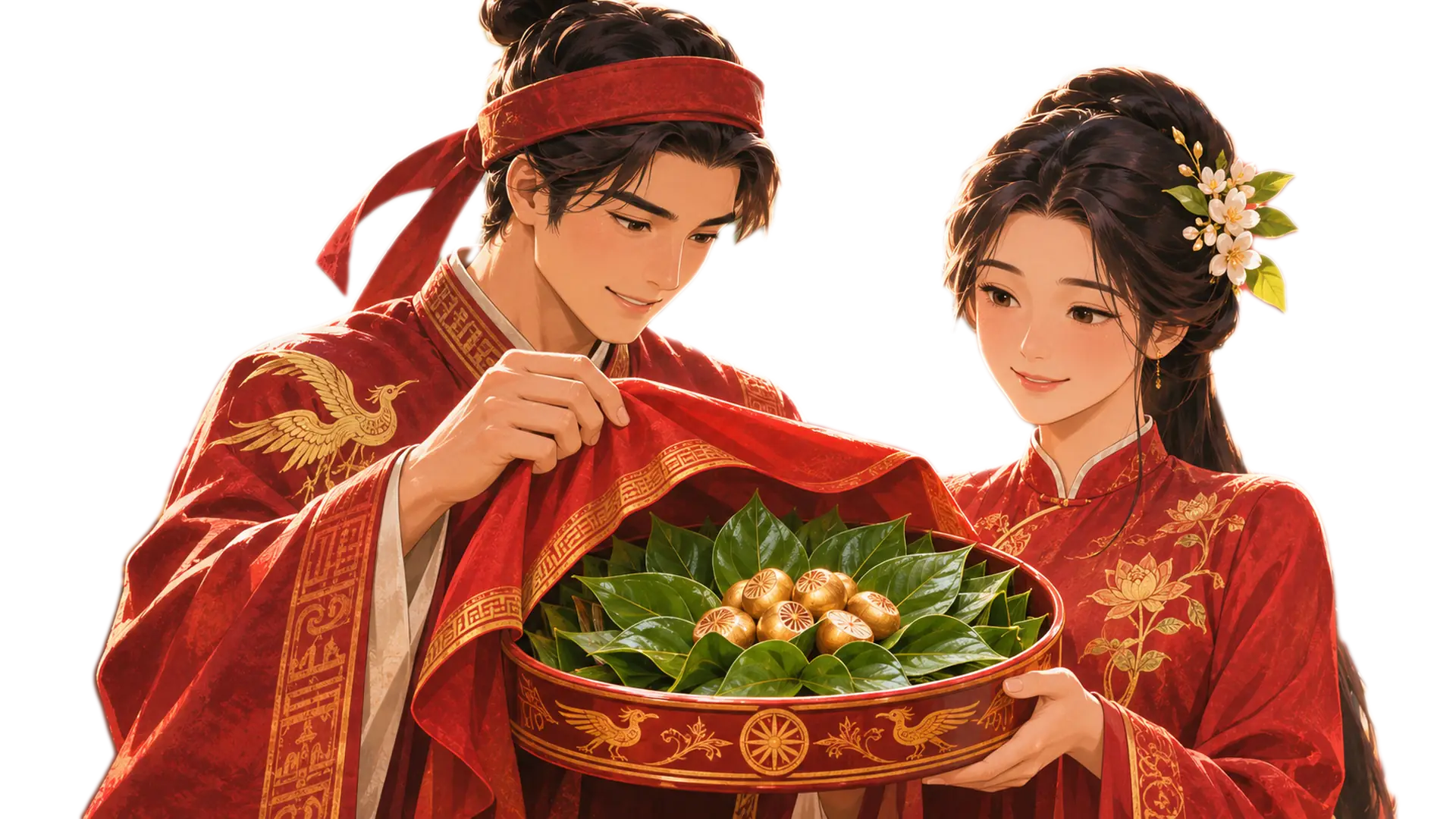
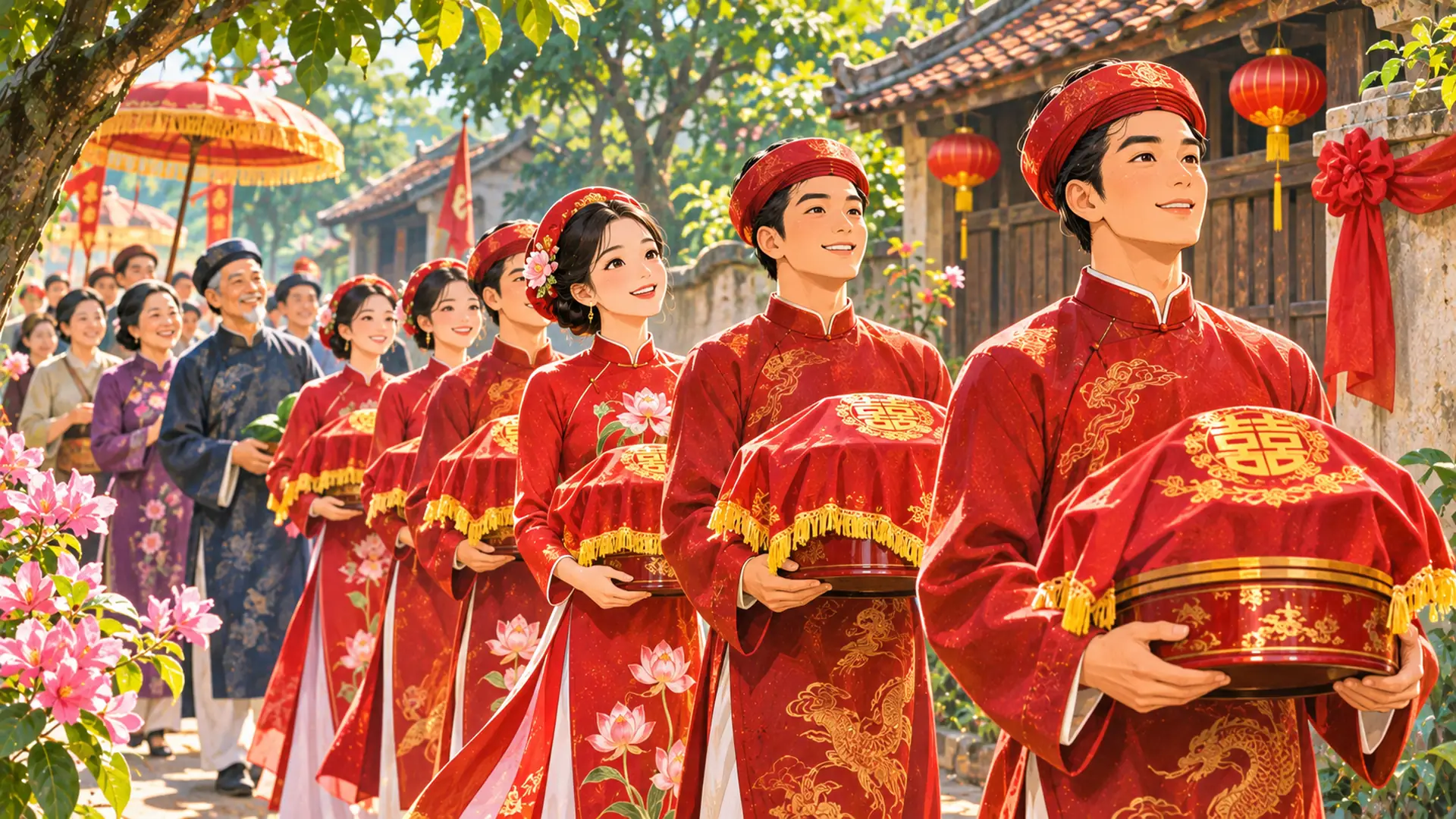
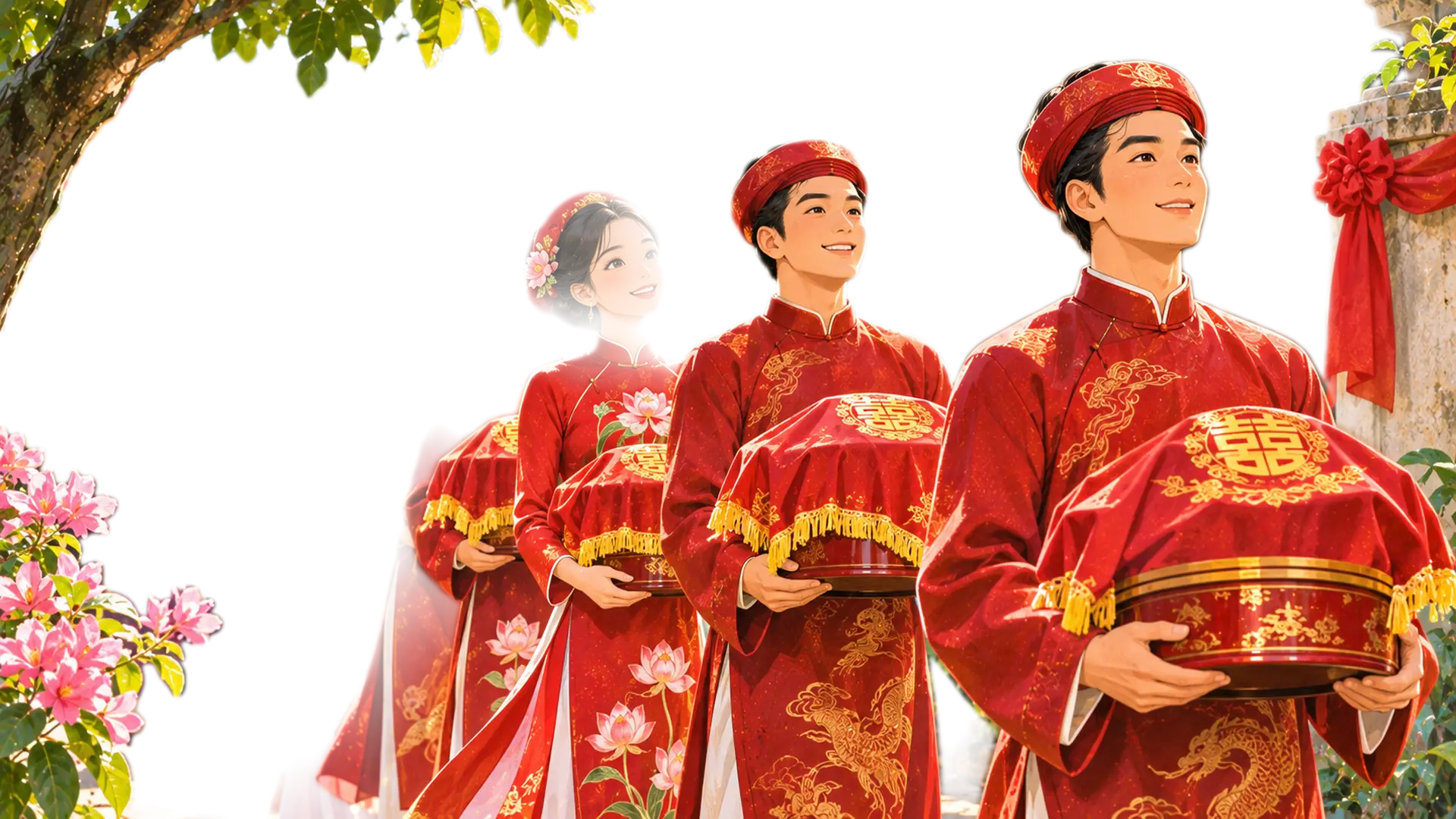
At every Vietnamese wedding there is a round tray covered in red cloth. Under the cloth: betel leaves and areca nuts.
Most guests don’t know that this tray holds the saddest love story in Vietnam.
Chapter
Two Brothers
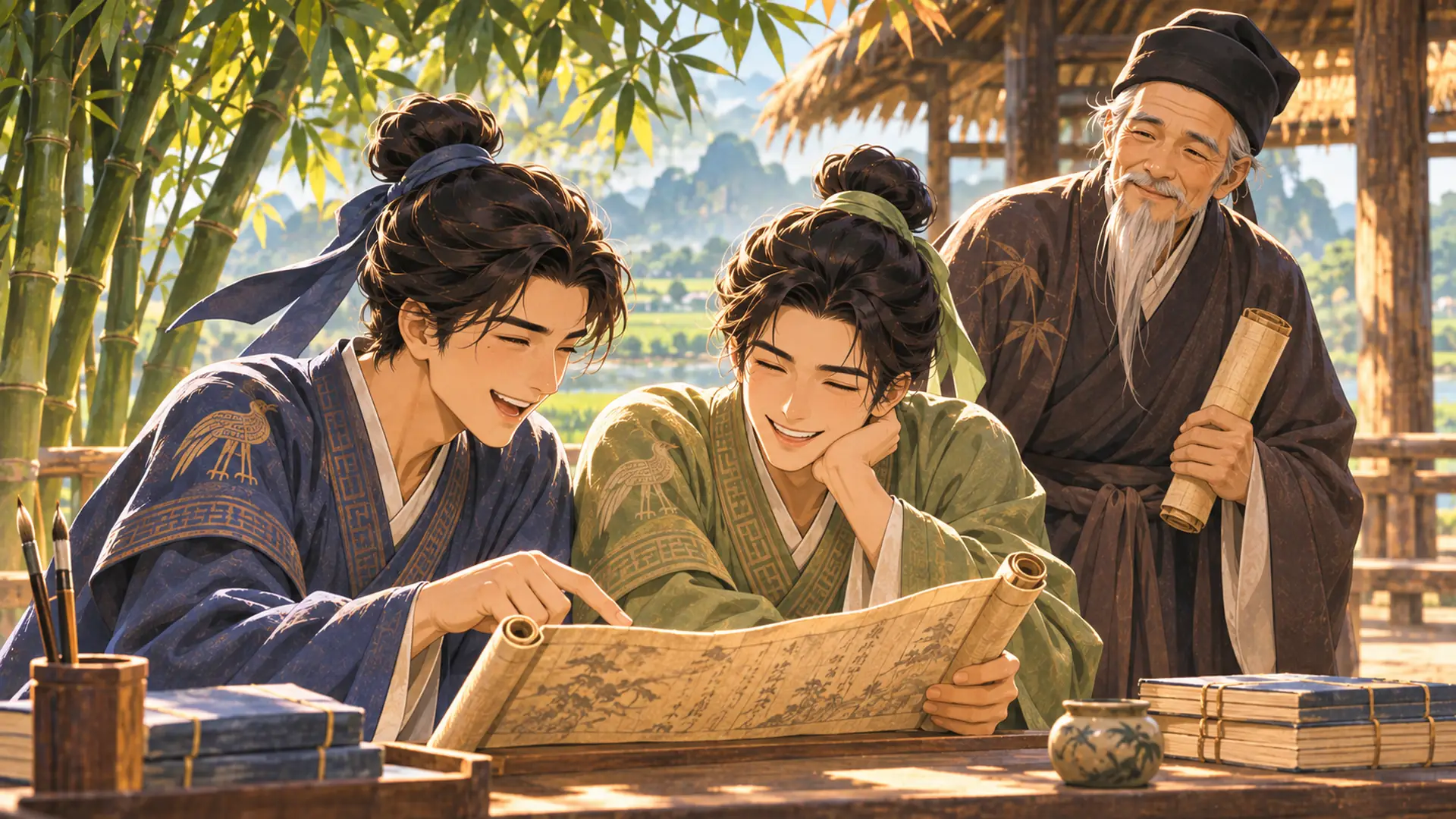
Long ago, in the time of the Hung Kings, there were two brothers named Tan and Lang. They looked so alike that no one could tell them apart. Orphaned young, they studied with a teacher named Luu, and they were as close as a body and its shadow.
Chapter
One Bowl, One Pair of Chopsticks
Teacher Luu had a daughter, and she wanted to marry the elder brother. But which one was older?
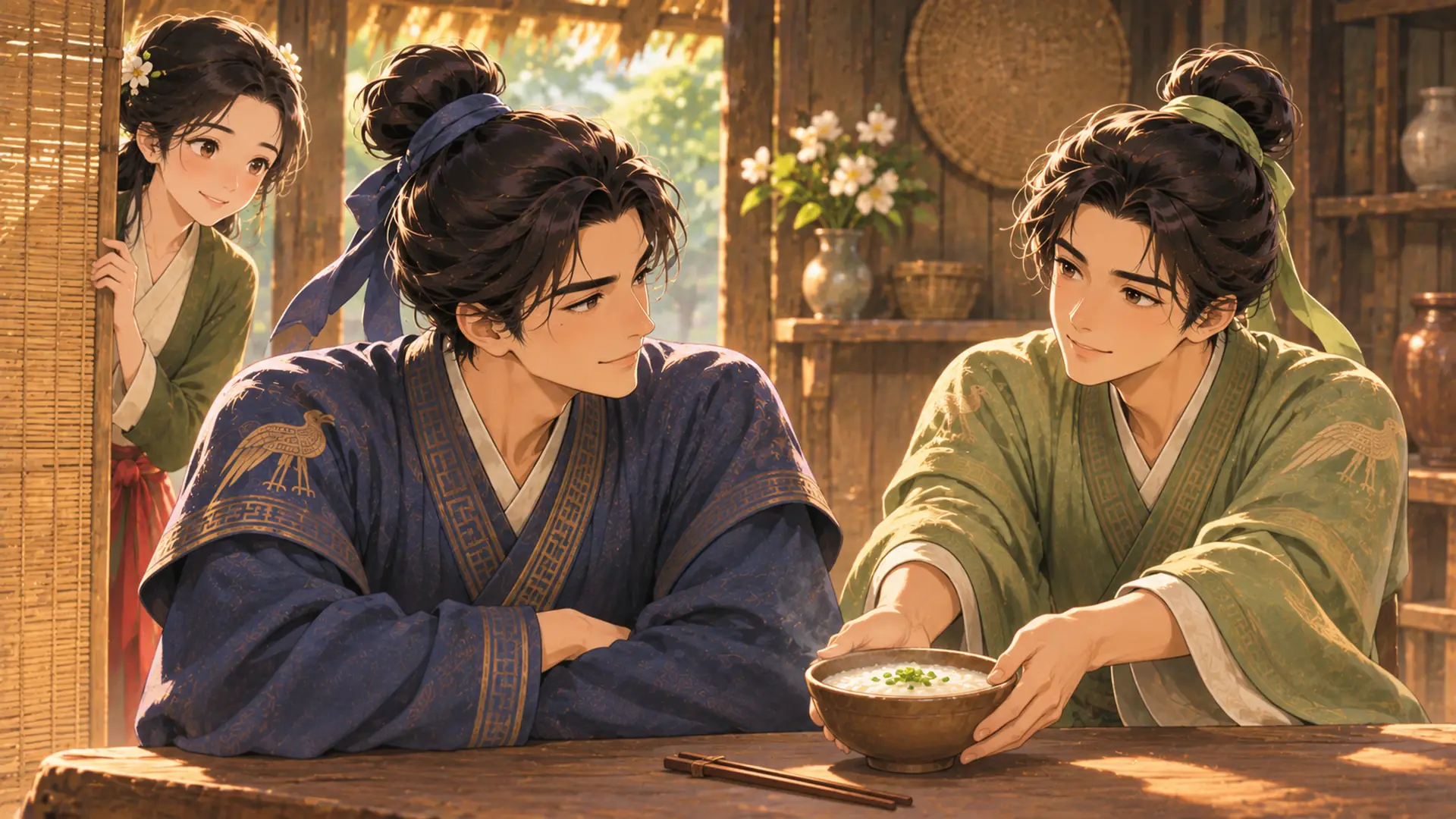
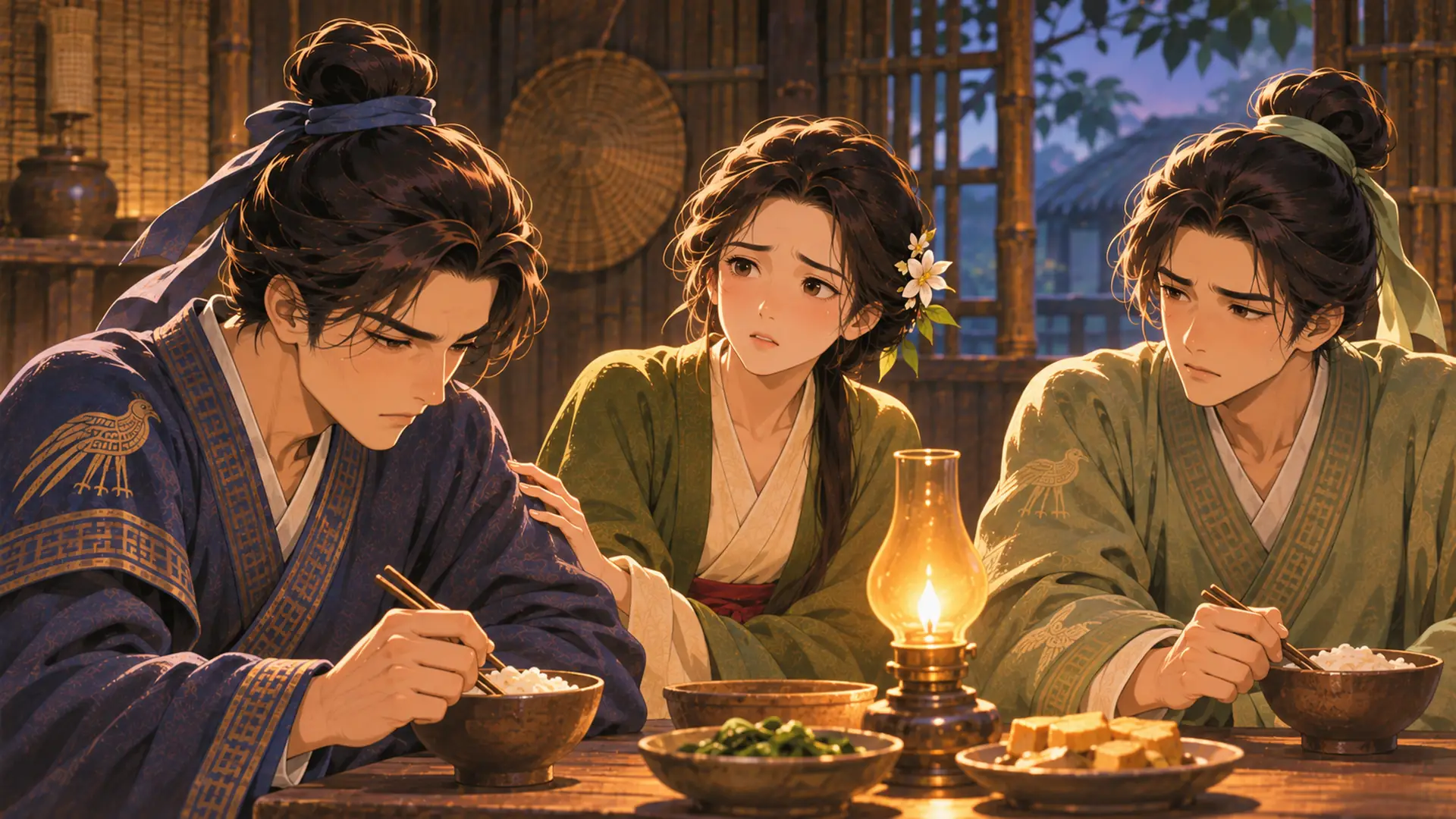
She came up with a trick. She served the brothers one bowl of porridge and only one pair of chopsticks, then hid behind a bamboo screen to watch. The younger brother quietly pushed the bowl to the elder. Now she knew.
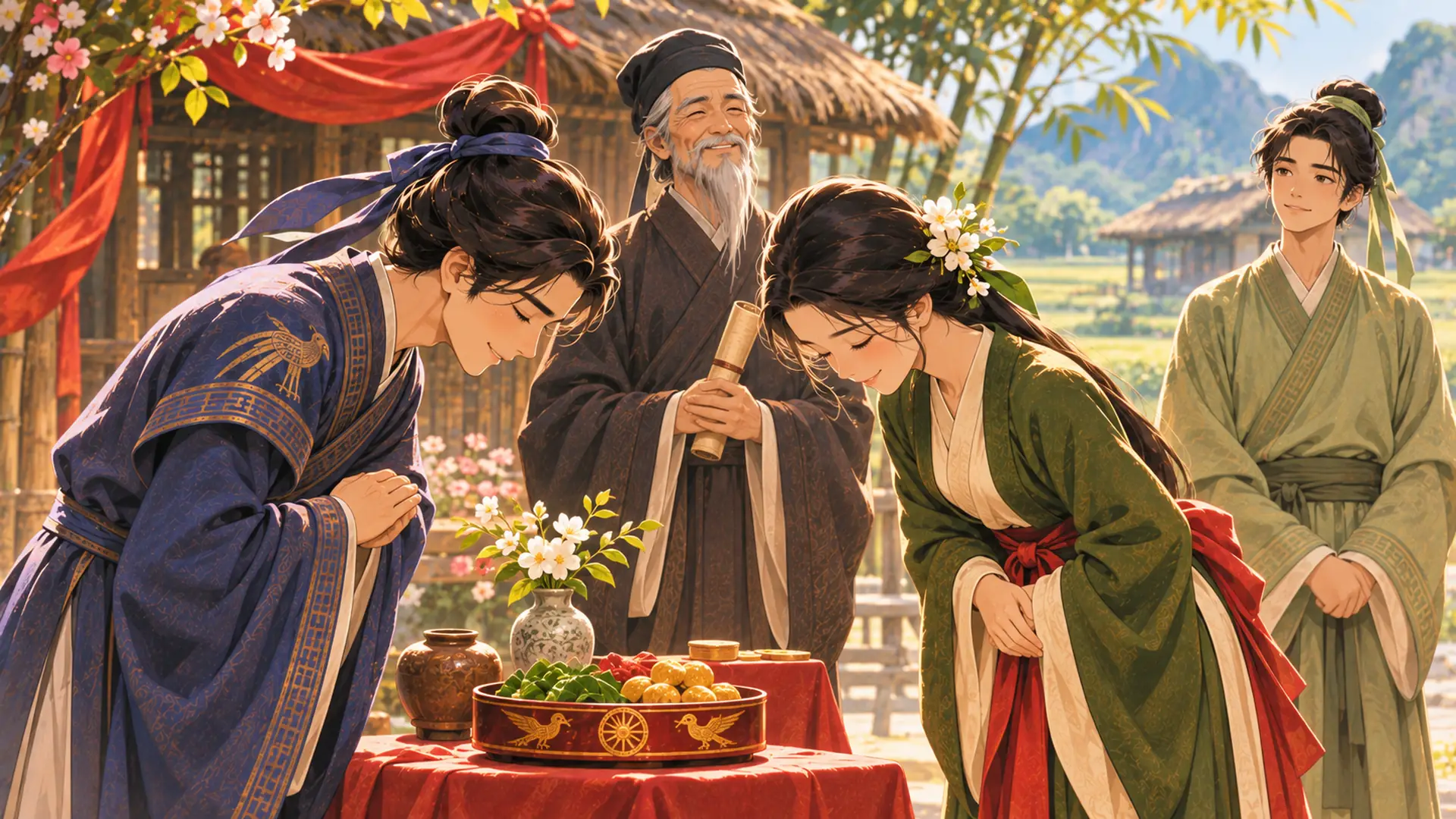
She married Tan. Lang was happy for his brother. But from the day Tan took a wife, Lang began to feel he no longer belonged.
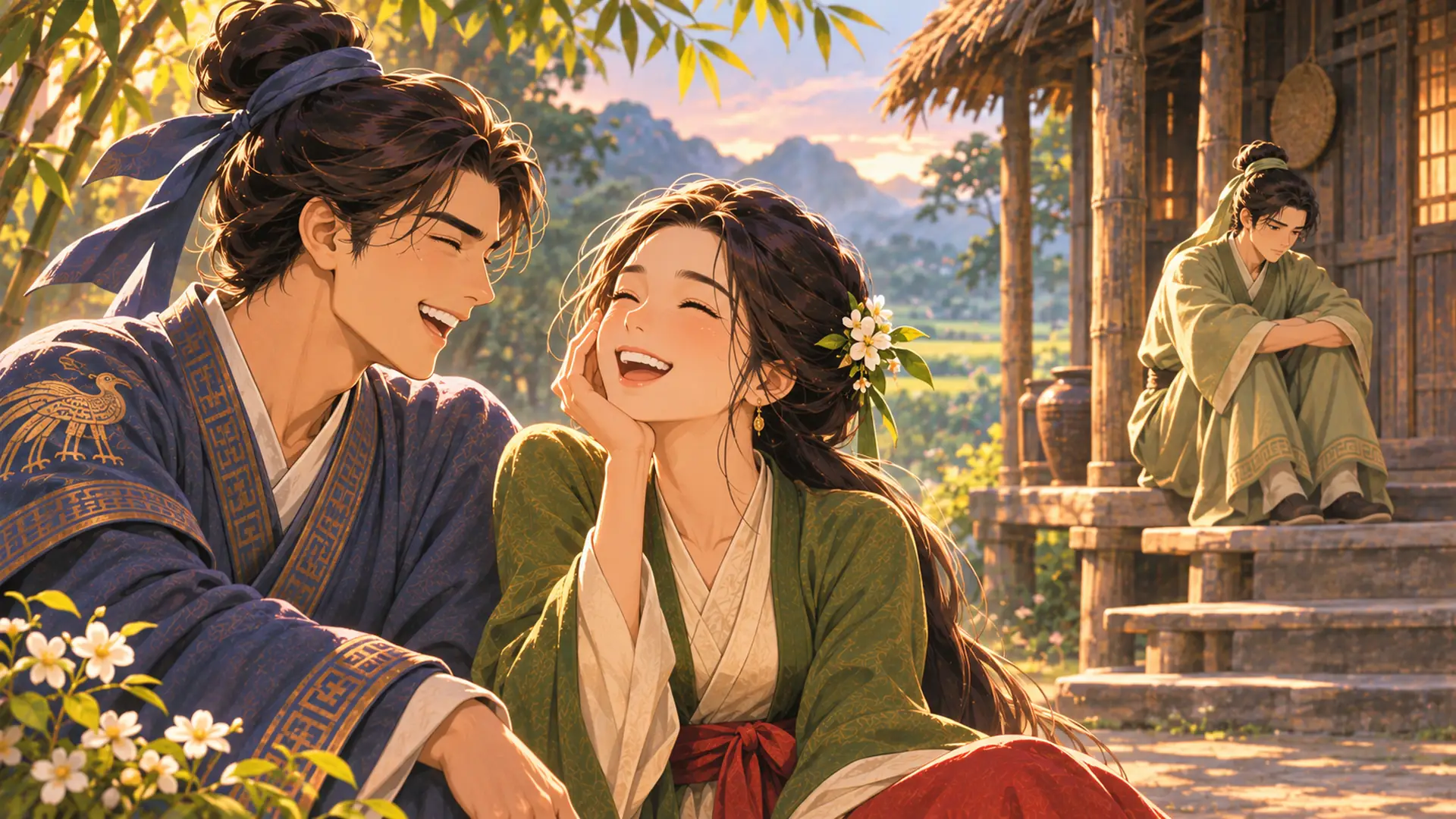
Tan still loved his brother, but they were no longer inseparable. Lang was sad, and he had no one to tell.
Chapter
The Mistake
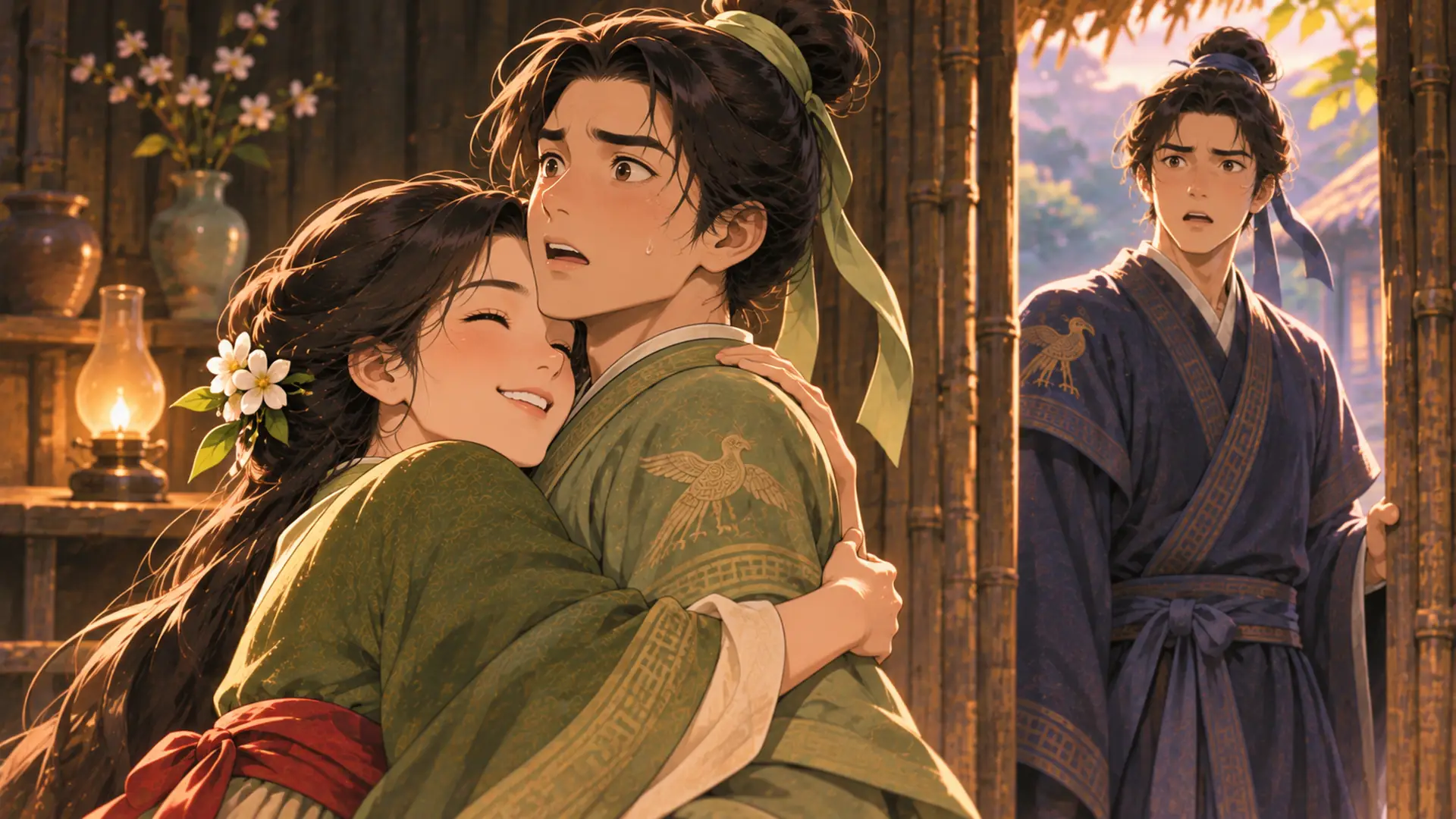
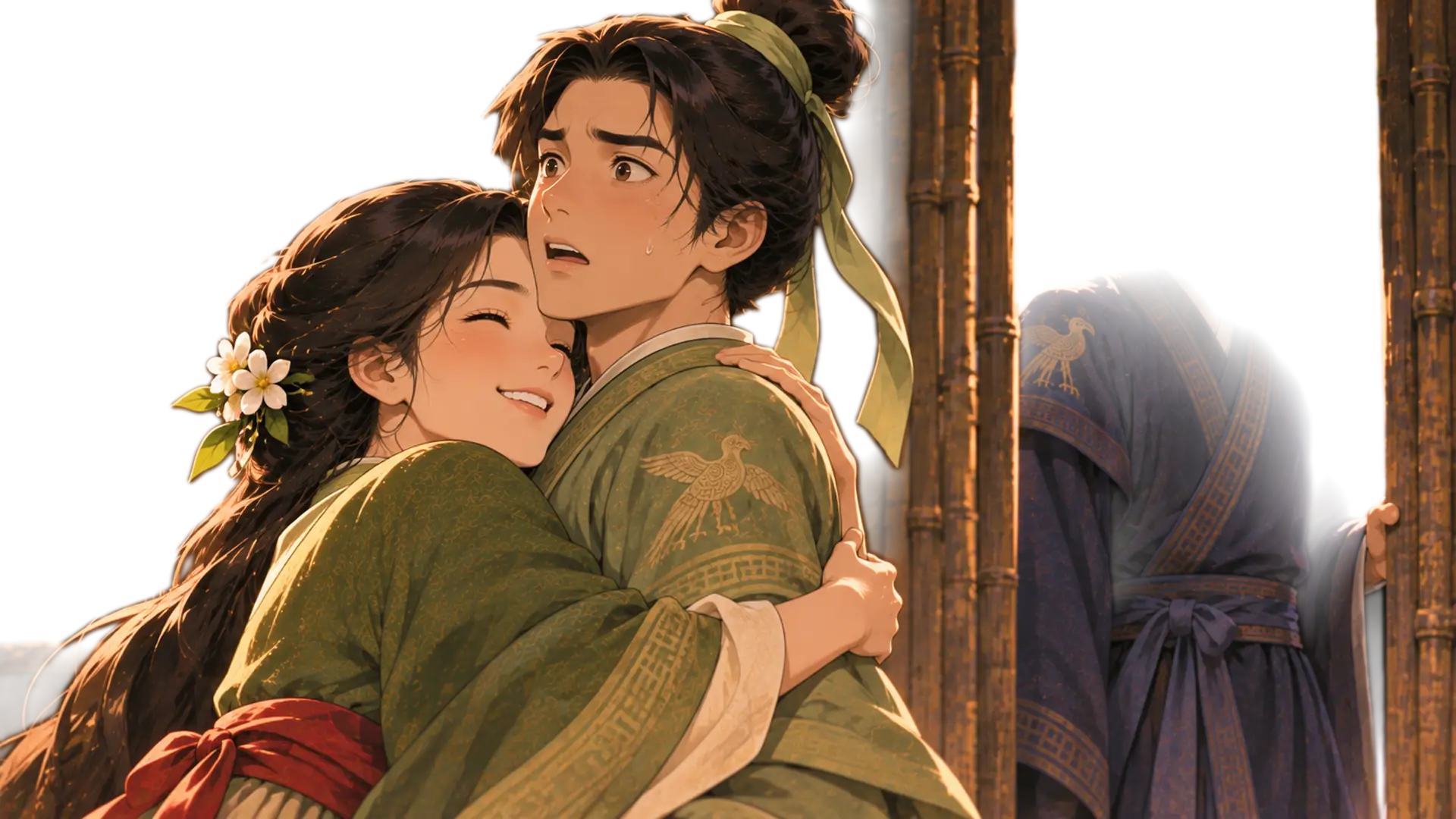
One evening, Lang came home first. In the twilight, his sister-in-law mistook him for her husband and ran to embrace him. At that very moment, Tan walked in.
It was only a mistake. But from that day, Tan turned cold toward his brother. No one said a word, and no one explained. That silence hurt more than any accusation.

Chapter
The River
Lang felt there was no place left for him in that house. One rainy night, he quietly walked away.
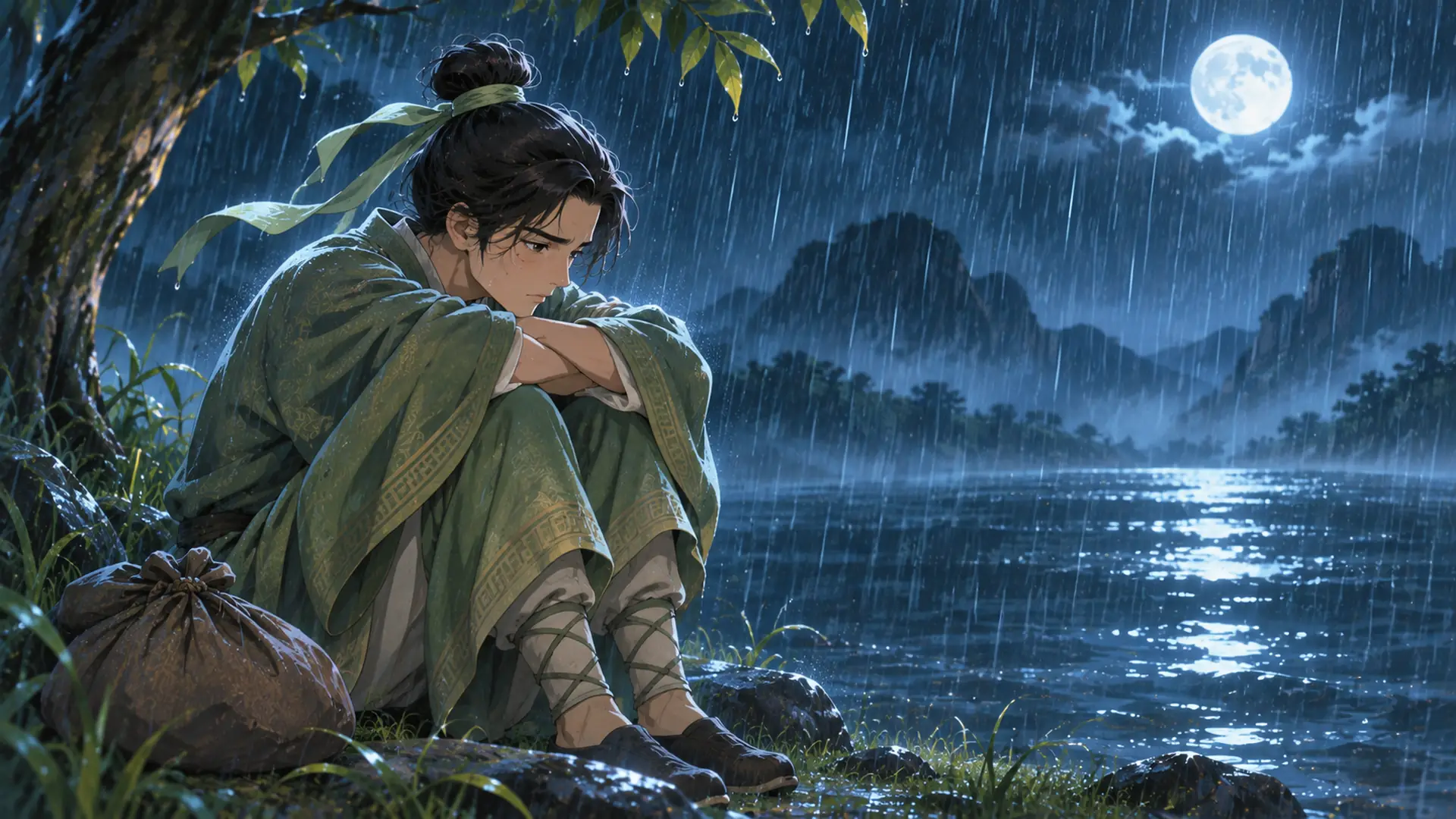
He walked until he reached a wide river. No boat, no one. He sat down on the bank and wept, until his strength ran out.

Chapter
Rock, Tree and Vine
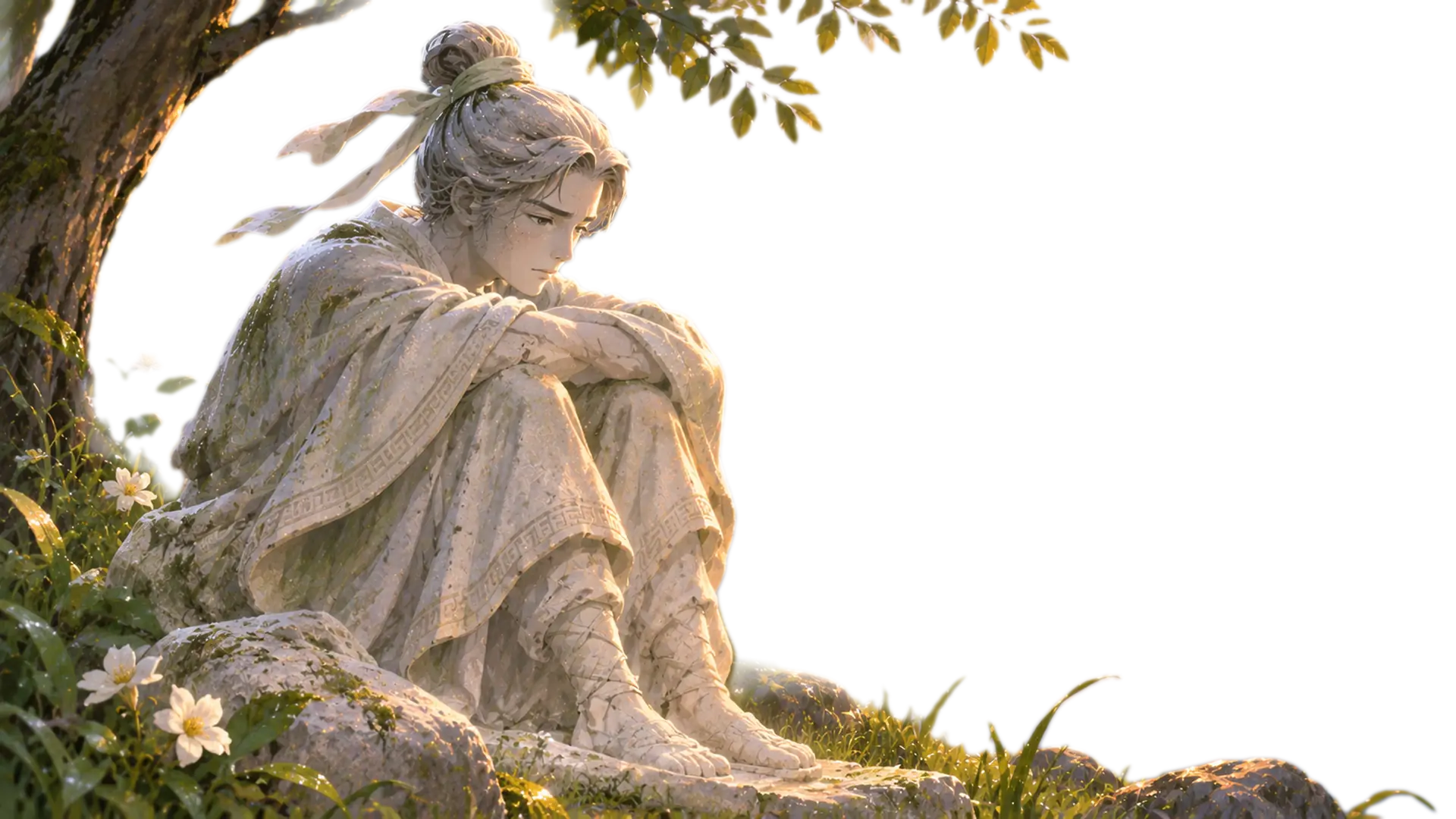
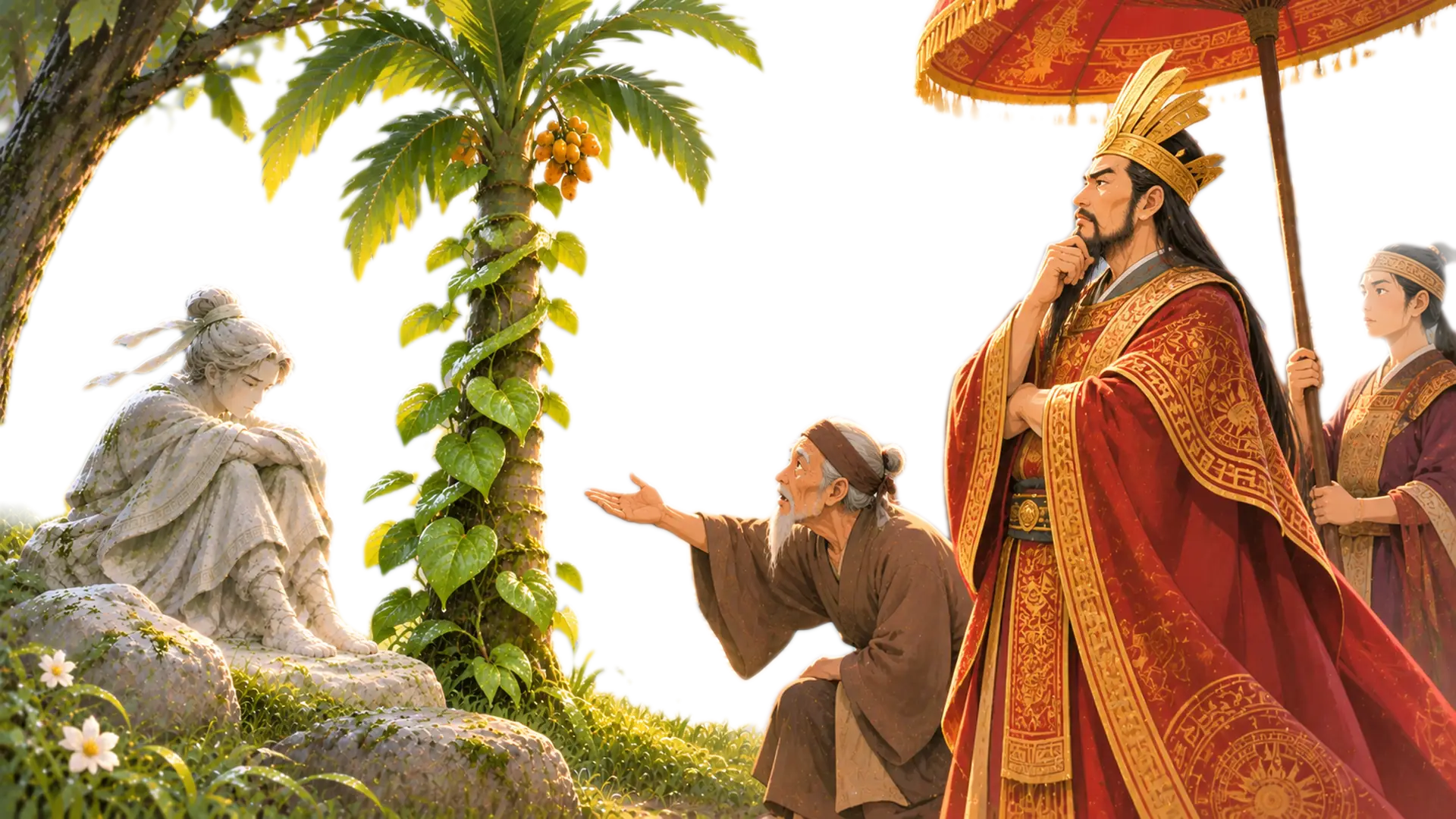
The next morning, where he had sat, there was only a white limestone rock.

At home, Tan found his brother gone and was filled with regret. He set out to find him, along the same road, to the same river. He sat leaning against the rock and wept, until he too died.

He became an areca palm, tall and straight, growing right beside the rock.
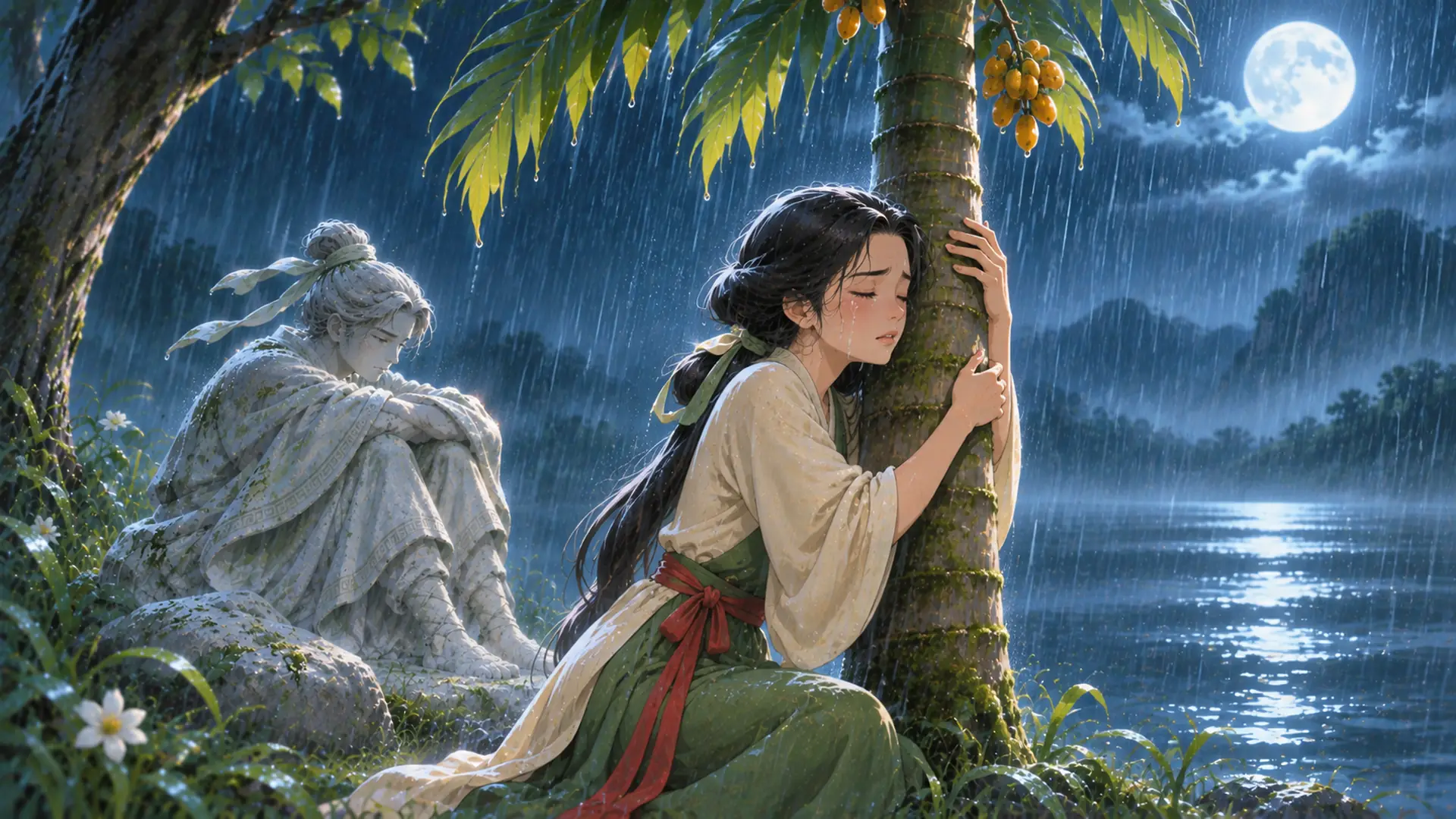
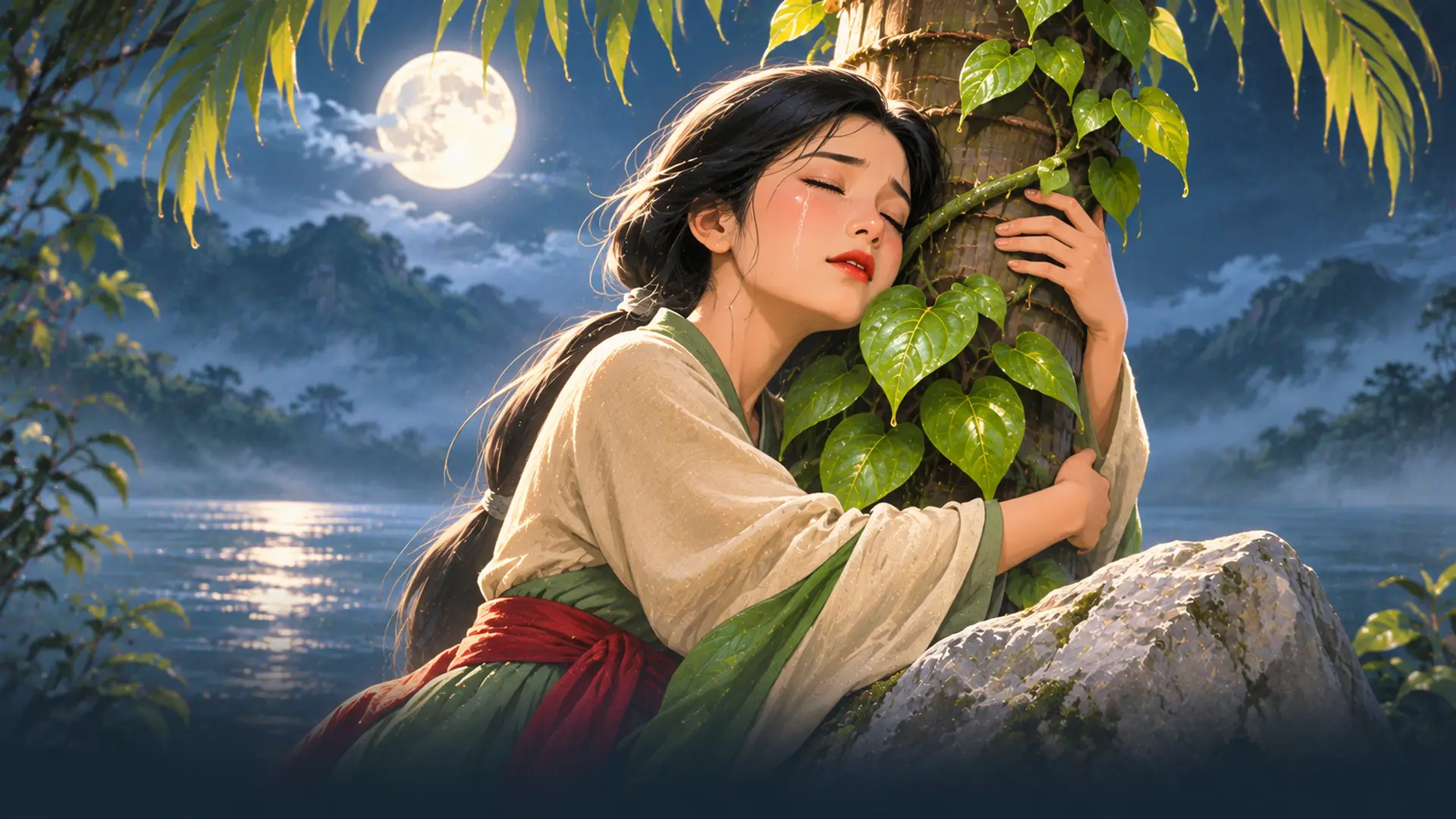
Tan’s wife waited, but he never came back. She went searching, reached the river, and wrapped her arms around the palm tree, crying, until she too died.

She became a betel vine, winding tenderly around the areca tree. Three people who could never say what was in their hearts — and now they would never be apart again.

Chapter
The Red Taste
Some time later, the Hung King passed through that land, and the villagers told him the story of the rock, the palm and the vine.
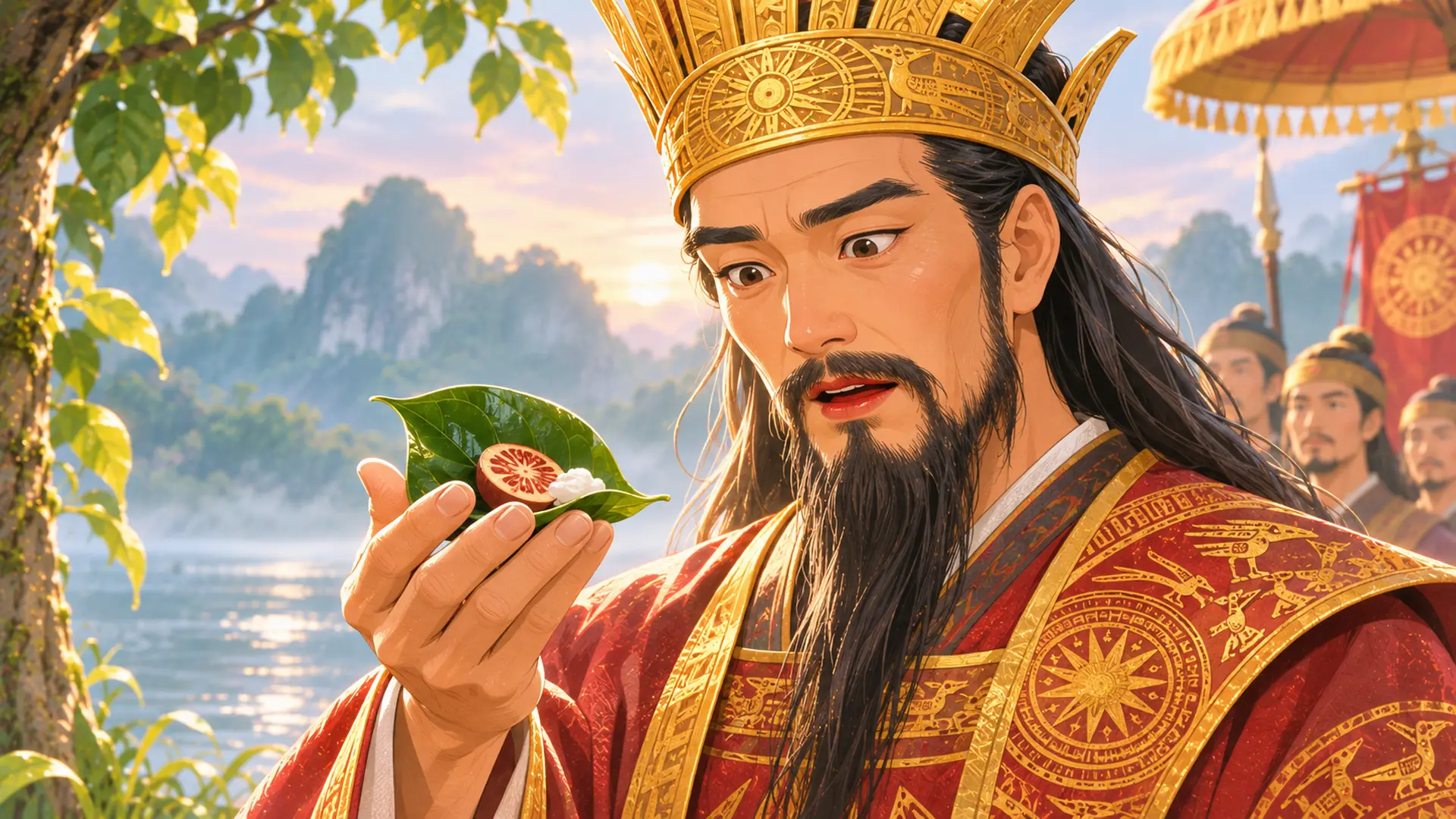
The king had a betel leaf picked, and an areca nut, and a little lime scraped from the rock, and he chewed them together. Spicy, sweet, warm and fragrant — and his mouth turned a deep red, like blood.
Only when all three are together does that red appear. So the king decreed that from then on, every wedding must have betel and areca.
Chapter
The Legacy
The story has many versions, but the custom lives on. Every traditional Vietnamese engagement begins with a tray of betel and areca, and at Tet they are placed on family altars.
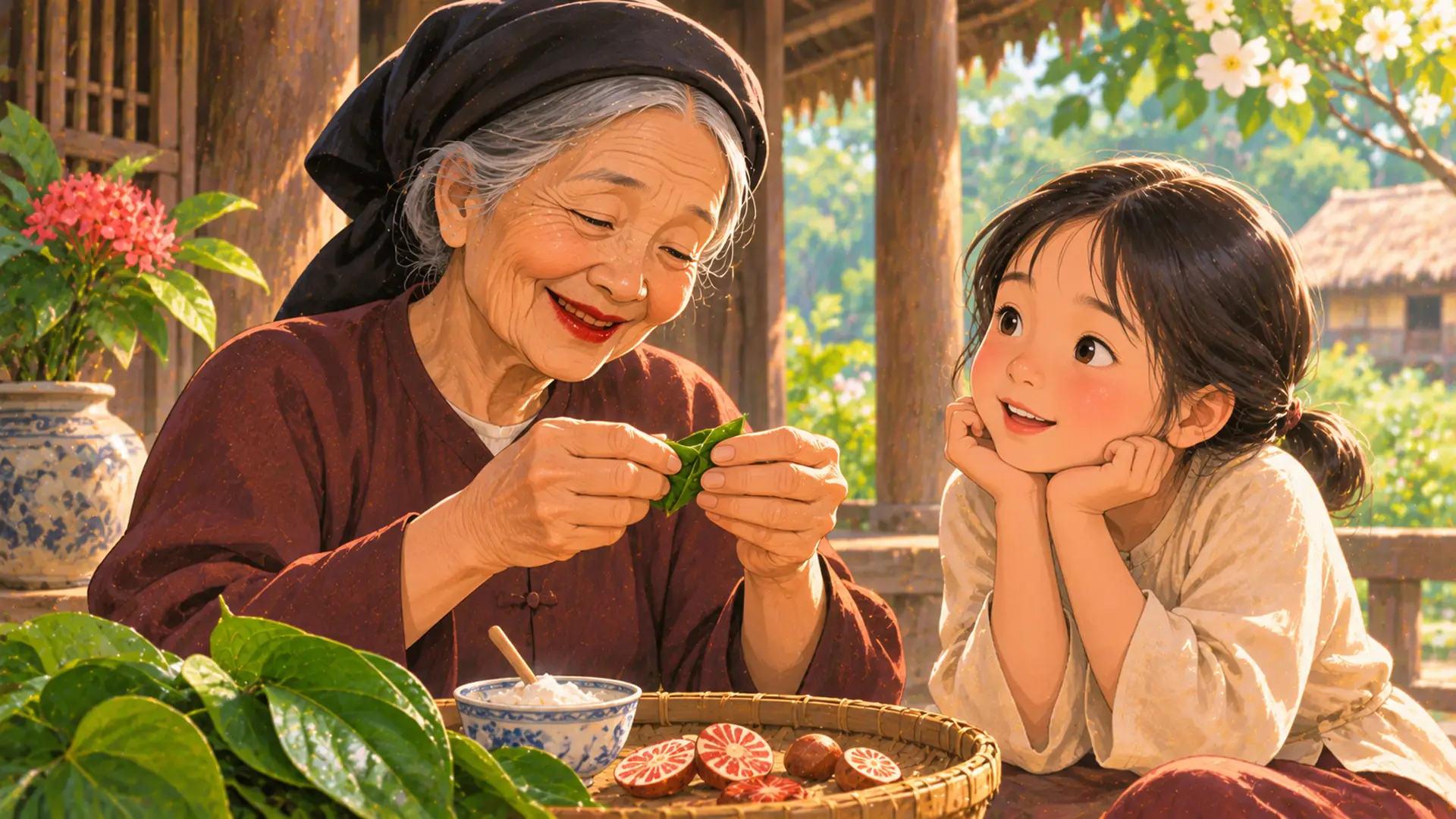
Our grandparents chewed betel every day, and deep red lips were once a sign of beauty. The Vietnamese still say: “A betel quid begins every conversation.” To offer someone betel is to open your heart to them.
This is a story about things left unsaid — between brothers, between husband and wife — and about a silence that tore three people apart. Perhaps that is why every Vietnamese wedding begins with betel and areca: to remind us that people who love each other must stay together, and must speak to each other.